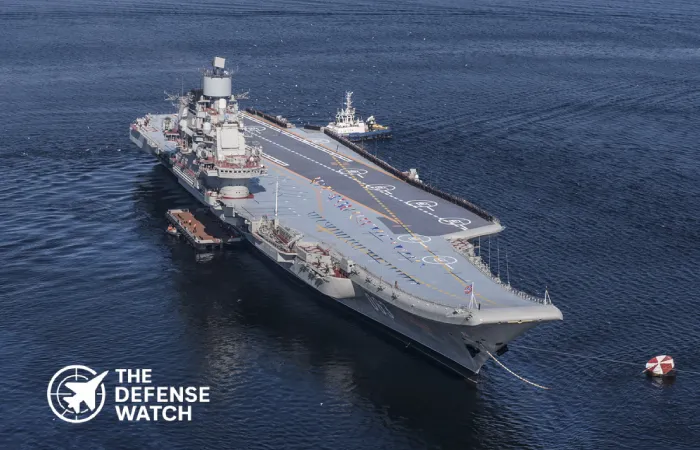
Admiral Kuznetsov Aircraft Carrier
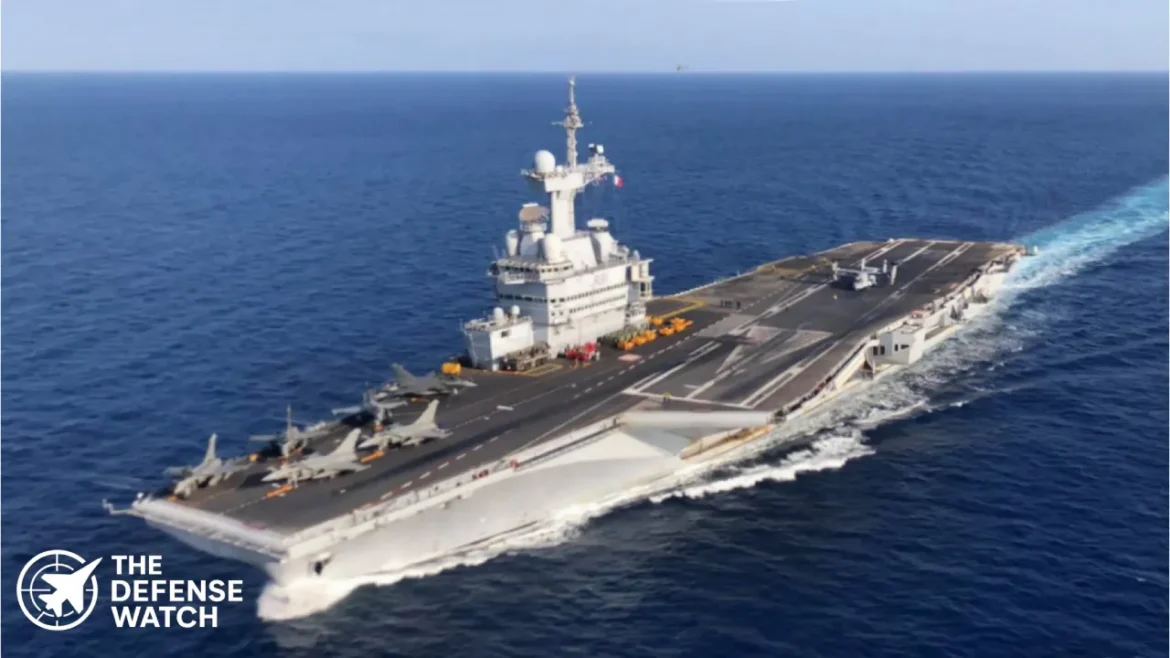
Admiral Kuznetsov features a unique ski-jump deck for Short Take-Off But Arrested Recovery (STOBAR) operations, enabling conventional fixed-wing aircraft such as the Su-33 and MiG-29K to operate from its deck. The carrier also supports a variety of rotary-wing aircraft for anti-submarine warfare (ASW), reconnaissance, and transport missions.
Powered by conventional steam turbines, the carrier can reach speeds up to 29 knots and has an endurance of approximately 45 days at sea. Its displacement of around 58,500 tons fully loaded makes it one of the largest vessels in the Russian Navy.
The carrier’s defensive suite includes the Kortik/Palash CIWS, AK-630 Gatling guns, and long- and short-range SAMs to protect against aerial threats. Onboard electronics include modern radar and fire control systems, electronic warfare capabilities, and advanced communications for fleet integration.
Operational Use
Though the Admiral Kuznetsov has faced mechanical challenges and maintenance issues over the years, it remains a key asset for power projection in the Arctic and Mediterranean theaters. The carrier operates alongside cruisers, destroyers, and submarines, offering a combined naval strike capability. Its flight deck and hangar can accommodate 30–40 fixed-wing and rotary aircraft, making it a versatile platform for both combat and support missions.
Admiral Kuznetsov Aircraft Carrier Price
The Admiral Kuznetsov Aircraft Carrier is Russia’s sole aircraft carrier and serves as the centerpiece of the Russian Navy’s Northern Fleet. Designed and built by the Nikolayev South Shipyard in Ukraine, the vessel was commissioned in 1991. Its primary mission is to project Russian air power at sea, provide fleet air defense, and support maritime strike operations.