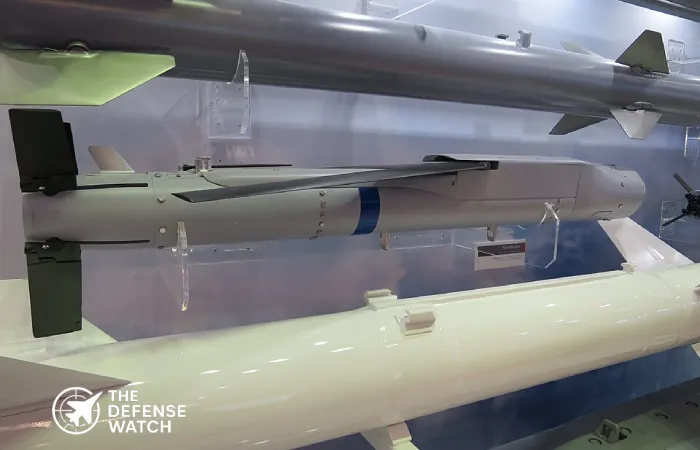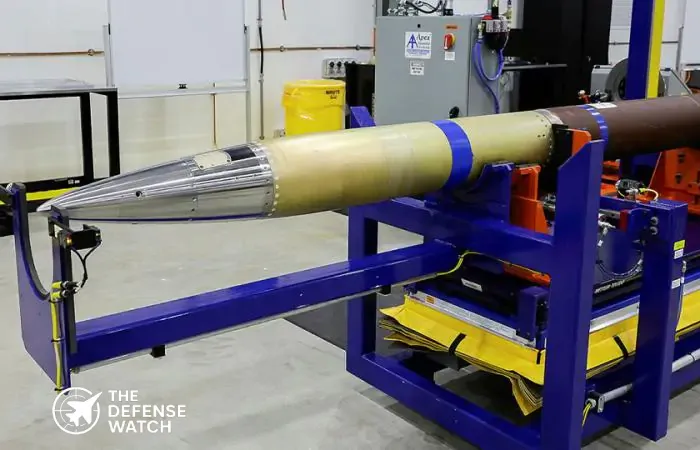
GMLRS Precision Guided Artillery Rocket
The Guided Multiple Launch Rocket System, commonly known as GMLRS, is a precision guided artillery rocket developed to provide accurate long range strike capability for modern ground forces. Designed for use with the M270 MLRS and M142 HIMARS launchers, GMLRS offers the ability to engage high value targets such as command posts, ammunition depots, air defense sites, and enemy troop formations with high precision.
Unlike traditional unguided artillery rockets, GMLRS uses advanced satellite navigation and inertial guidance systems to strike targets with significantly improved accuracy. The system has become a key component of modern artillery doctrine, enabling rapid strikes at distances far beyond conventional tube artillery. GMLRS has been widely used by U.S. and allied forces in multiple conflicts and remains a cornerstone of precision fires capability.
Manufacturer
GMLRS rockets are manufactured primarily by Lockheed Martin Missiles and Fire Control in the United States. Development of the system began in the late 1990s as an upgrade to the original MLRS rockets. The program focused on improving accuracy, reducing collateral damage, and expanding operational flexibility.
The system entered service with the U.S. Army in the early 2000s and has since been exported to numerous allied nations. Continuous upgrades have improved range, reliability, and targeting capabilities.
Speed and Range
The GMLRS rocket can reach speeds exceeding Mach 2 during flight. Standard variants have an operational range of approximately 70 to 84 kilometers depending on the version. Extended range variants introduced in recent years can reach distances up to roughly 150 kilometers.
Its GPS and inertial navigation guidance allow the rocket to achieve high precision with a circular error probable of around 10 meters or less.
Cost / Price
The unit cost of a standard GMLRS rocket is estimated to range between $150,000 and $170,000 depending on configuration and production contracts. Costs vary based on warhead type, export agreements, and production volumes.
Despite the relatively high price compared with conventional rockets, the system is considered cost effective because fewer rockets are required to achieve mission objectives due to its precision guidance.