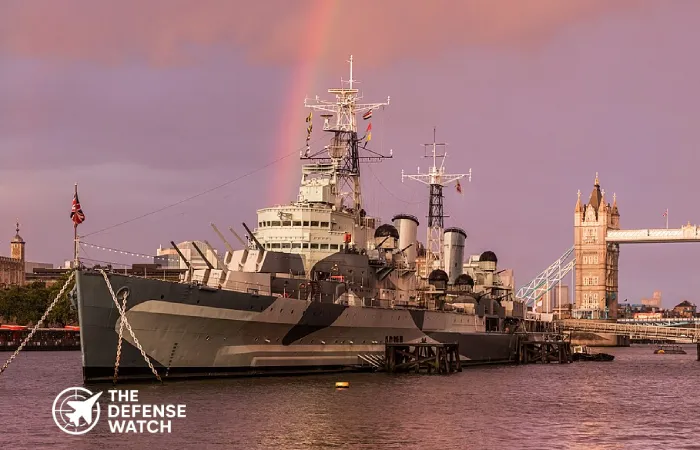
HMS Belfast Light Cruiser Profile
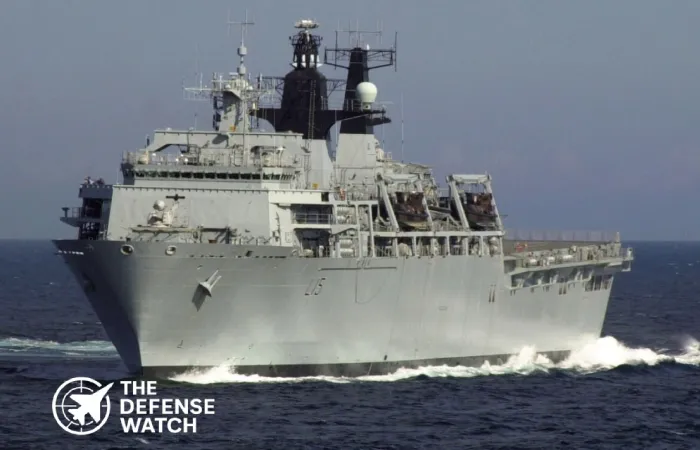
HMS Belfast is one of the most well preserved warships of the Second World War era. Commissioned in 1939, the Royal Navy light cruiser played a key role in Arctic convoy escorts, the sinking of the German battleship Scharnhorst, and naval gunfire support during the Normandy landings. Later, she served in the Korean War before being preserved as a museum ship in London.
Designed as part of the Town class, HMS Belfast was built for fleet screening, trade protection, and surface engagements. Her main battery of twelve 6 inch guns, supported by dual purpose secondary weapons and anti aircraft guns, made her a formidable surface combatant for her time. The ship combined firepower, endurance, and radar equipped targeting systems that reflected rapid wartime naval innovation.
Manufacturer
HMS Belfast was constructed by Harland and Wolff in Belfast, Northern Ireland. Built for the Royal Navy, she represented British naval engineering priorities on survivability and gunnery power during the late 1930s rearmament period.
Speed and Range
Powered by oil fired boilers and steam turbines producing roughly 80,000 shaft horsepower, HMS Belfast reached a maximum speed of about 32 knots. Her operational range extended to approximately 8,600 nautical miles at cruising speed, enabling long Atlantic and Arctic deployments.
Cost/Price
The estimated construction cost was about £2.14 million in late 1930s British currency, equivalent to significantly higher values in today’s terms when adjusted for inflation. The investment reflected the complexity of cruiser level firepower and armor protection before the missile age.