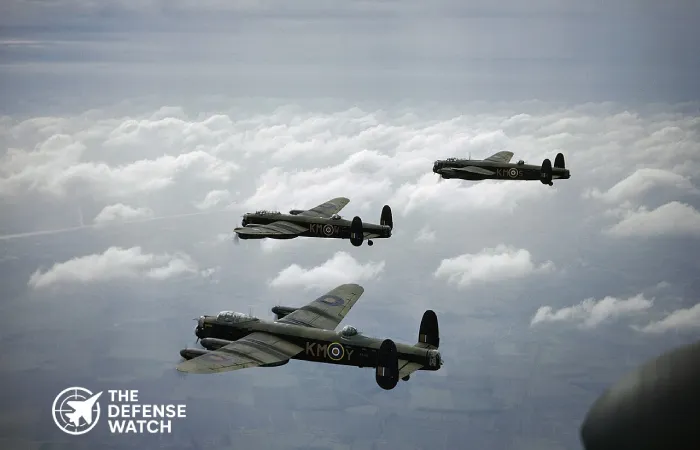
At just after midnight on May 17, 1943, a specially modified Avro Lancaster dropped its altitude to sixty feet above the black water of the Möhne See, held that height on spotlight cross-beams alone, and released a five-tonne cylinder spinning backward at 500 RPM. It skipped four times across the reservoir, struck the dam wall, sank, and detonated against the masonry at the depth Barnes Wallis had calculated it needed to fail structurally. Within minutes, one of the largest dams in Europe was breached and 330 million tonnes of water were pouring into the Ruhr valley below. Operation Chastise — the raid the press would immortalize as “the Dambusters” — remains one of the most audacious precision-strike missions ever flown, and its engineering logic still echoes through how modern militaries think about standoff weapons, low-observable delivery profiles, and infrastructure targeting.
Key Takeaways
- Operation Chastise (May 16–17, 1943) breached the Möhne and Eder dams using Barnes Wallis’ backspin “Upkeep” bouncing mine, delivered by specially modified Type 464 Provisioning Avro Lancasters flying at just sixty feet.
- The Sorpe dam, arguably the most strategically important target, was damaged but never breached — a reminder that even a successful raid can leave its highest-value objective unmet.
- Losses were severe: eight of nineteen aircraft failed to return, and 53 of 133 aircrew were killed, underscoring the real cost of early precision-strike doctrine before stand-off weapons existed.
- The raid’s core logic — engineering the weapon and delivery profile as one system to defeat a hardened target with a small precision force rather than mass bombing — directly foreshadows modern PGM, bunker-buster, and loitering-munition doctrine.
At-a-Glance Executive Summary
| Strategic Brief | Details |
|---|---|
| Codename / Mission | Operation Chastise |
| Date / Theater | Night of May 16–17, 1943; Ruhr industrial region, Nazi Germany |
| Executing Force(s) | No. 617 Squadron, RAF Bomber Command (newly formed for this mission), under Wing Commander Guy Gibson |
| Primary Target | Möhne, Eder, and Sorpe dams, feeding the Ruhr valley’s hydroelectric and industrial water supply |
| Key Platforms & Tech | Avro Lancaster B Mk.III (Type 464 Provisioning), “Upkeep” backspin bouncing mine, dual-spotlight altimetry, Y-shaped release calipers |
| Mission Outcome | Möhne and Eder dams breached; Sorpe damaged but held; significant short-term flooding and industrial disruption; heavy aircrew losses; long-term strategic effect limited but propaganda and doctrinal impact substantial |
Strategic Background & Operational Context
By 1943, RAF Bomber Command’s area-bombing campaign against the Ruhr — Germany’s industrial heartland — was grinding through heavy losses for uneven strategic return. British planners had studied the Ruhr’s dam system since before the war, recognizing that the Möhne, Eder, and Sorpe dams didn’t just hold back water; they underpinned hydroelectric generation, canal transport, and the cooling and process water that steel and munitions plants across the region depended on. Conventional bombing couldn’t crack reinforced gravity dams of that scale — the ordnance of the day lacked both the accuracy and the specific delivery geometry needed to place a large enough charge directly against the wall at depth, where water pressure would do the rest of the structural work.

That bottleneck — the need for pinpoint delivery of a large charge against a hardened, water-defended target without the aircraft flying close enough to be destroyed by torpedo nets or flak — was the problem engineer Barnes Neville Wallis set out to solve. His answer, developed initially through his “Upkeep” and “Highball” weapon programs, was not a smarter guidance system but a smarter physics trick: skip the bomb across the water like a stone, let torpedo nets become irrelevant, and use backspin to keep the weapon hugging the dam face as it sank to a pre-set depth before detonating. Air Chief Marshal Arthur “Bomber” Harris was skeptical of diverting scarce heavy bombers to a single-target special mission, but Chief of the Air Staff Sir Charles Portal and Wallis’ persistent lobbying secured approval in early 1943, giving planners barely two months to form a squadron, modify aircraft, and train crews before the reservoirs reached the water levels needed for the raid to work.
Engineering & Technological Innovation
The mission lived or died on three interlocking pieces of improvised engineering, each addressing a specific tactical constraint:
The Upkeep weapon
Wallis’ bouncing mine was a 9,250-lb cylindrical depth charge containing roughly 6,600 lbs of Torpex explosive, spun backward at approximately 500 RPM by a belt-driven motor mounted in the Lancaster’s modified bomb bay before release. The backspin served two purposes: it let the weapon skip across the water surface in a controlled series of bounces to clear anti-torpedo nets strung in front of the dams, and after the final bounce it caused the mine to roll down the face of the dam wall itself, holding contact until a hydrostatic pistol detonated it at the pre-calculated depth — deep enough for water pressure to amplify the blast against the structure.
The Type 464 Provisioning Lancaster
Standard Avro Lancaster B Mk.IIIs were extensively modified by Avro under the “Type 464 Provisioning” designation: bomb-bay doors were removed entirely to accommodate the Upkeep’s dimensions, a caliper-and-belt release mechanism was fitted to spin the weapon before drop, the mid-upper gun turret was deleted to save weight and drag, and a spotlight altimetry system was installed — two lights mounted in the nose and rear fuselage, angled so their beams converged into a single point on the water only when the aircraft was flying at exactly sixty feet, the release altitude the weapon’s skip physics required.
Precision delivery under fire
Sixty feet is below the effective engagement envelope of most flak fire-control solutions of the era, but it also left crews with virtually no margin for error over blacked-out, unfamiliar terrain at night, navigating largely by dead reckoning and map-reading at low level. A calibrated bombsight — initially an improvised wooden triangle with sighting pins, later refined — let the bomb aimer judge release distance by aligning the dam’s flanking towers, a detail as low-tech as the guidance system was high-concept, and a reminder that 1943-era “precision” still depended on a human eye at the critical moment.
Mission Execution & Key Sorties
No. 617 Squadron formed at RAF Scampton in March 1943 under 24-year-old Wing Commander Guy Gibson, who handpicked crews from experienced bomber units and drove an intense, compressed training program of nighttime low-level flying across British reservoirs chosen for their resemblance to the German targets. Nineteen Lancasters took off in three waves on the night of May 16, flying at extremely low altitude across occupied Europe to avoid radar detection — a profile that itself proved lethal, as several aircraft were lost to high-tension power lines and flak before reaching their targets.
The first wave of nine aircraft, led by Gibson, attacked the Möhne dam. Gibson’s own Upkeep breached the dam on the fifth attacking run after earlier drops failed to hold contact with the wall; remarkably, he then flew a decoy pass alongside the next attacking aircraft to draw flak fire away from it, a tactic he repeated for subsequent runs. With the Möhne breached, the surviving aircraft of the first wave proceeded to the Eder dam, which lacked flak defenses entirely — its remote valley location had been considered protection enough — but presented brutal approach geometry, requiring a steep dive after crossing a ridgeline followed by an immediate pull-up. The Eder was breached after several runs by the remaining aircraft.
The second wave, tasked with the Sorpe dam — an earthen embankment dam requiring a different attack profile with no backspin — suffered heavy losses en route and only a single aircraft reached the target, scoring a hit that damaged but did not breach the structure. A third, reserve wave was scrambled after the raid was already underway, attacking secondary targets including the Sorpe and Ennepe dams with mixed results.
Of the nineteen aircraft that took off, eight failed to return — a 42% loss rate in a single night — and 53 of the 133 aircrew who flew the mission were killed, with three more captured as prisoners of war. Gibson was awarded the Victoria Cross for his leadership during the attack.
Tactical Outcome & Operational Assessment
The immediate physical results were dramatic: the Möhne and Eder breaches released a combined flood of hundreds of millions of tonnes of water down the Ruhr and Eder valleys, destroying bridges, roads, rail lines, and factories, killing an estimated 1,300–1,600 people (a substantial share of them forced laborers from Allied nations housed in camps below the Eder), and temporarily knocking out hydroelectric generation and water supply to Ruhr industry.
The strategic assessment, however, is more nuanced than the raid’s legend suggests. German authorities mobilized an extraordinary repair effort — the Möhne dam was substantially restored within about five months, aided partly by the diversion of labor and material that would otherwise have gone toward the Atlantic Wall, which analysts have since noted as an underappreciated secondary effect. Industrial output in the Ruhr dipped but recovered faster than British planners had hoped, and the Sorpe dam — arguably the most operationally significant target for regional water supply — was never breached at all. Post-war analysis by the British Bombing Survey Unit concluded the material damage, while real, fell well short of the operation’s ambitious industrial-collapse objectives.
Where Chastise unambiguously succeeded was in demonstrating that a small, specially trained force using a purpose-built weapon could achieve an effect that mass conventional bombing had failed to deliver, and in the propaganda and morale value the raid generated for Britain at a difficult point in the war. It also validated, at real operational cost, the principle that a weapon’s release geometry and delivery platform have to be engineered together as a single system — a lesson that shaped how Allied planners approached subsequent special-weapons programs, including the Tallboy and Grand Slam earthquake bombs Wallis later developed for hardened German targets.
The Modern Connection: Lineage to 21st-Century Warfare
Operation Chastise is a useful reference point precisely because it solved a precision-delivery problem with mechanical ingenuity rather than electronics, decades before guidance computers existed — and the underlying tactical logic maps cleanly onto problems modern planners still wrestle with.
Standoff and low-observable delivery profiles
The sixty-foot release altitude was, in effect, a 1943 answer to the same question modern strike planners ask when routing a platform beneath a radar horizon or an integrated air defense envelope: how close does a weapon-delivery platform need to get, and can the flight profile itself substitute for armor or countermeasures? Contemporary terrain-following flight profiles for strike aircraft, and the ultra-low ingress routes used by some cruise missile systems, are direct conceptual descendants.
Purpose-built munitions for hardened, unconventional targets
Upkeep’s core insight — that a standard bomb dropped in a standard way cannot defeat every target class, and that the weapon sometimes has to be redesigned around the target’s specific physics — is the same logic behind modern bunker-buster munitions like the GBU-57 Massive Ordnance Penetrator, and behind the proliferation of purpose-built anti-infrastructure loitering munitions designed to loiter, identify, and strike hardened or moving targets with a single precise hit rather than area saturation.
Precision as a force-multiplier over mass
Chastise used nineteen aircraft to achieve what hundreds of conventional bomber sorties had failed to accomplish against the same target set. That ratio — small precision-capable forces substituting for large area-attack forces — is the founding logic of the entire precision-guided munitions era, from laser-guided bombs in Vietnam through today’s swarming loitering munitions and networked sensor-to-shooter kill chains, where a single UAV or PGM can now do reliably, with GPS/INS guidance and terminal seekers, what Wallis’ crews did once, at enormous risk, with a spinning bomb and a spotlight.
Infrastructure as a target set
The raid also previewed a targeting debate that persists today: dams, power grids, and water systems sit at the intersection of military and civilian value, and striking them produces disproportionate downstream effects — a calculus that shapes modern targeting-law doctrine and the design of “effects-based” strike planning far beyond its WWII origins.
FAQs
What was Operation Chastise?Operation Chastise was the RAF’s May 1943 raid by No. 617 Squadron against the Möhne, Eder, and Sorpe dams in Germany’s Ruhr valley, using Barnes Wallis’ specially developed “bouncing bomb” to breach the dam walls and flood the surrounding industrial region.
Why is it called the “Dambusters” raid?The nickname came from wartime press coverage after the mission, and 617 Squadron itself was later formally nicknamed “The Dambusters” in recognition of the operation; the name has since applied to the squadron’s badge, insignia, and popular history of the raid.
Did the bouncing bomb actually work as intended?Yes, though it required several attempts per target in practice. The backspin let the Upkeep weapon skip over anti-torpedo nets and then roll down the dam face, holding contact until a hydrostatic pistol triggered detonation at a set depth — the mechanism performed as Wallis had calculated at the Möhne and Eder dams, though the Sorpe’s earthen construction required a different, less effective attack profile.
How many aircraft and aircrew were lost during the raid?Eight of the nineteen Lancasters that took off failed to return, and 53 of the 133 aircrew involved were killed, with three more taken prisoner — a loss rate of roughly 40%, among the highest of any single RAF Bomber Command operation of the war.
Did the raid actually damage German war production?It caused significant short-term disruption to Ruhr hydroelectric power, water supply, and industry, and diverted German labor and materials toward rapid repairs. However, most infrastructure was substantially restored within months, and the operation’s long-term strategic impact on German war production is generally assessed by historians as more limited than its propaganda value.
Level Up: The Dambusters in Simulation and Strategy Gaming
For the strategic-gaming and esports audience, Operation Chastise has become a recurring set-piece across combat flight sims and historical strategy titles — and for good reason: it’s one of the rare real-world missions where success hinges on a single, learnable mechanical skill rather than abstract firepower. Flight simulation communities built around titles like War Thunder and IL-2 Sturmovik have long treated the Möhne dam run as an informal benchmark mission, replicating the sixty-foot altitude hold, the spotlight-convergence technique, and the narrow release window as a genuine test of low-level flight discipline under simulated flak. That mirrors the real training bottleneck Gibson’s squadron faced in 1943: the weapon’s physics were solved on paper well before any crew could reliably fly the profile needed to use it. It’s a useful reminder for wargamers and strategy-title players alike that in mission design, as in 1943, the hardest part of a “precision strike” is rarely the warhead — it’s getting the platform to the exact point in space the warhead needs.


Executive Summary: The Department of Government Efficiency reported $1.76 billion in savings after identifying a Defense Health Agency information technology contract for termination in April 2025. A subsequent Government Accountability Office review found that the contract was not terminated, its scope and value were not reduced, and no funds were deobligated, meaning the claimed savings were not achieved.
GAO Challenges DOGE Military Health IT Savings Claim
The DOGE military health IT contract savings claim has come under scrutiny after the Government Accountability Office found that a Defense Health Agency contract identified for termination was ultimately left in place. The finding is part of a broader GAO review of DOGE’s public Wall of Receipts, which examined whether reported savings from contracts, grants and leases could be supported by government records.
DOGE’s April 14, 2025 entry identified A1FedImpact and its Geographic Service Providers contract as generating approximately $1.76 billion in savings. The DOGE database currently lists the Department of Defense entry at $1.7645 billion.
GAO found that the Defense Health Agency did not ultimately terminate the contract. According to the audit findings reported by Defense News and other outlets, there was no partial termination, reduction in scope, reduction in contract value or deobligation of funds.
The result is significant because those actions would normally be the mechanisms through which a federal agency could demonstrate an actual reduction in future spending.
The Defense Health Agency Contract At The Center Of The Dispute
The contract, HT001523D0002, was one of six awards made by the Defense Health Agency in 2023 under a multiple-award indefinite-delivery, indefinite-quantity vehicle with a ceiling of approximately $2.4 billion.
The vehicle was established to provide enterprise information technology services across the Defense Health Agency and its medical facilities in the United States and overseas.
Its responsibilities include a wide range of technical services:
| Area | Contracted IT Support |
|---|---|
| Service management | IT service desk and user support |
| Applications | Database, application and web development |
| Network operations | Network and telecommunications support |
| Cybersecurity | Information assurance and identity management |
| Infrastructure | Desktop and data center operations |
| Health IT | Clinical informatics and information business operations |
The scale of the mission helps explain why terminating or substantially reducing such a contract would require careful coordination. Defense medical facilities depend on enterprise IT services for administrative, clinical and operational functions.
The Defense Health Agency’s broader military health system serves millions of beneficiaries and operates hundreds of medical facilities. GAO reported in June that the Defense Department’s Military Health System provides care to about 9.4 million beneficiaries through more than 700 medical facilities, supported by more than 100,000 military, civilian and contractor personnel.
Why The $1.76 Billion Figure Is Important
The central issue is not whether the Defense Department has opportunities to reduce unnecessary IT spending. It does.
The issue is whether a projected or potential reduction can accurately be described as realized savings when the underlying contract remains active and its financial position is unchanged.
DOGE’s Wall of Receipts has used contract value and other figures to present estimated savings from government contract terminations. Its public records include the A1FedImpact entry at approximately $1.76 billion.
GAO’s review found that the Defense Health Agency contract did not undergo the actions necessary to create those savings.
That distinction matters for defense budgeting because a contract ceiling is not the same as money that the government would necessarily have spent.
A contract can have a large maximum value while actual obligations remain substantially lower. Eliminating the ceiling therefore does not automatically translate into an equivalent reduction in federal expenditures.
For the A1FedImpact entry, the reported contract value was approximately $1.83 billion, while the amount already obligated was about $62 million, according to information associated with the GAO review. DOGE reported the difference as savings, but GAO found no corresponding termination or reduction in the government’s contractual commitments.
DOGE And The Defense Health Agency Discussed The Contract
The chronology is particularly important.
Defense officials initially identified the contract during the administration’s broader effort to reduce federal spending. DOGE subsequently listed the contract on its Wall of Receipts as a savings item.
Defense Health Agency officials then discussed the contract and its ongoing work with DOGE. Following those discussions, DOGE agreed that the contract should not be terminated, according to the GAO findings reported by Defense News.
That decision created a clear separation between the initial identification of a possible termination and an actual savings action.
Federal acquisition records reviewed by GAO did not show a completed termination, partial termination, reduction in contract scope or deobligation of funds.
As a result, GAO concluded that no savings were achieved on the contract.
Broader Problems With DOGE’s Contract Savings Methodology
The Defense Health Agency example was not isolated.
GAO’s broader review found significant limitations in the Wall of Receipts data. DOGE had reported more than $61 billion in savings associated with 13,476 contracts it identified as terminated.
GAO found that 2,503 of those contracts, representing approximately $27.4 billion in reported savings, had no corresponding termination action recorded in federal procurement data.
The watchdog also found that DOGE did not apply its stated methodology to calculate the majority of the reported contract savings.
GAO further found that DOGE’s methodology for grants could not be independently verified in many cases and that some lease savings credited to DOGE involved leases that were already in the process of being terminated before DOGE was established.
The audit therefore does not simply concern one disputed Defense Department contract. It raises a broader accounting and transparency issue over how federal savings were identified, calculated and presented.
Military Health IT Is Different From Conventional Support Contracts
The case also highlights the difficulty of applying broad cost-cutting measures to military health information technology.
Defense health IT supports more than routine administrative functions. It can connect medical facilities, providers, patients, networks, applications, identity systems and clinical information.
The Defense Department’s MHS GENESIS electronic health record is one example of the scale of the department’s health IT environment. Health.mil says the system is intended to provide a single integrated health record for approximately 9.5 million beneficiaries and about 205,000 medical providers when fully deployed.
That does not mean every Defense Health Agency IT contract is directly part of MHS GENESIS. The A1FedImpact contract covered broader enterprise IT services.
However, it illustrates why IT reductions within the Military Health System require more than identifying a large contract ceiling. Any reduction must account for operational requirements, cybersecurity, continuity of medical services, technical dependencies and the cost of moving work to another provider or government workforce.
For defense planners, a contract that appears expensive on paper may still perform functions that have to be maintained even if the contractor changes.
What The GAO Finding Means For Defense Budget Oversight
The most important lesson is the difference between potential savings, estimated savings and realized savings.
A contract termination can produce genuine savings when the government eliminates future obligations or reduces services it otherwise would have purchased.
By contrast, identifying a contract for termination does not itself create a budget reduction.
The same distinction applies to contract ceilings. A ceiling represents the maximum potential value under the contract vehicle. It does not necessarily represent the amount the government will spend.
That distinction is especially important for the Pentagon, where large indefinite-delivery contracts can support multiple activities over several years.
The GAO finding therefore has implications beyond DOGE. Congressional defense committees, Pentagon acquisition officials and federal financial managers need reliable data showing whether a claimed reduction actually changed obligations, outlays or future requirements.
This is consistent with GAO’s broader concerns about Defense Department financial management. The watchdog has repeatedly identified weaknesses in DOD’s financial systems, internal controls and ability to provide reliable information for oversight.
Implications For The Military Health System
The immediate operational implication is that the Defense Health Agency’s IT requirement did not disappear when the contract was listed as a savings item.
The agency still requires enterprise technology support across a geographically dispersed medical network.
That means any genuine future reduction would need to come from one of several mechanisms, including reducing requirements, consolidating services, changing the acquisition strategy, bringing work into government organizations, negotiating lower prices or competing services more effectively.
Simply removing a contract from a public savings database does not accomplish those objectives.
The Pentagon is also pursuing broader efficiencies within the Military Health System. GAO estimates that DOD’s military health system will account for more than $72.5 billion in fiscal year 2027 spending, underscoring the financial scale of the enterprise.
Against that backdrop, accurate measurement of savings is not a minor accounting issue. It directly affects how defense leaders assess available resources and decide where reductions can be made without weakening military readiness or medical support.
DOGE Savings Claims Face A Higher Standard After GAO Review
DOGE’s Wall of Receipts was created to provide a public accounting of claimed federal savings. The GAO review found that the site’s usefulness for evaluating actual savings was limited by data quality and transparency problems.
For the Defense Health Agency contract, the evidence reviewed by GAO points to a straightforward conclusion: the reported $1.76 billion saving did not correspond to an actual contract termination or reduction.
That does not establish that every DOGE savings claim was invalid. It does, however, demonstrate why individual claims need to be evaluated against underlying procurement and financial records rather than relying solely on a published savings figure.
For the Pentagon, the distinction is particularly important. Defense budgets are built around real obligations, appropriations, contracts, personnel requirements and operational capabilities. A claimed reduction only becomes a defense budget saving when the underlying spending requirement or financial obligation actually changes.
The GAO findings provide a clear example of why those distinctions matter as the Defense Department continues efforts to reduce administrative costs while protecting military readiness and essential support functions.
What Comes Next
The Defense Health Agency contract example is likely to remain relevant to congressional oversight because it connects federal cost-cutting claims with the underlying mechanics of defense acquisition.
The key questions for policymakers are whether the contract remained active, whether work continued, whether funding changed and whether any future requirement was actually eliminated.
In this case, GAO’s review found no evidence of a termination or corresponding reduction that would support the reported $1.76 billion savings figure.
The broader audit also demonstrates that government efficiency claims require independently verifiable financial evidence. For the Defense Department, that standard is particularly important when savings claims involve systems supporting military medical care, cybersecurity, enterprise IT and other functions that directly affect the department’s ability to operate.

Executive Summary:
Pakistan’s Makkah Joint Defence Agreement with Saudi Arabia and Türkiye could develop into a wider economic partnership covering investment, energy, industrial production, technology and defense manufacturing. The agreement itself does not create an automatic economic bloc, however, and Pakistan’s ability to convert strategic ties into sustained investment will depend on macroeconomic stability, regulatory reforms, infrastructure and project execution.
Pakistan’s Makkah Defense Pact Opens A Wider Economic Question
The Pakistan Makkah defense pact signed with Saudi Arabia and Türkiye on August 7 has immediate military and geopolitical implications, but its longer-term importance may extend into investment, energy security and industrial cooperation. Reuters reported that the agreement treats an armed attack against one member as an attack against all, while the three governments have emphasized its defensive character and have not presented it as a replacement for existing alliances.
For Pakistan, the economic dimension is particularly significant because Islamabad continues to balance external financing requirements with efforts to attract foreign capital, strengthen reserves and move from stabilization toward sustainable growth.
The strategic relationship with Saudi Arabia already has an important financial component. In April, Pakistan’s Finance Ministry said Saudi Arabia had committed an additional $3 billion in deposits and agreed to extend an existing $5 billion Saudi deposit for a longer period, providing support for Pakistan’s external financing position.
That existing financial relationship means the Makkah agreement is being signed on top of established economic ties rather than creating them from scratch.
Saudi Capital Could Support Pakistan’s Energy And Infrastructure Priorities
Energy is one of the clearest areas where closer Pakistan-Saudi relations could produce measurable economic effects.
Pakistan has historically relied heavily on imported energy, making global oil prices and foreign exchange availability important variables for its balance of payments. Saudi financing has previously helped Islamabad manage part of that exposure.
The Saudi Fund for Development said in 2025 that its oil derivatives financing for Pakistan had reached approximately $6.7 billion since 2019. The latest agreement at that time provided $1.2 billion for oil derivative imports.
More recently, Pakistani officials have been discussing a potential new Saudi oil financing arrangement reportedly worth $6.7 billion over 15 years, with a proposed five-year grace period and a 1 percent interest rate. The proposal was still under discussion and should not be treated as a finalized financing commitment.
If implemented, such financing could reduce short-term pressure on Pakistan’s foreign exchange position and provide greater predictability for energy imports. It would not, by itself, resolve the structural problems affecting Pakistan’s energy sector, including circular debt, transmission constraints and the financial condition of state-owned utilities.
That distinction is important. External financing can provide liquidity, but lasting energy security requires domestic reforms and investment in generation, transmission, distribution and indigenous energy production.
Investment Is The Bigger Test Of The Makkah Partnership
The central economic question is whether political and security confidence can translate into actual capital deployment.
Pakistan and Saudi Arabia already have an economic cooperation framework covering areas including energy, industry, mining, information technology, tourism, agriculture and food security. Islamabad has also been seeking Saudi participation in major projects and investment opportunities across the economy.
Saudi investment could be particularly important in capital-intensive sectors where Pakistan faces financing constraints.
Potential areas include:
| Sector | Potential Economic Role |
|---|---|
| Energy | Oil, gas, refining, renewable power and electricity infrastructure |
| Mining | Development of mineral resources and processing capacity |
| Logistics | Ports, transport corridors and warehousing |
| Agriculture | Food security, processing and export-oriented production |
| Digital economy | Data infrastructure, IT services and technology |
| Manufacturing | Industrial projects and supply-chain development |
| Tourism | Hospitality, transport and related services |
| Defense industry | Joint production, maintenance and technology cooperation |
The economic logic is straightforward. Saudi Arabia has access to significant investment capital and is pursuing economic diversification under Vision 2030, while Pakistan has a large domestic market, a substantial labor force, natural resources and geographic access to South and Central Asian markets.
The difficult part is turning that complementarity into commercially viable projects.
Türkiye Adds An Industrial And Technology Dimension
Türkiye’s role is different from Saudi Arabia’s.
Ankara has developed a substantial domestic defense industry and industrial base spanning aerospace, naval systems, unmanned aircraft, electronics, armored vehicles and precision weapons. Pakistan and Türkiye already cooperate in areas including naval shipbuilding, aerospace and defense modernization.
The new trilateral framework could therefore provide a platform for combining Saudi financing with Turkish industrial expertise and Pakistani manufacturing capacity.
For the defense sector, that could potentially support joint ventures involving maintenance, components, unmanned systems, naval platforms, electronics and other military technologies.
However, a defense agreement does not automatically create industrial integration. Successful joint production requires export controls, intellectual property arrangements, financing structures, technical standards, supply-chain agreements and long-term procurement commitments.
These mechanisms would have to be negotiated separately.
Pakistan’s Defense Industry Could Gain From Greater Regional Integration
The defense-industrial dimension deserves particular attention because the three countries bring different capabilities to the relationship.
Pakistan has an established defense production sector and experience developing and exporting aircraft, armored vehicles, naval systems and other military equipment. Türkiye has expanded its defense exports and developed advanced domestic platforms and subsystems. Saudi Arabia is seeking to increase domestic defense production as part of its broader economic diversification strategy.
This creates a potential industrial model in which:
- Saudi Arabia provides capital and access to Gulf markets.
- Türkiye contributes engineering, systems integration and industrial technology.
- Pakistan contributes manufacturing capacity, engineering manpower and established defense-production experience.
Such cooperation could be relevant to unmanned systems, naval platforms, ammunition, electronics, maintenance and other areas where regional production capacity is increasingly important.
For the United States and other Western defense suppliers, the development is also worth watching because greater regional defense-industrial cooperation can affect future procurement patterns, technology partnerships and supply-chain relationships.
At the same time, the scale of any future cooperation remains uncertain until specific contracts, production agreements and investment commitments are announced.
Trade Remains A Major Weakness
Security cooperation among Pakistan, Saudi Arabia and Türkiye is considerably deeper than their three-way commercial integration.
Pakistan’s trade relationship with Saudi Arabia remains dominated by energy imports and a relatively narrow range of exports. Pakistan also has significant room to increase commercial trade with Türkiye.
The broader opportunity lies in moving beyond government-to-government agreements toward private-sector investment and supply-chain integration.
Pakistan could potentially expand exports in areas such as:
- Textiles and apparel
- Rice and processed food
- Surgical instruments
- Sports goods
- Leather products
- Pharmaceuticals
- Engineering goods
- Information technology services
Saudi Arabia’s large investment program and Türkiye’s industrial base could also create opportunities for Pakistani suppliers to become part of regional manufacturing and logistics networks.
But this requires more than diplomatic access. Pakistani exporters need competitive energy costs, reliable infrastructure, predictable taxation, efficient customs procedures and stable commercial regulations.
Pakistan’s Macroeconomic Position Remains The Main Constraint
The Makkah agreement comes while Pakistan is still implementing a major economic reform program supported by the International Monetary Fund.
The IMF completed Pakistan’s third review under its Extended Fund Facility and second review under the Resilience and Sustainability Facility in May 2026. The decision unlocked approximately $1.1 billion under the EFF and about $220 million under the RSF, taking combined disbursements under the two arrangements to about $4.8 billion.
The IMF continues to emphasize fiscal discipline, stronger public finances, improved competition, higher productivity, state-owned enterprise reform and energy-sector viability.
Those issues directly affect foreign investment.
A major Saudi or Turkish investor evaluating a multibillion-dollar project will look beyond diplomatic agreements. The investment decision will depend on currency stability, taxation, repatriation rules, energy availability, contract enforcement, infrastructure and the ability of Pakistani institutions to execute projects on schedule.
This is why the Makkah pact should be viewed as an enabling political framework rather than an economic guarantee.
Remittances Already Give Saudi Arabia Strategic Economic Importance
The relationship also extends well beyond government financing and investment.
Saudi Arabia is a major source of remittances for Pakistan. The State Bank of Pakistan reported that Pakistani workers sent home $1.025 billion from Saudi Arabia in May 2026 alone.
Total Pakistani workers’ remittances reached $38.1 billion during July-May of fiscal year 2026, up 9.2 percent from the same period a year earlier. Saudi Arabia was the largest source among the countries listed by the central bank in its May data.
This provides another economic foundation for the strategic relationship.
Labor mobility, skills development and technology transfer could therefore become important components of the broader partnership, particularly as Saudi Arabia continues developing large infrastructure, tourism, technology and industrial projects.
What The Pact Could Mean For U.S. Defense Strategy
From a U.S. defense perspective, the development is significant because it reflects a broader trend toward regional states building additional security relationships outside traditional alliance structures.
The agreement does not eliminate Saudi Arabia’s existing security relationship with Washington, nor does it replace Türkiye’s NATO membership. Reuters reported that the Makkah agreement complements existing arrangements rather than replacing them.
Its importance lies instead in the growing willingness of regional powers to combine their own military capabilities, financing and industrial resources.
For Washington, that could create both opportunities and challenges.
Greater regional defense capacity can reduce pressure on U.S. forces and strengthen the ability of partners to protect critical infrastructure and maritime routes. At the same time, expanding indigenous defense production could gradually reduce dependence on Western suppliers in selected categories.
The eventual impact will depend on whether the agreement remains primarily a political commitment or develops into a structured defense-industrial and operational framework.
Execution Will Determine Whether The Economic Promise Becomes Real
The Makkah pact gives Pakistan an opportunity to connect defense diplomacy with economic policy, but the agreement itself cannot solve Pakistan’s structural economic problems.
The most important indicators to watch over the next 12 to 24 months will be concrete rather than rhetorical:
- Signed investment agreements: Whether announced Saudi and Turkish investment plans become legally binding projects.
- Energy financing: Whether proposed Saudi financing arrangements are finalized and implemented.
- Industrial projects: Whether joint ventures establish actual production facilities inside Pakistan.
- Trade growth: Whether bilateral trade moves beyond existing commodity patterns.
- Defense manufacturing: Whether the three countries establish joint production or technology partnerships.
- Infrastructure execution: Whether major projects move from memorandums to construction and operation.
- Economic reforms: Whether Pakistan improves the regulatory and financial conditions required to retain foreign investment.
The economic potential is substantial, but the distinction between announced investment and realized investment is critical.
Pakistan already has extensive experience with large foreign investment announcements that take years to reach financial close or construction.
The Strategic Opportunity Extends Beyond Defense
The Makkah Joint Defence Agreement creates a new layer in relations among Pakistan, Saudi Arabia and Türkiye, but its economic significance will ultimately depend on what follows the signing ceremony.
Saudi Arabia can provide investment capital and access to Gulf markets. Türkiye brings industrial and technological capabilities, while Pakistan offers manufacturing capacity, a large workforce, strategic geography and access to regional markets.
That combination gives the three countries a potentially complementary economic relationship.
The next stage will require detailed commercial agreements, financing structures, industrial partnerships and regulatory reforms.
For Pakistan, the central challenge is therefore not attracting headlines around the Makkah pact. It is converting strategic trust into factories, energy projects, technology partnerships, exports and long-term private investment.
That is the measure that will determine whether the agreement becomes an important economic milestone or remains primarily a defense and diplomatic arrangement.
Executive Summary:
Saudi Arabia, Pakistan, and Turkey signed the Mecca Joint Defence Agreement on Aug. 7, 2026, a trilateral pact stipulating that an armed attack on any one signatory will be treated as an attack on all three. The deal, sealed in Islam’s holiest city as the Iran war and Houthi missile fire continue to threaten Gulf oil infrastructure, brings together a nuclear-armed Pakistan, NATO member Turkey, and the Arab world’s largest economy — a combination that is already being read in Tehran, Tel Aviv, and New Delhi as a fundamental shift in Middle East security architecture.
A New Collective Defense Bloc Takes Shape In Mecca
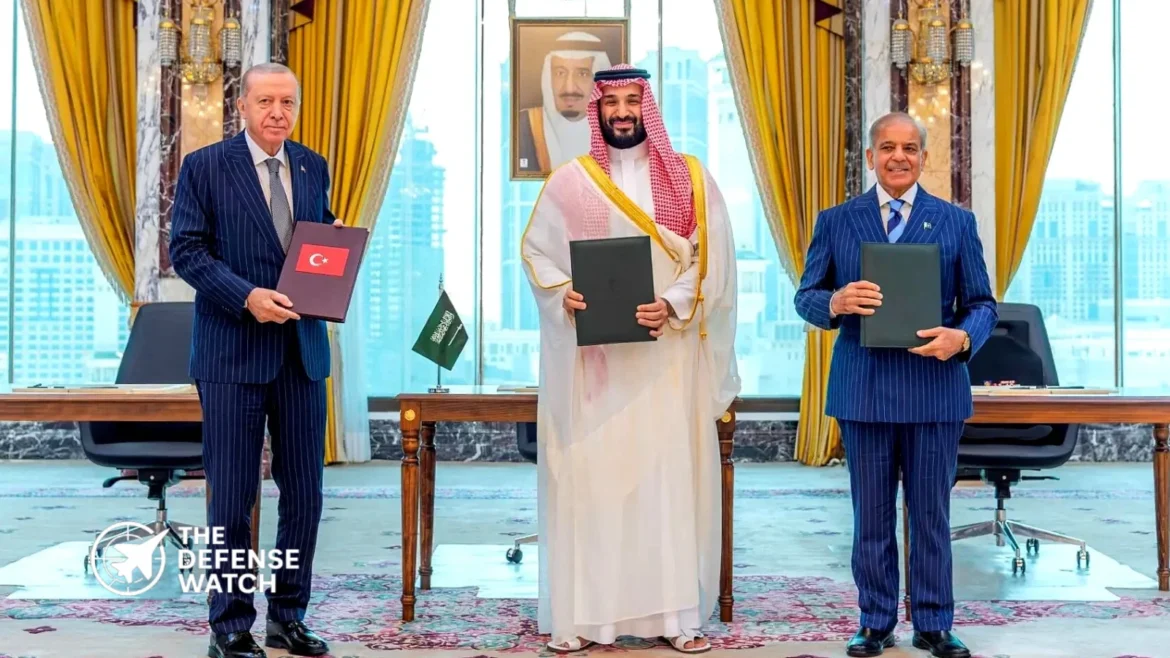
The Mecca Defense Pact became reality on Aug. 7, when Saudi Crown Prince Mohammed bin Salman, Turkish President Recep Tayyip Erdogan, and Pakistani Prime Minister Shehbaz Sharif signed the trilateral agreement at al-Safa Palace in Mecca. The signing followed nearly a year of negotiation and came a day after Sharif, joined by Pakistani army chief Field Marshal Asim Munir, performed Umrah at Islam’s holiest site.
The core provision is unambiguous: an armed attack against any one of the three states will be regarded as an attack against them all. Pakistan’s Foreign Ministry framed the language as intended to “strengthen collective deterrence,” a formulation that closely mirrors NATO’s Article 5 mutual-defense clause. A Turkish official told Reuters the pact remains open to additional regional members, raising the possibility that the current trilateral framework could expand into a broader coalition.
Unlike NATO’s founding treaty, the Mecca Joint Defence Agreement does not specify the military actions each signatory would be obligated to take if a partner came under attack — a deliberate ambiguity that gives all three governments room to calibrate their response short of automatic military intervention.
Why Now: The Iran War Is The Backdrop
The timing is inseparable from the regional war that has run since the United States and Israel struck Iran on Feb. 28, 2026. In the months since, Iran and allied forces — including Houthi fighters in Yemen and Shia militias in Iraq — have launched attacks on Saudi Arabia and other Gulf states, including Kuwait, Bahrain, Qatar, the UAE, Oman, and Jordan, disrupting energy shipments and closing off much of the Strait of Hormuz at various points.
For Riyadh, the conflict has directly imperiled oil exports and the kingdom’s Vision 2030 development agenda while raising pointed questions about the durability of its long-standing US security guarantee. Analysts at the Atlantic Council noted that Gulf states are increasingly reluctant to bank on Washington’s protection, particularly given what Saudi officials view as an unpredictable American posture under the current administration.
The Mecca pact builds directly on a bilateral Strategic Mutual Defence Agreement that Saudi Arabia and Pakistan signed in September 2025, which already contained similar aggression-against-one, aggression-against-both language. Turkey’s formal accession this month converts that bilateral arrangement into a three-way structure spanning South Asia, the Gulf, and NATO’s southeastern flank.
What Each Country Brings To The Table
The Mecca Defense Pact draws its geopolitical weight from the complementary military and economic assets each signatory contributes:
- Pakistan — The only nuclear-armed Muslim-majority state, with a large, combat-experienced military and a domestic fighter jet program. Islamabad co-produces the JF-17 Thunder with China and has decades of experience training and advising Saudi forces.
- Turkey — NATO’s second-largest military by personnel, with an expanding indigenous defense industrial base spanning armed drones, licensed F-16 production, and an in-development fifth-generation fighter program.
- Saudi Arabia — The Arab world’s largest economy and a top global oil exporter, offering substantial financial and technology-investment capacity to underwrite joint defense-industrial projects with its two partners.
Rich Outzen, a nonresident senior fellow at the Atlantic Council’s Turkey Program, said the agreement carries “military operational, defense industrial, and diplomatic advantages” for each signatory, with Turkish defense manufacturers positioned to benefit from expanded commercial access to Gulf markets.
The Nuclear Umbrella Question
No provision of the Mecca Joint Defence Agreement explicitly extends Pakistan’s nuclear deterrent to Saudi Arabia or Turkey, and Islamabad has previously stated that nuclear weapons were “not on the radar” in its bilateral pact with Riyadh. Pakistan notably did not intervene militarily when Iran struck Saudi Arabia following the earlier 2025 agreement.
Still, defense analysts argue the ambiguity itself functions as a deterrent. Mansoor Ahmed of the Australian National University’s Strategic and Defence Studies Centre said Pakistan’s nuclear posture remains oriented primarily toward the perceived threat from India rather than any Middle Eastern contingency. But as regional commentary has noted, any adversary weighing a major strike on Saudi Arabia or Turkey must now factor in that a nuclear-armed state has formally declared such an attack to be an attack on itself — even without a codified extended-deterrence commitment.
Middle East Security Implications
Regional reaction has split along familiar fault lines. Iranian state media previously characterized the 2025 Saudi-Pakistan precursor pact as non-threatening, even describing it as a possible step toward a broader regional security framework. Analysts now suggest Tehran faces a starkly different calculus: a nuclear-armed Pakistan and NATO’s second-largest military anchored on either side of Iranian territory, both backed by Gulf financing.Israel has not issued an official government response to the Mecca Defense Pact. Analysts described the timing as significant given Israel’s stalled normalization track with Saudi Arabia and its deteriorating relationship with Turkey. A security architecture built on Islamic solidarity rather than the Abraham Accords framework is, by definition, one Israeli intelligence services cannot directly monitor or shape from the inside.Gulf policy analysts have also floated comparisons to a “Sunni NATO,” though officials from all three signatory states have publicly insisted the pact is defensive in nature and not directed at any specific country.
Pakistan Economy: The Financial Dividend
For Pakistan, the strategic upside may be matched — or exceeded — by the economic one. Together, Pakistan, Saudi Arabia, and Turkey represent a combined economic bloc worth more than $3 trillion: Turkey’s economy is valued at roughly $1.4 trillion, Saudi Arabia’s at nearly $1.28 trillion, and Pakistan’s at approximately $410-420 billion.Riyadh has already signaled intent to deepen its financial footprint in Pakistan through the Special Investment Facilitation Council, with plans for up to $10 billion in investment across mining, oil refining, petrochemicals, renewable energy, agriculture, logistics, tourism, ports, and digital infrastructure. Flagship projects under discussion include Saudi participation in the Reko Diq copper and gold project and a proposed oil refinery and petrochemical complex.A Pakistani security official told Middle East Eye that the country’s military strength “is becoming an economic asset as well as a strategic one” — a framing that captures how Islamabad’s defense-pact currency is increasingly convertible into Gulf capital at a moment when Pakistan is working to stabilize growth, expand exports, and shore up energy security.
Expert Analysis: Impact On The Global Defense Sector
Set aside the mutual-defense clause for a moment, and the more consequential story for the global arms market is industrial, not military. The Mecca pact formalizes a defense-industrial integration track that has been building since at least 2023, and it is already narrowing the gap between US/Western arms suppliers and a rising Turkish-Gulf production axis.
Turkey’s export curve is the pact’s real leverage
Turkish defense and aerospace exports hit a record $10.054 billion in 2025, up 48.8% year-on-year, and the country logged another $5.79 billion in the first seven months of 2026 alone — a 26.2% year-on-year increase. Baykar, the maker of the Bayraktar and Akinci drone families, generated $2.2 billion in export revenue in 2025, or 88% of its total sales. That trajectory is precisely what Riyadh is now buying into: since 2023, Saudi Arabian Military Industries (SAMI) has signed successive localization deals with Baykar and, more recently, with ULAQ Global Autonomous Systems for unmanned surface vessels — and Ankara has separately discussed a defense package worth as much as $6 billion covering warships, armor, and missiles, alongside potential Saudi participation in Turkey’s KAAN fifth-generation fighter program.
Localization, not just sales, is the shift worth watching
Saudi Arabia’s Vision 2030 defense-localization target sits near 25% of procurement spending sourced domestically, and the Mecca framework gives Riyadh a formal channel to embed Turkish production know-how — drone airframes, sensors, and eventually naval systems — inside Saudi industry rather than simply importing finished platforms. Turkey is already building four MILGEM-derived Jinnah-class frigates for the Pakistan Navy, split between shipyards in Istanbul and Karachi, a template that could plausibly extend to Saudi yards. For a Western defense industrial base accustomed to Gulf states as pure end-users, that is a structural change in the customer relationship, not a one-off contract.
The pact narrows, without closing, the gap with US and European suppliers
Riyadh, Ankara, and Islamabad remain heavily dependent on American and European platforms — F-15s, Patriot batteries, and Eurofighters in the Saudi inventory; F-16s and NATO interoperability in Turkey’s; and a mixed US-Chinese-European inventory in Pakistan’s. Nothing in the Mecca agreement displaces those relationships in the near term. What it does is give the three signatories a pooled alternative supply chain for categories — armed drones, unmanned surface vessels, frigates, potentially fighter aircraft — where US and European export controls, end-user agreements, and political conditionality have historically constrained Gulf and South Asian buyers. Saudi officials have been explicit that the goal is “sustainable, self-reliant capabilities,” not a bloc built around any single adversary.
For Western primes, the practical read is competitive pressure at the margins, not displacement
Turkish drone and naval platforms are materially cheaper than comparable Western systems and now come with a credible path to co-production inside the buyer’s own borders — a proposition few US or European suppliers currently match in the Gulf. Expect continued Saudi and Pakistani diversification toward Turkish unmanned systems and naval hulls in the near term, with the fighter-aircraft and air-defense segments remaining the primary battleground where US and European suppliers still hold a durable technological edge.
Regional Order And What Comes Next
Whether the Mecca Joint Defence Agreement evolves into a durable, institutionalized security bloc — or remains a symbolically weighty but operationally vague declaration — will depend on follow-through that has not yet been tested in combat. The agreement’s open-ended language leaves open both an expansion to additional Muslim-majority states and the question of how member militaries would actually respond if the mutual-defense clause were invoked.
For now, the pact formalizes something that has been building for years: growing security coordination among regional middle powers unwilling to rely solely on Washington, at a moment when the Iran war has made that calculation harder to avoid.
Executive Summary:
Rheinmetall CEO Armin Papperger says he has no intention of stepping down despite round-the-clock security linked to alleged threats against him. The comments come as Germany’s largest defense contractor expands weapons production, supports Ukraine and broadens its role across Europe’s defense industrial base.
Rheinmetall CEO Rejects Pressure Amid Security Threats
Rheinmetall CEO Armin Papperger says he will remain in his position despite heightened personal security measures and alleged threats connected to his company’s support for Ukraine.
In comments released Aug. 9 by the Deutsche Presse-Agentur, Papperger said that backing away from the responsibilities of leading a major defense company was not an option. He said people unable to withstand the pressure should not hold such positions.
Papperger, 63, has been Rheinmetall’s chief executive since 2013. The company has become one of Europe’s most important defense manufacturers as Germany and other NATO members accelerate efforts to rebuild military stocks and expand domestic production capacity.
The security concerns surrounding Papperger are not new. German authorities significantly increased his protection in 2024 following reports that Western intelligence agencies had disrupted an alleged Russian plot targeting him. German public broadcaster ARD later reported that security officials had detected suspicious activity but characterized the precise nature of the threat as unclear.
Papperger Says He Will Stay
Papperger said he currently has a contract extending for another three and a half years and indicated that he has no plans to leave Rheinmetall.
He also acknowledged the unusual security environment surrounding his position. According to reports, Papperger said his property had previously been targeted by a fire and that demonstrations had taken place outside his home. He said German authorities were protecting him as far as possible.
The German defense executive continues to appear publicly at major industrial and political events while accompanied by security personnel.
His continued role matters because Rheinmetall’s business has expanded substantially beyond traditional weapons manufacturing. The company now operates across land systems, weapons and ammunition, air defense, digital systems and naval capabilities.
Why Rheinmetall Has Become Strategically Important
Rheinmetall’s growing importance is closely tied to Europe’s effort to rebuild military capacity after decades of relatively limited defense investment.
The company’s 2025 results show the scale of that expansion. Rheinmetall reported €9.94 billion in sales, a 29% increase from 2024, while its operating result rose 33% to €1.84 billion. Its order backlog reached €63.8 billion at the end of 2025, up 36% year over year.
Rheinmetall entered 2026 expecting another major increase in activity.
| Rheinmetall Indicator | 2025 Result | 2026 Guidance |
|---|---|---|
| Sales | €9.94 billion | €14.0 billion to €14.5 billion |
| Sales growth | 29% | 40% to 45% |
| Operating result | €1.84 billion | Margin around 19% |
| Order backlog | €63.8 billion | Continued major expansion |
Source: Rheinmetall’s 2025 annual results and 2026 guidance.
That growth reflects sustained demand for ammunition, armored vehicles, air defense systems and other military equipment across Germany and allied countries.
Rheinmetall has also increased its role in areas that are strategically important to NATO’s ability to sustain a prolonged conflict, including artillery ammunition, air defense and missile production.
The Threat Extends Beyond One Executive
The security issue surrounding Papperger is part of a wider concern among European governments about espionage, sabotage and other forms of hostile activity against defense companies.
German intelligence services have warned defense-industry personnel to remain particularly vigilant, citing increased risks associated with espionage and sabotage attributed to Russian state actors. The warning reportedly included concerns about potential targeted attacks against individuals in senior management positions depending on developments in the Ukraine war.
This creates a different security problem from conventional military attacks.
Defense companies are increasingly part of the strategic infrastructure of NATO countries. Their factories, logistics networks, engineering teams and executives can influence military readiness even when they are located hundreds of miles from an active battlefield.
The recent security environment around German infrastructure illustrates the broader challenge. A drone carrying explosives was discovered at Leipzig/Halle Airport in August, prompting German authorities to investigate what officials described as a serious hybrid-security concern. No perpetrator has been publicly established in connection with that incident.
For defense manufacturers, the implication is that physical security increasingly has to be integrated with cybersecurity, counter-drone protection, intelligence monitoring and personnel security.
Rheinmetall Is Expanding the Industrial Base
Rheinmetall’s expansion is not limited to existing production lines.
In July, the company announced plans with Lockheed Martin to establish production of the Army Tactical Missile System, or ATACMS, at Rheinmetall’s Unterlüß facility in Germany. The companies described the project as the first and only ATACMS production facility outside the United States.
The arrangement is strategically significant for both sides of the Atlantic.
For Europe, localized production can reduce dependence on long-distance supply chains and provide additional manufacturing capacity for weapons already used by allied forces.
For the United States, cooperation with European manufacturers can help expand the wider allied industrial base at a time when American missile inventories and production capacity face heavy demand.
Reuters reported Aug. 7 that Rheinmetall expects the ATACMS venture to take time to reach meaningful production levels, underscoring a broader problem facing Western militaries: expanding a sophisticated missile production line cannot be achieved simply by adding workers or increasing factory hours.
Production depends on specialized components, energetics, testing infrastructure, tooling, qualified suppliers and regulatory approvals.
Ammunition Capacity Is Another Priority
Rheinmetall is also investing heavily in ammunition manufacturing.
The company said in July that it was expanding its propellant production capability at its Nitrochemie Aschau site as part of its broader Project Firepower initiative. The goal is to strengthen the supply chain for ammunition components and reduce potential bottlenecks in areas such as propellants, explosives and fuzes.
This is particularly relevant after the Ukraine war demonstrated how quickly artillery ammunition can be consumed during sustained high-intensity combat.
The industrial lesson for NATO is straightforward: stockpiles alone are not enough. Alliances need manufacturing capacity capable of replacing weapons and ammunition at wartime consumption rates.
Rheinmetall’s Expanding Role in European Defense
Rheinmetall’s strategic position has also widened through acquisitions and new partnerships.
The company completed its acquisition of Naval Vessels Lürssen in early 2026, giving it a larger presence in naval systems and allowing it to compete across a wider portion of the German military procurement market. Rheinmetall said its naval activities now extend from unmanned naval vehicles to corvettes and frigates.
The company is also expanding into space-based intelligence and surveillance through Rheinmetall ICEYE Space Solutions.
That diversification matters because European governments are increasingly seeking defense suppliers capable of integrating multiple domains rather than providing individual weapons in isolation.
Rheinmetall’s portfolio now includes land combat systems, ammunition, air defense, digital networks, naval platforms and space-based intelligence capabilities.
Implications For NATO And The United States
The security situation surrounding Papperger illustrates a broader change in the defense industry.
Major European contractors are no longer simply commercial suppliers competing for peacetime procurement contracts. They are increasingly treated as strategic assets supporting national and allied military readiness.
That shift has several implications for the United States.
First, a stronger European defense industrial base can reduce pressure on U.S. production lines. Additional European capacity for ammunition, missiles, armored vehicles and air defense systems gives NATO more options during a prolonged crisis.
Second, industrial cooperation is becoming increasingly important. The Rheinmetall-Lockheed Martin ATACMS project demonstrates how American defense technology can be paired with European manufacturing capacity.
Third, protecting defense companies is becoming part of national security policy. Security measures increasingly have to cover not only factories and classified information but also senior executives, engineers, supply chains and critical infrastructure.
The challenge is therefore larger than the personal security of one executive.
Papperger’s decision to remain at Rheinmetall comes as the company assumes a larger role in rebuilding European military capacity. His comments underline how the defense industry’s transformation is occurring alongside a more contested security environment in which industrial infrastructure and personnel can themselves become targets.
For Germany and its NATO partners, the strategic objective is not simply to manufacture more weapons. It is to build an industrial base that can continue operating, expanding and supplying allied forces under sustained pressure.
Executive Summary:
Saudi Arabia, Pakistan and Turkey signed the Mecca Joint Defense Agreement on Aug. 7, creating a trilateral framework under which an armed attack against one member is regarded as an attack against all three. The agreement strengthens collective deterrence and defense cooperation, while its signatories stress that it is defensive and not directed against any specific country.
Saudi Arabia, Pakistan And Turkey Establish New Defense Framework
The Mecca Joint Defense Agreement brings Saudi Arabia, Pakistan and Turkey into a new collective security framework at a time of heightened instability across the Middle East. The agreement was signed in Mecca on Aug. 7 by Saudi Crown Prince Mohammed bin Salman, Turkish President Recep Tayyip Erdogan and Pakistani Prime Minister Shehbaz Sharif.
The central provision states that an armed attack against any one of the three countries will be regarded as an attack against all three. The language creates a collective-defense commitment, although the agreement does not publicly specify an automatic military response or establish detailed force commitments comparable to NATO’s integrated military structure.
The agreement is significant because it formalizes defense cooperation among three countries with different but complementary military capabilities. Turkey is a NATO member with a large conventional military and a growing domestic defense industry. Pakistan contributes extensive military experience and a nuclear deterrent, while Saudi Arabia provides substantial economic resources and a major regional security role.
From Bilateral Pact To Trilateral Security Arrangement
The new framework builds on the Strategic Mutual Defense Agreement signed by Saudi Arabia and Pakistan in September 2025. That earlier agreement also established a collective-defense principle under which aggression against either country would be treated as aggression against both.
The addition of Turkey represents a major expansion of that security relationship.
The development was not unexpected. In January 2026, Turkish officials acknowledged discussions with Pakistan and Saudi Arabia over broader defense cooperation. At the time, Turkish Foreign Minister Hakan Fidan said talks were underway but that no agreement had yet been signed.
By August, those negotiations had produced a formal trilateral agreement.
Reuters reported that the agreement had been under discussion for more than two years and that the three governments intend to establish institutional mechanisms for cooperation. Fidan said a ministerial committee would be created, alongside a permanent secretariat in Saudi Arabia.
Agreement Emphasizes Deterrence, Not A Named Adversary
The Mecca Joint Defense Agreement has attracted attention because of its collective-defense language, but officials from the three countries have been careful to describe it as defensive.
Fidan said Aug. 8 that the agreement was not directed against Iran or any other country. He said the pact is intended to provide a general security commitment and that the participating states would determine the nature and scale of assistance following an attack.
Pakistan’s Foreign Minister Ishaq Dar similarly described the agreement as purely defensive and said it was not aimed at a particular state. He also said the framework remains open to other countries that support its principles.
That distinction matters. The agreement establishes a political and strategic commitment to collective defense, but the available public information does not indicate the creation of a permanently integrated military command, standing trilateral force or automatic deployment mechanism.
In practical terms, the pact provides a framework through which the three governments can coordinate responses, share capabilities and strengthen deterrence without replacing their existing bilateral and multilateral defense arrangements.
Turkey Adds Defense Industry And Military Capacity
Turkey’s participation adds an important industrial and military dimension to the arrangement.
Ankara has developed a broad domestic defense sector spanning unmanned aircraft, air defense, precision weapons, armored vehicles, naval systems and combat aircraft programs. Turkish defense companies have also expanded their export presence across the Middle East and other markets.
Turkey’s military relationship with Saudi Arabia has grown alongside this defense-industrial expansion. The two countries have increased cooperation in areas including unmanned systems and defense technology.
For Pakistan, Turkish defense cooperation also provides another channel for military modernization and technology collaboration. Islamabad and Ankara have maintained long-standing defense ties, including cooperation involving naval platforms, aircraft and other military systems.
The trilateral framework could therefore provide a political umbrella for deeper defense-industrial cooperation, although the agreement itself does not announce specific weapons contracts.
Saudi Arabia Gains A Broader Security Partnership
For Riyadh, the agreement expands its formal defense relationships beyond the existing Saudi-Pakistani arrangement.
Saudi Arabia has invested heavily in air defense, combat aircraft, missiles, unmanned systems and other military capabilities as it seeks to protect critical infrastructure and strategic facilities. The kingdom’s security concerns have increased as regional conflicts have produced missile, drone and maritime threats.
Pakistan has already demonstrated its willingness to support Saudi security cooperation under the bilateral framework. In April, Saudi authorities confirmed the arrival of Pakistani military personnel and fighter aircraft in the kingdom to strengthen joint defense cooperation.
The new trilateral pact creates a wider political framework around those relationships.
Turkey also brings a NATO-standard military structure and experience operating alongside Western forces, while maintaining an increasingly independent defense-industrial base.
Pakistan’s Role Extends Beyond South Asia
The Mecca Joint Defense Agreement also gives Pakistan a larger formal role in a Middle Eastern security framework.
Islamabad has maintained close defense ties with Riyadh for decades and has previously deployed military personnel to Saudi Arabia. The two countries’ 2025 defense agreement already established a collective-defense relationship.
Pakistan’s position is particularly notable because it maintains relationships with Saudi Arabia, Turkey, Iran and other regional actors. Islamabad has also sought to position itself as a diplomatic channel during periods of heightened regional tension.
That balancing role could become increasingly important as the new defense framework develops.
At the same time, the agreement does not automatically mean Pakistan or Turkey would enter every conflict involving Saudi Arabia, or that Saudi Arabia would automatically participate in a future conflict involving Pakistan or Turkey. The public statements indicate that the form and scale of assistance would be determined through consultation.
Potential Expansion To Other Countries
One of the most important unanswered questions is whether the agreement will remain trilateral.
Fidan said Turkey’s leadership wants the framework to expand beyond the three founding members. He identified Egypt as a potential participant, although technical and political issues would have to be resolved before any expansion.
Expansion would significantly change the strategic weight of the arrangement.
Egypt would add another major Arab military power and give the framework a stronger geographic position linking the eastern Mediterranean, Red Sea and Gulf regions. However, there is currently no confirmed timetable for Egyptian accession.
The immediate priority appears to be establishing the institutions needed to make the existing agreement operational.
What The Pact Means For Regional Security
The significance of the Mecca Joint Defense Agreement lies less in the creation of a new military force and more in the formalization of political commitments among three major regional powers.
The agreement brings together countries with different strategic priorities and military strengths. Turkey offers defense technology and conventional military capacity. Pakistan provides military experience and strategic deterrence. Saudi Arabia contributes financial resources, regional influence and an important geographic position.
That combination could improve coordination in areas such as intelligence sharing, military planning, defense technology and counterterrorism.
However, the pact’s ultimate effectiveness will depend on how its collective-defense clause is implemented. NATO’s Article 5 operates within a much more developed institutional system, including integrated command structures, standardized procedures and decades of joint planning. The Mecca agreement is at an early stage and still needs to establish its mechanisms for consultation and implementation. Reuters reported that operational details are expected to be addressed through the planned ministerial committee.
The agreement therefore represents an important political development, but its military consequences will depend on decisions that have yet to be made.
A New Layer In Middle East Defense Cooperation
The signing of the Mecca pact marks a new stage in security cooperation between Saudi Arabia, Pakistan and Turkey.
It does not replace existing alliances or defense partnerships, and its signatories have explicitly rejected the idea that it is directed against a particular country. Instead, the agreement establishes a framework for collective deterrence and deeper defense coordination.
Its long-term importance will depend on whether the three governments translate the political commitment into regular military cooperation, shared planning and concrete defense programs.
For now, the agreement gives Saudi Arabia, Pakistan and Turkey a formal mechanism for coordinating their security interests while leaving the scope of future military cooperation open.
Executive Summary:
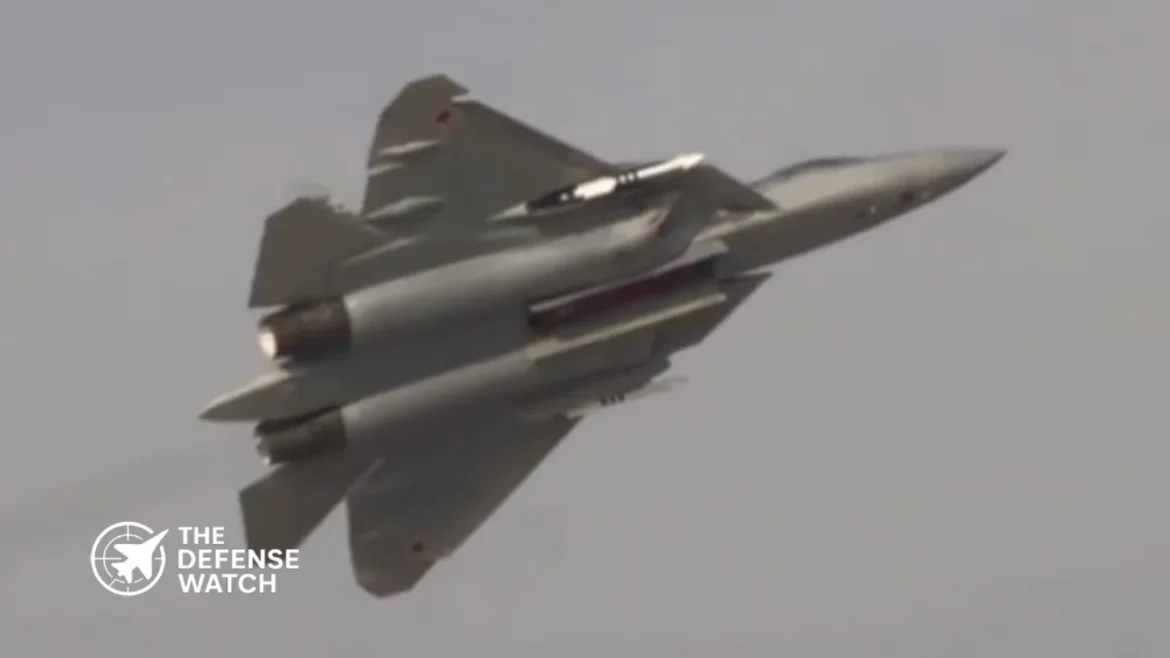
India has confirmed it is not pursuing the procurement of Russia’s Su-57E fifth-generation fighter in the near term. Instead, New Delhi is prioritizing upgrades for its Su-30MKI fleet, additional Rafale fighters, and development of the indigenous Advanced Medium Combat Aircraft (AMCA), reflecting a long-term strategy focused on capability enhancement and domestic defense production.
India Prioritizes Su-30MKI Modernization Over Su-57E Fighter Purchase
India’s decision to postpone any potential acquisition of Russia’s Su-57E fighter jet signals a significant shift in its fighter modernization roadmap. Rather than introducing another foreign combat aircraft into its inventory, New Delhi is concentrating on upgrading its existing fleet while accelerating indigenous aerospace development.
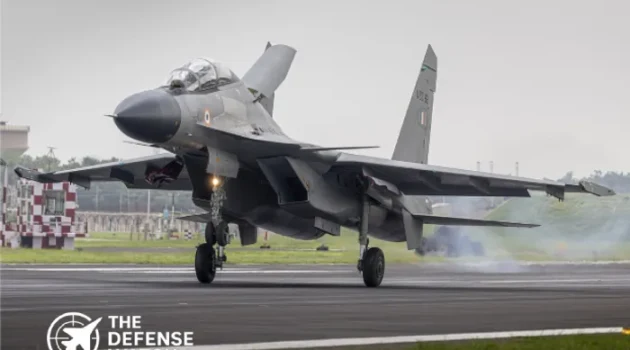
The announcement came from India’s Defense Ministry Secretary Rajesh Kumar Singh, who confirmed that the government is not considering the purchase of a new Sukhoi model at this stage. Instead, the Ministry’s immediate focus is on modernizing approximately 260 Su-30MKI multirole fighters currently serving with the Indian Air Force (IAF).
The move aligns with India’s broader modernization strategy, which emphasizes extending the operational life of proven platforms while investing in domestic defense manufacturing.
India Focuses On Upgrading Its Largest Fighter Fleet
The Su-30MKI remains the backbone of the Indian Air Force, accounting for a substantial portion of its frontline combat capability. Originally developed jointly by Russia and India, the aircraft has undergone continuous upgrades since entering service.
The planned modernization program is expected to introduce improvements across multiple areas, including:
- Advanced mission computers
- Modern active electronically scanned array (AESA) radar technology
- Enhanced electronic warfare systems
- Improved long-range weapons integration
- Updated cockpit avionics
- Expanded network-centric warfare capabilities
By upgrading the existing fleet instead of purchasing an entirely new fighter platform, India can improve operational capability while reducing logistical complexity and controlling long-term sustainment costs.
Defense planners have increasingly emphasized maximizing the effectiveness of aircraft already in service, particularly as regional security dynamics continue to evolve.
Su-57E Purchase Not Under Consideration
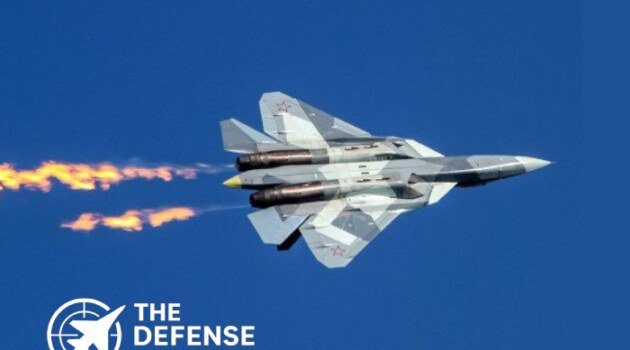
Russia has actively promoted the export version of its fifth-generation Su-57E fighter to international customers, with India frequently mentioned as a potential buyer because of its longstanding defense relationship with Moscow.
However, Rajesh Kumar Singh stated that India is not evaluating a new Sukhoi aircraft at present.
The statement effectively removes the Su-57E from India’s near-term procurement agenda, although it does not necessarily rule out future discussions should operational requirements change.
The announcement also reflects India’s preference to balance foreign acquisitions with indigenous defense development rather than expanding dependence on another imported combat aircraft.
Rafale Fleet Expansion Remains A Priority
While ruling out the Su-57E for now, India continues to strengthen its fighter inventory through additional procurement of the French-built Rafale.
The Indian Air Force already operates Rafale fighters, and New Delhi has approved further acquisitions to expand advanced combat capabilities while addressing squadron strength requirements.
The Rafale offers modern sensors, advanced electronic warfare capabilities, precision strike weapons, and interoperability with India’s existing Western-origin systems.
Combined with upgraded Su-30MKIs, additional Rafales provide the IAF with a capable mix of heavy and multirole fighters during the transition toward future indigenous platforms.
AMCA Represents India’s Long-Term Vision
India’s long-term fighter modernization strategy increasingly centers on the Advanced Medium Combat Aircraft (AMCA) program.
The AMCA is India’s indigenous fifth-generation fighter project, designed to incorporate low observable characteristics, advanced sensors, internal weapons carriage, and modern network-centric capabilities.
Unlike purchasing another foreign fifth-generation aircraft, investing in AMCA supports India’s broader objectives under its domestic defense manufacturing initiatives by strengthening the national aerospace industry and reducing future dependence on overseas suppliers.
Although the AMCA remains under development, it represents the centerpiece of India’s next-generation combat aviation plans.
Analysis: Modernization Over Fleet Expansion
India’s latest position highlights an increasingly pragmatic procurement strategy.
Rather than introducing another complex fighter type into service, the government appears focused on maximizing existing investments while preparing for domestically produced next-generation aircraft.
Upgrading approximately 260 Su-30MKIs provides a substantial capability increase across the Air Force without requiring the infrastructure, training, maintenance, and supply chain associated with operating an entirely new fleet.
At the same time, additional Rafales help address immediate operational needs while the AMCA progresses through development.
This balanced approach allows India to maintain combat readiness in the near term while supporting longer-term industrial and technological goals.
From a force planning perspective, the decision also simplifies logistics by concentrating resources on aircraft already integrated into the Indian Air Force rather than introducing another high-end platform.
As regional air forces continue to modernize, India’s strategy suggests that enhancing existing capabilities and accelerating indigenous aerospace development remain higher priorities than pursuing a near-term purchase of the Russian Su-57E.

Executive Summary:
The Pentagon is moving to replenish U.S. long range precision missile inventories after extensive combat operations during the Iran war reportedly consumed much of the Army’s available stockpile. The development highlights the growing importance of industrial capacity and munitions production in sustaining modern high intensity conflicts.
Pentagon Moves To Restore Long Range Precision Missile Inventory
The long range precision missile inventory has become a renewed focus for the Pentagon after reports indicated that U.S. forces expended much of their stockpile during the five month military campaign against Iran. According to multiple sources familiar with internal military data, the Army used nearly all available Army Tactical Missile Systems (ATACMS) and Precision Strike Missiles (PrSM) during sustained combat operations.
The reported depletion has prompted senior defense leaders to accelerate efforts to replenish critical munitions while maintaining readiness for other global contingencies, particularly in the Indo Pacific and Europe. Pentagon officials have continued to state that U.S. forces remain capable of executing assigned missions worldwide despite increased demand on missile inventories.
Precision Weapons Played A Central Role
ATACMS and the newer Precision Strike Missile are among the U.S. Army’s most valuable long range surface to surface strike weapons. Fired from both the M142 HIMARS and M270 Multiple Launch Rocket System, they enable commanders to strike command posts, logistics hubs, air defense sites, and other high value targets from stand off distances.
The PrSM entered combat for the first time earlier this year during operations against Iran, representing a major milestone in the Army’s long range fires modernization program. The missile offers greater range, improved accuracy, and future growth potential compared with the aging ATACMS it is designed to replace.
Military analysts note that these weapons are especially important for any future conflict involving highly contested environments where long range precision fires are essential to suppress enemy defenses before air and ground operations begin.
Production Capacity Faces New Pressure
One of the key lessons emerging from the Iran conflict is that modern warfare can consume precision guided munitions at a pace far exceeding peacetime production rates.
Defense officials have increasingly emphasized expanding manufacturing capacity for missiles, interceptors, and other advanced weapons. Industry partners including Lockheed Martin have already been increasing production of the Precision Strike Missile before the conflict, but rebuilding inventories is expected to require sustained investment and expanded industrial output.
A recent analysis by the Center for Strategic and International Studies estimated that restoring several critical U.S. missile inventories could take years because production of complex precision weapons cannot be rapidly expanded overnight.
Strategic Implications Beyond The Middle East
The reported drawdown has implications extending well beyond the Middle East.
Long range precision missiles form an important element of U.S. deterrence strategy against potential peer competitors. Defense planners have repeatedly identified these weapons as critical capabilities for operations in the Indo Pacific, where long distances and heavily defended targets require precision stand off strike systems.
Although officials have not disclosed remaining inventory levels, they continue to stress that the U.S. military retains sufficient combat capability while replenishment efforts continue. Pentagon spokesperson Sean Parnell recently said the Department has the resources needed to execute missions as directed by the President.
Analysis: Industrial Capacity Is Becoming A Strategic Weapon
The reported consumption of long range precision missiles underscores a broader shift in defense planning. Modern conflicts are increasingly testing not only battlefield capabilities but also the resilience of national defense industries.
Advanced precision weapons require specialized manufacturing, complex supply chains, and long production timelines. Even for the world’s largest defense budget, replacing sophisticated missiles cannot happen quickly.
For U.S. military planners, maintaining credible deterrence now depends on two equally important factors: possessing advanced weapons and sustaining the industrial capacity to replace them during prolonged operations. As defense budgets increasingly prioritize munitions production, manufacturing capacity itself is becoming a strategic advantage.
The Pentagon’s renewed emphasis on expanding missile production reflects this reality, ensuring that future operational demands do not outpace the nation’s ability to replenish critical precision strike capabilities.
Executive Summary:
The European Union’s member states increased combined defense spending to €418 billion in 2025, marking a 20% annual increase, according to the European Defence Agency. The trend reflects Europe’s sustained effort to strengthen military readiness, expand industrial capacity, and improve collective defense capabilities, with spending projected to approach €547 billion by 2029 if current growth continues.EU Defense Spending Climbs To Record Levels
EU defense spending reached €418 billion in 2025, representing approximately 2.2% of the European Union’s combined GDP, according to newly released data from the European Defence Agency (EDA). The increase marks the eleventh consecutive year of higher military expenditure across the EU’s 27 member states.
The EDA projects spending will continue rising to approximately €454 billion in 2026, with current trends indicating total defense expenditure could approach €547 billion by 2029. Officials say the increase reflects sustained efforts to strengthen military readiness amid a changing European security environment.
Investment Shifts Toward Equipment And Research
The latest figures show that growth is not limited to overall defense budgets.
Defense equipment procurement climbed to €115 billion in 2025, while investment spending accounted for more than 32% of total defense expenditure, exceeding the EDA’s collective benchmark. Collaborative procurement represented roughly 24% of equipment purchases among participating countries.
Research and development spending also continued to expand, reaching €17 billion in 2025 and projected to increase to €20 billion in 2026. According to the agency, defense investment is expected to account for 36% of total military expenditure next year.
Most Member States Now Meet NATO’s 2 Percent Benchmark
The report notes that 23 of the EU’s 27 member states spent at least 2% of GDP on defense during 2025, a significant increase from previous years. The figures illustrate how European governments have continued raising military budgets following several years of heightened security concerns across the continent.
EDA Chief Executive André Denk said member states are making unprecedented investments that, together with broader EU initiatives under the Defense Readiness 2030 framework, are intended to strengthen defense capabilities, industrial production, readiness, and resilience.
Analysis: More Spending Does Not Automatically Mean More Capability
While the record increase demonstrates political commitment, the effectiveness of EU defense spending will depend on how efficiently governments translate larger budgets into deployable military capability.
Europe has historically faced challenges in fragmented procurement, multiple weapons platforms, and overlapping national programs. Although collaborative procurement has improved, it still accounts for less than one quarter of total equipment purchases, indicating significant room for greater coordination.
Industrial production capacity will also become increasingly important. Expanding ammunition output, missile production, air defense manufacturing, and defense electronics requires long term investment beyond annual budget increases. Simply allocating additional funding does not immediately translate into operational capability if supply chains and manufacturing capacity remain constrained.
For NATO and U.S. defense planners, Europe’s higher spending could gradually strengthen burden sharing across the alliance. Increased European procurement may improve readiness while creating additional opportunities for joint industrial programs involving both European and American defense companies.
The continued emphasis on research and development is equally significant. Higher R&D investment supports emerging technologies including autonomous systems, advanced sensors, cyber defense, electronic warfare, and next generation air and missile defense capabilities that are expected to shape future military modernization.
Looking Ahead
The projected rise toward nearly €547 billion by 2029 suggests Europe’s defense buildup remains a multi year effort rather than a short term response. Whether these investments ultimately deliver stronger collective military capability will depend on sustained political commitment, coordinated procurement, and continued expansion of the European defense industrial base.
Executive Summary:
The U.S. Department of Defense is conducting a comprehensive review of its military posture across Europe that could significantly alter American force deployments. The review is designed to encourage European NATO members to assume greater responsibility for conventional defense while allowing Washington to rebalance resources toward other global priorities.US Europe Force Posture Review Signals Potential Shift In NATO Defense Strategy
The US Europe force posture review has emerged as one of the Pentagon’s most consequential strategic assessments in recent years, with the potential to reshape the American military footprint across the European continent.
While no force reductions have been formally announced, U.S. defense officials have made clear that the review is intended to ensure NATO’s European members assume primary responsibility for the alliance’s conventional defense. The initiative reflects a broader effort by Washington to adapt its global military posture while maintaining credible deterrence against Russia.
What The Pentagon Is Reviewing
The review, announced by Defense Secretary Pete Hegseth and led by Under Secretary of Defense for Policy Elbridge Colby, examines several key aspects of America’s military presence in Europe, including:
- Overall troop levels
- Permanent and rotational force deployments
- Air, naval, and ground force positioning
- Military basing arrangements
- Access agreements and overflight rights
- Infrastructure supporting NATO operations
According to Pentagon officials, the objective is not simply reducing forces but evaluating whether current deployments align with evolving U.S. national security priorities and NATO’s increasing defense capabilities.
Greater European Responsibility
A central theme of the review is encouraging European allies to carry a larger share of the burden for defending the continent.
The Pentagon has repeatedly stated that NATO should evolve into what officials have described as a stronger and more balanced alliance in which European members lead conventional defense while the United States continues to provide strategic capabilities, nuclear deterrence, and high-end military support when necessary.
This approach follows years of increasing European defense spending after Russia’s full-scale invasion of Ukraine in 2022. Several NATO members have expanded defense budgets, accelerated modernization programs, and strengthened forces deployed along the alliance’s eastern flank.
No Immediate Withdrawal Decision
Despite growing discussion surrounding America’s future military presence, defense officials have emphasized that the posture review does not automatically mean large-scale troop withdrawals.
Instead, the six-month assessment is intended to provide recommendations for future force structure based on strategic requirements, alliance commitments, and changing global security demands. Congress will also remain involved, as U.S. law establishes minimum troop thresholds for Europe without additional legislative review.
Strategic Context
The review comes as Washington faces increasing security challenges across multiple regions.
Alongside continued support for NATO deterrence, the United States is placing greater emphasis on long-term competition in the Indo-Pacific, particularly concerning China. Defense planners have argued that balancing commitments across Europe and the Pacific requires a careful reassessment of force allocation rather than maintaining Cold War-era deployment models.
Many defense analysts view the Europe posture review as part of a broader global force optimization effort rather than a retreat from NATO commitments. Studies from the Center for Strategic and International Studies have noted that future U.S. posture decisions will need to balance deterrence against Russia with emerging requirements elsewhere.
Implications For NATO
For NATO, the outcome could influence future planning in several areas:
- Increased European investment in conventional military capabilities.
- Expanded leadership roles for European member states within alliance operations.
- Continued U.S. focus on strategic enablers such as intelligence, missile defense, logistics, and nuclear deterrence.
- Potential adjustments to rotational deployments rather than wholesale withdrawals.
Military planners across Europe are closely monitoring the review because any future changes could affect force planning, infrastructure investments, and multinational exercises throughout the alliance.
Analysis: A Strategic Rebalance Rather Than A Strategic Retreat
The US Europe force posture review represents a strategic reassessment rather than a declaration of reduced American commitment to NATO.
The Pentagon has consistently framed the initiative around burden sharing, ensuring European allies possess sufficient capability to defend the continent while enabling the United States to address simultaneous challenges across multiple theaters. If implemented carefully, future adjustments could strengthen NATO by creating a more balanced distribution of responsibilities without weakening collective deterrence.
The review’s final recommendations are expected to shape U.S. defense planning in Europe for years to come and will likely influence NATO’s force posture, defense investment priorities, and alliance strategy well into the next decade.