

Table of Contents
The Top 5 U.S. fighter jets represent the cutting edge of American airpower, combining stealth, advanced sensors, superior weapons, and unmatched operational experience. As the backbone of U.S. air dominance, these jets reflect decades of technological innovation, defense investment, and combat requirements. Together, they ensure the United States maintains a decisive advantage in both contested and permissive airspace.
This article examines the United States’ leading fighter aircraft, their roles, capabilities, and strategic importance, providing a clear picture of why they remain the world’s benchmark for air combat performance.
The Top 5 U.S. Fighter Jets in Service Today
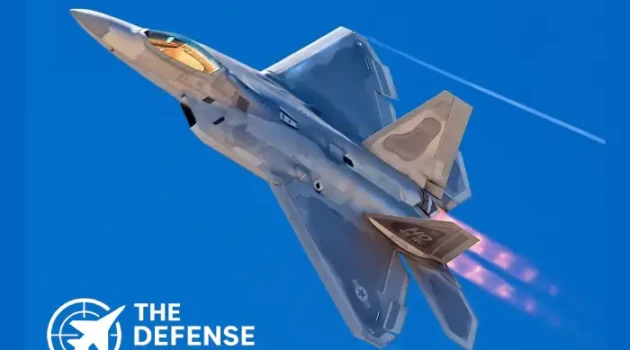
1. F-22 Raptor — America’s Premier Air-Dominance Stealth Fighter
The F-22 Raptor remains the world’s most capable air-superiority fighter. Designed for unmatched stealth, supercruise, and aerial agility, it delivers decisive first-look, first-shot, first-kill capability. Despite production ending in 2012, the Raptor continues to anchor high-end air dominance missions.
Key Features:
- Stealth + supercruise (Mach 1.8 without afterburner)
- Advanced AESA radar and sensor fusion
- Unmatched dogfighting performance
- Primary role: air superiority and offensive counter-air
Strategic Importance:
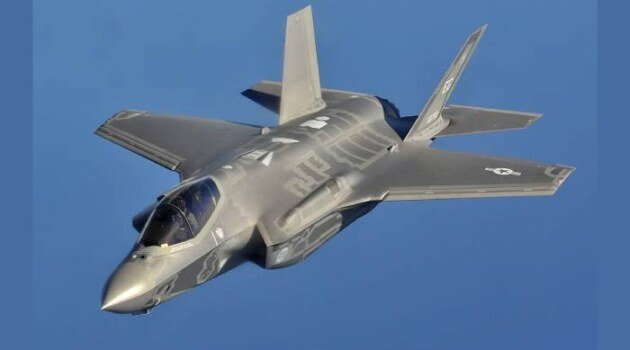
Essential for high-threat environments against near-peer adversaries like China and Russia.2. F-35A Lightning II — The U.S. Air Force’s Stealth Multirole Backbone
The F-35A is the most widely deployed fifth-generation fighter and the backbone of future U.S. tactical aviation. Its stealth, electronic warfare suite, and sensor fusion allow it to penetrate contested airspace, conduct precision strikes, and serve as an intelligence node.
Key Features:
- Stealth multirole design
- High survivability in denied environments
- Advanced networking, targeting sensors
- Continuous upgrades through Block 4
Strategic Importance:
The F-35A’s versatility, production scale, and global interoperability make it the cornerstone of U.S. and allied airpower.3. F-15EX Eagle II — The Heavyweight Missile Truck
The F-15EX Eagle II represents the modernized evolution of the legendary F-15 lineage. With expanded payload capacity and advanced avionics, it serves as a “missile truck” capable of launching long-range weapons, providing air dominance and deep-strike support.
Key Features:
- Carries up to 22 air-to-air missiles
- Latest fly-by-wire controls and advanced cockpit
- Open mission system for rapid upgrades
- High speed and altitude performance
Strategic Importance:
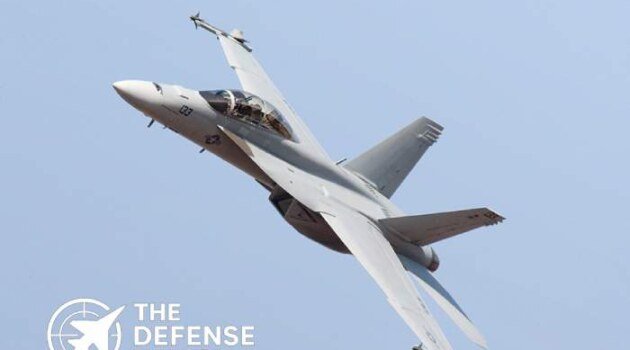
Complements stealth aircraft by delivering massed firepower from standoff range.4. F/A-18E/F Super Hornet — Carrier-Based Multirole Workhorse
The Super Hornet remains the primary U.S. Navy fighter, performing air-to-air combat, strike missions, and maritime interdiction. Its reliability and versatility make it a cornerstone of carrier air wings.
Key Features:
- Carrier-capable multirole platform
- APG-79 AESA radar
- Proven combat record
- Excellent maintainability at sea
Strategic Importance:
The only U.S. fighter qualified across all Navy carriers, ensuring continuous maritime airpower projection.5. F-16C/D Fighting Falcon — The USAF’s Combat-Proven Multirole Jet
The F-16 Fighting Falcon continues to serve as one of the most flexible airframes in U.S. inventory. Decades of upgrades—including modern radars, datalinks, and targeting systems—keep it relevant in modern air combat.
Key Features:
- Lightweight, agile design
- APG-83 AESA radar on many upgraded units
- Low operating cost
- Vast weapons compatibility
Strategic Importance:
Though aging, its global popularity and modernization programs ensure it remains integral for homeland defense, air policing, and secondary strike missions.How These Jets Shape U.S. Airpower
Each aircraft fills a different role within the U.S. airpower ecosystem:
- F-22 dominates high-threat airspace.
- F-35A penetrates defenses and conducts precision strikes.
- F-15EX provides standoff firepower and air dominance support.
- F/A-18E/F anchors naval aviation operations.
- F-16 provides flexible, cost-effective multirole capability.
This layered approach ensures the United States maintains superiority across air, land, and maritime theaters.
Additional Context: Modernization Trends
Recent modernization trends reflect shifting strategic priorities:
- Expansion of NGAD (Next-Generation Air Dominance) for sixth-generation capabilities
- Upgrades to F-35 Block 4 and open architecture
- Standoff weapons integration on the F-15EX
- Improved EW systems for F-22 and F/A-18E/F
- Continued service-life extensions for F-16
The U.S. fighter fleet is evolving to face high-end threats from China’s PLA Air Force, Russia, and emerging long-range missile threats.
Analysis: The Future of American Fighter Airpower
The United States is shifting toward a hybrid model of stealth dominance and high-capacity fighter support. While fifth-generation platforms like the F-22 and F-35 ensure survivability, aircraft such as the F-15EX and Super Hornet deliver payload mass and mission endurance.
Key insights:
- The U.S. remains the only nation with two operational fifth-generation fighter lines.
- F-35 production scale will define global airpower for decades.
- Carrier aviation remains central to Indo-Pacific strategy.
- The U.S. requires both stealth platforms and high-capacity 4.5-generation fighters for large-scale conflict scenarios.
Future developments—including NGAD, Collaborative Combat Aircraft (CCAs), and advanced EW—will further transform how U.S. fighter jets operate.
FAQs
What is the most advanced U.S. fighter jet today?The F-22 Raptor is widely regarded as the most advanced U.S. air-dominance fighter.
Which U.S. fighter jet is used by the most countries?The F-16 Fighting Falcon, operated by more than 25 nations worldwide.
What is the newest U.S. fighter jet in production?The F-15EX and the F-35A Block 4 are the most recent major production upgrades.
Which U.S. fighter jet carries the most weapons?The F-15EX can carry up to 22 air-to-air missiles, the highest of any U.S. fighter.
What jet will replace the F-22?The NGAD program is expected to produce America’s next air-dominance fighter by the 2030s.
Get real time update about this post category directly on your device, subscribe now.




2 comments
[…] Northrop reports Talon went from program launch to “weight on wheels” in roughly 15 months — a strikingly rapid pace for a jet-powered combat aircraft. […]
[…] South Korean officials view this as a strategic capability that reduces reliance on external suppliers and export restrictions. It also supports Seouls ambition to become a competitive exporter of advanced combat aircraft. […]