Table of Contents
Fighter jet generations explained is a common way military analysts describe how combat aircraft have evolved over time. The system groups fighter aircraft by shared design features, mission roles, and technology levels. While not an official U.S. military standard, the generational model is widely used by defense planners, aerospace engineers, and analysts to compare airpower capabilities across countries.
From early gun armed jets of the Cold War to stealthy networked platforms now entering service, fighter aircraft have changed how air forces fight, deter, and project power. This explainer outlines the defining characteristics of fighter jets from the first generation through the emerging sixth generation, with examples and operational context.
What Defines a Fighter Jet Generation
Fighter generations are shaped by major leaps in technology rather than strict timelines. Key factors include propulsion, avionics, sensors, weapons, stealth, and how aircraft operate within a broader combat network.
Not all countries agree on exact boundaries. Some aircraft blur generational lines due to upgrades or hybrid designs. Still, the framework remains useful for understanding capability gaps and modernization trends.
First Generation Fighter Jets
Early Jet Age and Subsonic Combat
First generation fighters emerged in the mid nineteen forties and early nineteen fifties. These aircraft were often direct adaptations of late World War Two designs, replacing propellers with jet engines.
Key traits included straight wings, limited radar or none at all, and reliance on guns rather than guided weapons. Flight performance improved over prop aircraft, but endurance and reliability were limited.
Examples
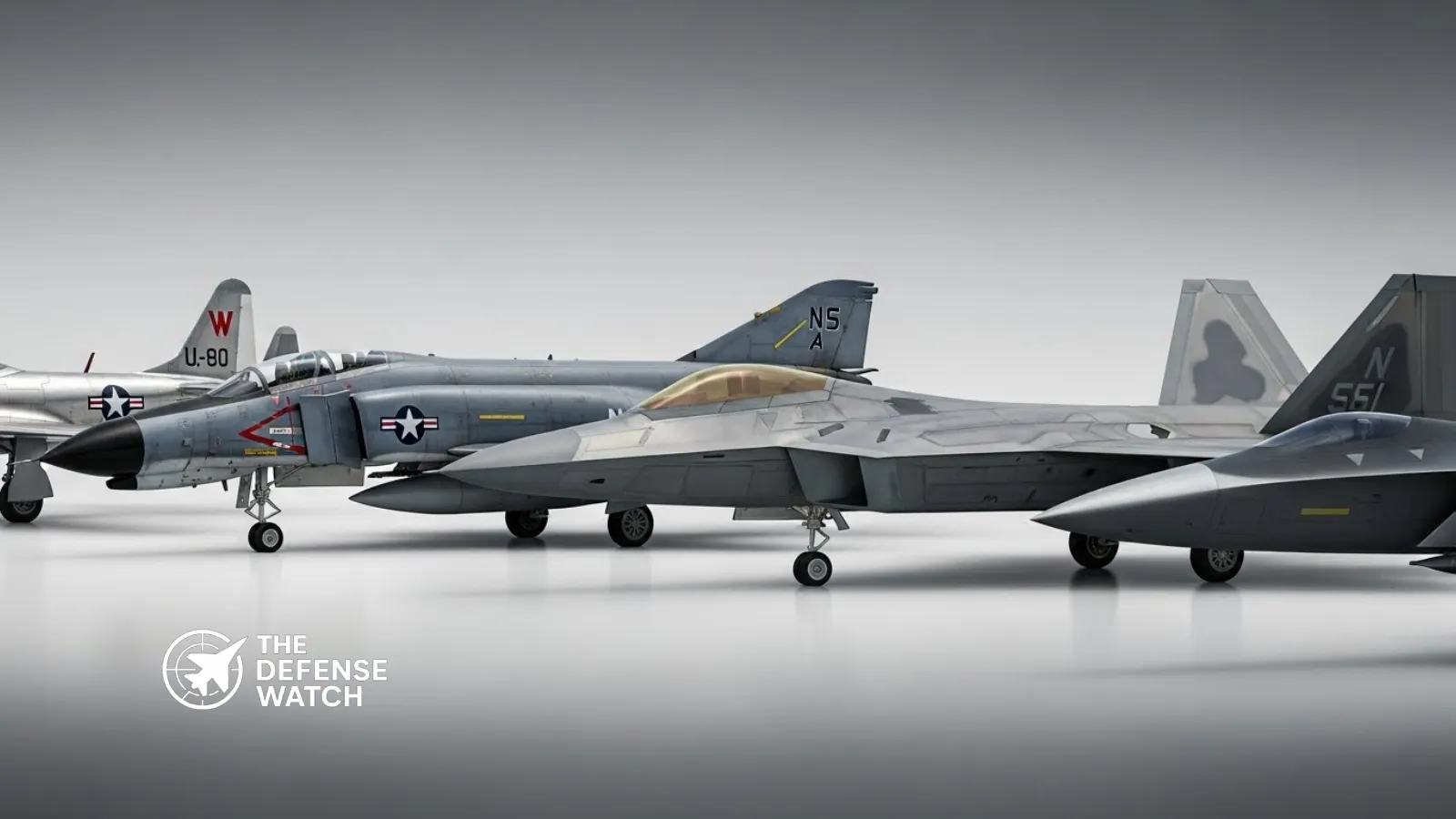
Notable first generation fighters include the Messerschmitt Me 262, Gloster Meteor, Lockheed P 80 Shooting Star, and Mikoyan Gurevich MiG 9.
These jets established the foundation for jet air combat but were quickly outpaced by faster and more capable designs.
Second Generation Fighter Jets
Supersonic Flight and Early Missiles
Second generation fighters entered service in the mid nineteen fifties. Swept wings and more powerful engines allowed sustained supersonic flight. Radar began to appear, though early systems were basic and unreliable.
This generation marked the introduction of air to air missiles, driven by the belief that dogfighting would become obsolete. Combat experience later challenged that assumption.
Examples
Representative aircraft include the MiG 21, F 104 Starfighter, English Electric Lightning, and Dassault Mirage III.
Many second generation fighters were produced in large numbers and exported globally, shaping Cold War air forces for decades.
Third Generation Fighter Jets
Multirole Capability and Improved Avionics
Third generation fighters arrived in the nineteen sixties and seventies. Lessons from Vietnam and Middle East conflicts led to renewed emphasis on maneuverability, guns, and pilot situational awareness.
Radar systems improved, beyond visual range missiles became more credible, and aircraft began to adopt true multirole designs capable of both air combat and ground attack.
Examples
Key third generation fighters include the F 4 Phantom II, MiG 23, MiG 25, Saab Viggen, and early variants of the Mirage F1.
These aircraft formed the backbone of many air forces well into the late Cold War.
Fourth Generation Fighter Jets
Agility, Sensors, and Digital Flight Control
Fourth generation fighters represent a major leap in capability. Entering service from the late nineteen seventies onward, they emphasized energy maneuverability, relaxed static stability, and fly by wire flight controls.
Advanced pulse Doppler radars, modern electronic warfare systems, and high off bore sight missiles transformed air combat.
Examples
Prominent fourth generation fighters include the F 15 Eagle, F 16 Fighting Falcon, F A 18 Hornet, Su 27 Flanker, and Mirage 2000.
Many remain in frontline service today after extensive upgrades.
Fourth Generation Plus Fighters
Incremental Advances Without Full Stealth
Fourth generation plus fighters build on earlier designs with improved avionics, active electronically scanned array radar, reduced radar signature, and better data links.
While not stealth aircraft, they are more survivable and capable in contested airspace.
Examples
Examples include the F A 18E F Super Hornet, Rafale, Eurofighter Typhoon, Su 30SM, Su 35, and JAS 39E Gripen.
These aircraft continue to dominate global fighter procurement due to lower cost and export availability.
Fifth Generation Fighter Jets
Stealth and Networked Warfare
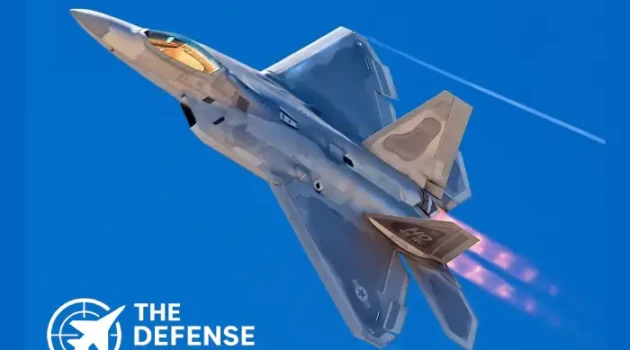
Fifth generation fighters are defined by low observable design, internal weapons carriage, sensor fusion, and secure data sharing. Stealth allows them to operate in heavily defended airspace while gathering and distributing targeting data.
These aircraft are designed as part of a system rather than standalone platforms.
Examples
Operational fifth generation fighters include the F 22 Raptor, F 35 Lightning II, J 20 Mighty Dragon, and Su 57 Felon.
Each reflects different national approaches to stealth, propulsion, and mission priorities.
Sixth Generation Fighter Jets
Next Step in Air Dominance
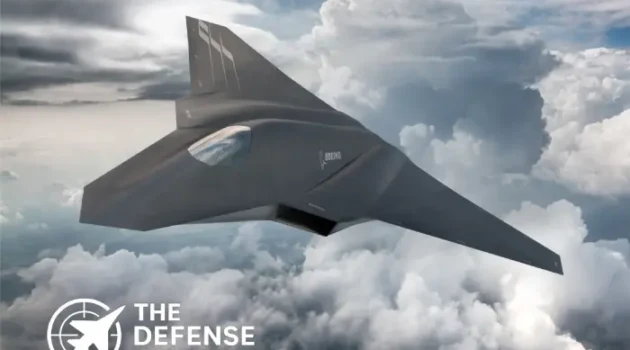
Sixth generation fighters remain under development, with programs in the United States, Europe, and Asia. These aircraft are expected to enter service in the mid twenty thirties or later.
Planned features include optionally crewed operation, integration with unmanned wingmen, advanced electronic warfare, adaptive engines, and expanded use of artificial intelligence.
Current Programs
Major efforts include the U.S. Next Generation Air Dominance program, the British Italian Japanese Global Combat Air Programme, and the Franco German Spanish Future Combat Air System.
Specific performance details remain classified or unconfirmed.
Analysis: Why Fighter Jet Generations Still Matter
Understanding fighter jet generations explained in clear terms helps frame debates about airpower balance and defense spending. While generational labels can oversimplify reality, they highlight where technology gaps may exist.
Modern air combat depends as much on sensors, networks, and support assets as on raw aircraft performance. A fourth generation plus fighter paired with strong intelligence and electronic warfare may outperform a fifth generation jet used in isolation.
As sixth generation programs advance, the focus is shifting from individual platforms to integrated air combat systems. This trend will shape procurement choices and alliance cooperation for decades.
FAQs
Are fighter generations officially defined by the U.S. military?No. Generational labels are analytical tools used by industry and analysts rather than formal doctrine.
Can older fighters compete with newer generations?Yes, when upgraded and used with strong support systems, though survivability may be limited in high threat environments.
Is stealth the main factor separating generations?Stealth is central to fifth generation fighters, but sensors, data fusion, and networking are equally important.
Will sixth generation fighters replace fifth generation aircraft?They are expected to complement rather than fully replace existing fleets for many years.
Do all countries follow the same generational model?No. Some nations define generations differently based on doctrine and industrial priorities.
Get real time update about this post category directly on your device, subscribe now.