Pentagon Requests 38 F-35A Fighters for U.S. Air Force in FY2027 Defense Budget
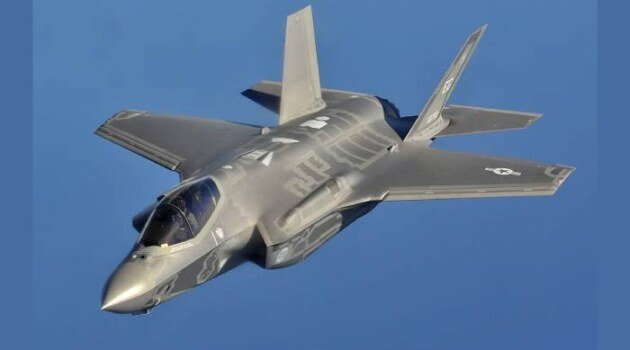
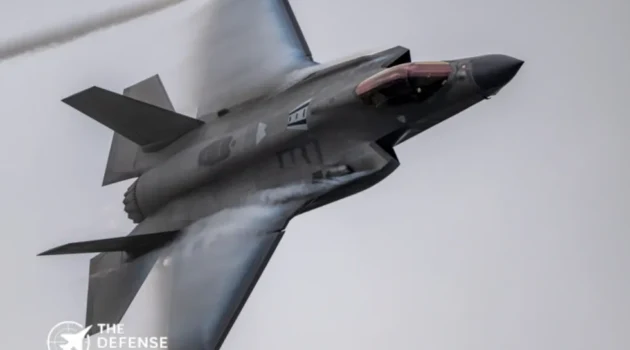
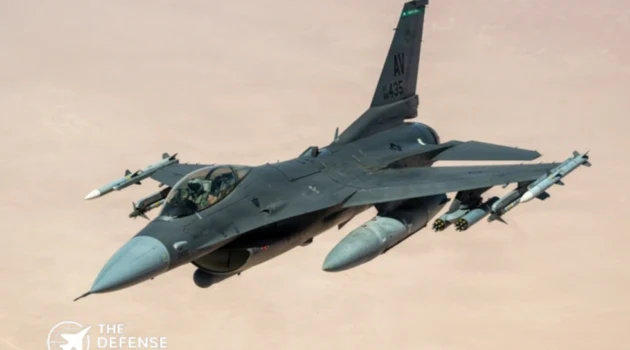
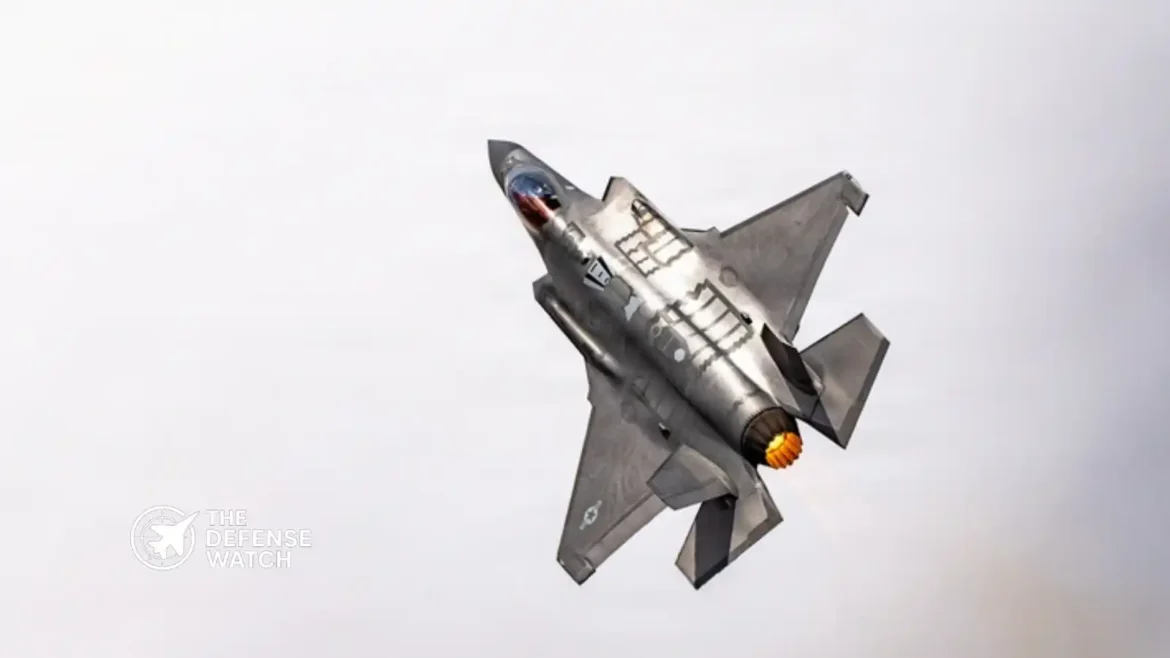
The Pentagon’s fiscal year 2027 defense budget request includes funding for 38 F-35A Lightning II fighters for the U.S. Air Force — a figure that senior defense analysts say is insufficient to address the service’s deepening fighter inventory crisis. The allocation is part of a broader request for 85 F-35s across all military branches, embedded within President Donald Trump’s record-breaking $1.5 trillion defense spending proposal unveiled on April 3, 2026.
An Office of Management and Budget official confirmed the Air Force’s allocation directly to Air & Space Forces Magazine. The number represents a modest increase over the previous year but falls well short of what Air Force leadership and independent analysts say is needed for genuine fleet recapitalization.
- The Pentagon’s FY2027 budget requests a total of 85 F-35 Lightning II fighters across all services, with 38 F-35A variants allocated to the U.S. Air Force.
- The request is part of President Trump’s record $1.5 trillion defense budget for fiscal year 2027, which allocates $30.6 billion for Air Force aircraft procurement.
- The Air Force would receive 14 more F-35As than in the previous budget year, but 10 fewer than the service itself requested in 2025.
- This marks the first time in a decade that the Air Force is set to receive less than half of the total F-35s requested by the Pentagon.
- The White House budget fact sheet prioritizes rapid development of the F-47 sixth-generation fighter, while providing limited detail on the B-21 Raider and Collaborative Combat Aircraft programs.
A Budget That Signals Priorities — And Trade-Offs
The White House budget request provides $30.6 billion for Air Force aircraft procurement, a significant increase over prior years, though it does not break down specific funding figures for key aircraft programs.
A White House fact sheet confirms that the budget prioritizes rapid development and production of the F-47 sixth-generation fighter, while making no mention of the unmanned Collaborative Combat Aircraft or the B-21 Raider stealth bomber programs.
That silence, however, does not necessarily indicate diminished investment in those platforms. Retired Lt. Gen. David A. Deptula, dean of the Mitchell Institute for Aerospace Studies and one of the nation’s foremost airpower strategists, urged caution in reading too much into the omissions.
The absence of public F-47 and B-21 details should not be mistaken for lack of priority,” Deptula said. “Aircraft modernization is still buried in broader procurement and development accounts.”
Analysts: 38 Jets Is “Budget Triage,” Not Recapitalization
The core concern among defense experts centers on whether 38 F-35As represents a genuine commitment to rebuilding U.S. airpower or simply a stopgap measure.
Deptula described the Air Force as operating “the oldest and smallest fighter force in its history” and said that 38 aircraft fails to constitute a meaningful rebuild rate for a service at that level of depletion.
In his assessment, the number preserves production line stability at Lockheed Martin’s Fort Worth facility but does nothing to reverse structural shortfalls in tactical aviation capacity.
“It may keep the line warm, but it does not reverse the fighter inventory shortfall,” Deptula said, adding that 38 F-35As “feels more like budget triage than a true recapitalization rate.”
His critique goes deeper than the raw numbers. Deptula argued that the Air Force cannot sustain a strategy of divesting older aircraft in exchange for modernization if that modernization never keeps pace with the divestment — a cycle he characterized as structurally unsustainable given current geopolitical demands.
Historical Context: A Decade-Low Share Of Pentagon’s F-35 Request
The procurement numbers carry significant historical weight. This is the first time in the past decade that the Air Force is set to receive less than half of the total F-35 fighters requested by the Pentagon in a single budget cycle.
If approved by Congress, the Air Force would receive 14 more F-35As than it did under last year’s enacted budget, but the figure also represents 10 fewer aircraft than the service itself requested in fiscal year 2025.
The divergence between what the Air Force asks for and what it ultimately receives reflects ongoing competition for finite dollars within a defense budget that, despite its record topline, must simultaneously fund sixth-generation fighter development, nuclear modernization, munitions replenishment, and a major naval buildup.
Deptula acknowledged these competing demands directly: “This number suggests the Air Force is still being forced to balance near-term procurement against other large bills — F-47 development, B-21, Sentinel, readiness recovery, munitions, and CCA.”
Senior Leaders Have Pushed For More
The debate over F-35 procurement numbers is not new. Last July, a coalition of 16 retired Air Force four-star generals — including six former Chiefs of Staff — formally called on Congress to substantially increase F-35 purchases.
Gen. Philip M. Breedlove, former Supreme Allied Commander Europe, argued at the time that the F-35 must remain a top procurement priority because it is the most capable U.S. fighter currently in production and essential to meeting the Air Force’s “fight tonight” requirement.
Former Chief of Staff Gen. T. Michael Moseley reinforced that argument by pointing to the aircraft’s role in coalition operations. Allied nations have invested heavily in the F-35 specifically to maintain interoperability with U.S. forces — a strategic asset that procurement shortfalls could erode over time.
Why wouldn’t we want to continue to build that airplane in larger numbers?” Moseley said.
Shipbuilding Takes Center Stage
While Air Force advocates push back on the F-35 allocation, the FY2027 budget makes its naval priorities explicit. The White House fact sheet details $65.8 billion for shipbuilding in 2027, covering procurement of 18 battle force ships and 16 non-battle force vessels.
Deptula characterized the prominent role of shipbuilding in the budget’s public messaging as a strategic communications choice rather than evidence of reduced emphasis on airpower modernization. He noted that the budget’s detailed justification materials — still awaited by Congress and independent analysts — will offer a clearer picture of how F-47, B-21, and next-generation airpower investments are structured.
The Broader Strategic Calculus
The FY2027 F-35 request lands at a particularly sensitive moment for U.S. airpower. Active military operations in the Middle East — including Operation Epic Fury against Iran — have placed sustained pressure on Air Force assets, accelerated aircraft attrition, and put a premium on combat-ready fighter capacity. Reports confirm an F-35A assigned to Nellis Air Force Base crashed on March 31, 2026, with the pilot ejecting safely, underscoring the operational tempo the fleet is currently sustaining.
Against that backdrop, the F-35A Lightning II remains the primary fifth-generation tactical platform available to the Air Force in meaningful numbers. With the F-47 years from initial operational capability, the fifth-generation bridge between today’s requirements and tomorrow’s fleet depends heavily on continued F-35 investment.
Whether 38 aircraft in a single fiscal year constitutes a credible commitment to that bridge — or simply manages decline — will likely define the central airpower debate in Congress as FY2027 budget hearings get underway.

U.S. Air Force Selects Shield AI For CCA Mission Autonomy Development
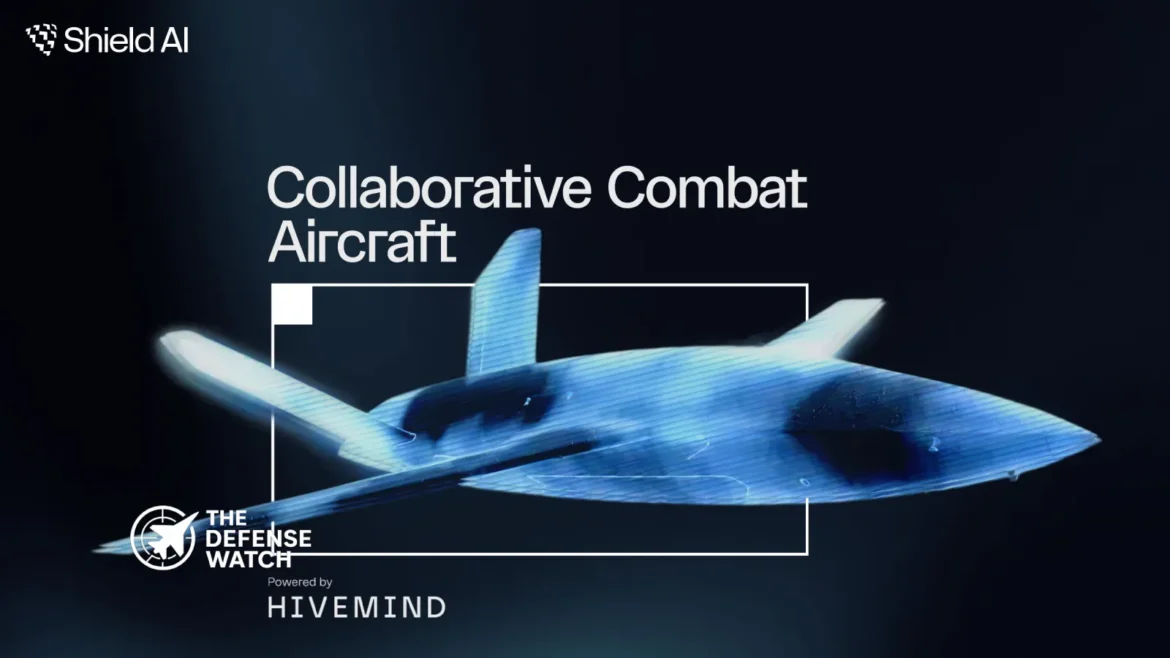
Shield AI has been selected as a mission autonomy provider for the U.S. Air Force Collaborative Combat Aircraft program following a competitive Technology Maturity and Risk Reduction evaluation, the San Diego-based company announced February 13, 2026.
The company’s Hivemind autonomy software has successfully integrated on Anduril’s Fury aircraft and is supporting system-level testing in preparation for flight demonstrations expected in the coming months, marking a significant milestone in the Air Force’s effort to field autonomous combat drones alongside crewed fighters.
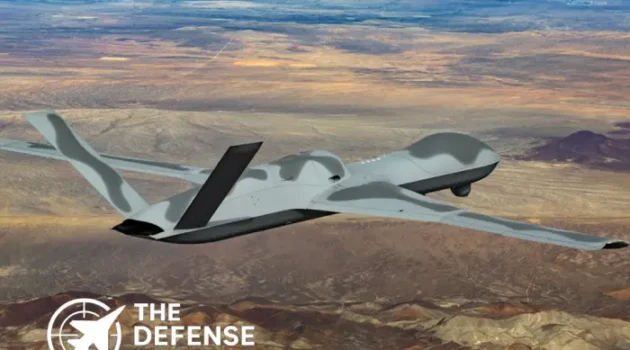
The announcement positions Shield AI as one of two mission autonomy providers for the Air Force’s CCA program. Collins Aerospace will provide autonomous software for General Atomics’ YFQ-42A platform, while Shield AI’s Hivemind will power Anduril’s YFQ-44A variant.
“Shield AI is proud to be named a mission autonomy provider supporting the Collaborative Combat Aircraft program,” said Gary Steele, CEO of Shield AI. “The Air Force is moving with urgency to explore how autonomy can reshape air combat, and we have spent years preparing for this—building, testing, and flying mission autonomy in the real world.”
What Is Collaborative Combat Aircraft?
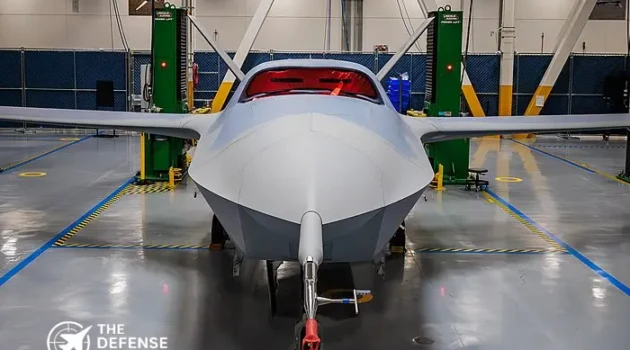
The U.S. Air Force is developing CCAs as large uncrewed aircraft powered by jet engines, potentially equipped for missions including air-to-air combat, air-to-ground combat, electronic warfare, targeting, and intelligence, surveillance, and reconnaissance. The platforms are designed to fly alongside fifth and sixth-generation fighters such as the F-35A and future F-47.
The Air Force hopes to field at least 1,000 CCAs in varying configurations and have them carry out missions such as strike operations, reconnaissance, electronic warfare and as decoys to lure enemy fire away from piloted fighters.
Air Force officials have estimated that CCAs might cost roughly one-third the price of crewed fighters, potentially enabling the service to purchase the platforms in larger quantities than traditional combat aircraft.
Hivemind Autonomy Software Capabilities
Hivemind is Shield AI’s core artificial intelligence software that assumes the role of a human pilot or operator, enabling unmanned defense systems to sense, decide, and act. Unlike conventional autopilot systems that follow predetermined flight paths, Hivemind can reroute around no-fly zones, avoid or engage obstacles, respond to unexpected conditions, and complete missions safely and effectively without human intervention.
Christian Gutierrez, vice president of Hivemind Solutions at Shield AI, emphasized the complexity of the mission. “Delivering mission autonomy in real-world combat conditions is hard, which is why Shield AI has spent more than a decade building Hivemind and the technical and operational foundation to do it right,” he stated.
Hivemind is Autonomy Government Reference Architecture compliant, platform-agnostic, and has demonstrated A-GRA-aligned autonomy across multiple government and industry test efforts. The software has been tested on platforms including General Atomics’ MQ-20 Avenger, Northrop Grumman’s Talon IQ autonomous ecosystem, U.S. Navy BQM-177 test aircraft, and the Airbus UH-72A Lakota helicopter.
CCA Program Timeline And Competition
In April 2024, the Air Force selected Anduril and General Atomics to produce Increment 1 production-representative test articles after eliminating Boeing, Lockheed Martin, and Northrop Grumman from competition. The service designated the platforms YFQ-44A and YFQ-42A respectively in March 2025.
General Atomics‘ YFQ-42A completed its maiden flight in August 2025, while Anduril’s YFQ-44A first flew on October 31, 2025. Both platforms are now undergoing flight testing at California locations.
The Air Force is currently integrating a government-owned Autonomy Government Reference Architecture onto loyal wingman drones built by both General Atomics and Anduril. The A-GRA framework prevents vendor lock-in by establishing a single standard for CCA mission autonomy systems, allowing the service to install new software and capabilities from multiple vendors.
The Air Force said Thursday that government-owned autonomous software programs have been successfully integrated into both of its prototype collaborative combat aircraft, demonstrating that the platforms can be easily modified using modular open systems architecture.
Strategic Significance For Air Dominance
The CCA program represents a cornerstone of the Air Force’s Next-Generation Air Dominance initiative, which seeks to counter sophisticated adversary air defense systems. China’s development of anti-access/area-denial capabilities, such as long-range missiles and sophisticated air defense systems, has challenged the U.S. Air Force’s ability to achieve air superiority.
CCAs are central to restoring mass and resilience to U.S. combat air power in the face of sophisticated Chinese and Russian air defenses. The combination of lower unit cost, modular payloads, and AI-enabled autonomy promises to extend the reach, sensing, and striking power of a shrinking fleet of crewed aircraft.
The Air Force is planning to make a final competitive production decision on Increment 1 of CCA in fiscal year 2026 and expects to field a fully operational capability by the end of the decade.
Industry Impact And Future Increments
Several Increment 2 contract awards are expected in the early part of fiscal year 2026, with overseas suppliers also in contention The Air Force has indicated Increment 2 will focus on different capability sets than the initial platforms, potentially including enhanced stealth features or specialized mission packages.
The Air Force awarded nine contracts under Increment 2 of the CCA program in December 2025, though the service has not disclosed recipient companies citing enhanced security measures.
Shield AI, founded in 2015, develops state-of-the-art autonomy software products and aircraft including the V-BAT and X-BAT platforms. The company maintains offices and facilities across the United States, Europe, the Middle East, and Asia-Pacific, with its technology actively supporting operations worldwide.
The selection of Shield AI and Collins Aerospace for mission autonomy development underscores the Air Force’s commitment to competition and modular architecture in the CCA program. As flight testing accelerates through 2026, the service will gather critical data to refine requirements and reduce risk ahead of full-scale production decisions expected later this year.
Northrop Grumman Finalizing Major Production Agreement
Northrop Grumman expects to finalize an agreement with the Air Force to accelerate B-21 Raider production expansion by the end of March, according to company CEO Kathy Warden during a Jan. 27 earnings call.
The announcement confirms that negotiations for one of the U.S. military’s most critical modernization programs are entering their final phase. Congress approved $4.5 billion for expanding production capacity for the B-21 as part of a reconciliation package passed in July 2025, and defense officials have been working to structure the contract terms since then.
“We continue to work closely with the Air Force on plans to increase the production rate of the program,” Warden stated. Our priority is to establish a mutually beneficial agreement that accelerates the delivery of this game-changing capability to our nation.”
The current fiscal quarter concludes March 31, 2026, establishing a firm timeline for contract finalization.
Massive Investment in Bomber Capacity
The production expansion contract represents substantial financial commitment from both parties. The Air Force outlined plans in its 2026 budget request to spend all $4.5 billion from the reconciliation bill this fiscal year: nearly $2.4 billion in research and development and $2.1 billion in procurement.
Northrop Grumman is also making significant internal investments to support increased manufacturing throughput. Warden revealed that Northrop plans to invest between $2 to $3 billion over multiple years for “facilitizing for that acceleration”, though specific details about these facility upgrades were not disclosed.
The defense contractor previously announced in April 2025 that it had invested $477 million in a “process change” designed to enable higher production rates for the advanced stealth bomber.
Low-Rate Initial Production Advances
Parallel to expansion negotiations, the B-21 program continues advancing through its planned production phases. Warden confirmed that Northrop received the contract for the third lot of low-rate initial production in the final quarter of 2025, as well as a contract for advanced procurement for the fifth lot.
The low-rate initial production phase is expected to encompass 21 aircraft distributed across five lots, establishing the manufacturing foundation before full-rate production begins.
Flight testing is also progressing on schedule. The CEO highlighted the first flight of a second B-21 test aircraft as evidence of program momentum, building on the successful maiden flight of the initial test platform.
Classification Limits Public Disclosure
Specific details about production metrics and long-term program objectives remain highly classified. The Air Force has consistently declined to reveal exact production rates or whether the expansion aims to exceed the current program of record of 100 aircraft or simply deliver that baseline quantity on an accelerated timeline.
Defense industry sources have previously suggested the B-21 production rate operates around seven aircraft annually, though official confirmation remains restricted.
An Air Force spokesperson provided limited comment, stating: “The B-21 program of record has not changed. We are in low-rate initial production. We don’t have additional details to share at this time.”
Congressional Funding Adjustments
Despite overall program progress, lawmakers recently modified the B-21’s fiscal 2026 baseline budget allocation. Congressional appropriators cut $620 million from procurement and added $409 million for research and development for a net reduction of $211 million, citing “classified adjustments” without elaborating on specific rationale.
These budget shifts are separate from the $4.5 billion reconciliation package dedicated to production expansion, which remains intact.
Sentinel ICBM Program Faces Delays
While the B-21 bomber program accelerates, Warden provided sobering updates on the Air Force’s other major nuclear modernization effort—the Sentinel intercontinental ballistic missile system.
The Sentinel program is undergoing comprehensive restructuring following a “Nunn-McCurdy breach” triggered by significant cost overruns and schedule delays. If the program had continued on its trajectory, it would have been 81 percent over budget and three years late.
We still believe that the program will be in development for several years and not transitioning into production until later in the decade,” Warden explained, adding that production transition falls “outside of that two-to-three-year window at this point.
The Pentagon cleared Sentinel to continue in July 2024 but rescinded its previous approval for engineering and manufacturing development, mandating the current restructure before the program can advance.
Strategic Significance of B-21 Expansion
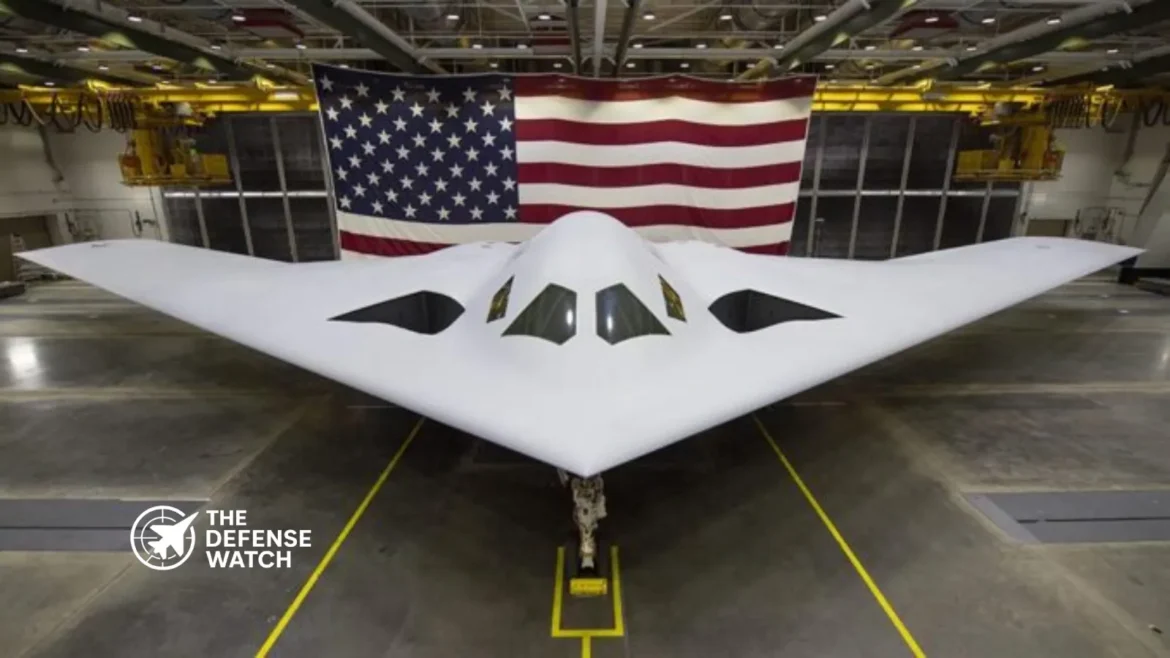
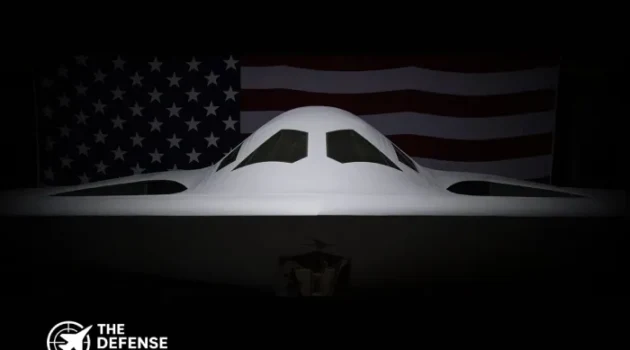
The B-21 Raider represents the cornerstone of the Air Force’s future strategic bomber fleet and nuclear deterrence posture. The aircraft’s stealth characteristics, advanced sensors, and open-architecture design position it to operate in highly contested environments against peer adversaries.
Accelerating production delivery directly supports the Department of Defense’s priority to field next-generation capabilities faster amid intensifying great power competition. The bomber is designed to eventually replace aging B-1 and B-2 fleets while complementing upgraded B-52 Stratofortress bombers.
Industry analysts anticipate the March contract announcement will provide greater clarity on delivery timelines and potential force structure implications, though classification constraints will likely limit public disclosure of operational details.
The production expansion initiative reflects broader Pentagon efforts to strengthen America’s deterrence capabilities and ensure air dominance against advanced anti-access/area-denial threats in the 2030s and beyond.
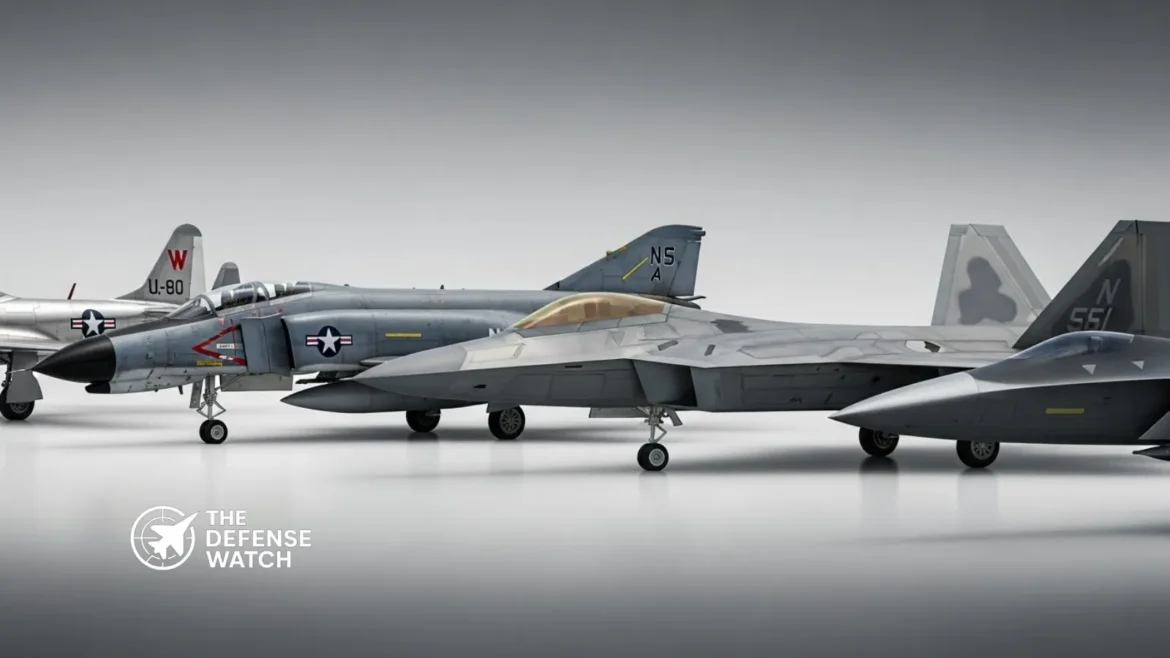
Fighter jet generations explained is a common way military analysts describe how combat aircraft have evolved over time. The system groups fighter aircraft by shared design features, mission roles, and technology levels. While not an official U.S. military standard, the generational model is widely used by defense planners, aerospace engineers, and analysts to compare airpower capabilities across countries.
From early gun armed jets of the Cold War to stealthy networked platforms now entering service, fighter aircraft have changed how air forces fight, deter, and project power. This explainer outlines the defining characteristics of fighter jets from the first generation through the emerging sixth generation, with examples and operational context.
What Defines a Fighter Jet Generation
Fighter generations are shaped by major leaps in technology rather than strict timelines. Key factors include propulsion, avionics, sensors, weapons, stealth, and how aircraft operate within a broader combat network.
Not all countries agree on exact boundaries. Some aircraft blur generational lines due to upgrades or hybrid designs. Still, the framework remains useful for understanding capability gaps and modernization trends.
First Generation Fighter Jets
Early Jet Age and Subsonic Combat
First generation fighters emerged in the mid nineteen forties and early nineteen fifties. These aircraft were often direct adaptations of late World War Two designs, replacing propellers with jet engines.
Key traits included straight wings, limited radar or none at all, and reliance on guns rather than guided weapons. Flight performance improved over prop aircraft, but endurance and reliability were limited.
Examples
Notable first generation fighters include the Messerschmitt Me 262, Gloster Meteor, Lockheed P 80 Shooting Star, and Mikoyan Gurevich MiG 9.
These jets established the foundation for jet air combat but were quickly outpaced by faster and more capable designs.
Second Generation Fighter Jets
Supersonic Flight and Early Missiles
Second generation fighters entered service in the mid nineteen fifties. Swept wings and more powerful engines allowed sustained supersonic flight. Radar began to appear, though early systems were basic and unreliable.
This generation marked the introduction of air to air missiles, driven by the belief that dogfighting would become obsolete. Combat experience later challenged that assumption.
Examples
Representative aircraft include the MiG 21, F 104 Starfighter, English Electric Lightning, and Dassault Mirage III.
Many second generation fighters were produced in large numbers and exported globally, shaping Cold War air forces for decades.
Third Generation Fighter Jets
Multirole Capability and Improved Avionics
Third generation fighters arrived in the nineteen sixties and seventies. Lessons from Vietnam and Middle East conflicts led to renewed emphasis on maneuverability, guns, and pilot situational awareness.
Radar systems improved, beyond visual range missiles became more credible, and aircraft began to adopt true multirole designs capable of both air combat and ground attack.
Examples
Key third generation fighters include the F 4 Phantom II, MiG 23, MiG 25, Saab Viggen, and early variants of the Mirage F1.
These aircraft formed the backbone of many air forces well into the late Cold War.
Fourth Generation Fighter Jets
Agility, Sensors, and Digital Flight Control
Fourth generation fighters represent a major leap in capability. Entering service from the late nineteen seventies onward, they emphasized energy maneuverability, relaxed static stability, and fly by wire flight controls.
Advanced pulse Doppler radars, modern electronic warfare systems, and high off bore sight missiles transformed air combat.
Examples
Prominent fourth generation fighters include the F 15 Eagle, F 16 Fighting Falcon, F A 18 Hornet, Su 27 Flanker, and Mirage 2000.
Many remain in frontline service today after extensive upgrades.
Fourth Generation Plus Fighters
Incremental Advances Without Full Stealth
Fourth generation plus fighters build on earlier designs with improved avionics, active electronically scanned array radar, reduced radar signature, and better data links.
While not stealth aircraft, they are more survivable and capable in contested airspace.
Examples
Examples include the F A 18E F Super Hornet, Rafale, Eurofighter Typhoon, Su 30SM, Su 35, and JAS 39E Gripen.
These aircraft continue to dominate global fighter procurement due to lower cost and export availability.
Fifth Generation Fighter Jets
Stealth and Networked Warfare
Fifth generation fighters are defined by low observable design, internal weapons carriage, sensor fusion, and secure data sharing. Stealth allows them to operate in heavily defended airspace while gathering and distributing targeting data.
These aircraft are designed as part of a system rather than standalone platforms.
Examples
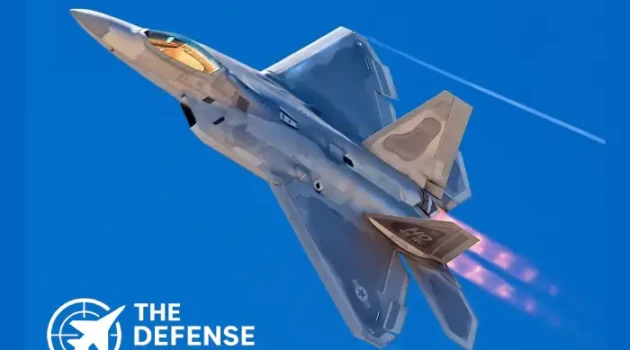
Operational fifth generation fighters include the F 22 Raptor, F 35 Lightning II, J 20 Mighty Dragon, and Su 57 Felon.
Each reflects different national approaches to stealth, propulsion, and mission priorities.
Sixth Generation Fighter Jets
Next Step in Air Dominance
Sixth generation fighters remain under development, with programs in the United States, Europe, and Asia. These aircraft are expected to enter service in the mid twenty thirties or later.
Planned features include optionally crewed operation, integration with unmanned wingmen, advanced electronic warfare, adaptive engines, and expanded use of artificial intelligence.
Current Programs
Major efforts include the U.S. Next Generation Air Dominance program, the British Italian Japanese Global Combat Air Programme, and the Franco German Spanish Future Combat Air System.
Specific performance details remain classified or unconfirmed.
Analysis: Why Fighter Jet Generations Still Matter
Understanding fighter jet generations explained in clear terms helps frame debates about airpower balance and defense spending. While generational labels can oversimplify reality, they highlight where technology gaps may exist.
Modern air combat depends as much on sensors, networks, and support assets as on raw aircraft performance. A fourth generation plus fighter paired with strong intelligence and electronic warfare may outperform a fifth generation jet used in isolation.
As sixth generation programs advance, the focus is shifting from individual platforms to integrated air combat systems. This trend will shape procurement choices and alliance cooperation for decades.
FAQs
Are fighter generations officially defined by the U.S. military?No. Generational labels are analytical tools used by industry and analysts rather than formal doctrine.
Can older fighters compete with newer generations?Yes, when upgraded and used with strong support systems, though survivability may be limited in high threat environments.
Is stealth the main factor separating generations?Stealth is central to fifth generation fighters, but sensors, data fusion, and networking are equally important.
Will sixth generation fighters replace fifth generation aircraft?They are expected to complement rather than fully replace existing fleets for many years.
Do all countries follow the same generational model?No. Some nations define generations differently based on doctrine and industrial priorities.
Boeing F-47 Sixth-Generation Fighter: Everything We Know About America’s Next Air Dominance Platform
Boeing F-47 Sixth-Generation Fighter: Everything We Know About America’s Next Air Dominance Platform
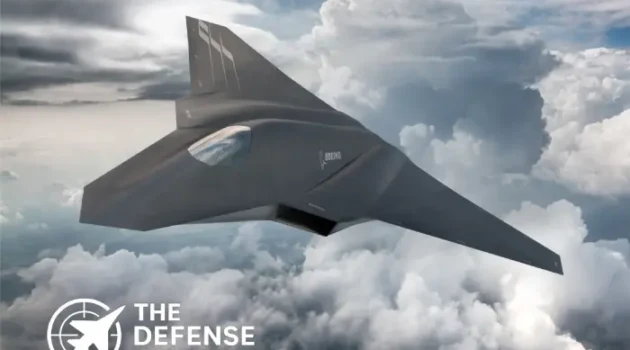
The United States Air Force is accelerating development of its most ambitious combat aircraft program in decades. The Boeing F-47, America’s first sixth-generation fighter jet, represents a fundamental shift in air warfare philosophy , combining extreme range, advanced stealth, and the ability to command autonomous drone wingmen in contested airspace. As China rapidly expands its own next-generation fighter programs, the F-47 has become central to maintaining American air superiority through the 2030s and beyond.
President Donald Trump announced on March 21, 2025, that Boeing had secured the engineering and manufacturing development contract worth over $20 billion, ending months of uncertainty that had placed the entire Next Generation Air Dominance (NGAD) program in jeopardy. The selection marked a significant victory for Boeing’s defense division and signals a major shift in American tactical aviation development.

Historic Designation Honors WWII Legacy
The Air Force chose the designation “F-47” to honor the legacy of the P-47 Thunderbolt, whose contributions to air superiority during World War II remain historic. The number also pays tribute to 1947, the founding year of the Air Force as an independent service, while recognizing the 47th President’s support for developing the world’s first operational sixth-generation fighter.
This marks Boeing’s first clean-sheet fighter design to be selected since the company’s 1997 merger with McDonnell Douglas. The F-47 contract is expected to revitalize Boeing’s fighter production line in St. Louis, Missouri, where the company has invested billions of dollars in highly classified facilities even before winning the competition.
Performance Specifications and Capabilities
While many technical details remain classified, Air Force leaders have disclosed several key performance parameters that underscore the F-47’s revolutionary capabilities.
The F-47 will have a combat radius exceeding 1,000 nautical miles and achieve speeds above Mach 2 providing approximately 25 percent greater operational reach than current American fighters. Air Force Chief of Staff General David Allvin stated the aircraft will feature significantly longer range, more advanced stealth, and higher availability than fifth-generation fighters like the F-22 and F-35.
The fighter’s extended range proves critical for operations in the vast Indo-Pacific theater, where distances between potential conflict zones and allied bases stretch across thousands of miles. This capability addresses one of the primary weaknesses identified in current force structure planning for potential conflicts with peer adversaries.
Revolutionary propulsion technology will enable these performance gains. The F-47 will utilize variable-cycle engines developed under the Next Generation Adaptive Propulsion program, featuring a third stream of cooled air that can be adjusted dynamically during flight. When opened, this third stream maximizes fuel efficiency and theoretically doubles the range compared to the F-22 Raptor. When closed, it provides maximum thrust for high-speed operations and supercruise capability.
Next-Generation Stealth Technology
The F-47 incorporates next-generation all-aspect broadband low-observability, including significantly reduced infrared signature alongside a minimal radar cross-section. These stealth advances represent a generational leap beyond current fifth-generation fighters, enabling operations deep within heavily defended airspace.
Advanced ceramic radar-absorbent coatings are being developed to survive the extreme heat, rain, and abrasion encountered at high speeds. The aircraft’s stealth characteristics extend across multiple spectrums, addressing the increasingly sophisticated sensor networks deployed by potential adversaries. Spectral warfare” and “spectral dominance” have emerged as major focus areas throughout the NGAD initiative, recognizing that modern air defense systems operate across infrared, electronic, and visual detection methods.
Family of Systems Approach
The F-47 represents just one element of the broader NGAD ecosystem. The aircraft will fly alongside multiple autonomous drone wingmen known as Collaborative Combat Aircraft, which can conduct reconnaissance, strike missions, electronic warfare, and decoy operations. The Air Force plans to acquire at least 1,000 CCAs to complement the manned fighter fleet.
General Atomics and Anduril are developing the first iteration of CCA drone wingmen, designated RFQ-42A and RFQ-44A respectively, designed to operate alongside F-35s and F-47s. These relatively inexpensive unmanned platforms will provide mass and flexibility while reducing risk to pilots in contested environments.
The F-47 serves as the command node for these autonomous systems, acting as a quarterback that coordinates sensing, jamming, decoy, and strike operations across the combat space. This manned-unmanned teaming concept fundamentally changes air combat tactics, allowing a single F-47 to project power across a much wider battlespace than any previous fighter.
Accelerated Development Timeline
Air Force Chief of Staff General David Allvin confirmed in November 2025 that the F-47 will make its first flight in 2028, an aggressive timeline made possible by years of secretive development work that preceded the formal contract award.
Allvin stated that X-plane demonstrators have been flying for five years, logging hundreds of hours while testing cutting-edge concepts and proving advanced technologies. These experimental aircraft, developed by both Boeing and Lockheed Martin under research contracts with the Defense Advanced Research Projects Agency, first flew in 2019 and 2022.
Boeing has already begun manufacturing the first production F-47, demonstrating remarkable speed from contract award to construction. Boeing officials attribute this rapid progress to the maturity of their design and experience gained from prototype development. The company made unprecedented investments in classified manufacturing facilities before even securing the contract, gambling billions on winning the competition.
The Air Force aims to achieve operational capability by 2029, with the service planning to field the aircraft throughout the 2030s. Air Force leaders have indicated plans to purchase at least 185 F-47s, roughly equivalent to the current F-22 Raptor fleet size.
Development Challenges and Concerns
Despite optimistic timelines, the F-47 program faces significant technical hurdles. The Next Generation Adaptive Propulsion engine development is running approximately two years behind schedule due to supply chain constraints. Both GE Aerospace and Pratt & Whitney are competing to provide the revolutionary powerplants, with final engine selection not expected until 2030.
The program’s cost remains a sensitive issue. Former Air Force Secretary Frank Kendall paused the program in May 2024 after cost estimates reached approximately $300 million per aircraft, roughly triple the cost of an F-35. The pause prompted an extensive internal study to determine whether NGAD represented the most viable approach to achieving air superiority against advanced adversaries.
Major General Joseph Kunkel, director of Air Force Force Design, Integration, and Wargaming, stated the study tried numerous alternatives but found no more viable option than NGAD to achieve air superiority in highly contested environments. This conclusion led to resumption of the program under the new administration.
Questions persist about whether the planned force structure provides sufficient mass for potential conflicts. Some defense analysts argue that 186 fighters represents a dangerously thin fleet when accounting for maintenance rotations, training requirements, forward basing vulnerabilities, and attrition over decades of service. While Collaborative Combat Aircraft provide force multiplication, they cannot fully substitute for manned fighters in all mission scenarios.
Countering the China Challenge
The F-47’s urgency stems directly from China’s rapid advances in next-generation aviation technology. Beijing is expanding its J-20 stealth fighter fleet, pushing fourth-generation jets through deep modernization programs, and experimenting with sixth-generation designs. Some projections suggest China could be adding stealth fighters at a pace not seen since the early Cold War.
In late 2024, China publicly tested multiple prototype sixth-generation fighters, including designs designated J-36 and J-50. These aircraft feature tailless configurations and advanced stealth characteristics, demonstrating that China is aggressively pursuing next-generation capabilities. The public nature of these tests contrasts sharply with American secrecy surrounding the F-47, though whether this reflects Chinese confidence or psychological operations remains debated.
General Kenneth Wilsbach of Air Combat Command emphasized that the United States would need crewed sixth-generation aircraft to counter Chinese sixth-generation aircraft. The qualitative edge provided by American fifth-generation fighters cannot be assumed to persist indefinitely as adversary capabilities mature.
Strategic Implications and Analysis
The F-47 represents more than just another fighter aircraft—it embodies a fundamental reconceptualization of air dominance for the 21st century. By integrating extreme range, advanced stealth, revolutionary sensors, and autonomous wingmen into a single system of systems, the Air Force is betting that quality and capability can offset potential numerical disadvantages against adversaries like China.
This approach carries significant risks. The high unit cost limits procurement numbers, potentially creating gaps in coverage during major contingencies. The complexity of integrating so many advanced technologies simultaneously increases development risk and could delay fielding. And the assumption that expensive, exquisite platforms can decisively outperform larger numbers of less-capable aircraft remains unproven in modern combat.
However, the alternatives appear even less attractive. Attempting to match China’s production volume with legacy aircraft would prove financially impossible while ceding qualitative advantages. Relying solely on unmanned systems ignores their current limitations in complex decision-making and adaptability. And failing to modernize would guarantee American air power becomes obsolete within a decade.
The F-47 program also signals America’s commitment to maintaining technological leadership in military aviation, a domain where the United States has held decisive advantages since World War II. Success would preserve this advantage for another generation. Failure could mark a fundamental shift in the global balance of power.
Looking Ahead
As the F-47 moves from conceptual demonstrators to production aircraft, many questions remain unanswered. The final design remains highly classified, with even basic configuration details unknown to the public. Cost per aircraft, while projected around $300 million, could change as the program matures. And the ultimate fleet size may adjust based on budget realities and evolving threat assessments.
The 2028 first flight represents a critical milestone that will provide the first public glimpse of America’s vision for sixth-generation air combat. Success in meeting this timeline while managing costs and technical risks will determine whether the F-47 becomes a decisive capability or a cautionary tale in defense acquisition.
What remains clear is that the F-47 has become central to American military planning for future conflicts. As peer competitors advance their own next-generation programs, the pressure to field this revolutionary aircraft only intensifies. The next few years will prove decisive in determining whether American air dominance persists through mid-century or becomes another casualty of great power competition.
FAQS
When will the F-47 make its first flight?Air Force Chief of Staff General David Allvin confirmed the F-47 will conduct its first flight in 2028, with operational capability targeted for 2029.
How much will each F-47 cost?While the exact price remains classified, estimates suggest approximately $300 million per aircraft—roughly three times the cost of an F-35 Lightning II.
How many F-47 fighters will the Air Force buy?Current plans call for acquiring at least 185 F-47s, though this number could change based on budget constraints and evolving requirements.
What makes the F-47 a “sixth-generation” fighter?The F-47 features next-generation stealth, extreme range exceeding 1,000 nautical miles, speeds above Mach 2, variable-cycle engines, and the ability to command autonomous drone wingmen in combat.
Will the F-47 replace the F-22 Raptor?Yes, the F-47 is designed as the successor to the F-22 Raptor for the air superiority mission, though F-22s will undergo modernization to bridge the gap until F-47s achieve full operational capability.
How does the F-47 compare to China’s sixth-generation fighters?While both countries are developing sixth-generation capabilities, specific performance comparisons remain speculative due to classification. China has publicly tested prototype designs, while American F-47 details remain highly classified.
WASHINGTON — President Donald Trump announced plans to pursue America’s first $1 trillion defense budget during remarks this week in Washington, marking one of the most ambitious military spending targets in U.S. history. The proposal comes as congressional leaders negotiate an agreement to end the ongoing federal shutdown, which has disrupted several Air Force acquisition timelines and slowed contract actions across the Pentagon.
Trump said the milestone budget is needed to accelerate modernization, reinforce deterrence, and maintain U.S. military advantage amid expanding threats from China, Russia, Iran, and North Korea. “We’re entering an era where American strength must leave no room for doubt,” he said, outlining priorities including the E-7 Wedgetail airborne early warning aircraft, expanded munitions production, and the administration’s proposed Golden Dome missile shield concept.
The move signals a sweeping overhaul of near-term defense planning and sets the stage for a legislative battle as budget committees return to work following the shutdown’s near-resolution.
Background: Modernization Pressures and Shutdown Delays
The U.S. military has been pursuing large-scale modernization to replace aging Cold War–era systems, bolster air and missile defense capacity, and expand space-based surveillance. The Air Force, in particular, has faced persistent readiness challenges linked to legacy aircraft sustainment, industrial capacity limits, and global mission demand.
The government shutdown — now in its third week — has slowed acquisition activity, delaying contract awards, evaluation cycles, and oversight actions for programs including the E-7 Wedgetail, Next-Generation Air Dominance (NGAD) initiatives, and munitions replenishment efforts.
Pentagon officials have warned that prolonged funding lapses damage program stability and risk increasing long-term costs. The trillion-dollar defense budget target seeks to counterbalance these disruptions by infusing new resources into procurement, research, and industrial base expansion.
Key Details: Programs Backed in the $1 Trillion Defense Plan
E-7 Wedgetail Procurement
The Air Force has prioritized the E-7 Wedgetail to replace the aging E-3 Sentry AWACS fleet. Under Trump’s proposed budget framework, procurement would accelerate to field the aircraft earlier than previously scheduled.
Senior officials have argued that the Wedgetail offers improved sensor reliability, higher mission availability rates, and greater interoperability with allied fleets already operating the platform.
Golden Dome Missile Shield
The most ambitious line item is the emerging Golden Dome missile shield, envisioned as a layered defense architecture integrating ground-based interceptors, airborne sensors, and space-based tracking systems. While still in early conceptual stages, the project aims to create a nationwide defensive umbrella against advanced missile threats, including hypersonic glide vehicles.
Analysts note that the concept would represent one of the largest U.S. missile defense investments since the Strategic Defense Initiative, but caution that cost, feasibility, and technological maturity remain uncertain.
Industrial Base and Stockpile Replenishment
A substantial portion of the budget is expected to target munitions production and industrial base expansion to address stockpile shortfalls highlighted by recent global operations and foreign military sales.
Political and Policy Perspective
Defense analysts say the proposed $1 trillion defense budget aligns with broader national security trends emphasizing great-power competition and rapid technology adoption. However, the milestone figure is expected to face scrutiny in Congress, particularly from fiscal conservatives and lawmakers advocating reductions to domestic discretionary spending.
“The strategic rationale for higher defense spending is clear, but a trillion-dollar topline raises significant questions about long-term affordability,” said one Washington-based defense budget expert. “Congress will have to weigh modernization urgency against fiscal constraints.”
With the shutdown nearing a negotiated end, appropriators are expected to shift quickly toward rebuilding timelines and reassessing program priorities for the current and upcoming fiscal years.
What’s Next
If approved, Trump’s $1 trillion defense budget would reshape U.S. defense planning through the next decade, accelerating key modernization programs and expanding missile defense architecture. The proposal sets the stage for contentious budget negotiations, with final decisions likely to influence procurement cycles, industrial investments, and force posture for years to come.
Congressional leaders have indicated that ending the shutdown remains the immediate priority, after which committees will begin evaluating the administration’s budget demands in detail. The Pentagon is expected to provide formal justification documents and updated program timelines once full government operations resume.
Bangladesh Clears Path for Multirole Fighter Acquisition
Bangladesh’s caretaker government has provisionally approved a sweeping modernization of its air force, granting the Bangladesh Air Force (BAF) the green light to procure multirole combat aircraft, along with advanced surface-to-air missiles and long-range radars.
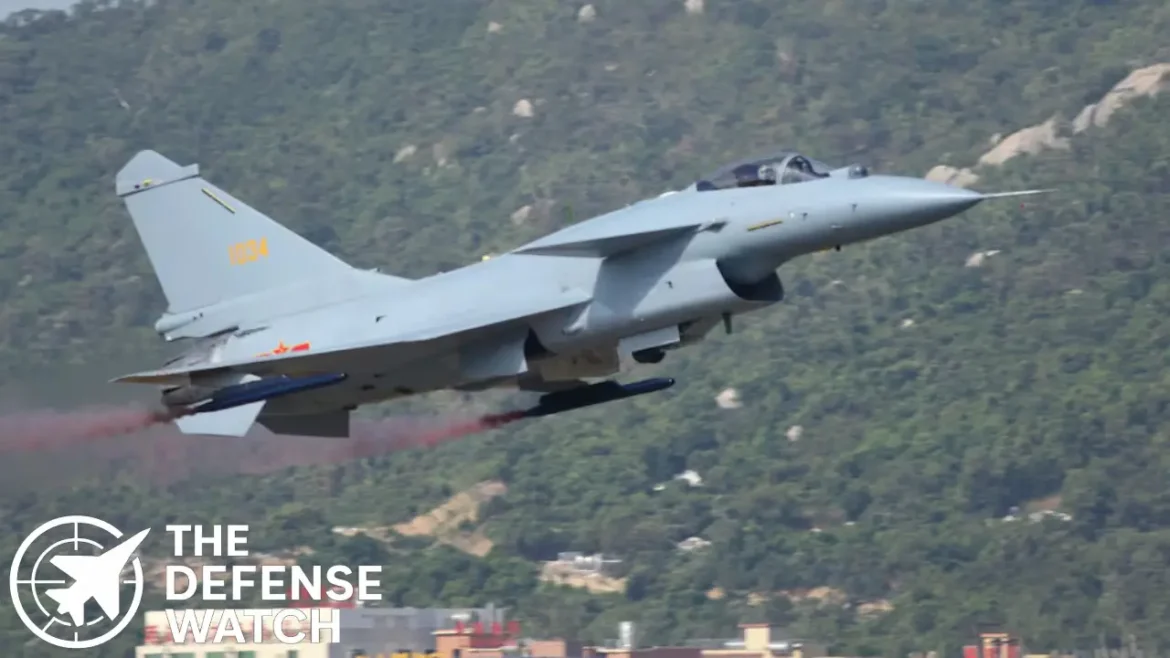
Although Air Chief Marshal Hasan Mahmood Khan has not publicly confirmed a model, industry and regional analysis suggest a strong tilt toward the Chinese J-10CE export variant, a 4.5-generation fighter already in service with Pakistan. Under the authorization, Bangladesh may acquire up to 20 jets by 2027, with total costs — including training, spares, infrastructure, and sustainment — estimated at around US $2.2 billion.
This decision comes amid growing urgency: Bangladesh’s current fighter fleet, composed largely of aging Chinese F-7s and a handful of Russian MiG-29s, has suffered from high maintenance demands and safety issues. One F-7 crashed into a Dhaka college campus earlier this year, claiming dozens of lives and underscoring the pressing need for fleet renewal.
Strategic Rationale Behind the Move
Reinforcing Air Sovereignty and Coastal Defense
Geographically positioned between India and the Bay of Bengal, Bangladesh’s air defense challenges are pronounced. A modern multirole fleet would give Dhaka enhanced capabilities to surveil, interdict, and enforce its airspace, particularly over maritime boundaries and in contested coastal corridors. The shift to more capable jets is aligned with the broader Forces Goal 2030 modernization roadmap.
Chinese Equipment Ecosystem and Existing Ties
Bangladesh already fields several Chinese-origin platforms — from light tanks to submarines — which suggests that interoperability, logistics synergies, and political alignment could favor a Chinese fighter choice. Moreover, previous diplomatic engagements, including during a visit by interim Chief Adviser Muhammad Yunus to Beijing, signaled mutual interest in stronger defense ties and arms trade cooperation.
Risks and Balancing Western Options
While the Chinese J-10CE remains the frontrunner, Bangladesh has reportedly explored Western alternatives, including attending Eurofighter Typhoon demonstration flights in Italy. However, aligning with Chinese systems carries diplomatic trade-offs: potential friction with the United States and Western suppliers, export control constraints, and reliance on China for long-term sustainment.
Publicly, Bangladesh’s Finance Adviser declined to comment when pressed on the $2.2 billion deal, underlining the sensitivity of the procurement in political and fiscal circles.
Technical Prospects and Integration Challenges
The J-10CE is believed to incorporate modern avionics such as active electronically scanned array (AESA) radar, digital flight control, and compatibility with beyond-visual-range missiles like the PL-15E. If fully integrated, it would constitute a qualitative leap over Bangladesh’s existing fleet of second- and third-generation jets.
However, successful deployment demands upgrades in BAF’s command, control, communications, computers, and intelligence (C4I) framework. Integration of datalinks, secure networks, and ground-based radar nodes will be critical for network-centric operations. Key infrastructure—bases, maintenance depots, hardened shelters, fuel systems—would also require modernization before new jets can deploy.
Regional Implications and Competitive Dynamics
Bangladesh’s move enters a dynamic South Asian airpower landscape. India’s air force fields advanced platforms like the Rafale, Su-30MKI, and indigenous Tejas Mk1A, maintaining qualitative edge in many domains. The acquisition of J-10CEs narrows the gap, particularly in radar and missile capabilities.
At the same time, neighboring countries and strategic watchers will assess this as part of China’s broader regional outreach. The introduction of relatively capable Chinese fighters into smaller air forces amplifies China’s defense posture beyond its borders, even if indirectly.
Outlook and Next Steps
With in-principle approval secured, the next phases hinge on a multiministerial committee led by the BAF to negotiate terms, finalize contracts, and choose between government-to-government (G2G) approaches or direct commercial deals.
If the timeline holds, training may begin in China as early as 2027, with first deliveries arriving in late 2027 or 2028. Full operational capability could be achieved by the early 2030s, catalyzing a new era for Bangladesh’s air defence posture.
Analysis & Context
This decision highlights a broader trend among mid-tier states in Asia: a shift toward 4th/4.5-generation multirole jets to replace aging interceptor fleets. The J-10CE particularly appeals to countries already using Chinese equipment, lowering integration and sustainment risk. That said, reliance on a single supplier presents vulnerability—both politically and logistically.
For Bangladesh, the stakes are high. Successful modernization could yield a credible deterrent in the Bay of Bengal region. But delays, cost overruns, or integration failures would risk strategic and fiscal backlash. Balancing ambition with execution discipline will be key.
FAQs
Why is Bangladesh choosing the J-10CE over Western fighters?The J-10CE leverages Bangladesh’s existing Chinese equipment ecosystem, offers attractive financing, and presents fewer export control obstacles. Western jets can be costlier, diplomatically sensitive, and involve more complex technology transfer challenges.
Is $2.2 billion high for 20 fighters?The sum includes not only the aircraft but training, spares, infrastructure, maintenance, and lifetime support — spreading cost over 10 years makes it more manageable.
Could Bangladesh cancel or choose another vendor later?Yes — the current approval is in-principle. The final decision depends on multiministerial committee review, negotiations, and competitive offers.
When will the new jets fly operationally?If all goes smoothly, initial deliveries may come in 2027–28, with full operational capability by around 2030.
Does this shift alter regional airpower balance?Moderately. While it won’t match India’s cutting-edge platforms, it strengthens Bangladesh’s deterrence and forces competitors to account for improved BAF capabilities.
Finland Air Force to Retire Swastika Flags
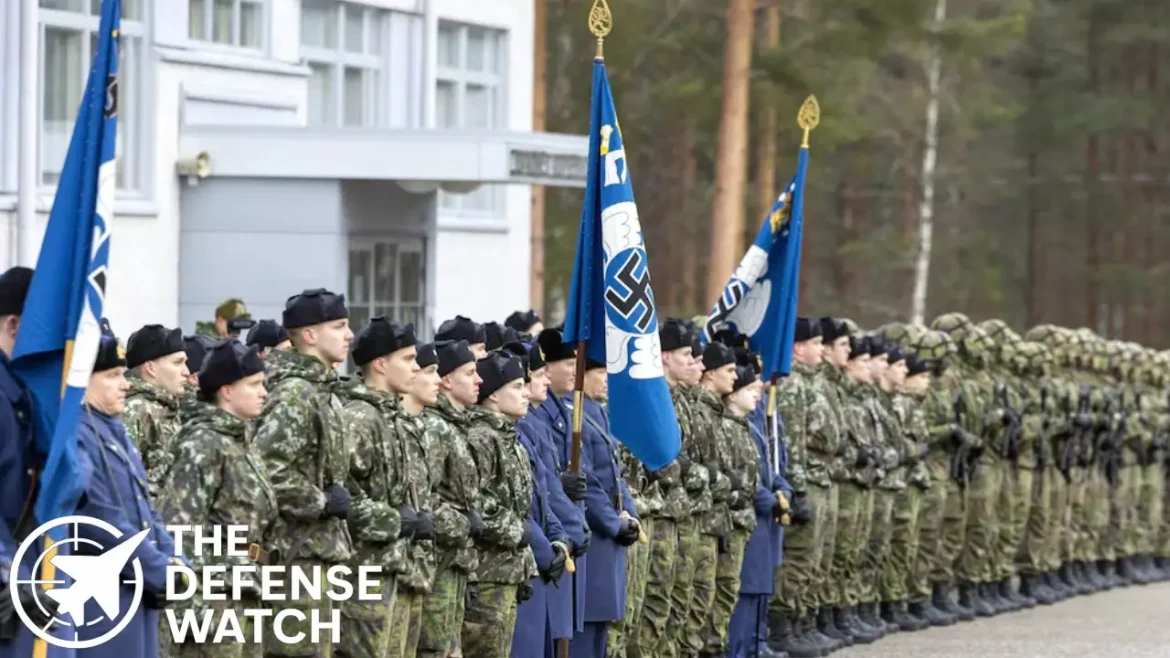
Finland’s Air Force is preparing to phase out swastikas still displayed on a handful of unit flags, a move aimed at avoiding diplomatic awkwardness with NATO allies and foreign visitors. While Finland insists its use of the swastika predates Nazi Germany, the symbol’s strong association with tyranny and hate groups has increasingly posed challenges for Helsinki since joining NATO in 2023.
The Finnish Defense Forces confirmed that a program to renew Air Force unit flags began in 2023, the same year Finland formally entered the alliance. Officials said the decision was not directly linked to NATO accession but rather part of a broader effort “to update the symbolism and emblems of the flags to better reflect the current identity of the Air Force.”
An Ancient Symbol with Modern Controversy
The Finnish Air Force adopted the swastika in 1918, when Sweden’s Count Eric von Rosen donated Finland’s first aircraft marked with his personal emblem — a blue swastika on a white background. The symbol became the service’s insignia until 1945, appearing on aircraft, flags, and academy emblems.
However, its use became controversial after Nazi Germany adopted the same symbol in the 1930s. Despite Finland stressing that its swastika had no connection to Hitler’s regime, the historical overlap complicated its international perception. Von Rosen himself was later linked to Nazi circles, being the brother-in-law of Hermann Göring, who would go on to command the Luftwaffe.
“Sometimes awkward situations can arise with foreign visitors,” Col. Tomi Böhm, commander of the Karelia Air Wing, told Finnish public broadcaster YLE. “It may be wise to live with the times.”
NATO Membership Accelerates Change
Finland’s move comes as it deepens integration with NATO’s command structure. Experts note that the swastika, while historically distinct in Finland, remains deeply taboo across much of Europe.
Teivo Teivanen, professor of world politics at the University of Helsinki, told Helsingin Sanomat that the swastika had become an “embarrassing symbol in international contexts.” He noted that in 2021, German Air Force personnel skipped a final ceremony in Lapland after learning swastika-bearing flags would be displayed.
This context has made it increasingly difficult for Finland to reconcile its traditions with alliance interoperability. New unit flags, expected to feature an eagle motif, will gradually replace the older banners at parades and military ceremonies.
A Logical Continuation of Reform
The Finnish Air Force already removed the swastika from its command emblem several years ago, part of a gradual modernization effort. The Defense Forces emphasized that the current flag replacement program is simply the latest stage in aligning symbols with contemporary military identity.
“The traditional Von Rosen swastika emblem, in use since 1918, has already been removed from most other Air Force emblems during earlier reforms, so its removal from the unit flags is a logical continuation of this work,” the military said in a statement.
Analysis: Balancing Tradition and Alliances
Finland’s decision underscores the broader challenge of balancing national traditions with multinational defense obligations. While the swastika in Finland predates Nazi Germany, the global perception of the symbol is overwhelmingly negative. For a new NATO member located on the alliance’s front line with Russia, maintaining cohesion and avoiding unnecessary friction with key allies such as Germany and France carries strategic weight.
Symbolism in defense organizations is not merely ceremonial — it also communicates values, unity, and interoperability. For Finland, retiring the swastika from military use is both a diplomatic necessity and a symbolic marker of its transition from historic neutrality to NATO integration.
FAQs
Why did Finland’s Air Force use the swastika originally?The swastika was adopted in 1918 when Sweden’s Count Eric von Rosen donated Finland’s first aircraft marked with the symbol, decades before Nazi Germany.
Is the change directly linked to NATO membership?Finnish officials say the decision was not directly tied to joining NATO, but analysts note that alliance integration accelerated the move.
What will replace the swastika on Air Force flags?The Defense Forces said new designs featuring an eagle emblem will gradually replace existing flags.
How many Finnish Air Force units still use swastika flags?According to experts, four units introduced in the 1950s continue to display the symbol.
When will the new flags be introduced?The Defense Forces did not specify an exact timeline but said the work is ongoing.