
- Home
- Defense Systems
- Military Satellites & Space Systems
- Yaogan Reconnaissance Satellite
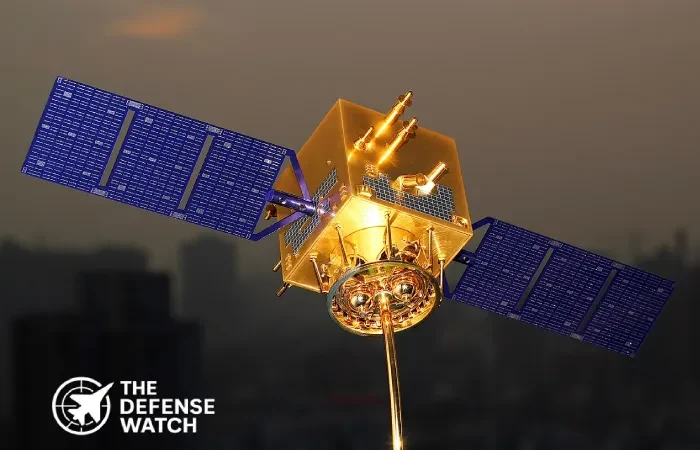
Yaogan Reconnaissance Satellite
Defense Systems Full Specifications
1. General Information
| System Name | Yaogan Reconnaissance Satellite |
| Manufacturer | China Aerospace Science and Technology Corporation (CASC) |
| Country of Origin | China |
| Type / Role | Military Reconnaissance / ISR Satellite |
| In Service | Yes |
| Year Introduced | 2006 |
| Unit Cost | USD 150–300 Million (Estimated) |
2. Performance & Capabilities
| Orbit Type | Low Earth Orbit (LEO) |
| Operational Altitude | 500–1,200 km (estimated) |
| Operational Inclination | Sun-Synchronous / Inclined |
| Imaging / Sensor Type | Optical / SAR / ELINT |
| Resolution / Accuracy | Sub-meter (optical, estimated) |
| Revisit Time / Coverage | Hours to days (constellation-based) |
| Mission Duration | 5–8 years |
3. Payload & Sensor Specifications
| Primary Sensor | Optical Imager or SAR Payload |
| Secondary Sensor | ELINT / Signals Intelligence |
| Data Transmission | Encrypted Military SATCOM |
| Imaging Capability | Day/Night, All-Weather (SAR) |
| Payload Weight | 1,000–2,000 kg (estimated) |
| Onboard Power | Solar Arrays, ~3–5 kW |
4. Guidance, Control & Communication
| Attitude Control System | Reaction Wheels + Thrusters |
| Orbit Control | Chemical Propulsion |
| Communication Link | X-Band / Ka-Band |
| Data Encryption | Military-Grade Encryption |
| Telemetry & Command System | Secure PLA Ground Network |
5. Launch & Deployment
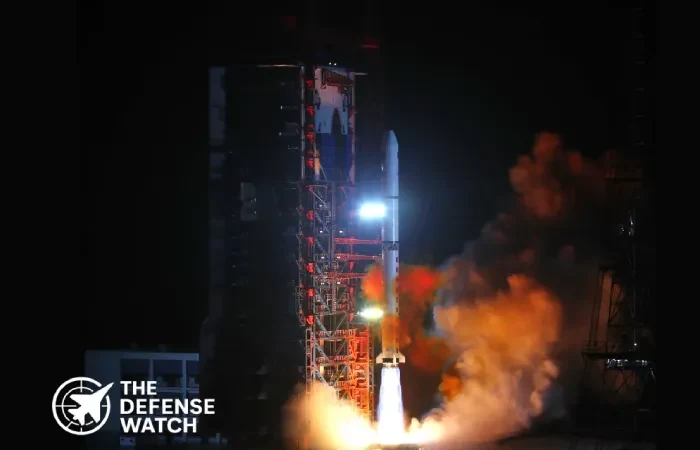
| Launch Vehicle | Long March 2C / 4B |
| Launch Site | Jiuquan, Taiyuan |
| Deployment Orbit | LEO / Sun-Synchronous |
| Launch Mass | 3,000–4,000 kg |
| Deployment Method | Direct Orbital Injection |
6. Operational & Command Use
| Primary Operators | People’s Liberation Army |
| Global Coverage | Yes (via constellation) |
| Combat Proven | Operationally Active |
| Typical Missions | ISR, Maritime Tracking, ELINT |
| Notable Feature | Multi-Orbit ISR Network |
7. Future & Experimental Use
| Planned Upgrades | Improved SAR, AI onboard processing |
| Replacement / Next Gen | Advanced Yaogan Variants |
| Experimental Variants | Counter-space awareness payloads |
| International Collaboration | None disclosed |
PROS
- Persistent ISR through large constellation
- Multi-sensor architecture (optical, SAR, ELINT)
- All-weather, day/night surveillance capability
- Supports long-range missile targeting
- Enhances maritime domain awareness
CONS
- Individual satellite capability likely below top-tier U.S. systems
- High launch and sustainment costs
- Vulnerable to counter-space operations
- Limited transparency on performance
- Dependence on ground station network
Yaogan Reconnaissance Satellites (China ISR Network)
The Chinese Yaogan reconnaissance satellite series is Beijing’s primary space‑based remote sensing and intelligence system. First launched in 2006 and still active, the Yaogan constellation supports a mix of optical imaging, synthetic‑aperture radar and electronic intelligence missions for the People’s Liberation Army and state agencies.
Built by the China Aerospace Science and Technology Corporation and partners such as the Shanghai Academy of Spaceflight Technology, the program spans many satellite variants. Yaogan platforms operate mostly in low Earth and sun‑synchronous orbits to gather detailed Earth observation data across the globe.
Capabilities and Role
Yaogan Reconnaissance Satellite use a range of sensors. Optical imaging units collect high‑resolution visible and infrared data, while SAR payloads penetrate weather and darkness to produce radar imagery. Some variants also carry ELINT gear to detect and geolocate electronic emissions.
Yaogan satellites are launched aboard Long March rockets from sites like Jiuquan and Taiyuan. Individual satellites operate for years, often in constellations tailored to specific sensing roles.
Operational Use
Though official Chinese statements often emphasize civilian uses, defense observers link the series to intelligence, surveillance and reconnaissance tasks across East Asia and beyond. Constellation growth continues, with dozens of Yaogan assets in orbit.
FAQs
What is the purpose of China’s Yaogan satellites?
They provide military ISR, including imaging, radar surveillance, and electronic intelligence.
Are Yaogan satellites military or civilian?
Publicly civilian, but widely assessed as military-operated by the PLA.
Can Yaogan satellites track U.S. naval ships?
Yes, SAR and ELINT variants are believed capable of maritime tracking.
How many Yaogan satellites are in orbit?
Open sources estimate over 40 launched across multiple variants.
How do Yaogan satellites compare to U.S. systems?
They are less advanced individually but compensate through constellation size and redundancy.
Disclaimer Note
The information provided on TheDefenseWatch.com is for general informational purposes only. While we strive to ensure the accuracy, completeness, and timeliness of our content regarding defense and aerospace products, technologies, and specifications, we cannot guarantee that all information is 100% accurate or up-to-date due to the evolving nature of military technology and classified data.TheDefenseWatch.com does not warrant the reliability, suitability, or availability of the information for any specific purpose. Users are advised to consult official sources, such as manufacturers, government publications, or defense agencies, for precise and verified data before making decisions based on our content.We are not affiliated with any defense manufacturers, governments, or military organizations mentioned. Opinions, reviews, and ratings reflect expert analysis but are subjective and should not be considered endorsements. TheDefenseWatch.com is not responsible for any errors, omissions, or consequences arising from the use of this website’s content.External links are provided for convenience and do not imply endorsement. TheDefenseWatch.com reserves the right to update or modify content without prior notice. By using this website, you agree to our Privacy & Cookies Policy.


New Arrivals




Popular Comparisons
-
 Tejas vs Gripen: Key Differences and Capabilities
View Comparison →
Tejas vs Gripen: Key Differences and Capabilities
View Comparison → -
Tejas vs MiG-21 Bison: How India Replaced Its Iconic Supersonic Fighter
View Comparison →
-
F-35 vs F-16: Stealth, Sensors and Combat Roles
View Comparison →
-
Tejas Fighter Jet vs F-16 Fighting Falcon: Capability Compared
View Comparison →
-
Rafale Fighter Jet vs F-16 Fighting Falcon : Which Fighter Has the Edge?
View Comparison →
-
Su-57 Fighter Jet vs J-20 Fighter Jet: Stealth and Air Combat Compared
View Comparison →
-
Mirage 2000 vs Tejas Mk1A: Legacy Combat Power vs Indigenous Modernization
View Comparison →
-
Rafale Fighter Jet vs F-22 Raptor: Which Air Dominance Fighter Has the Edge?
View Comparison →
-
Tejas Fighter Jet vs. Rafale Fighter Jet: India’s Indigenous Fighter Meets France’s Proven Multirole Combat Aircraft
View Comparison →
-
F-22 Raptor vs. F-35 Joint Strike Fighter: Which Fifth Generation Fighter Has the Edge?
View Comparison →


- USS Oregon Visits Norway as U.S. Navy Maintains High North Presence

- Lockheed Martin Unveils PAC-3 Edge Interceptor for U.S. Army
- Northrop Grumman Completes B-2 Spirit of Kitty Hawk Overhaul
- Army Report Finds Systemic Failures Behind Fatal 2025 Midair Collision
- Lockheed Martin to Supply Black Hawk Training Systems to Philippine Air Force
- US Air Force Expands B-21 Raider Production Capacity by 25%
- Boeing Wins $10.9 Million VC-25B Test Maintenance Contract Modification
- Raytheon Wins $6.34 Billion Contract for SM-3 Block IB Missile Production
- USS Abraham Lincoln CO Addresses Crew Welfare Concerns After 322-Day Deployment
- General Dynamics, Primordial Labs to Add Voice Control to Abrams and XM30






Fighter Jets
-
 MIG-31 Fighter Jet
-
J-10CE Fighter Jet
-
Chengdu J-10 Fighter Jet
-
Chengdu J-10C Fighter Jet
-
Gripen E Fighter Jet
-
Tejas Mk1A Fighter Jet
-
Tejas Mk‑2 Fighter Jet
-
F-16V Viper Block 70 Fighter Jet
-
F-15EX Eagle II Fighter
-
Boeing F/A-XX Fighter
-
F-15E Strike Eagle Fighter
-
F/A-18E/F Super Hornet Fighter Jet
-
Saab Gripen F Fighter Jet
-
JAS 39E/F Gripen Fighter Jet
-
JAS 39 Gripen Fighter Jet
-
F-35A Lightning II Fighter Jet
-
F/A-18F Super Hornet
-
J-50 Fighter Jet
-
Spanish EF-18 Hornet Fighter
-
F-47 Fighter Jet
-
F-35i Adir Fighter Jet
-
F-16 Fighting Falcon
-
AIDC T-5 Brave Eagle
-
F-CK-1 Ching-Kuo Fighter







Recent Compares
-
Tejas vs Gripen: Key Differences and Capabilities
View Comparison →
-
Tejas vs MiG-21 Bison: How India Replaced Its Iconic Supersonic Fighter
View Comparison →
-
F-35 vs F-16: Stealth, Sensors and Combat Roles
View Comparison →
-
Tejas Fighter Jet vs F-16 Fighting Falcon: Capability Compared
View Comparison →
-
Rafale Fighter Jet vs F-16 Fighting Falcon : Which Fighter Has the Edge?
View Comparison →
Latest Defense Systems
10 Compares Defense Systems
-
Tejas vs Gripen: Key Differences and Capabilities
View Comparison →
-
Tejas vs MiG-21 Bison: How India Replaced Its Iconic Supersonic Fighter
View Comparison →
-
F-35 vs F-16: Stealth, Sensors and Combat Roles
View Comparison →
-
Tejas Fighter Jet vs F-16 Fighting Falcon: Capability Compared
View Comparison →
-
Rafale Fighter Jet vs F-16 Fighting Falcon : Which Fighter Has the Edge?
View Comparison →
-
Su-57 Fighter Jet vs J-20 Fighter Jet: Stealth and Air Combat Compared
View Comparison →
-
Mirage 2000 vs Tejas Mk1A: Legacy Combat Power vs Indigenous Modernization
View Comparison →
-
Rafale Fighter Jet vs F-22 Raptor: Which Air Dominance Fighter Has the Edge?
View Comparison →
-
Tejas Fighter Jet vs. Rafale Fighter Jet: India’s Indigenous Fighter Meets France’s Proven Multirole Combat Aircraft
View Comparison →
-
F-22 Raptor vs. F-35 Joint Strike Fighter: Which Fifth Generation Fighter Has the Edge?
View Comparison →
- USS Oregon Visits Norway as U.S. Navy Maintains High North Presence
- Lockheed Martin Unveils PAC-3 Edge Interceptor for U.S. Army
- Northrop Grumman Completes B-2 Spirit of Kitty Hawk Overhaul
- Army Report Finds Systemic Failures Behind Fatal 2025 Midair Collision
- Lockheed Martin to Supply Black Hawk Training Systems to Philippine Air Force