
- Home
- Defense Systems
- Missiles & Precision Weapons
- Precision Strike Missile (PrSM)
Precision Strike Missile (PrSM)
Defense Systems Full Specifications
1. General Information
| Name / Designation | Precision Strike Missile PrSM |
| Type / Role | Surface to Surface Precision Strike Missile |
| Country of Origin | United States |
| Manufacturer | Lockheed Martin |
| Service Entry / Year Introduced | Mid 2020s |
| Operational Status | Active and expanding |
2. Performance & Range
| Range | 500 km plus |
| Speed | High supersonic |
| Ceiling / Altitude Limit | Classified |
| Accuracy (CEP) | Very low CEP, precise strike |
| Warhead Type | High Explosive Unitary |
3. Guidance & Targeting
| Guidance System | GPS and Inertial Navigation |
| Targeting Mode | Fire and forget |
| Launch Platform Compatibility | Ground launch systems |
| Seeker Type | GPS INS, future multi mode seeker |
4. Physical Characteristics
| Length | Approx. 4 m |
| Diameter | Classified |
| Wingspan | N/A |
| Launch Weight | Classified |
| Propulsion | Solid fuel rocket |
5. Warhead & Payload
| Warhead Weight | Classified |
| Explosive Type | High Explosive |
| Detonation Mechanism | Impact or delay fuse |
| Payload Options | Conventional |
6. Operational Use & Capabilities
| Operational Range Type | Long |
| Deployment Platform | Ground |
| Target Types | Command centers, air defense, logistics |
| Combat Proven | Limited operational testing |
| Users / Operators | United States |
PROS
- Significantly longer range than ATACMS
- High accuracy with modern guidance
- Compatible with existing HIMARS and M270
- Modular design for future upgrades
- Faster response against time sensitive targets
CONS
- High unit cost per missile
- Limited public combat data so far
- Dependence on GPS for optimal accuracy
- Primarily optimized for fixed land targets
- Full capability rollout still in progress
Precision Strike Missile (PrSM) Long Range Army Missile
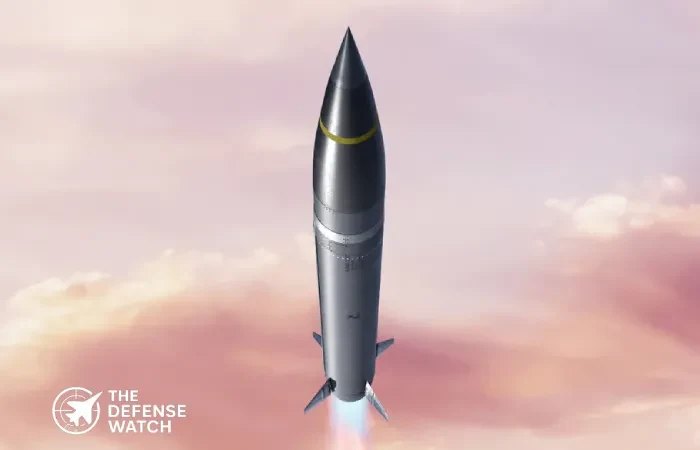
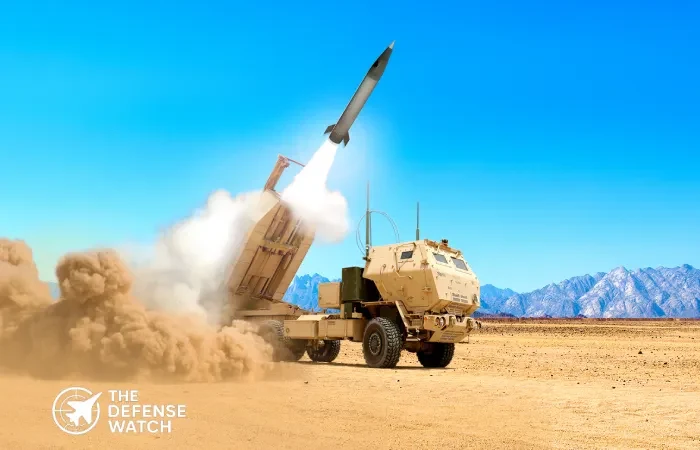
The Precision Strike Missile, known as PrSM, is the U.S. Army next generation long range surface to surface missile. It is designed to replace the aging ATACMS and give U.S. forces deeper reach, faster response, and better accuracy on the modern battlefield.
Manufacturer and Origin
PrSM is developed and produced by Lockheed Martin in the United States. The program is part of the U.S. Army Long Range Precision Fires priority, aimed at countering advanced air defenses, command nodes, and high value targets in contested areas.
Purpose and Role
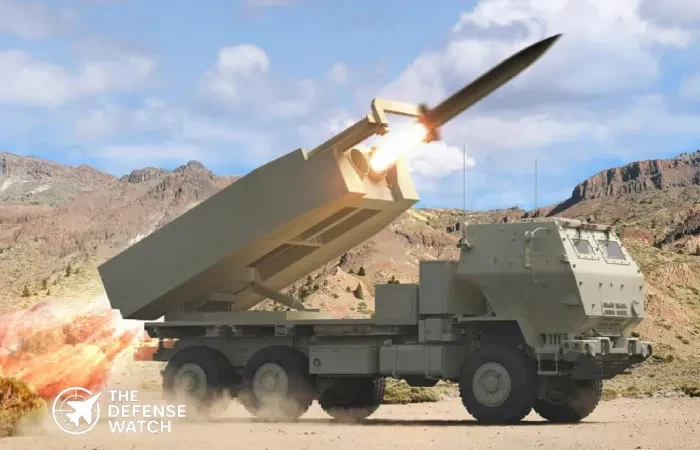
The missile is built to strike critical land targets at long distances using ground launch systems already in service. PrSM is compatible with both HIMARS and the M270 MLRS, allowing rapid fielding without new launch vehicles. Two missiles can be loaded into a single ATACMS pod, doubling firepower per launcher.
Range, Speed, and Accuracy
PrSM offers a range exceeding 500 km, with future variants expected to go even farther. It uses a solid fuel rocket motor and flies at high supersonic speed, reducing enemy reaction time. The missile relies on GPS and inertial navigation for high precision, with very low CEP against fixed targets.
Technology and Warhead
The missile features an open architecture design, allowing future upgrades such as multi mode seekers and new warhead types. Current versions use a unitary high explosive warhead optimized for hardened and time sensitive targets. Planned upgrades include anti ship capability and enhanced targeting in GPS denied environments.
Operational Use
PrSM strengthens U.S. Army deep strike capability and improves joint operations with U.S. Air Force and Navy assets. It is intended for high intensity conflict scenarios and is a key part of U.S. deterrence strategy in the Indo Pacific and European theaters.
Precision Strike Missile (PrSM) Price
The estimated unit cost of the Precision Strike Missile in the United States ranges from USD 3.5 million to USD 4 million per missile, depending on production lot size, configuration, and future capability upgrades.
Disclaimer Note
The information provided on TheDefenseWatch.com is for general informational purposes only. While we strive to ensure the accuracy, completeness, and timeliness of our content regarding defense and aerospace products, technologies, and specifications, we cannot guarantee that all information is 100% accurate or up-to-date due to the evolving nature of military technology and classified data.TheDefenseWatch.com does not warrant the reliability, suitability, or availability of the information for any specific purpose. Users are advised to consult official sources, such as manufacturers, government publications, or defense agencies, for precise and verified data before making decisions based on our content.We are not affiliated with any defense manufacturers, governments, or military organizations mentioned. Opinions, reviews, and ratings reflect expert analysis but are subjective and should not be considered endorsements. TheDefenseWatch.com is not responsible for any errors, omissions, or consequences arising from the use of this website’s content.External links are provided for convenience and do not imply endorsement. TheDefenseWatch.com reserves the right to update or modify content without prior notice. By using this website, you agree to our Privacy & Cookies Policy.





New Arrivals



Popular Comparisons
-
 Tejas vs Gripen: Key Differences and Capabilities
View Comparison →
Tejas vs Gripen: Key Differences and Capabilities
View Comparison → -
Tejas vs MiG-21 Bison: How India Replaced Its Iconic Supersonic Fighter
View Comparison →
-
F-35 vs F-16: Stealth, Sensors and Combat Roles
View Comparison →
-
Tejas Fighter Jet vs F-16 Fighting Falcon: Capability Compared
View Comparison →
-
Rafale Fighter Jet vs F-16 Fighting Falcon : Which Fighter Has the Edge?
View Comparison →
-
Su-57 Fighter Jet vs J-20 Fighter Jet: Stealth and Air Combat Compared
View Comparison →
-
Mirage 2000 vs Tejas Mk1A: Legacy Combat Power vs Indigenous Modernization
View Comparison →
-
Rafale Fighter Jet vs F-22 Raptor: Which Air Dominance Fighter Has the Edge?
View Comparison →
-
Tejas Fighter Jet vs. Rafale Fighter Jet: India’s Indigenous Fighter Meets France’s Proven Multirole Combat Aircraft
View Comparison →
-
F-22 Raptor vs. F-35 Joint Strike Fighter: Which Fifth Generation Fighter Has the Edge?
View Comparison →


- Hegseth Says Autonomous Warfare Has Long Been the Pentagon’s End Goal

- US Rejects Automatic Body Camera Activation for ICE Officers
- Iron Dome Architect Develops New Counter-Swarm Drone Defense System
- U.S. Navy Conducts First F-35C Landing on USS John F. Kennedy
- Huntington Ingalls Wins $56.2 Million Contract for Foreign Nuclear Submarine Support
- US Forces Disable Cargo Ship Attempting to Evade Iran Blockade
- Netherlands Deploys Nuclear-Capable F-35s for NATO Steadfast Noon
- Pakistan Tests Extended-Range Fatah-2 Hypersonic Ballistic Missile
- CSG Acquires 9.5% Stake in MDA Space, Expanding Into Space Technology
- RAF Voyager Completes 14 Missions During Saudi Arabia Deployment





Fighter Jets
-
 MIG-31 Fighter Jet
-
J-10CE Fighter Jet
-
Chengdu J-10 Fighter Jet
-
Chengdu J-10C Fighter Jet
-
Gripen E Fighter Jet
-
Tejas Mk1A Fighter Jet
-
Tejas Mk‑2 Fighter Jet
-
F-16V Viper Block 70 Fighter Jet
-
F-15EX Eagle II Fighter
-
Boeing F/A-XX Fighter
-
F-15E Strike Eagle Fighter
-
F/A-18E/F Super Hornet Fighter Jet
-
Saab Gripen F Fighter Jet
-
JAS 39E/F Gripen Fighter Jet
-
JAS 39 Gripen Fighter Jet
-
F-35A Lightning II Fighter Jet
-
F/A-18F Super Hornet
-
J-50 Fighter Jet
-
Spanish EF-18 Hornet Fighter
-
F-47 Fighter Jet
-
F-35i Adir Fighter Jet
-
F-16 Fighting Falcon
-
AIDC T-5 Brave Eagle
-
F-CK-1 Ching-Kuo Fighter








Recent Compares
-
Tejas vs Gripen: Key Differences and Capabilities
View Comparison →
-
Tejas vs MiG-21 Bison: How India Replaced Its Iconic Supersonic Fighter
View Comparison →
-
F-35 vs F-16: Stealth, Sensors and Combat Roles
View Comparison →
-
Tejas Fighter Jet vs F-16 Fighting Falcon: Capability Compared
View Comparison →
-
Rafale Fighter Jet vs F-16 Fighting Falcon : Which Fighter Has the Edge?
View Comparison →
Latest Defense Systems
10 Compares Defense Systems
-
Tejas vs Gripen: Key Differences and Capabilities
View Comparison →
-
Tejas vs MiG-21 Bison: How India Replaced Its Iconic Supersonic Fighter
View Comparison →
-
F-35 vs F-16: Stealth, Sensors and Combat Roles
View Comparison →
-
Tejas Fighter Jet vs F-16 Fighting Falcon: Capability Compared
View Comparison →
-
Rafale Fighter Jet vs F-16 Fighting Falcon : Which Fighter Has the Edge?
View Comparison →
-
Su-57 Fighter Jet vs J-20 Fighter Jet: Stealth and Air Combat Compared
View Comparison →
-
Mirage 2000 vs Tejas Mk1A: Legacy Combat Power vs Indigenous Modernization
View Comparison →
-
Rafale Fighter Jet vs F-22 Raptor: Which Air Dominance Fighter Has the Edge?
View Comparison →
-
Tejas Fighter Jet vs. Rafale Fighter Jet: India’s Indigenous Fighter Meets France’s Proven Multirole Combat Aircraft
View Comparison →
-
F-22 Raptor vs. F-35 Joint Strike Fighter: Which Fifth Generation Fighter Has the Edge?
View Comparison →
- Hegseth Says Autonomous Warfare Has Long Been the Pentagon’s End Goal
- US Rejects Automatic Body Camera Activation for ICE Officers
- Iron Dome Architect Develops New Counter-Swarm Drone Defense System
- U.S. Navy Conducts First F-35C Landing on USS John F. Kennedy
- Huntington Ingalls Wins $56.2 Million Contract for Foreign Nuclear Submarine Support