


U.S. Army Fields First Operational Hypersonic Battery
The United States military is advancing into a new era of long-range precision strike with hypersonic glide vehicles now entering operational service. The U.S. Army’s Long-Range Hypersonic Weapon, officially designated Dark Eagle in April 2025, represents America’s entry into a hypersonic arms race where adversaries China and Russia have maintained a multi-year lead.
The Army confirmed that the first full battery of Dark Eagle missiles will be operational in 2025, following the successful completion of an end-to-end flight test in December 2024 at Cape Canaveral. This milestone marks the culmination of a development program plagued by technical setbacks, funding challenges, and schedule delays that pushed initial fielding from fiscal year 2023 to late 2025.
The Dark Eagle system consists of four Transporter Erector Launchers mounted on modified M870A4 trailers, each carrying two missiles for a total battery capacity of eight rounds. Designed as a land-based, truck-launched platform, it combines a two-stage solid-fueled booster system with the Common Hypersonic Glide Body (C-HGB), enabling the missile to travel at speeds exceeding Mach 5 and strike targets over 1,725 miles (2,775 km) away.
How Hypersonic Glide Vehicles Function
Hypersonic glide vehicles represent a distinct category of weaponry that exploits the boundary between atmospheric and space-based flight. Unlike traditional ballistic missiles that follow predictable parabolic trajectories, or cruise missiles that fly at constant altitudes, hypersonic glide vehicles combine elements of both technologies while introducing unprecedented maneuverability.
The operational profile begins with a rocket booster accelerating the glide body to hypersonic velocities—speeds exceeding Mach 5, or five times the speed of sound (approximately 3,800 miles per hour). Once the booster reaches altitude and speed, it releases the glide body, which then maneuvers at hypersonic speeds toward its target. The glide vehicle then descends through the upper atmosphere, generating lift from its specially designed aerodynamic surfaces.
This flight regime presents extreme engineering challenges. At hypersonic speeds, friction with atmospheric molecules generates temperatures exceeding 2,000 degrees Fahrenheit, creating plasma sheaths around the vehicle that can disrupt communications and electronics. The shockwaves produced by the craft occur much closer to the vehicle than in supersonic flight, requiring innovative thermal protection systems and materials capable of withstanding sustained heat stress while maintaining structural integrity.
The strategic advantage lies in the glide vehicle’s ability to maneuver unpredictably during its terminal phase. An HGV’s ability to maneuver as it descends into thicker and thicker air allows it to be both more accurate and unpredictable. When the vehicle’s wings begin generating lift as it reaches the upper wisps of the atmosphere, it gains the ability to roll and maneuver. This capability complicates defensive calculations, as the weapon can alter its trajectory to engage different targets or evade interceptor missiles.
Global Hypersonic Programs Transform Strategic Balance
The development and deployment of hypersonic glide vehicles has emerged as a defining competition among major military powers, with China and Russia establishing operational capabilities years ahead of the United States.
Chinese Hypersonic Arsenal
China has aggressively pursued hypersonic weapons development, integrating these systems across multiple service branches. China’s military parade in September showed off a hypersonic “carrier killer” ballistic missile built to attack high-value naval targets. The display included the YJ-17, YJ-19, and YJ-20 systems—a clear signal of Beijing’s intent to hold U.S. carrier strike groups at risk in any Pacific conflict.
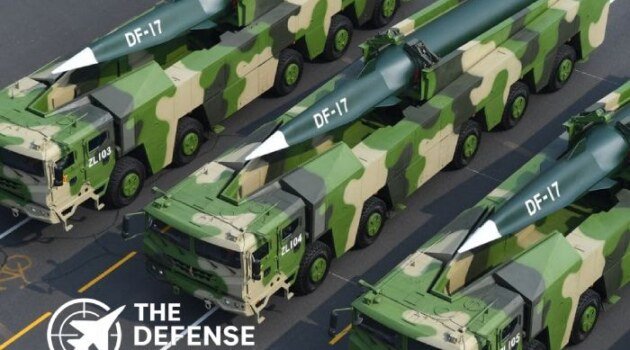
The DF-17 medium-range ballistic missile, first unveiled publicly in 2019, represents China’s most mature operational hypersonic system. Boasting the ability to fly at speeds in excess of Mach 5, the DF-17 is boosted into the atmosphere by a rocket before separating and gliding at hypersonic speeds toward its target. With an estimated range of 1,800 to 2,500 kilometers, the DF-17 poses a considerable threat to regional security.
Beyond theater-range systems, China has tested fractional orbital bombardment systems paired with hypersonic glide vehicles—a combination that would enable attacks from unpredictable trajectories, including approaches over the South Pole that circumvent U.S. missile defense radars optimized for polar approaches.
Russian Operational Systems
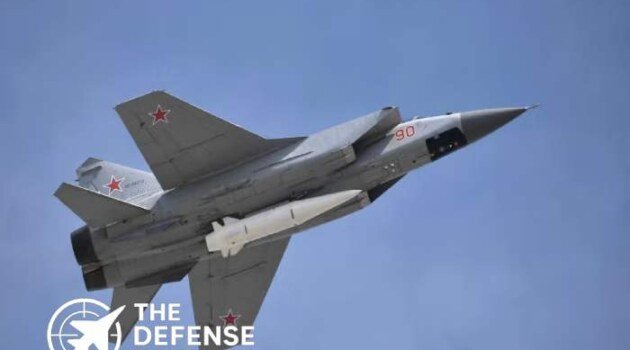
Russia has fielded multiple operational hypersonic weapons systems and employed them in combat operations. The Kh-47M2 Kinzhal, an air-launched hypersonic missile carried by modified MiG-31K interceptors and Tu-22M3 bombers, entered service in 2017. Russia fields a range of hypersonic systems, for example, the sea-launched Zircon (often reported to be traveling at speeds near Mach 8–9) and the Kh-47M2 Kinzhal (air-launched and reported to travel at speeds up to Mach 10), as well as strategic boost-glide programs such as Avangard.
The 3M22 Zircon sea-launched hypersonic cruise missile, deployed aboard surface combatants and submarines, provides Russian naval forces with anti-ship and land-attack capabilities designed to overwhelm Western air defenses. The Avangard strategic boost-glide system, mounted atop intercontinental ballistic missiles, represents Moscow’s answer to U.S. missile defense systems, capable of maneuvering during its terminal phase while traveling at speeds reportedly approaching Mach 27.
Russia has employed hypersonic weapons operationally during its invasion of Ukraine, though with mixed results. Ukrainian forces successfully intercepted a Kinzhal missile using U.S.-provided Patriot air defense systems in May 2023, demonstrating that hypersonic weapons are not invulnerable despite their extreme speed.
U.S. Navy Prepares Sea-Based Hypersonic Strike
While the Army moves toward operational deployment with Dark Eagle, the U.S. Navy is pursuing parallel development of the Conventional Prompt Strike system, which shares the Common Hypersonic Glide Body with the Army’s program but integrates it onto naval platforms.
The lead ship for CPS integration is USS Zumwalt (DDG-1000), the Navy’s most advanced stealth destroyer. USS Zumwalt (DDG-1000) is back in the water after the installation of four missile tubes that will eventually carry the Conventional Prompt Strike weapon. The destroyer underwent extensive modifications at HII’s Ingalls Shipbuilding facility in Pascagoula, Mississippi, where workers removed the ship’s problematic 155mm Advanced Gun System and installed four large-diameter vertical launch tubes.
Each 87-inch diameter tube will accommodate three CPS missiles in a triple-pack configuration, giving each Zumwalt-class destroyer a maximum load of 12 hypersonic weapons. The Navy wants to start testing its Conventional Prompt Strike missile system aboard guided-missile destroyer USS Zumwalt (DG-1000) in 2027 or 2028, with operational deployment targeted for 2026-2027.
The Navy also plans to integrate CPS onto Virginia-class attack submarines equipped with the Virginia Payload Module. This submarine-launched variant would provide a covert hypersonic strike capability, enabling attacks without warning from submarines positioned off enemy coastlines. Initial submarine integration is scheduled for 2028, contingent on the delivery timeline for Block V Virginia-class boats.
Strategic Implications for Naval Warfare
The integration of hypersonic weapons onto surface combatants and submarines fundamentally alters naval strike warfare. The warships will be armed with a hypersonic glide vehicle released from a weapon known as Conventional Prompt Strike, a long range precision missile intended to hold any target in the world at risk of an ultra-long-range, high-speed missile attack.
This capability addresses a critical gap in the Navy’s arsenal. Traditional Tomahawk cruise missiles, while accurate and proven, fly at subsonic speeds and can be intercepted by modern air defense systems. Hypersonic weapons compress decision timelines for adversaries, potentially arriving at their targets before defenders can react effectively. For high-value, time-sensitive targets—such as mobile ballistic missile launchers, command posts, or surface action groups—the speed advantage of hypersonic weapons could prove decisive.
The stealth characteristics of the Zumwalt class compound this advantage. The destroyer’s tumblehome hull design and composite superstructure produce a radar signature comparable to a small fishing vessel, enabling the ship to approach contested waters undetected before launching hypersonic strikes.
Technical Challenges and Cost Constraints
Despite recent successes, U.S. hypersonic weapons programs continue to grapple with significant technical and fiscal challenges that threaten to constrain their operational impact.
Testing Setbacks and Reliability Concerns
The path to operational fielding has been marked by numerous test failures and delays. The first test of the AUR, conducted in June 2022, resulted in failure. Subsequent flight tests, including those planned for March and September 2023, did not occur due to failed preflight checks. Army officials attributed these problems to mechanical engineering issues with the Lockheed Martin-produced launcher rather than the missile itself, but the pattern of delays fueled concerns about industrial base capacity and technical maturity.
Even after successful flight tests in June and December 2024, questions about operational effectiveness persist. The 2024 report from the Director, Operational Test & Evaluation (DOT&E) delivered a stark verdict: “There is not enough data available to assess the operational effectiveness, lethality, suitability, and survivability of the LRHW system.” This assessment indicates that while the Army has proven the missile can fly, critical questions about its ability to reliably destroy intended targets under combat conditions remain unanswered.
Prohibitive Unit Costs
The economics of hypersonic weapons pose serious challenges for large-scale procurement and deployment. A 2023 Congressional Budget Office study estimated that a missile similar to the LRHW would cost approximately $41 million. For context, this is significantly more than a Trident II D5 submarine-launched ballistic missile, which costs around $31 million.
Program costs have also experienced significant growth. According to a June 2025 Government Accountability Office (GAO) assessment, the estimated cost of fielding just the first prototype battery rose by $150 million in a single year, from $2.54 billion in January 2024 to $2.69 billion in January 2025. The Army attributed this increase to rising missile costs and expenses associated with investigating and correcting earlier failures.
These costs create difficult tradeoffs for military planners. At $41 million per missile, a single eight-round Dark Eagle battery represents a $328 million investment in munitions alone, not counting the launcher systems, fire control equipment, training, and logistics support. Army Chief of Staff General Randy George pointedly stated the service was preparing to test “long-range missiles that are a tenth of the price.” This signals recognition that Dark Eagle will likely remain a niche capability reserved for the highest-value targets rather than a weapon available in large quantities.
Multi-Domain Task Force Employment Concept
The Army is fielding Dark Eagle to its Multi-Domain Task Forces, specialized units designed to conduct integrated operations across land, sea, air, space, and cyberspace domains. The 5th Battalion, 3rd Field Artillery Regiment at Joint Base Lewis-McChord, WA, was designated to operate the first battery of eight LRHW missiles. The battalion, also referred to as the Long-Range Fires Battalion, is part of the Army’s 1st Multi-Domain Task Force (MDTF), a unit in the Indo-Pacific-oriented I Corps.
This organizational structure reflects the weapon’s strategic rather than tactical role. MDTFs operate at the theater level, providing joint force commanders with long-range fires capabilities to shape the operational environment before major combat operations begin. In an Indo-Pacific conflict scenario, Dark Eagle batteries could engage targets across the first island chain, suppressing enemy air defenses, striking command nodes, or destroying ballistic missile launchers before they can fire.
Forward Deployment Considerations
The Army has demonstrated interest in forward-deploying Dark Eagle systems to allied nations in critical theaters. In July, the U.S. Army deployed the LRHW outside the continental U.S. for the first time, with two missile launchers participating in Exercise Talisman Sabre 2025 in Australia. This deployment, involving the Hawaii-based Third Multi-Domain Task Force, validated the system’s transportability and ability to operate in expeditionary environments.
Potential basing locations include Japan, where U.S. forces already maintain substantial presence, and Australia, which has signaled willingness to host enhanced American military capabilities. However, forward deployment of hypersonic weapons carries significant diplomatic implications. Host nations must weigh the deterrent value of these systems against the risk of becoming priority targets for adversary strikes in a conflict.
The mobile nature of Dark Eagle provides some mitigation for these concerns. Mounted on standard military trucks, the launchers can relocate rapidly after firing, complicating adversary targeting. This “shoot and scoot” capability—proven effective with rocket artillery in Ukraine—enhances survivability compared to fixed installations.
Budget Reductions Signal Strategic Reassessment
Despite the urgency surrounding hypersonic weapons development, Pentagon funding for these programs has declined substantially. The Pentagon’s FY2026 budget request for hypersonic research was $3.9 billion—down from $6.9 billion in the FY2025 request. This represents a 43% reduction in a single fiscal year, suggesting either increased confidence in current programs or recognition that initial hypersonic capabilities may be sufficient to meet near-term requirements.
The funding decline also reflects cancellation of underperforming programs. The Air Force’s AGM-183 Air-Launched Rapid Response Weapon program was terminated in 2023 after multiple test failures, with officials citing the weapon’s lackluster testing record as justification for ending procurement. The Navy also canceled its Hypersonic Air-Launched Offensive Anti-Surface Warfare (HALO) program in April 2025 due to cost concerns, consolidating resources on the Conventional Prompt Strike system.
These programmatic decisions indicate a shift toward fielding fewer, more mature hypersonic systems rather than pursuing multiple parallel development efforts. The emphasis on the Common Hypersonic Glide Body shared between Army and Navy programs exemplifies this more disciplined approach.
Defensive Countermeasures and Arms Control Challenges
The proliferation of hypersonic weapons has spurred efforts to develop defensive systems capable of detecting, tracking, and intercepting these high-speed threats. However, defending against hypersonic glide vehicles poses extraordinary technical challenges that current missile defense architectures are poorly positioned to address.
Detection and Tracking Limitations
Traditional missile defense systems rely on space-based infrared sensors optimized for detecting the heat signatures of ballistic missile launches and tracking their predictable trajectories. Hypersonic glide vehicles exploit gaps in this architecture. Operating at altitudes between 20 and 60 kilometers—below typical satellite detection capabilities but above most radar coverage—they can evade observation during critical portions of their flight.
The U.S. Missile Defense Agency is developing the Hypersonic and Ballistic Tracking Space Sensor constellation to address this gap. MDA’s FY2025 budget documents state that GPI is to be delivered in FY2035. However, the lengthy development timeline means that offensive hypersonic capabilities will significantly outpace defensive systems for at least a decade.
Interceptor Development Programs
Even with improved sensors, destroying hypersonic targets requires interceptors capable of matching their speed and maneuverability. DARPA’s Glide Breaker program aims to develop critical component technologies for hypersonic defense, but operational systems remain years away. The extreme closing velocities involved—potentially Mach 15 or higher when combining the speed of both interceptor and target—create engagement challenges that existing kinetic kill vehicles cannot reliably address.
Some defense experts argue that the most effective defense against hypersonic weapons is offensive capability to destroy them before launch. “Your best defense is a good offense — you have to be able to deny launch and go after those numbers before they launch”, according to former defense officials. This logic suggests that hypersonic weapons may drive military strategies toward preemption and rapid escalation rather than measured response.
FAQs
What makes hypersonic glide vehicles different from ballistic missiles?Hypersonic glide vehicles maneuver during flight, unlike ballistic missiles that follow predictable trajectories. They operate at lower altitudes than ballistic missiles, making them harder to detect with space-based sensors, and can change course to evade defenses
Can current missile defense systems intercept hypersonic weapons?Advanced systems like the U.S. Patriot have demonstrated limited capability to intercept certain hypersonic weapons under ideal conditions, but reliably defending against maneuvering hypersonic glide vehicles remains an unsolved technical challenge. Detection and tracking represent equally significant obstacles to interception.
When will the U.S. have operational hypersonic weapons?The U.S. Army’s Dark Eagle system is scheduled to reach initial operational capability by the end of fiscal year 2025. The Navy’s Conventional Prompt Strike system is expected to begin testing from USS Zumwalt in 2027-2028, with operational deployment projected for the late 2020s.
Why are hypersonic weapons so expensive?The extreme temperatures, pressures, and speeds involved in hypersonic flight require exotic materials, specialized manufacturing techniques, and extensive testing. Current production runs are small, preventing economies of scale. Unit costs exceeding $40 million per missile are common for U.S. systems.
Do Russia and China already have operational hypersonic weapons?Yes. Russia has deployed the Kinzhal air-launched system, Zircon sea-launched cruise missile, and Avangard strategic boost-glide vehicle. China fields the DF-17 medium-range ballistic missile with a hypersonic glide vehicle and has tested multiple other systems, giving both nations a multi-year lead over the United States.




8 comments
[…] the exercise reflects lessons drawn from recent combat operations involving mechanized units, particularly those of allies or partner nations. For instance, vehicles […]
[…] The HH 60M, introduced to replace older medical evacuation platforms, has become the standard Army MEDEVAC helicopter. It plays a critical role in reducing casualty evacuation times and improving survival rates for wounded personnel during combat operations. […]
[…] of how the Kh-47M2 Kinzhal entered service in 2017 on modified MiG-31K interceptors underscores how early Moscow moved. By […]
[…] being developed by defense startup Castelion. According to program details released this week, the system is expected to reach operational maturity by 2027. The effort aligns with US Department of Defense priorities to field longer-range, […]
[…] vehicles are built to operate in high heat, extreme humidity, and corrosive saltwater conditions. These requirements reflect the […]
[…] The Illinois Portugal State Partnership Agreement aligns with the broader US State Partnership Program, which links US states with partner nations to build long term defense relationships. These partnerships focus on practical cooperation rather than combat operations. […]
[…] planning. These services are essential for maintaining interoperability across allied fleets that operate U.S.-designed combat systems and […]
[…] to maneuver laterally and vertically, complicating tracking and interception. Detailed analysis of hypersonic glide vehicles explains how this lift‑generating design lets them change course during flight, undermining […]