The Hypersonic Arms Race Has Entered a New Phase
Hypersonic weapons 2026 are moving from a technology race into a fielding and operational integration race. China, Russia and the United States have pursued different approaches to high-speed strike, with the DF-27 representing China’s emerging long-range boost-glide capability, Russia’s 3M22 Zircon representing a sea-launched hypersonic cruise missile, and the U.S. Army’s Dark Eagle providing a ground-launched conventional hypersonic strike system.
The three weapons should not be judged simply by which one has the highest advertised Mach number.
They represent different engineering solutions and different military missions.
The DF-27 is associated with a long-range Chinese missile architecture that could provide land-attack and anti-ship capabilities at ranges potentially extending across the Indo-Pacific. Public reporting on the system remains incomplete, and the Pentagon has described the DF-27 as a developing long-range missile with a possible hypersonic glide vehicle option.
Russia’s Zircon is a scramjet-powered hypersonic cruise missile designed primarily for naval strike missions. Russian testing has demonstrated launches from surface ships and submarines, while the system has entered Russian Navy service. CSIS has documented Russian claims of ranges reaching approximately 1,000 kilometers and test speeds approaching Mach 8.
The U.S. Dark Eagle takes a different approach. It uses a common hypersonic glide body launched by a large rocket booster and is designed to deliver conventional precision effects against high-value and time-sensitive targets. The Army formally gave the Long Range Hypersonic Weapon the Dark Eagle name in April 2025.
By 2026, Dark Eagle has also moved beyond laboratory development. U.S. Army forces trained with the system during Valiant Shield 2026 in the Western Pacific, demonstrating its growing role in the Indo-Pacific operational concept.
Key Takeaways
The 2026 hypersonic competition is increasingly defined by range, survivability, launch flexibility, production capacity and operational integration rather than speed alone.
Hypersonic Weapons 2026: What Actually Makes These Systems Different?
Hypersonic weapons generally travel at speeds above Mach 5, but that definition covers several fundamentally different technologies.
A ballistic missile can exceed Mach 5 while following a largely predictable trajectory during portions of its flight. A hypersonic glide vehicle, by contrast, can separate from a booster and maneuver through the upper atmosphere, creating a more complicated tracking problem.
Hypersonic cruise missiles take another approach. They use air-breathing propulsion, such as a scramjet, to maintain high speed within the atmosphere.
This distinction matters when comparing DF-27, Zircon and Dark Eagle.
Hypersonic Glide Vehicles
A boost-glide weapon uses a rocket booster to accelerate the vehicle to high velocity and altitude.
The booster then separates, leaving the glide body to travel through the atmosphere while using aerodynamic lift and maneuvering controls to alter its trajectory.
The combination of speed, altitude and maneuverability can reduce the time available to defensive systems and complicate trajectory prediction.
The U.S. Dark Eagle and China’s suspected DF-27 HGV configuration belong broadly to this category.
Hypersonic Cruise Missiles
Zircon is different.
It uses a scramjet propulsion system after initial acceleration. A scramjet can sustain combustion using incoming atmospheric air at very high speeds.
This gives the missile characteristics closer to a high-speed cruise missile than a boost-glide vehicle.
That distinction gives Zircon a potentially useful combination of speed, maneuverability and naval launch flexibility.
DF-27: China’s Long-Range Hypersonic Challenge
The DF-27 is arguably the most difficult system in this comparison to assess because much of its performance remains classified or uncertain.
Open-source assessments place the weapon in the 5,000 to 8,000 kilometer range class. A 2026 academic assessment based on U.S. government reporting states that the DF-27 may have a hypersonic glide vehicle option and could support land-attack and anti-ship missions.
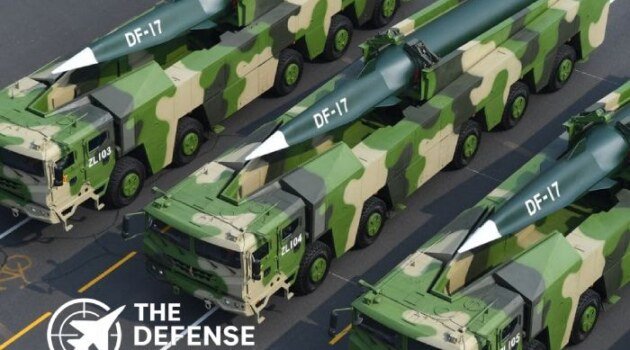
The U.S. Department of Defense has separately described China’s growing conventional missile force and identifies the DF-17 as an operational hypersonic glide vehicle system. The broader PLA Rocket Force architecture also includes long-range DF-26 missiles and other precision-strike weapons.
Why DF-27 Matters
If the higher-end range estimates are accurate, DF-27 could occupy an important space between regional ballistic missiles and China’s strategic intercontinental systems.
Its potential missions include:
- Long-range land attack
- Anti-ship strike
- Counter-intervention operations
- Attacks against high-value fixed targets
- Strategic conventional deterrence
The anti-ship possibility is particularly important for the Indo-Pacific.
A long-range maneuvering weapon capable of threatening surface combatants would fit naturally within China’s broader anti-access and area-denial strategy.
DF-27 Performance Remains Difficult to Verify
There is an important caveat.
The DF-27 does not have the same level of publicly documented operational information as systems such as the U.S. Dark Eagle.
Public reporting has varied over time regarding its deployment status, configuration and precise range.
For that reason, the most defensible assessment is that the DF-27 represents a major Chinese long-range missile development effort with a potential hypersonic glide capability, rather than treating every published specification as confirmed.
That distinction is important for credible defense journalism.
Zircon: Russia’s Naval Hypersonic Strike Weapon
Russia’s 3M22 Zircon takes a different path.
The missile is a scramjet-powered hypersonic cruise missile developed by NPO Mashinostroyeniya for Russian naval forces.
CSIS has documented Russian tests from both surface ships and submarines. A 2020 test involved a reported flight of approximately 450 kilometers at a claimed maximum speed of Mach 8. Later Russian claims placed the missile’s range at approximately 1,000 kilometers.
Naval Launch Flexibility
One of Zircon’s most important advantages is its integration with Russian naval platforms.
The weapon is associated with the Russian 3S-14 launch architecture, allowing it to be deployed from compatible surface combatants and submarines.
That creates a different threat model from a truck-launched weapon.
A naval platform can reposition before launch, creating uncertainty about the direction from which the weapon may arrive.
This is particularly significant for maritime forces operating in enclosed or heavily contested waters.
Zircon’s Strengths
Zircon’s principal strengths include:
- High terminal velocity
- Scramjet propulsion
- Naval launch capability
- Surface and submarine integration
- Potential land-attack and anti-ship applications
- Reduced warning time for defended targets
Its primary limitation in this comparison is range.
Even if the upper-end Russian range claims are accepted, Zircon does not appear to occupy the same long-range class as the estimated DF-27.
That does not make it less dangerous. It means the weapon solves a different operational problem.
Dark Eagle: America’s Most Advanced Fielded Hypersonic Strike System
The U.S. Army’s Long Range Hypersonic Weapon, officially designated Dark Eagle, is built around the Common Hypersonic Glide Body.
The system uses a large rocket booster to accelerate the glide body before the vehicle separates and conducts the remainder of its flight.
The Congressional Research Service has reported a range of approximately 1,725 miles, or roughly 2,776 kilometers. The Army has stated that the weapon can travel well beyond 3,800 miles per hour.
The system is designed for conventional precision strike against high-payoff and time-sensitive targets in heavily defended environments.
Common Army and Navy Technology
One of the most important features of the U.S. approach is joint development.
The Army’s Dark Eagle and Navy’s Conventional Prompt Strike share a common hypersonic missile architecture.
The Navy describes the weapon as consisting of a Common Hypersonic Glide Body and a two-stage booster, with each service developing launchers and weapon-control systems suited to its own platform.
This approach is intended to reduce duplication while giving the United States land, surface and submarine launch options.
Dark Eagle Enters the Indo-Pacific
The most important development in 2026 is not another laboratory test.
It is operational integration.
U.S. Army personnel trained with Dark Eagle during Valiant Shield 2026 in the Western Pacific. The Army’s own reporting shows the system operating with the 7th Infantry Division’s Multi-Domain Command Pacific during the exercise.
The deployment places a long-range conventional hypersonic capability within the geographic environment where the United States expects to confront China’s increasingly sophisticated missile forces.
That makes Dark Eagle strategically significant even before the Army reaches full-scale fleet quantities.
DF-27 vs Zircon vs Dark Eagle: Technical Comparison
Metric DF-27 3M22 Zircon Dark Eagle Country China Russia United States General type Ballistic missile with potential HGV configuration Hypersonic cruise missile Boost-glide weapon Propulsion Rocket booster plus possible HGV Rocket booster and scramjet Large solid-fuel booster plus HGV Approximate range Reported 5,000 to 8,000 km class Claimed up to about 1,000 km Reported about 1,725 miles, approximately 2,776 km Speed Not reliably disclosed Russian claims around Mach 8 to 9 More than 3,800 mph stated by Army Launch platforms Ground based Surface ships and submarines Mobile ground launcher Primary role Long-range land attack and possible anti-ship strike Anti-ship and land attack Conventional precision strike Glide vehicle Reported possible capability No Yes Operational transparency Low Moderate High relative to competitors 2026 status Limited public information Operational Russian system Operational integration and fielding Key advantage Potential reach and geographic coverage Naval mobility and high speed Precision, mobility and U.S. joint architecture Performance figures should be treated carefully because several values are based on official claims, intelligence assessments or open-source estimates rather than independently verified operational data.
Which Is Fastest?
This is one of the most difficult questions to answer accurately.
Russia has publicly associated Zircon with speeds around Mach 8 to Mach 9.
The U.S. Army describes Dark Eagle as traveling at more than 3,800 miles per hour, although exact operational flight profiles and terminal speeds are not publicly disclosed.
China has not publicly provided enough reliable data to establish a confirmed maximum speed for DF-27.
More importantly, maximum velocity does not determine the overall effectiveness of a hypersonic weapon.
A weapon traveling at Mach 9 but operating inside a shorter engagement envelope can have less strategic reach than a slower weapon with substantially greater range.
The meaningful comparison therefore involves:
speed + range + maneuverability + survivability + targeting + launch position + sensor support + production capacity.
Which Has the Longest Range?
Based on currently available open-source assessments, the DF-27 appears to have the greatest potential range.
The reported 5,000 to 8,000 kilometer range class would place it substantially beyond Zircon and Dark Eagle.
However, the range figure should not be treated as a confirmed operational specification.
The Dark Eagle’s approximately 1,725-mile reported range is considerably more transparent because the U.S. Army and Congressional Research Service have publicly described the system and its mission.
Zircon remains a shorter-range weapon by comparison, but its naval launch architecture can partially compensate by moving the launch platform closer to the target.
Which System Is Most Operationally Mature?
Dark Eagle has the strongest publicly documented operational integration among the three.
The United States has openly described its development architecture, conducted end-to-end testing, formally designated the weapon and trained units with the system in the Indo-Pacific.
Russia’s Zircon is also operational, but reliable independent information about the size of the inventory, production rate and combat effectiveness is limited.
China’s DF-27 is the least transparent.
That does not mean it is less capable. It means outside analysts have less information with which to evaluate its true operational status.
The Real Advantage: Launch Architecture
The most important difference may not be the missile itself.
It is where the missile can be launched.
China
China’s land-based missile architecture provides the PLA Rocket Force with extensive geographic reach from mainland territory.
A long-range DF-27 could threaten targets across large portions of the Western Pacific without requiring China to expose aircraft or naval forces.
Russia
Russia can deploy Zircon from ships and submarines.
That gives Moscow the ability to generate mobile launch points and complicate maritime defense planning.
United States
Dark Eagle provides the U.S. Army with a mobile land-based strike capability.
The system becomes particularly relevant when combined with distributed forces, intelligence networks, long-range sensors and allied basing.
This is why the 2026 Guam deployment is strategically important.
It demonstrates the U.S. approach of placing long-range precision weapons inside the Indo-Pacific operating environment rather than relying exclusively on aircraft and surface ships.
Hypersonic Weapons and Integrated Air Defense
The rise of hypersonic weapons is also forcing a major change in missile defense.
Traditional ballistic missile defense relies heavily on predicting the trajectory of an incoming object.
Hypersonic glide vehicles can maneuver through the atmosphere, potentially changing their flight path and reducing the usefulness of a purely ballistic trajectory prediction.
CSIS has described this as a complex air defense challenge because hypersonic weapons combine characteristics associated with ballistic missiles and maneuvering atmospheric weapons.
This means future defenses will require a combination of:
- Space-based missile warning
- Persistent infrared sensing
- Long-range tracking radars
- Sensor fusion
- Advanced command and control
- High-speed interceptors
- Potentially directed-energy systems
- Distributed defensive architecture
The objective is not simply to build a faster interceptor.
The defense network must detect the weapon earlier, maintain a continuous track and provide a fire-control solution against a maneuvering target.
Dark Eagle’s Biggest Weakness May Be Production
The United States has made significant progress with hypersonic development, but production remains a major concern.
A 2026 Government Accountability Office review found that the Army and Navy are investing more than $50 billion in the shared hypersonic effort. It also identified coordination problems between the services and delays in the Navy’s integration of Conventional Prompt Strike onto Zumwalt-class destroyers.
The Congressional Research Service has also reported delays affecting additional Dark Eagle batteries, including missile delivery and testing challenges.
This exposes an important weakness in the American approach.
Developing an extremely sophisticated weapon is only part of the problem.
The United States must also produce enough weapons to matter during a prolonged conflict.
A small inventory of expensive hypersonic missiles can deliver powerful effects, but it cannot provide the same operational depth as a large conventional missile arsenal.
China Has a Different Scale Problem
China’s advantage is not simply technology.
It is scale.
The PLA Rocket Force operates one of the world’s largest land-based missile forces, including large numbers of short-, medium- and intermediate-range systems.
The DF-27 would therefore fit into an existing ecosystem rather than operate as a stand-alone capability.
That ecosystem includes:
- DF-17 hypersonic glide weapons
- DF-21 anti-ship ballistic missiles
- DF-26 intermediate-range ballistic missiles
- Long-range cruise missiles
- ISR satellites
- Over-the-horizon sensors
- Maritime surveillance systems
- Aircraft and unmanned systems
This creates a larger kill-chain problem for an adversary.
A hypersonic missile does not need to defeat an enemy by itself.
It needs to be part of a network that finds, identifies, tracks and engages the target.
Russia’s Zircon Provides a Different Strategic Option
Russia’s strongest argument for Zircon is platform mobility.
A submarine carrying hypersonic cruise missiles does not have the same geographic signature as a fixed ground-based missile battery.
A surface combatant can also reposition before launching.
This gives Zircon an important role within Russia’s naval deterrence architecture.
Its value increases when paired with long-range maritime surveillance, submarines, electronic warfare and other anti-ship weapons.
However, questions remain regarding actual production volumes, combat performance and the ability of Russian industry to sustain large-scale production under wartime conditions.
Hypersonic Weapons 2026 and the Cost Problem
The hypersonic arms race is expensive.
A modern hypersonic weapon requires advanced propulsion, thermal protection, guidance, flight-control technology, specialized materials and extensive flight testing.
The U.S. Navy’s FY2027 documentation shows the Conventional Prompt Strike program developing a common missile architecture for both Army and Navy use, while also pursuing future technology insertion to improve capability, manufacturing and affordability.
Lockheed Martin has also announced a Next Generation Glide Body program aimed at creating a more affordable and scalable hypersonic glide vehicle architecture. The company says the design is intended to support greater production capacity and multiple launch platforms.
This is significant because the next phase of the competition will not be won by laboratory performance alone.
It will be won by industrial capacity.
Who Leads the Hypersonic Arms Race in 2026?
There is no single winner across every category.
1. Range: DF-27
Winner: China, based on open-source estimates
The reported 5,000 to 8,000 kilometer range class gives DF-27 a potential reach advantage over Dark Eagle and Zircon. However, the uncertainty surrounding its configuration and operational status prevents a definitive judgment.
2. Naval Strike: Zircon
Winner: Russia
Zircon’s ability to operate from both surface ships and submarines gives Russia a highly mobile maritime hypersonic strike option.
3. Operational Transparency and Integration: Dark Eagle
Winner: United States
The U.S. Army has publicly documented testing, designation, unit training and Indo-Pacific deployment of Dark Eagle.
4. Strategic Geographic Position: DF-27
Winner: China
China can deploy long-range missile forces from mainland territory while using its broader surveillance and anti-access architecture to support targeting.
5. Joint-Service Architecture: Dark Eagle
Winner: United States
The common hypersonic missile architecture links Army and Navy requirements and creates a pathway toward land, surface and submarine launch options.
6. Overall 2026 Assessment
First: Dark Eagle for demonstrated operational integration
Second: DF-27 for potential strategic reach
Third: Zircon for naval hypersonic strike
This ranking should not be interpreted as a simple ranking of missile lethality.
The systems perform different missions.
What Comes Next?
The next generation of hypersonic competition is likely to focus on five areas.
More Survivable Sensors
Hypersonic weapons are only as effective as their targeting data.
Future systems will depend increasingly on satellites, aircraft, unmanned systems and distributed sensors.
Better Thermal Protection
At hypersonic speed, atmospheric friction creates extreme heating.
Thermal protection systems therefore remain one of the central engineering challenges.
Improved Maneuverability
Future glide bodies are likely to emphasize controlled maneuvering and greater cross-range capability.
The objective is to make interception even more difficult while maintaining precision.
Larger Production Capacity
This may become the decisive factor.
A country that can produce hundreds of capable missiles may have a greater wartime advantage than a country possessing a small number of technically superior weapons.
Hypersonic Defense
Offensive hypersonic development is also accelerating defensive programs.
The United States and allies are investing in improved detection, tracking and interception technologies because conventional air defense systems were not designed around large numbers of maneuvering hypersonic targets.
The Strategic Bottom Line
Hypersonic Weapons 2026 are no longer simply a contest over who can fly fastest.
China, Russia and the United States have developed different answers to the same strategic problem.
China is pursuing long-range missile systems that can support a broader anti-access and area-denial architecture.
Russia has emphasized naval mobility and high-speed cruise missile technology through Zircon.
The United States is building a joint Army-Navy boost-glide architecture centered on the Common Hypersonic Glide Body and is now moving Dark Eagle into operational Indo-Pacific activities.
The most important development in 2026 is therefore not the advertised Mach number of any single missile.
It is the transition from development to operational integration, distributed deployment, production and sustainment.
Dark Eagle has the clearest publicly demonstrated path toward operational employment.
DF-27 may ultimately offer the greatest range, but its precise capabilities remain difficult to verify.
Zircon gives Russia a mature naval hypersonic strike option with a different operational concept.
The wider competition will ultimately be decided by the ability to connect hypersonic weapons to sensors, command networks, launch platforms and industrial production.
For the United States and its allies, the challenge is therefore twofold: field enough offensive hypersonic weapons to provide credible long-range conventional strike options while simultaneously developing an integrated defensive architecture capable of detecting and defeating the next generation of high-speed maneuvering threats.
The hypersonic arms race has entered its next phase.
The question is no longer who can build a hypersonic weapon.
It is who can field, sustain, protect and integrate them at meaningful scale.



U.S. Evaluates Dark Eagle Hypersonic Missile Deployment Against Iranian Targets
The Dark Eagle hypersonic missile is under consideration by the United States as a potential tool to strike Iranian ballistic missile launchers, signaling a shift in how Washington may address rapidly evolving threats in the Middle East.
According to reporting by defense sources, U.S. planners are assessing whether the Dark Eagle system, officially known as the Long Range Hypersonic Weapon (LRHW), could provide a fast, survivable strike option against mobile and hardened missile assets operated by Iran.
- Iran and Russia reportedly signed a secret €500 million missile deal in December 2025, according to the Financial Times.
- The pact covers delivery of 500 Verba man portable air defense launch units and 2,500 9M336 missiles through 2027 to 2029.
- The Verba systems are infrared guided MANPADS designed to target low altitude threats including drones and cruise missiles.
- The deal follows damage to Iran’s air defense network during the 2025 conflict with Israel.
- The agreement reflects deepening military cooperation between Tehran and Moscow.
This comes as concerns grow over Iran’s expanding ballistic missile inventory and its ability to disperse launch systems across difficult terrain, complicating traditional targeting methods.
Why Dark Eagle Changes The Strike Equation
The Dark Eagle hypersonic missile offers a combination of speed, maneuverability, and precision that conventional strike systems struggle to match. Traveling at speeds above Mach 5, the system can penetrate advanced air defenses and reduce enemy reaction time.
Unlike ballistic missiles, hypersonic glide vehicles follow unpredictable flight paths, making interception far more difficult. For U.S. forces, this translates into a credible option to neutralize high-value targets such as transporter erector launchers before they can fire.
The operational value is clear. Iranian missile units often rely on mobility and concealment. A weapon like Dark Eagle compresses the decision window, allowing strikes within minutes rather than hours.
This capability is especially relevant in a scenario where early neutralization of missile threats could prevent escalation or limit damage to regional bases and allied infrastructure.
Strategic Context: Rising Tensions And Expanding Threats
The consideration of deploying the Dark Eagle hypersonic missile reflects broader geopolitical pressure. Iran continues to invest heavily in missile development, including solid-fuel systems that are quicker to launch and harder to detect.
Recent intelligence assessments have highlighted improvements in Iran’s dispersal tactics and hardened infrastructure. Combined with reported defense cooperation with Russia, this trend has raised concerns in Washington about the survivability of existing deterrence tools.

From a strategic standpoint, introducing hypersonic weapons into the region would send a clear signal. It demonstrates the ability to hold time-sensitive targets at risk, even in heavily defended environments.
However, such a move also carries escalation risks. Hypersonic systems are often viewed as strategic assets, and their deployment could be interpreted as a shift toward more aggressive posturing.
Operational Challenges And Deployment Considerations
While the Dark Eagle hypersonic missile offers clear advantages, its deployment is not without challenges.
First, the system is still progressing toward full operational capability within the U.S. Army. Fielding timelines, logistics, and integration with existing command structures remain critical factors.
Second, basing options in the Middle East would need careful evaluation. Forward deployment increases responsiveness but also exposes high-value assets to potential counterstrikes.
Third, targeting mobile launchers requires robust intelligence, surveillance, and reconnaissance support. Hypersonic speed alone does not guarantee success without accurate and timely target data.
These factors suggest that any deployment decision would likely be part of a broader integrated strategy rather than a standalone solution.
Analysis: A Shift Toward Rapid Precision Strike
The potential use of the Dark Eagle hypersonic missile highlights a larger shift in U.S. military thinking. The focus is moving toward rapid, precision strikes against fleeting targets in contested environments.
Traditional airpower and cruise missiles remain important, but they may face limitations against advanced air defenses and mobile threats. Hypersonic systems fill this gap by combining speed with survivability.
In the Middle East context, this capability could reshape deterrence dynamics. It introduces uncertainty for adversaries relying on mobility and concealment, potentially reducing their confidence in surviving a first strike.
At the same time, it raises questions about escalation control. Faster weapons compress decision timelines not only for the attacker but also for the defender.
The U.S. Army has confirmed a further delay in the deployment of its Dark Eagle hypersonic missile system, now scheduled for early 2026. The unit trained to operate the system is ready, but the missile itself remains in testing and integration.
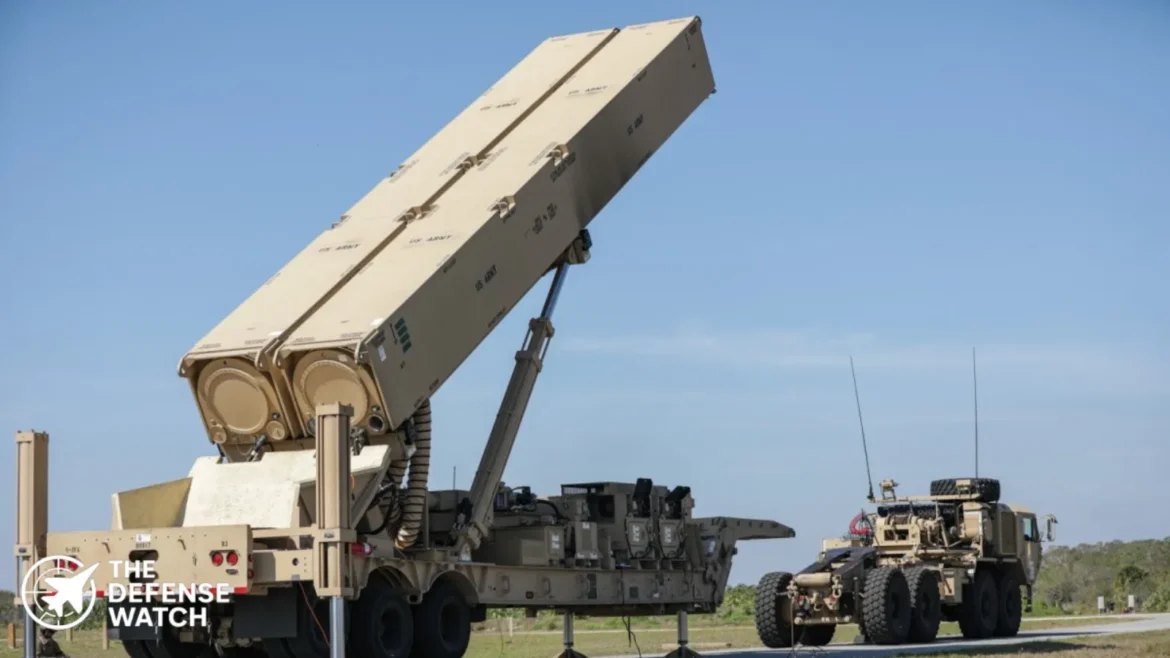
The Dark Eagle, part of the Army’s $10.4 billion hypersonic weapons program, is designed to provide long-range conventional strike capability using a boost-glide system capable of hypersonic speeds. Despite launchers and support vehicles being in place, the missile has not completed the necessary integration, safety, and readiness tests for operational deployment.
This marks the third missed deadline for the program, following earlier delays in 2023 and 2025, reflecting the technical challenges of developing weapons that operate at extreme speeds and temperatures while maintaining accuracy. The system is being developed by Lockheed Martin, with the Army overseeing integration, testing, and deployment.
In December 2025, the Army activated the first battery intended to operate Dark Eagle, citing it as a significant advancement, though missiles were not yet operational. The Government Accountability Office estimates the first battery will cost approximately $2.7 billion, including missiles.
The delay comes amid growing concerns over hypersonic capabilities, as China and Russia have already fielded operational systems, including Russia’s use in Ukraine. The U.S. Army maintains that rigorous testing and system maturity are critical to ensure reliability, sustainability, and effectiveness in operational environments.
The program’s postponement also serves as an early test for Defense Secretary Pete Hegseth, who has emphasized accelerating weapons deployment and personally inspected the Dark Eagle launcher in December at Huntsville, Alabama.

U.S. Army Fields First Operational Hypersonic Battery
The United States military is advancing into a new era of long-range precision strike with hypersonic glide vehicles now entering operational service. The U.S. Army’s Long-Range Hypersonic Weapon, officially designated Dark Eagle in April 2025, represents America’s entry into a hypersonic arms race where adversaries China and Russia have maintained a multi-year lead.
The Army confirmed that the first full battery of Dark Eagle missiles will be operational in 2025, following the successful completion of an end-to-end flight test in December 2024 at Cape Canaveral. This milestone marks the culmination of a development program plagued by technical setbacks, funding challenges, and schedule delays that pushed initial fielding from fiscal year 2023 to late 2025.
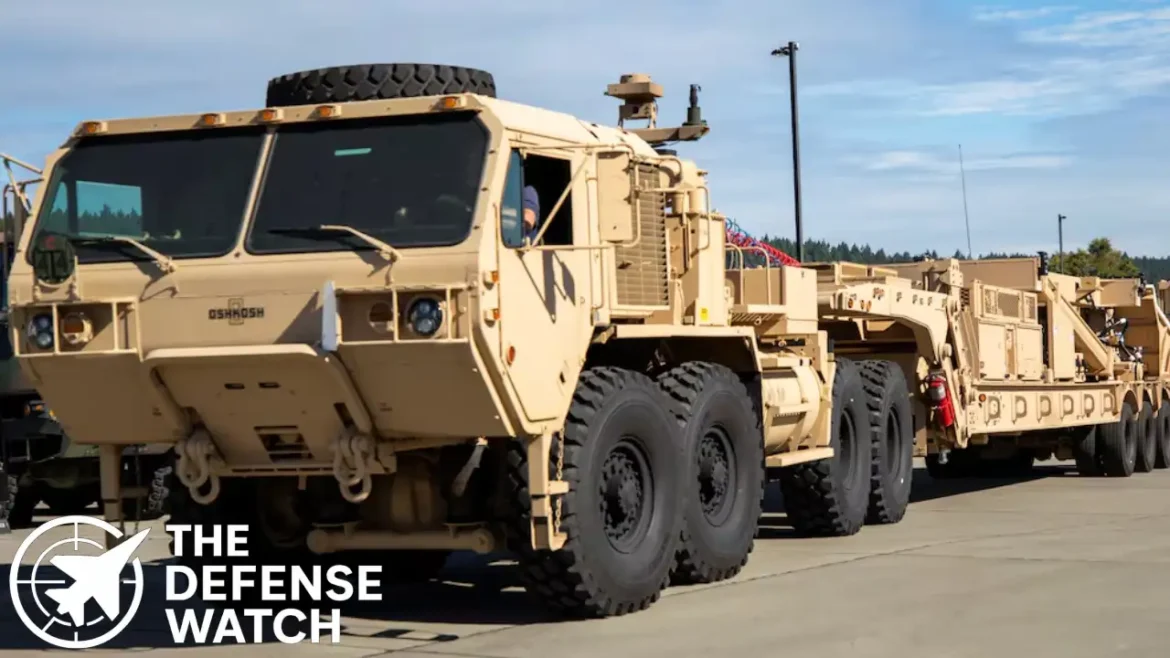
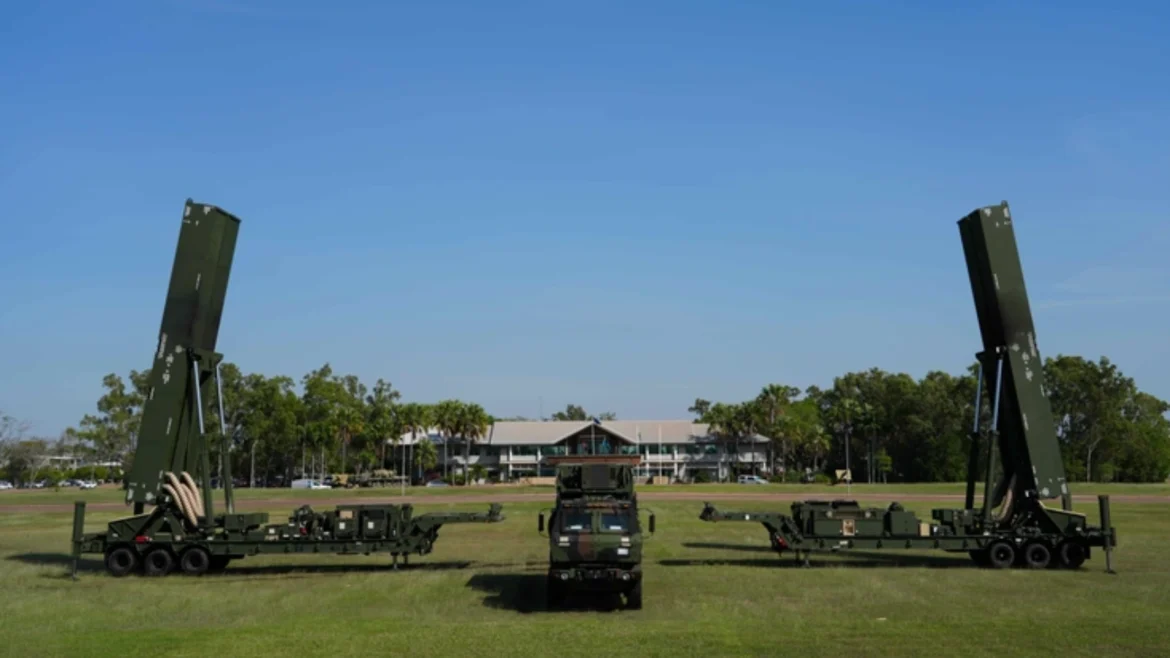
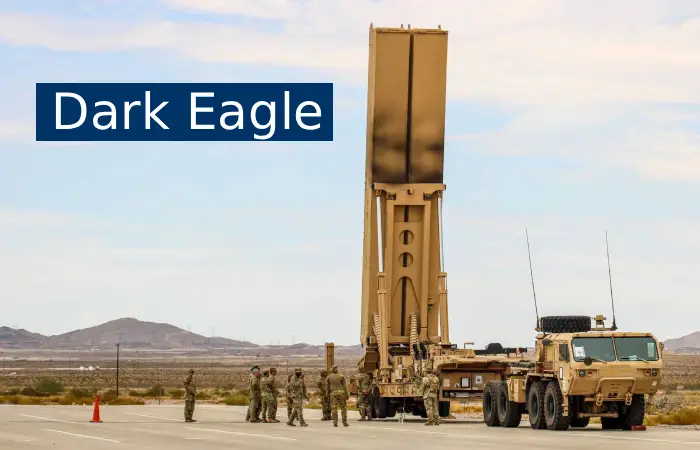
The Dark Eagle system consists of four Transporter Erector Launchers mounted on modified M870A4 trailers, each carrying two missiles for a total battery capacity of eight rounds. Designed as a land-based, truck-launched platform, it combines a two-stage solid-fueled booster system with the Common Hypersonic Glide Body (C-HGB), enabling the missile to travel at speeds exceeding Mach 5 and strike targets over 1,725 miles (2,775 km) away.
How Hypersonic Glide Vehicles Function
Hypersonic glide vehicles represent a distinct category of weaponry that exploits the boundary between atmospheric and space-based flight. Unlike traditional ballistic missiles that follow predictable parabolic trajectories, or cruise missiles that fly at constant altitudes, hypersonic glide vehicles combine elements of both technologies while introducing unprecedented maneuverability.
The operational profile begins with a rocket booster accelerating the glide body to hypersonic velocities—speeds exceeding Mach 5, or five times the speed of sound (approximately 3,800 miles per hour). Once the booster reaches altitude and speed, it releases the glide body, which then maneuvers at hypersonic speeds toward its target. The glide vehicle then descends through the upper atmosphere, generating lift from its specially designed aerodynamic surfaces.
This flight regime presents extreme engineering challenges. At hypersonic speeds, friction with atmospheric molecules generates temperatures exceeding 2,000 degrees Fahrenheit, creating plasma sheaths around the vehicle that can disrupt communications and electronics. The shockwaves produced by the craft occur much closer to the vehicle than in supersonic flight, requiring innovative thermal protection systems and materials capable of withstanding sustained heat stress while maintaining structural integrity.
The strategic advantage lies in the glide vehicle’s ability to maneuver unpredictably during its terminal phase. An HGV’s ability to maneuver as it descends into thicker and thicker air allows it to be both more accurate and unpredictable. When the vehicle’s wings begin generating lift as it reaches the upper wisps of the atmosphere, it gains the ability to roll and maneuver. This capability complicates defensive calculations, as the weapon can alter its trajectory to engage different targets or evade interceptor missiles.
Global Hypersonic Programs Transform Strategic Balance
The development and deployment of hypersonic glide vehicles has emerged as a defining competition among major military powers, with China and Russia establishing operational capabilities years ahead of the United States.
Chinese Hypersonic Arsenal
China has aggressively pursued hypersonic weapons development, integrating these systems across multiple service branches. China’s military parade in September showed off a hypersonic “carrier killer” ballistic missile built to attack high-value naval targets. The display included the YJ-17, YJ-19, and YJ-20 systems—a clear signal of Beijing’s intent to hold U.S. carrier strike groups at risk in any Pacific conflict.
The DF-17 medium-range ballistic missile, first unveiled publicly in 2019, represents China’s most mature operational hypersonic system. Boasting the ability to fly at speeds in excess of Mach 5, the DF-17 is boosted into the atmosphere by a rocket before separating and gliding at hypersonic speeds toward its target. With an estimated range of 1,800 to 2,500 kilometers, the DF-17 poses a considerable threat to regional security.
Beyond theater-range systems, China has tested fractional orbital bombardment systems paired with hypersonic glide vehicles—a combination that would enable attacks from unpredictable trajectories, including approaches over the South Pole that circumvent U.S. missile defense radars optimized for polar approaches.
Russian Operational Systems
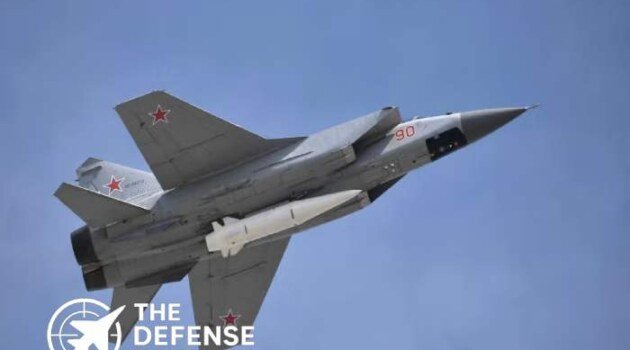
Russia has fielded multiple operational hypersonic weapons systems and employed them in combat operations. The Kh-47M2 Kinzhal, an air-launched hypersonic missile carried by modified MiG-31K interceptors and Tu-22M3 bombers, entered service in 2017. Russia fields a range of hypersonic systems, for example, the sea-launched Zircon (often reported to be traveling at speeds near Mach 8–9) and the Kh-47M2 Kinzhal (air-launched and reported to travel at speeds up to Mach 10), as well as strategic boost-glide programs such as Avangard.
The 3M22 Zircon sea-launched hypersonic cruise missile, deployed aboard surface combatants and submarines, provides Russian naval forces with anti-ship and land-attack capabilities designed to overwhelm Western air defenses. The Avangard strategic boost-glide system, mounted atop intercontinental ballistic missiles, represents Moscow’s answer to U.S. missile defense systems, capable of maneuvering during its terminal phase while traveling at speeds reportedly approaching Mach 27.
Russia has employed hypersonic weapons operationally during its invasion of Ukraine, though with mixed results. Ukrainian forces successfully intercepted a Kinzhal missile using U.S.-provided Patriot air defense systems in May 2023, demonstrating that hypersonic weapons are not invulnerable despite their extreme speed.
U.S. Navy Prepares Sea-Based Hypersonic Strike
While the Army moves toward operational deployment with Dark Eagle, the U.S. Navy is pursuing parallel development of the Conventional Prompt Strike system, which shares the Common Hypersonic Glide Body with the Army’s program but integrates it onto naval platforms.
The lead ship for CPS integration is USS Zumwalt (DDG-1000), the Navy’s most advanced stealth destroyer. USS Zumwalt (DDG-1000) is back in the water after the installation of four missile tubes that will eventually carry the Conventional Prompt Strike weapon. The destroyer underwent extensive modifications at HII’s Ingalls Shipbuilding facility in Pascagoula, Mississippi, where workers removed the ship’s problematic 155mm Advanced Gun System and installed four large-diameter vertical launch tubes.
Each 87-inch diameter tube will accommodate three CPS missiles in a triple-pack configuration, giving each Zumwalt-class destroyer a maximum load of 12 hypersonic weapons. The Navy wants to start testing its Conventional Prompt Strike missile system aboard guided-missile destroyer USS Zumwalt (DG-1000) in 2027 or 2028, with operational deployment targeted for 2026-2027.
The Navy also plans to integrate CPS onto Virginia-class attack submarines equipped with the Virginia Payload Module. This submarine-launched variant would provide a covert hypersonic strike capability, enabling attacks without warning from submarines positioned off enemy coastlines. Initial submarine integration is scheduled for 2028, contingent on the delivery timeline for Block V Virginia-class boats.
Strategic Implications for Naval Warfare
The integration of hypersonic weapons onto surface combatants and submarines fundamentally alters naval strike warfare. The warships will be armed with a hypersonic glide vehicle released from a weapon known as Conventional Prompt Strike, a long range precision missile intended to hold any target in the world at risk of an ultra-long-range, high-speed missile attack.
This capability addresses a critical gap in the Navy’s arsenal. Traditional Tomahawk cruise missiles, while accurate and proven, fly at subsonic speeds and can be intercepted by modern air defense systems. Hypersonic weapons compress decision timelines for adversaries, potentially arriving at their targets before defenders can react effectively. For high-value, time-sensitive targets—such as mobile ballistic missile launchers, command posts, or surface action groups—the speed advantage of hypersonic weapons could prove decisive.
The stealth characteristics of the Zumwalt class compound this advantage. The destroyer’s tumblehome hull design and composite superstructure produce a radar signature comparable to a small fishing vessel, enabling the ship to approach contested waters undetected before launching hypersonic strikes.
Technical Challenges and Cost Constraints
Despite recent successes, U.S. hypersonic weapons programs continue to grapple with significant technical and fiscal challenges that threaten to constrain their operational impact.
Testing Setbacks and Reliability Concerns
The path to operational fielding has been marked by numerous test failures and delays. The first test of the AUR, conducted in June 2022, resulted in failure. Subsequent flight tests, including those planned for March and September 2023, did not occur due to failed preflight checks. Army officials attributed these problems to mechanical engineering issues with the Lockheed Martin-produced launcher rather than the missile itself, but the pattern of delays fueled concerns about industrial base capacity and technical maturity.
Even after successful flight tests in June and December 2024, questions about operational effectiveness persist. The 2024 report from the Director, Operational Test & Evaluation (DOT&E) delivered a stark verdict: “There is not enough data available to assess the operational effectiveness, lethality, suitability, and survivability of the LRHW system.” This assessment indicates that while the Army has proven the missile can fly, critical questions about its ability to reliably destroy intended targets under combat conditions remain unanswered.
Prohibitive Unit Costs
The economics of hypersonic weapons pose serious challenges for large-scale procurement and deployment. A 2023 Congressional Budget Office study estimated that a missile similar to the LRHW would cost approximately $41 million. For context, this is significantly more than a Trident II D5 submarine-launched ballistic missile, which costs around $31 million.
Program costs have also experienced significant growth. According to a June 2025 Government Accountability Office (GAO) assessment, the estimated cost of fielding just the first prototype battery rose by $150 million in a single year, from $2.54 billion in January 2024 to $2.69 billion in January 2025. The Army attributed this increase to rising missile costs and expenses associated with investigating and correcting earlier failures.
These costs create difficult tradeoffs for military planners. At $41 million per missile, a single eight-round Dark Eagle battery represents a $328 million investment in munitions alone, not counting the launcher systems, fire control equipment, training, and logistics support. Army Chief of Staff General Randy George pointedly stated the service was preparing to test “long-range missiles that are a tenth of the price.” This signals recognition that Dark Eagle will likely remain a niche capability reserved for the highest-value targets rather than a weapon available in large quantities.
Multi-Domain Task Force Employment Concept
The Army is fielding Dark Eagle to its Multi-Domain Task Forces, specialized units designed to conduct integrated operations across land, sea, air, space, and cyberspace domains. The 5th Battalion, 3rd Field Artillery Regiment at Joint Base Lewis-McChord, WA, was designated to operate the first battery of eight LRHW missiles. The battalion, also referred to as the Long-Range Fires Battalion, is part of the Army’s 1st Multi-Domain Task Force (MDTF), a unit in the Indo-Pacific-oriented I Corps.
This organizational structure reflects the weapon’s strategic rather than tactical role. MDTFs operate at the theater level, providing joint force commanders with long-range fires capabilities to shape the operational environment before major combat operations begin. In an Indo-Pacific conflict scenario, Dark Eagle batteries could engage targets across the first island chain, suppressing enemy air defenses, striking command nodes, or destroying ballistic missile launchers before they can fire.
Forward Deployment Considerations
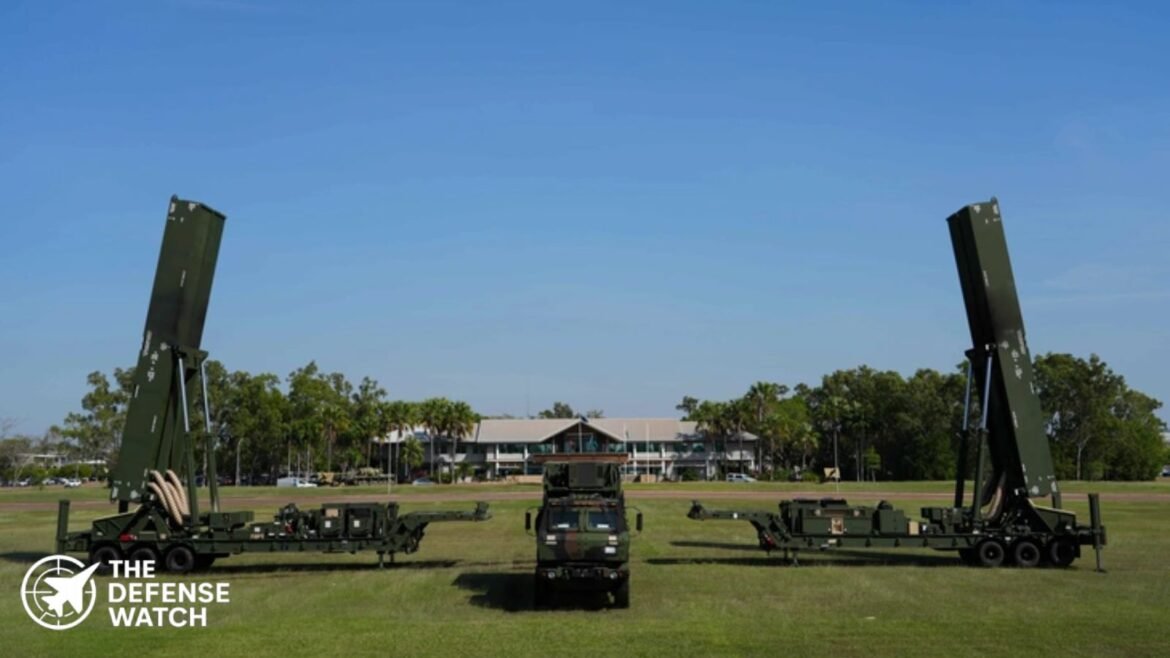
The Army has demonstrated interest in forward-deploying Dark Eagle systems to allied nations in critical theaters. In July, the U.S. Army deployed the LRHW outside the continental U.S. for the first time, with two missile launchers participating in Exercise Talisman Sabre 2025 in Australia. This deployment, involving the Hawaii-based Third Multi-Domain Task Force, validated the system’s transportability and ability to operate in expeditionary environments.
Potential basing locations include Japan, where U.S. forces already maintain substantial presence, and Australia, which has signaled willingness to host enhanced American military capabilities. However, forward deployment of hypersonic weapons carries significant diplomatic implications. Host nations must weigh the deterrent value of these systems against the risk of becoming priority targets for adversary strikes in a conflict.
The mobile nature of Dark Eagle provides some mitigation for these concerns. Mounted on standard military trucks, the launchers can relocate rapidly after firing, complicating adversary targeting. This “shoot and scoot” capability—proven effective with rocket artillery in Ukraine—enhances survivability compared to fixed installations.
Budget Reductions Signal Strategic Reassessment
Despite the urgency surrounding hypersonic weapons development, Pentagon funding for these programs has declined substantially. The Pentagon’s FY2026 budget request for hypersonic research was $3.9 billion—down from $6.9 billion in the FY2025 request. This represents a 43% reduction in a single fiscal year, suggesting either increased confidence in current programs or recognition that initial hypersonic capabilities may be sufficient to meet near-term requirements.
The funding decline also reflects cancellation of underperforming programs. The Air Force’s AGM-183 Air-Launched Rapid Response Weapon program was terminated in 2023 after multiple test failures, with officials citing the weapon’s lackluster testing record as justification for ending procurement. The Navy also canceled its Hypersonic Air-Launched Offensive Anti-Surface Warfare (HALO) program in April 2025 due to cost concerns, consolidating resources on the Conventional Prompt Strike system.
These programmatic decisions indicate a shift toward fielding fewer, more mature hypersonic systems rather than pursuing multiple parallel development efforts. The emphasis on the Common Hypersonic Glide Body shared between Army and Navy programs exemplifies this more disciplined approach.
Defensive Countermeasures and Arms Control Challenges
The proliferation of hypersonic weapons has spurred efforts to develop defensive systems capable of detecting, tracking, and intercepting these high-speed threats. However, defending against hypersonic glide vehicles poses extraordinary technical challenges that current missile defense architectures are poorly positioned to address.
Detection and Tracking Limitations
Traditional missile defense systems rely on space-based infrared sensors optimized for detecting the heat signatures of ballistic missile launches and tracking their predictable trajectories. Hypersonic glide vehicles exploit gaps in this architecture. Operating at altitudes between 20 and 60 kilometers—below typical satellite detection capabilities but above most radar coverage—they can evade observation during critical portions of their flight.
The U.S. Missile Defense Agency is developing the Hypersonic and Ballistic Tracking Space Sensor constellation to address this gap. MDA’s FY2025 budget documents state that GPI is to be delivered in FY2035. However, the lengthy development timeline means that offensive hypersonic capabilities will significantly outpace defensive systems for at least a decade.
Interceptor Development Programs
Even with improved sensors, destroying hypersonic targets requires interceptors capable of matching their speed and maneuverability. DARPA’s Glide Breaker program aims to develop critical component technologies for hypersonic defense, but operational systems remain years away. The extreme closing velocities involved—potentially Mach 15 or higher when combining the speed of both interceptor and target—create engagement challenges that existing kinetic kill vehicles cannot reliably address.
Some defense experts argue that the most effective defense against hypersonic weapons is offensive capability to destroy them before launch. “Your best defense is a good offense — you have to be able to deny launch and go after those numbers before they launch”, according to former defense officials. This logic suggests that hypersonic weapons may drive military strategies toward preemption and rapid escalation rather than measured response.
FAQs
What makes hypersonic glide vehicles different from ballistic missiles?Hypersonic glide vehicles maneuver during flight, unlike ballistic missiles that follow predictable trajectories. They operate at lower altitudes than ballistic missiles, making them harder to detect with space-based sensors, and can change course to evade defenses
Can current missile defense systems intercept hypersonic weapons?Advanced systems like the U.S. Patriot have demonstrated limited capability to intercept certain hypersonic weapons under ideal conditions, but reliably defending against maneuvering hypersonic glide vehicles remains an unsolved technical challenge. Detection and tracking represent equally significant obstacles to interception.
When will the U.S. have operational hypersonic weapons?The U.S. Army’s Dark Eagle system is scheduled to reach initial operational capability by the end of fiscal year 2025. The Navy’s Conventional Prompt Strike system is expected to begin testing from USS Zumwalt in 2027-2028, with operational deployment projected for the late 2020s.
Why are hypersonic weapons so expensive?The extreme temperatures, pressures, and speeds involved in hypersonic flight require exotic materials, specialized manufacturing techniques, and extensive testing. Current production runs are small, preventing economies of scale. Unit costs exceeding $40 million per missile are common for U.S. systems.
Do Russia and China already have operational hypersonic weapons?Yes. Russia has deployed the Kinzhal air-launched system, Zircon sea-launched cruise missile, and Avangard strategic boost-glide vehicle. China fields the DF-17 medium-range ballistic missile with a hypersonic glide vehicle and has tested multiple other systems, giving both nations a multi-year lead over the United States.

LRHW (Dark Eagle) 2025: What’s New
The U.S. Army’s Long-Range Hypersonic Weapon (LRHW), now officially nicknamed Dark Eagle, is moving from the drawing board to field trials and limited deployment in 2025. What had long been a technically ambitious concept is now entering a critical phase of transition, with recent test successes, forward deployments, and a planned soldier-operated test later in the year.
The Army announced the moniker Dark Eagle in April 2025 following a series of system-level flight tests. The name is intended to evoke both lethal precision (“eagle”) and the weapon’s disruptive potential against adversary systems (“dark”).
Program Trajectory & Testing History
Flight test successes and delays
The LRHW program has endured several false starts. Earlier planned launches in 2023 were scrubbed during pre-flight checks. These setbacks, often attributed to launcher mechanical issues or integration problems, forced the Army to postpone initial fielding schedules.
By mid-2024, however, the program recorded a major breakthrough. In June 2024, an end-to-end test was conducted from Hawaii to the Marshall Islands, validating the hypersonic glide body release and flight path. Later, in December 2024, the Army and Navy jointly executed a live-fire “all-up-round” test using a battery’s command & launcher ensemble. That event marked the first time the system had been tested in a configuration closer to an operational deployment.
Path to operational fielding
According to a June 2025 Congressional Research Service report, the Army aims to field its first LRHW battery by the end of fiscal year 2025. The first battery is assigned to 5th Battalion, 3rd Field Artillery Regiment under the 1st Multi-Domain Task Force at Joint Base Lewis-McChord, Washington. Procurement documents show the FY 2025 request included funding for ground support equipment and eight “all-up-round + canister” missiles for battery operations.
However, GAO’s 2025 Weapons Systems Annual Assessment highlights cost and schedule risks. The program’s estimated cost for the first battery has increased by about $150 million due to extra testing and retests. Battery 3 equipment awards have slipped from FY 2024 to Q3 FY 2025. Meanwhile, the Army intends to flight-test a slightly modified missile configuration in Q4 FY 2025 ahead of future battery deployments.
In public remarks in mid-2025, Army leadership emphasized upcoming tests and a push for cost efficiency. General Randy George described efforts to test “long-range missiles that are a tenth of the price” to deepen magazine depth.
Forward Deployment: Indo-Pacific & Australia
In a shift toward operational realism, the Army deployed an LRHW battery beyond continental U.S. for the first time in 2025. The 3rd Multi-Domain Task Force (3MDTF) temporarily stationed the launchers in Australia’s Northern Territory during Exercise Talisman Sabre 2025, under U.S. Indo-Pacific Command oversight. The deployment served two purposes: demonstrating strategic mobility and reinforcing deterrence posture in a contested region. As Adm. Samuel Paparo (USINDOPACOM) remarked, the move validated power projection and command-and-control (C2) ability in forward theaters.
Participating in Talisman Sabre 2025 alongside Australian forces, the battery’s presence signals Washington’s willingness to forward-base advanced strike systems, potentially inside allied territory, to counter peer adversary threats.
2025 Outlook & Challenges
Next soldier-operated test
One key milestone on the 2025 calendar is a soldier-operated test slated for December, tying the launch to operational crews rather than test teams. Maj. Gen. Frank Lozano (Army Missiles & Space) has said that the test will coincide with training for the first field unit — a critical step toward operational viability. The Army also plans to transition program oversight from the Rapid Capabilities & Critical Technologies Office (RCCTO) to the formal PEO (Program Executive Office) Missiles & Space once first rounds are delivered.
Cost, testing demands, and stockpile size
Cost overrun concerns remain acute. Early cost estimates placed each LRHW missile at around $41 million in 2023 dollars; current procurement estimates now exceed that value. In tandem, the relatively high price may constrain quantities procured. Congressional oversight may demand tighter reporting on missile stockpiles and testing volumes.
Operational testing faces another limit: suitable test ranges. Hypersonic weapons require extended flight corridors and tracking support, and range availability constrains how many tests the Army can conduct without incurring additional costs or logistical challenges.
Strategic and doctrinal implications
Deploying a mobile, road-launch hypersonic strike capability gives the Army’s long-range fires portfolio a leap in reach, speed, and flexibility. The LRHW fills a doctrinal gap between theater ballistic missiles and over-the-horizon strike assets. In a contested A2/AD environment, the maneuvering glide phase and high terminal velocity make interception by current missile defenses exceptionally difficult.
However, its strategic value depends heavily on stockpile size, weapons cost, and integration with intelligence, targeting, and command networks. A handful of high-end missiles alone may not be sufficient to deter adversaries unless backed by supporting systems and credible rules of engagement.
Final Analysis
By mid-2025, the LRHW (Dark Eagle) program is at a pivotal juncture. The transition from prototype to practiced operator deployment is underway, with forward deployments and live battery tests offering proof of concept. But the program must now prove that it can be sustainable: affordable, logistically supportable, and flexible enough for real-world operational demands.
If successful, Dark Eagle could reshape how the U.S. projects precision strike capability in peer conflict zones — especially across the Indo-Pacific. But its real test will be in combining speed, lethality, survivability, and cost-effectiveness against adversary counters.
Source 1 | Source 2 | Source 3
FAQs
What exactly is the LRHW / Dark Eagle?The LRHW is a boost-glide hypersonic missile system combining a rocket booster and a Common Hypersonic Glide Body (C-HGB). After booster separation, the C-HGB glides at hypersonic speed (Mach ≥ 5) toward its target, with maneuverability to complicate interception.
When will it be fielded?The Army aims to field the first LRHW battery by the end of FY 2025. A soldier-operated test is planned for December 2025.
What is its effective range?The program cites a range of approximately 1,725 miles (around 2,775 kilometers).
Why is deployment in Australia significant?It demonstrates forward deployment capability, strategic reach, and alliance integration in the Indo-Pacific. It also signals the U.S. willingness to project long-range strike assets beyond its mainland.
What are the main risks facing the program?Key challenges include cost growth, limited testing range infrastructure, integration and reliability of launch systems, and ensuring sufficient stockpiles to make deterrence credible.