
- Home
- Defense Systems
- Compare
- Rafale vs Su-57: 4.5 Gen vs 5th Gen Fighter Jet Comparison
Rafale vs Su-57: 4.5 Gen vs 5th Gen Fighter Jet Comparison
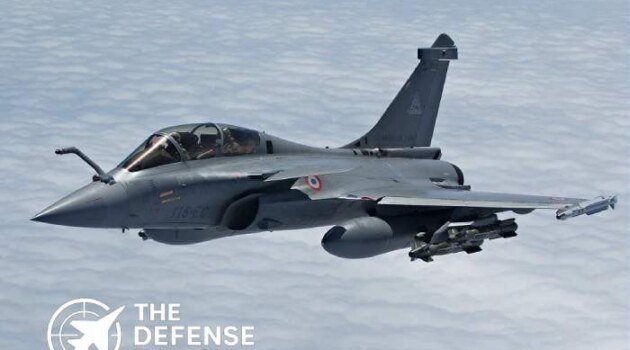
The Dassault Rafale and Sukhoi Su-57 represent two distinct generations of air combat evolution. The Rafale, developed by France’s Dassault Aviation, is a highly versatile 4.5-generation multirole fighter renowned for its agility, precision, and combat record in operations from Libya to the Indo-Pacific.
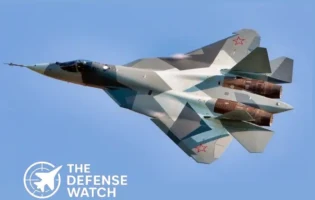
The Su-57 “Felon,” Russia’s flagship 5th-generation stealth fighter, aims to rival Western air superiority platforms with cutting-edge radar evasion, thrust-vectoring engines, and advanced avionics. This Rafale vs Su-57 comparison highlights how these aircraft differ in design philosophy—one optimized for proven multirole flexibility, the other for future stealth dominance—and why both play pivotal roles in shaping modern air warfare strategy.
Detailed Comparison
Design Philosophy and Role
The Rafale was designed as a “universal” combat platform capable of performing air superiority, deep strike, reconnaissance, and nuclear deterrence missions. It emphasizes aerodynamic performance and sensor fusion without relying heavily on stealth coatings. In contrast, the Su-57 was conceived as Russia’s response to Western stealth fighters, incorporating internal weapon bays, radar-absorbent materials, and a radar cross-section reduction profile for survivability in contested environments.
Avionics and Sensors
Rafale’s Thales RBE2 AESA radar, Spectra electronic warfare suite, and data fusion capabilities make it one of the most advanced 4.5-gen jets operational today. The Su-57 features the N036 Byelka AESA radar and IRST (Infrared Search and Track) system for multi-band target tracking and stealth detection. While the Su-57 theoretically offers broader sensor coverage, Rafale’s combat-proven reliability and integration with NATO systems give it a distinct operational edge.
Engines and Performance
Rafale is powered by twin Snecma M88-2 turbofan engines, offering a maximum speed of Mach 1.8 and exceptional agility at low altitudes. The Su-57 uses Saturn AL-41F1 engines (and future Izdeliye 30 versions), achieving Mach 2+ speeds and supermaneuverability via 3D thrust vectoring. The Russian fighter’s raw power surpasses Rafale’s, but Rafale’s engine reliability and ease of maintenance make it a more dependable platform in sustained operations.
Stealth and Survivability
The Su-57’s design integrates internal weapon bays and stealth shaping, though it reportedly falls short of U.S. stealth levels. The Rafale relies more on electronic warfare countermeasures (SPECTRA) and radar cross-section management rather than full stealth—offering a balanced defense-offense tradeoff for real-world missions.
Weapons and Combat Capability
Rafale’s METEOR BVRAAM, SCALP cruise missile, and Exocet anti-ship capabilities make it a versatile striker. The Su-57 can carry R-77M, K-77M, and Kh-59MK2 precision munitions internally or externally, maintaining flexibility in both stealth and high-payload modes.
Performance Verdict
The Rafale and Su-57 excel in different doctrines. Rafale dominates as a combat-proven, multirole fighter with superior interoperability, reliability, and a strong export track record across Europe, the Middle East, and Asia. Its advanced sensors, low maintenance footprint, and electronic warfare edge make it ideal for nations seeking an operationally flexible, NATO-compatible aircraft.
The Su-57, meanwhile, remains an ambitious project blending stealth, supermaneuverability, and long-range capability into a future-oriented design. However, limited production numbers, evolving engine technology, and the absence of large-scale combat deployment temper its current reputation.
In summary, Rafale wins in real-world versatility and dependability, while the Su-57 holds theoretical superiority in stealth and raw performance—a reflection of France’s refined engineering versus Russia’s pursuit of next-generation dominance.

| |
| Price | |
| Our Rating | |
| Manufacturer | Dassault Aviation Sukhoi |
| Category | Fighter Jets Fighter Jets |
General Information
| Name | Dassault Rafale Su-57 Felon |
| Manufacturer | Dassault Aviation Sukhoi (UAC) |
| Country of Origin | France Russia |
| Type / Role | Multirole Fighter Stealth Air Superiority / Multirole Fighter |
| Generation | 4.5th Fifth |
| Status | Active Service In limited service |
| First Flight | July 4, 1986 January 29, 2010 |
| Introduction / In Service Since | 2001 2020 |
| Number Built | 240+ ~25 (as of 2025) |
| Operators | France, India, Egypt, Qatar, Greece, Indonesia Russian Aerospace Forces |
Dimensions & Structure
| Length | 15.27 m 20.1 m |
| Wingspan | 10.9 m 14.1 m |
| Height | 5.3 m 4.6 m |
| Wing Area | 45.7 m² 78.8 m² |
| Empty Weight | 10,600 kg ~18,000 kg |
| Maximum Takeoff Weight (MTOW) | 24,500 kg 35,000 kg |
| Internal Weapons Bay | None Yes (2 main, 2 side) |
| External Hardpoints | 14 6 |
Performance
| Maximum Speed | Mach 1.8 (2,223 km/h) Mach 2.0 |
| Range | 3,700 km 3,500 km |
| Combat Radius | 1,000–1,850 km 1,500 km |
| Service Ceiling | 50,000 ft 20,000 m |
| Rate of Climb | 305 m/s 330 m/s |
| Thrust-to-Weight Ratio | 1.13 ~1.15 |
| G Limits | +9 / -3.6 +9 |
Powerplant
| Engine Type | Snecma M88-2 Turbofan Saturn AL-41F1 (future Izdeliye 30) |
| No. of Engines | 2 2 |
| Thrust (each) | 16,500 lbf 142 kN with afterburner |
| Thrust Vectoring | No Yes (3D) |
| Fuel Capacity | 4,700 kg (internal) ~10,300 kg |
Armament
| Gun | GIAT 30mm cannon 30mm GSh-30-1 cannon |
| Missiles (Air-to-Air) | MICA, Meteor R-77, R-74M, R-37M |
| Missiles (Air-to-Ground) | SCALP-EG, AM39 Exocet Kh-38, Kh-59MK2 |
| Bombs | Paveway, AASM KAB-250/500 guided bombs |
| Hardpoints | 14 10 (internal + external) |
| Payload Capacity | 9,500 kg 10,000 kg |
Avionics & Systems
| Radar | Thales RBE2 AESA N036 Byelka AESA |
| Radar Range | 200+ km 400+ km |
| Electronic Warfare (EW) System | SPECTRA Suite L402 Himalayas suite |
| Targeting System | Thales Damocles / TALIOS Pod IRST + radar fusion |
| Helmet Display | Integrated HMD Integrated HMS |
| Navigation | GPS/INS GLONASS-based INS |
| Autopilot / AI Assistance | Semi-Automated Partial autonomy |
| Communication | Secure Datalink, SATCOM Encrypted data link |
Stealth & Technology
| Radar Cross Section (RCS) | ~1 m² Estimated 0.3–0.5 m² |
| Stealth Features | Radar-absorbent materials Internal bays, radar-absorbing composites |
| Infrared Signature Reduction | Yes Engine shielding, cooling design |
| Sensor Fusion | Full Multi-source integration |
| Networking Capabilities | NATO-compatible datalink Limited data-link interoperability |
Variants
| Special Export Versions | Rafale EH/IH (India), Rafale EM/QM (Egypt/Qatar) Su-57E (Export Variant) |
Operational History
| Major Conflicts / Deployments | Libya, Mali, Iraq, Syria Syria (testing), Ukraine (limited combat) |
| Notable Operators | France, India, Egypt Russia |
| Combat Proven? | Yes Limited |
| Mission Types | Air superiority, strike, reconnaissance, deterrence Air superiority, strike, reconnaissance |
Cost & Program
| Unit Cost | $85–115 million ~$45–50 million (estimated) |
| Development Cost | ~$45 billion ~$10 billion (PAK FA program) |
| Program Name | Rafale Program PAK FA (T-50) |
| Funding Countries | France Russia |
Additional Information
| Upgrades Planned | F4 & F5 standard upgrades New radar, Izdeliye 30 engines |
| Future Replacement | Next-Gen Fighter (FCAS) None planned (Su-57M modernization) |
| Export Restrictions | Minimal (case-by-case) Controlled by Russian government |
| Notable Achievements | Combat-proven multirole success Russia’s first fifth-gen stealth jet |
| Competitors | Eurofighter Typhoon, F/A-18E/F, Gripen E F-22 Raptor, F-35 Lightning II, J-20 Mighty Dragon |

|
Disclaimer Note
The information provided on TheDefenseWatch.com is for general informational purposes only. While we strive to ensure the accuracy, completeness, and timeliness of our content regarding defense and aerospace products, technologies, and specifications, we cannot guarantee that all information is 100% accurate or up-to-date due to the evolving nature of military technology and classified data.TheDefenseWatch.com does not warrant the reliability, suitability, or availability of the information for any specific purpose. Users are advised to consult official sources, such as manufacturers, government publications, or defense agencies, for precise and verified data before making decisions based on our content.We are not affiliated with any defense manufacturers, governments, or military organizations mentioned. Opinions, reviews, and ratings reflect expert analysis but are subjective and should not be considered endorsements. TheDefenseWatch.com is not responsible for any errors, omissions, or consequences arising from the use of this website’s content.External links are provided for convenience and do not imply endorsement. TheDefenseWatch.com reserves the right to update or modify content without prior notice. By using this website, you agree to our Privacy & Cookies Policy.
New Arrivals


Popular Comparisons
-
 J-10C vs JF-17 Thunder: Which Fighter Is More Capable?
View Comparison →
J-10C vs JF-17 Thunder: Which Fighter Is More Capable?
View Comparison → -
Tejas vs Gripen: Key Differences and Capabilities
View Comparison →
-
Tejas vs MiG-21 Bison: How India Replaced Its Iconic Supersonic Fighter
View Comparison →
-
F-35 vs F-16: Stealth, Sensors and Combat Roles
View Comparison →
-
Tejas Fighter Jet vs F-16 Fighting Falcon: Capability Compared
View Comparison →
-
Rafale Fighter Jet vs F-16 Fighting Falcon : Which Fighter Has the Edge?
View Comparison →
-
Su-57 Fighter Jet vs J-20 Fighter Jet: Stealth and Air Combat Compared
View Comparison →
-
Mirage 2000 vs Tejas Mk1A: Legacy Combat Power vs Indigenous Modernization
View Comparison →
-
Rafale Fighter Jet vs F-22 Raptor: Which Air Dominance Fighter Has the Edge?
View Comparison →
-
Tejas Fighter Jet vs. Rafale Fighter Jet: India’s Indigenous Fighter Meets France’s Proven Multirole Combat Aircraft
View Comparison →


- P-800 Oniks Missile: Range, Speed and BrahMos Comparison

- Ukrainian Drone Unit Caused 70% of Simulated U.S. Brigade Casualties in Germany Exercise
- OCCAR Marks 25 Years of European Defense Cooperation With 28 Programs
- Saab Q3 2026 Results Show 30.6% Organic Sales Growth as Orders Surge
- How Much Does a Tomahawk Missile Cost? Price, Range and Blocks
- Faster Than Sound, Unstoppable at Sea: Inside China’s YJ-20 and YJ-17 Hypersonic Missiles
- U.S., Australia and UK Test Maritime Autonomy Under AUKUS
- TAI Anka-3: Turkey’s Stealth Flying-Wing Drone and Specifications
- Lockheed Martin’s Third-Quarter Innovations Span Missile Defense, Aviation and Space
- RTX Plans to Increase Missile Production Up to Fourfold Under Pentagon Contracts


Fighter Jets
-
 SU-57 Felon Stealth Fighter
-
Boeing F/A-XX Fighter
-
JF-17 Thunder Fighter Jet
-
F-47 Fighter Jet
-
MIG-31 Fighter Jet
-
J-10CE Fighter Jet
-
Chengdu J-10 Fighter Jet
-
Chengdu J-10C Fighter Jet
-
Gripen E Fighter Jet
-
Tejas Mk1A Fighter Jet
-
Tejas Mk‑2 Fighter Jet
-
F-16V Viper Block 70 Fighter Jet
-
F-15EX Eagle II Fighter
-
F-15E Strike Eagle Fighter
-
F/A-18E/F Super Hornet Fighter Jet
-
Saab Gripen F Fighter Jet
-
JAS 39E/F Gripen Fighter Jet
-
JAS 39 Gripen Fighter Jet
-
F-35A Lightning II Fighter Jet
-
F/A-18F Super Hornet
-
J-50 Fighter Jet
-
Spanish EF-18 Hornet Fighter
-
F-35i Adir Fighter Jet
-
F-16 Fighting Falcon






Recent Compares
-
J-10C vs JF-17 Thunder: Which Fighter Is More Capable?
View Comparison →
-
Tejas vs Gripen: Key Differences and Capabilities
View Comparison →
-
Tejas vs MiG-21 Bison: How India Replaced Its Iconic Supersonic Fighter
View Comparison →
-
F-35 vs F-16: Stealth, Sensors and Combat Roles
View Comparison →
-
Tejas Fighter Jet vs F-16 Fighting Falcon: Capability Compared
View Comparison →
Latest Defense Systems
10 Compares Defense Systems
-
J-10C vs JF-17 Thunder: Which Fighter Is More Capable?
View Comparison →
-
Tejas vs Gripen: Key Differences and Capabilities
View Comparison →
-
Tejas vs MiG-21 Bison: How India Replaced Its Iconic Supersonic Fighter
View Comparison →
-
F-35 vs F-16: Stealth, Sensors and Combat Roles
View Comparison →
-
Tejas Fighter Jet vs F-16 Fighting Falcon: Capability Compared
View Comparison →
-
Rafale Fighter Jet vs F-16 Fighting Falcon : Which Fighter Has the Edge?
View Comparison →
-
Su-57 Fighter Jet vs J-20 Fighter Jet: Stealth and Air Combat Compared
View Comparison →
-
Mirage 2000 vs Tejas Mk1A: Legacy Combat Power vs Indigenous Modernization
View Comparison →
-
Rafale Fighter Jet vs F-22 Raptor: Which Air Dominance Fighter Has the Edge?
View Comparison →
-
Tejas Fighter Jet vs. Rafale Fighter Jet: India’s Indigenous Fighter Meets France’s Proven Multirole Combat Aircraft
View Comparison →
- P-800 Oniks Missile: Range, Speed and BrahMos Comparison
- Ukrainian Drone Unit Caused 70% of Simulated U.S. Brigade Casualties in Germany Exercise
- OCCAR Marks 25 Years of European Defense Cooperation With 28 Programs
- Saab Q3 2026 Results Show 30.6% Organic Sales Growth as Orders Surge
- How Much Does a Tomahawk Missile Cost? Price, Range and Blocks