The Hypersonic Arms Race Has Entered a New Phase
Hypersonic weapons 2026 are moving from a technology race into a fielding and operational integration race. China, Russia and the United States have pursued different approaches to high-speed strike, with the DF-27 representing China’s emerging long-range boost-glide capability, Russia’s 3M22 Zircon representing a sea-launched hypersonic cruise missile, and the U.S. Army’s Dark Eagle providing a ground-launched conventional hypersonic strike system.
- The Hypersonic Arms Race Has Entered a New Phase
- Key Takeaways
- Hypersonic Weapons 2026: What Actually Makes These Systems Different?
- DF-27: China’s Long-Range Hypersonic Challenge
- Zircon: Russia’s Naval Hypersonic Strike Weapon
- Dark Eagle: America’s Most Advanced Fielded Hypersonic Strike System
- DF-27 vs Zircon vs Dark Eagle: Technical Comparison
- Which Is Fastest?
- Which Has the Longest Range?
- Which System Is Most Operationally Mature?
- The Real Advantage: Launch Architecture
- Hypersonic Weapons and Integrated Air Defense
- Dark Eagle’s Biggest Weakness May Be Production
- China Has a Different Scale Problem
- Russia’s Zircon Provides a Different Strategic Option
- Hypersonic Weapons 2026 and the Cost Problem
- Who Leads the Hypersonic Arms Race in 2026?
- 1. Range: DF-27
- 2. Naval Strike: Zircon
- 3. Operational Transparency and Integration: Dark Eagle
- 4. Strategic Geographic Position: DF-27
- 5. Joint-Service Architecture: Dark Eagle
- 6. Overall 2026 Assessment
- What Comes Next?
- More Survivable Sensors
- Better Thermal Protection
- Improved Maneuverability
- Larger Production Capacity
- Hypersonic Defense
- The Strategic Bottom Line
The three weapons should not be judged simply by which one has the highest advertised Mach number.
They represent different engineering solutions and different military missions.
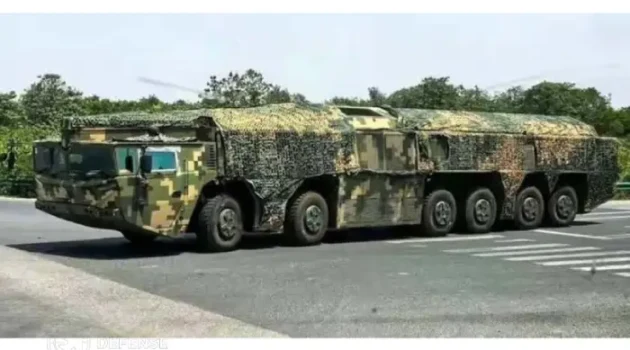
The DF-27 is associated with a long-range Chinese missile architecture that could provide land-attack and anti-ship capabilities at ranges potentially extending across the Indo-Pacific. Public reporting on the system remains incomplete, and the Pentagon has described the DF-27 as a developing long-range missile with a possible hypersonic glide vehicle option.
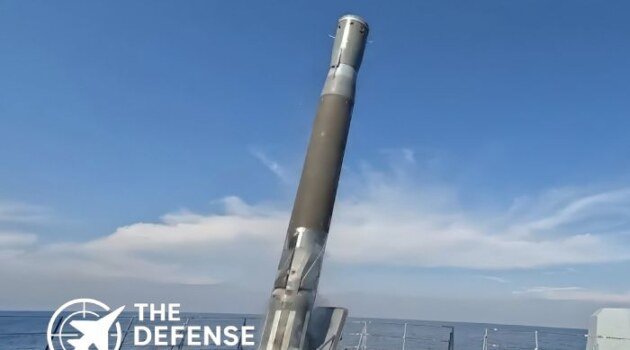
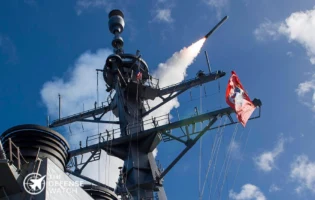
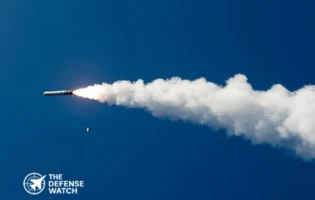
Russia’s Zircon is a scramjet-powered hypersonic cruise missile designed primarily for naval strike missions. Russian testing has demonstrated launches from surface ships and submarines, while the system has entered Russian Navy service. CSIS has documented Russian claims of ranges reaching approximately 1,000 kilometers and test speeds approaching Mach 8.
The U.S. Dark Eagle takes a different approach. It uses a common hypersonic glide body launched by a large rocket booster and is designed to deliver conventional precision effects against high-value and time-sensitive targets. The Army formally gave the Long Range Hypersonic Weapon the Dark Eagle name in April 2025.
By 2026, Dark Eagle has also moved beyond laboratory development. U.S. Army forces trained with the system during Valiant Shield 2026 in the Western Pacific, demonstrating its growing role in the Indo-Pacific operational concept.
Key Takeaways
The 2026 hypersonic competition is increasingly defined by range, survivability, launch flexibility, production capacity and operational integration rather than speed alone.
Hypersonic Weapons 2026: What Actually Makes These Systems Different?
Hypersonic weapons generally travel at speeds above Mach 5, but that definition covers several fundamentally different technologies.
A ballistic missile can exceed Mach 5 while following a largely predictable trajectory during portions of its flight. A hypersonic glide vehicle, by contrast, can separate from a booster and maneuver through the upper atmosphere, creating a more complicated tracking problem.
Hypersonic cruise missiles take another approach. They use air-breathing propulsion, such as a scramjet, to maintain high speed within the atmosphere.
This distinction matters when comparing DF-27, Zircon and Dark Eagle.
Hypersonic Glide Vehicles
A boost-glide weapon uses a rocket booster to accelerate the vehicle to high velocity and altitude.
The booster then separates, leaving the glide body to travel through the atmosphere while using aerodynamic lift and maneuvering controls to alter its trajectory.
The combination of speed, altitude and maneuverability can reduce the time available to defensive systems and complicate trajectory prediction.
The U.S. Dark Eagle and China’s suspected DF-27 HGV configuration belong broadly to this category.
Hypersonic Cruise Missiles
Zircon is different.
It uses a scramjet propulsion system after initial acceleration. A scramjet can sustain combustion using incoming atmospheric air at very high speeds.
This gives the missile characteristics closer to a high-speed cruise missile than a boost-glide vehicle.
That distinction gives Zircon a potentially useful combination of speed, maneuverability and naval launch flexibility.
DF-27: China’s Long-Range Hypersonic Challenge
The DF-27 is arguably the most difficult system in this comparison to assess because much of its performance remains classified or uncertain.
Open-source assessments place the weapon in the 5,000 to 8,000 kilometer range class. A 2026 academic assessment based on U.S. government reporting states that the DF-27 may have a hypersonic glide vehicle option and could support land-attack and anti-ship missions.
The U.S. Department of Defense has separately described China’s growing conventional missile force and identifies the DF-17 as an operational hypersonic glide vehicle system. The broader PLA Rocket Force architecture also includes long-range DF-26 missiles and other precision-strike weapons.
Why DF-27 Matters
If the higher-end range estimates are accurate, DF-27 could occupy an important space between regional ballistic missiles and China’s strategic intercontinental systems.
Its potential missions include:
- Long-range land attack
- Anti-ship strike
- Counter-intervention operations
- Attacks against high-value fixed targets
- Strategic conventional deterrence
The anti-ship possibility is particularly important for the Indo-Pacific.
A long-range maneuvering weapon capable of threatening surface combatants would fit naturally within China’s broader anti-access and area-denial strategy.
DF-27 Performance Remains Difficult to Verify
There is an important caveat.
The DF-27 does not have the same level of publicly documented operational information as systems such as the U.S. Dark Eagle.
Public reporting has varied over time regarding its deployment status, configuration and precise range.
For that reason, the most defensible assessment is that the DF-27 represents a major Chinese long-range missile development effort with a potential hypersonic glide capability, rather than treating every published specification as confirmed.
That distinction is important for credible defense journalism.
Zircon: Russia’s Naval Hypersonic Strike Weapon
Russia’s 3M22 Zircon takes a different path.
The missile is a scramjet-powered hypersonic cruise missile developed by NPO Mashinostroyeniya for Russian naval forces.
CSIS has documented Russian tests from both surface ships and submarines. A 2020 test involved a reported flight of approximately 450 kilometers at a claimed maximum speed of Mach 8. Later Russian claims placed the missile’s range at approximately 1,000 kilometers.
Naval Launch Flexibility
One of Zircon’s most important advantages is its integration with Russian naval platforms.
The weapon is associated with the Russian 3S-14 launch architecture, allowing it to be deployed from compatible surface combatants and submarines.
That creates a different threat model from a truck-launched weapon.
A naval platform can reposition before launch, creating uncertainty about the direction from which the weapon may arrive.
This is particularly significant for maritime forces operating in enclosed or heavily contested waters.
Zircon’s Strengths
Zircon’s principal strengths include:
- High terminal velocity
- Scramjet propulsion
- Naval launch capability
- Surface and submarine integration
- Potential land-attack and anti-ship applications
- Reduced warning time for defended targets
Its primary limitation in this comparison is range.
Even if the upper-end Russian range claims are accepted, Zircon does not appear to occupy the same long-range class as the estimated DF-27.
That does not make it less dangerous. It means the weapon solves a different operational problem.
Dark Eagle: America’s Most Advanced Fielded Hypersonic Strike System
The U.S. Army’s Long Range Hypersonic Weapon, officially designated Dark Eagle, is built around the Common Hypersonic Glide Body.
The system uses a large rocket booster to accelerate the glide body before the vehicle separates and conducts the remainder of its flight.
The Congressional Research Service has reported a range of approximately 1,725 miles, or roughly 2,776 kilometers. The Army has stated that the weapon can travel well beyond 3,800 miles per hour.
The system is designed for conventional precision strike against high-payoff and time-sensitive targets in heavily defended environments.
Common Army and Navy Technology
One of the most important features of the U.S. approach is joint development.
The Army’s Dark Eagle and Navy’s Conventional Prompt Strike share a common hypersonic missile architecture.
The Navy describes the weapon as consisting of a Common Hypersonic Glide Body and a two-stage booster, with each service developing launchers and weapon-control systems suited to its own platform.
This approach is intended to reduce duplication while giving the United States land, surface and submarine launch options.
Dark Eagle Enters the Indo-Pacific
The most important development in 2026 is not another laboratory test.
It is operational integration.
U.S. Army personnel trained with Dark Eagle during Valiant Shield 2026 in the Western Pacific. The Army’s own reporting shows the system operating with the 7th Infantry Division’s Multi-Domain Command Pacific during the exercise.
The deployment places a long-range conventional hypersonic capability within the geographic environment where the United States expects to confront China’s increasingly sophisticated missile forces.
That makes Dark Eagle strategically significant even before the Army reaches full-scale fleet quantities.
DF-27 vs Zircon vs Dark Eagle: Technical Comparison
Metric DF-27 3M22 Zircon Dark Eagle Country China Russia United States General type Ballistic missile with potential HGV configuration Hypersonic cruise missile Boost-glide weapon Propulsion Rocket booster plus possible HGV Rocket booster and scramjet Large solid-fuel booster plus HGV Approximate range Reported 5,000 to 8,000 km class Claimed up to about 1,000 km Reported about 1,725 miles, approximately 2,776 km Speed Not reliably disclosed Russian claims around Mach 8 to 9 More than 3,800 mph stated by Army Launch platforms Ground based Surface ships and submarines Mobile ground launcher Primary role Long-range land attack and possible anti-ship strike Anti-ship and land attack Conventional precision strike Glide vehicle Reported possible capability No Yes Operational transparency Low Moderate High relative to competitors 2026 status Limited public information Operational Russian system Operational integration and fielding Key advantage Potential reach and geographic coverage Naval mobility and high speed Precision, mobility and U.S. joint architecture Performance figures should be treated carefully because several values are based on official claims, intelligence assessments or open-source estimates rather than independently verified operational data.
Which Is Fastest?
This is one of the most difficult questions to answer accurately.
Russia has publicly associated Zircon with speeds around Mach 8 to Mach 9.
The U.S. Army describes Dark Eagle as traveling at more than 3,800 miles per hour, although exact operational flight profiles and terminal speeds are not publicly disclosed.
China has not publicly provided enough reliable data to establish a confirmed maximum speed for DF-27.
More importantly, maximum velocity does not determine the overall effectiveness of a hypersonic weapon.
A weapon traveling at Mach 9 but operating inside a shorter engagement envelope can have less strategic reach than a slower weapon with substantially greater range.
The meaningful comparison therefore involves:
speed + range + maneuverability + survivability + targeting + launch position + sensor support + production capacity.
Which Has the Longest Range?
Based on currently available open-source assessments, the DF-27 appears to have the greatest potential range.
The reported 5,000 to 8,000 kilometer range class would place it substantially beyond Zircon and Dark Eagle.
However, the range figure should not be treated as a confirmed operational specification.
The Dark Eagle’s approximately 1,725-mile reported range is considerably more transparent because the U.S. Army and Congressional Research Service have publicly described the system and its mission.
Zircon remains a shorter-range weapon by comparison, but its naval launch architecture can partially compensate by moving the launch platform closer to the target.
Which System Is Most Operationally Mature?
Dark Eagle has the strongest publicly documented operational integration among the three.
The United States has openly described its development architecture, conducted end-to-end testing, formally designated the weapon and trained units with the system in the Indo-Pacific.
Russia’s Zircon is also operational, but reliable independent information about the size of the inventory, production rate and combat effectiveness is limited.
China’s DF-27 is the least transparent.
That does not mean it is less capable. It means outside analysts have less information with which to evaluate its true operational status.
The Real Advantage: Launch Architecture
The most important difference may not be the missile itself.
It is where the missile can be launched.
China
China’s land-based missile architecture provides the PLA Rocket Force with extensive geographic reach from mainland territory.
A long-range DF-27 could threaten targets across large portions of the Western Pacific without requiring China to expose aircraft or naval forces.
Russia
Russia can deploy Zircon from ships and submarines.
That gives Moscow the ability to generate mobile launch points and complicate maritime defense planning.
United States
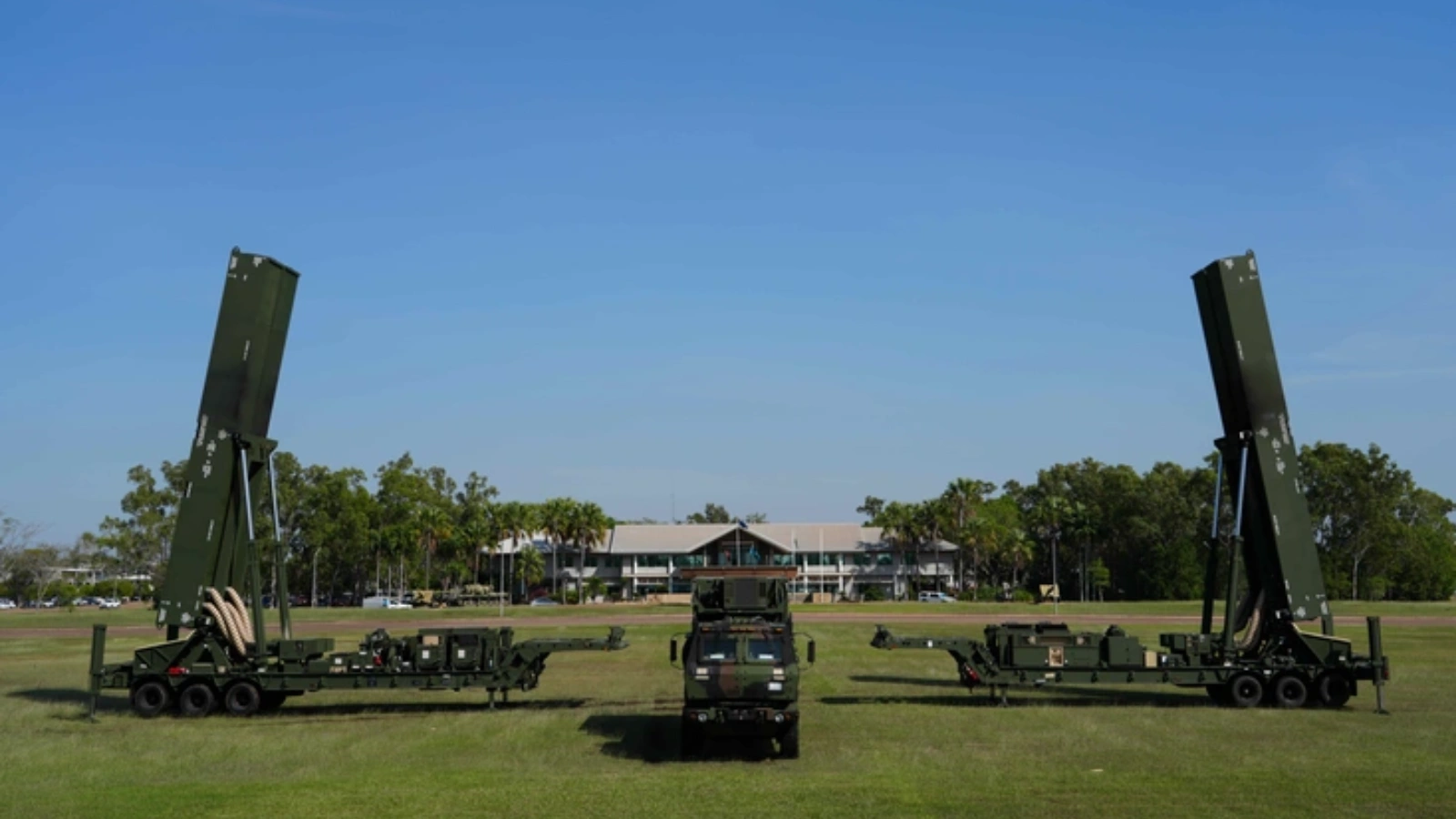
Dark Eagle provides the U.S. Army with a mobile land-based strike capability.
The system becomes particularly relevant when combined with distributed forces, intelligence networks, long-range sensors and allied basing.
This is why the 2026 Guam deployment is strategically important.
It demonstrates the U.S. approach of placing long-range precision weapons inside the Indo-Pacific operating environment rather than relying exclusively on aircraft and surface ships.
Hypersonic Weapons and Integrated Air Defense
The rise of hypersonic weapons is also forcing a major change in missile defense.
Traditional ballistic missile defense relies heavily on predicting the trajectory of an incoming object.
Hypersonic glide vehicles can maneuver through the atmosphere, potentially changing their flight path and reducing the usefulness of a purely ballistic trajectory prediction.
CSIS has described this as a complex air defense challenge because hypersonic weapons combine characteristics associated with ballistic missiles and maneuvering atmospheric weapons.
This means future defenses will require a combination of:
- Space-based missile warning
- Persistent infrared sensing
- Long-range tracking radars
- Sensor fusion
- Advanced command and control
- High-speed interceptors
- Potentially directed-energy systems
- Distributed defensive architecture
The objective is not simply to build a faster interceptor.
The defense network must detect the weapon earlier, maintain a continuous track and provide a fire-control solution against a maneuvering target.
Dark Eagle’s Biggest Weakness May Be Production
The United States has made significant progress with hypersonic development, but production remains a major concern.
A 2026 Government Accountability Office review found that the Army and Navy are investing more than $50 billion in the shared hypersonic effort. It also identified coordination problems between the services and delays in the Navy’s integration of Conventional Prompt Strike onto Zumwalt-class destroyers.
The Congressional Research Service has also reported delays affecting additional Dark Eagle batteries, including missile delivery and testing challenges.
This exposes an important weakness in the American approach.
Developing an extremely sophisticated weapon is only part of the problem.
The United States must also produce enough weapons to matter during a prolonged conflict.
A small inventory of expensive hypersonic missiles can deliver powerful effects, but it cannot provide the same operational depth as a large conventional missile arsenal.
China Has a Different Scale Problem
China’s advantage is not simply technology.
It is scale.
The PLA Rocket Force operates one of the world’s largest land-based missile forces, including large numbers of short-, medium- and intermediate-range systems.
The DF-27 would therefore fit into an existing ecosystem rather than operate as a stand-alone capability.
That ecosystem includes:
- DF-17 hypersonic glide weapons
- DF-21 anti-ship ballistic missiles
- DF-26 intermediate-range ballistic missiles
- Long-range cruise missiles
- ISR satellites
- Over-the-horizon sensors
- Maritime surveillance systems
- Aircraft and unmanned systems
This creates a larger kill-chain problem for an adversary.
A hypersonic missile does not need to defeat an enemy by itself.
It needs to be part of a network that finds, identifies, tracks and engages the target.
Russia’s Zircon Provides a Different Strategic Option
Russia’s strongest argument for Zircon is platform mobility.
A submarine carrying hypersonic cruise missiles does not have the same geographic signature as a fixed ground-based missile battery.
A surface combatant can also reposition before launching.
This gives Zircon an important role within Russia’s naval deterrence architecture.
Its value increases when paired with long-range maritime surveillance, submarines, electronic warfare and other anti-ship weapons.
However, questions remain regarding actual production volumes, combat performance and the ability of Russian industry to sustain large-scale production under wartime conditions.
Hypersonic Weapons 2026 and the Cost Problem
The hypersonic arms race is expensive.
A modern hypersonic weapon requires advanced propulsion, thermal protection, guidance, flight-control technology, specialized materials and extensive flight testing.
The U.S. Navy’s FY2027 documentation shows the Conventional Prompt Strike program developing a common missile architecture for both Army and Navy use, while also pursuing future technology insertion to improve capability, manufacturing and affordability.
Lockheed Martin has also announced a Next Generation Glide Body program aimed at creating a more affordable and scalable hypersonic glide vehicle architecture. The company says the design is intended to support greater production capacity and multiple launch platforms.
This is significant because the next phase of the competition will not be won by laboratory performance alone.
It will be won by industrial capacity.
Who Leads the Hypersonic Arms Race in 2026?
There is no single winner across every category.
1. Range: DF-27
Winner: China, based on open-source estimates
The reported 5,000 to 8,000 kilometer range class gives DF-27 a potential reach advantage over Dark Eagle and Zircon. However, the uncertainty surrounding its configuration and operational status prevents a definitive judgment.
2. Naval Strike: Zircon
Winner: Russia
Zircon’s ability to operate from both surface ships and submarines gives Russia a highly mobile maritime hypersonic strike option.
3. Operational Transparency and Integration: Dark Eagle
Winner: United States
The U.S. Army has publicly documented testing, designation, unit training and Indo-Pacific deployment of Dark Eagle.
4. Strategic Geographic Position: DF-27
Winner: China
China can deploy long-range missile forces from mainland territory while using its broader surveillance and anti-access architecture to support targeting.
5. Joint-Service Architecture: Dark Eagle
Winner: United States
The common hypersonic missile architecture links Army and Navy requirements and creates a pathway toward land, surface and submarine launch options.
6. Overall 2026 Assessment
First: Dark Eagle for demonstrated operational integration
Second: DF-27 for potential strategic reach
Third: Zircon for naval hypersonic strike
This ranking should not be interpreted as a simple ranking of missile lethality.
The systems perform different missions.
What Comes Next?
The next generation of hypersonic competition is likely to focus on five areas.
More Survivable Sensors
Hypersonic weapons are only as effective as their targeting data.
Future systems will depend increasingly on satellites, aircraft, unmanned systems and distributed sensors.
Better Thermal Protection
At hypersonic speed, atmospheric friction creates extreme heating.
Thermal protection systems therefore remain one of the central engineering challenges.
Improved Maneuverability
Future glide bodies are likely to emphasize controlled maneuvering and greater cross-range capability.
The objective is to make interception even more difficult while maintaining precision.
Larger Production Capacity
This may become the decisive factor.
A country that can produce hundreds of capable missiles may have a greater wartime advantage than a country possessing a small number of technically superior weapons.
Hypersonic Defense
Offensive hypersonic development is also accelerating defensive programs.
The United States and allies are investing in improved detection, tracking and interception technologies because conventional air defense systems were not designed around large numbers of maneuvering hypersonic targets.
The Strategic Bottom Line
Hypersonic Weapons 2026 are no longer simply a contest over who can fly fastest.
China, Russia and the United States have developed different answers to the same strategic problem.
China is pursuing long-range missile systems that can support a broader anti-access and area-denial architecture.
Russia has emphasized naval mobility and high-speed cruise missile technology through Zircon.
The United States is building a joint Army-Navy boost-glide architecture centered on the Common Hypersonic Glide Body and is now moving Dark Eagle into operational Indo-Pacific activities.
The most important development in 2026 is therefore not the advertised Mach number of any single missile.
It is the transition from development to operational integration, distributed deployment, production and sustainment.
Dark Eagle has the clearest publicly demonstrated path toward operational employment.
DF-27 may ultimately offer the greatest range, but its precise capabilities remain difficult to verify.
Zircon gives Russia a mature naval hypersonic strike option with a different operational concept.
The wider competition will ultimately be decided by the ability to connect hypersonic weapons to sensors, command networks, launch platforms and industrial production.
For the United States and its allies, the challenge is therefore twofold: field enough offensive hypersonic weapons to provide credible long-range conventional strike options while simultaneously developing an integrated defensive architecture capable of detecting and defeating the next generation of high-speed maneuvering threats.
The hypersonic arms race has entered its next phase.
The question is no longer who can build a hypersonic weapon.
It is who can field, sustain, protect and integrate them at meaningful scale.