• Home
  • About
  • Defense Systems
  • Manufacturer
  • Comparisons
  • Compare 
  • Tools
TheDefenseWatch.com
  • Aerospace & Aviation
  • Military & Ordnance
  • Naval & Maritime
  • Cyber & Space Defense
  • Policy & Strategy
  • Global News
  • Tools Library
    • Smart Calculator
    • Drone Flight Time Calculator
    • Drone Range Calculator
    • Counter-Drone Jammer Effective Range Calculator
    • Counter-Battery Radar Detection Calculator
    • Artillery Fire Correction Calculator
    • Thermal Camera Detection Range Calculator
    • Missile Range & Time-of-Flight Calculator
    • Radar Detection Range Calculator
    • FPV Strike Drone Payload vs Range Calculator
    • Loitering Munition Endurance Calculator
    • Sniper Ballistic Drop & Windage Calculator
    • Bullet Drop Calculator
    • U.S. Army Combat Fitness Test (ACFT) Calculator
    • Military Pension Calculator
    • Military Retirement Calculator
    • Military Pension Calculator
    • Large Number Calculator
Font ResizerAa

TheDefenseWatch.com

The Defense Watch | U.S. & Global Defense News, Analysis & Military Updates

Search
  • Home
  • About
  • Defense Systems
  • Manufacturer
  • Comparisons
  • Compare 
  • Tools

Stay Updated

Get the latest update

Subscribe

Explore

  • Drone
  • Fighter Jets & Military Aircraft
  • Hypersonic Weapons
  • Aircraft Carriers
  • Strategic History & Missions
  • Tools Library
Home » Autonomous Weapon Systems Spark U.S. Ethics Debate Amid Rapid Military AI Integration
AI & Electronic WarfareCyber & Space Defense

Autonomous Weapon Systems Spark U.S. Ethics Debate Amid Rapid Military AI Integration

TeamDefenseWatch
Last updated: September 24, 2025 3:36 am
TeamDefenseWatch
Share
2 Min Read
Autonomous weapon systems
SHARE

Autonomous Weapon Systems Spark U.S. Ethics Debate Amid Rapid Military AI Integration

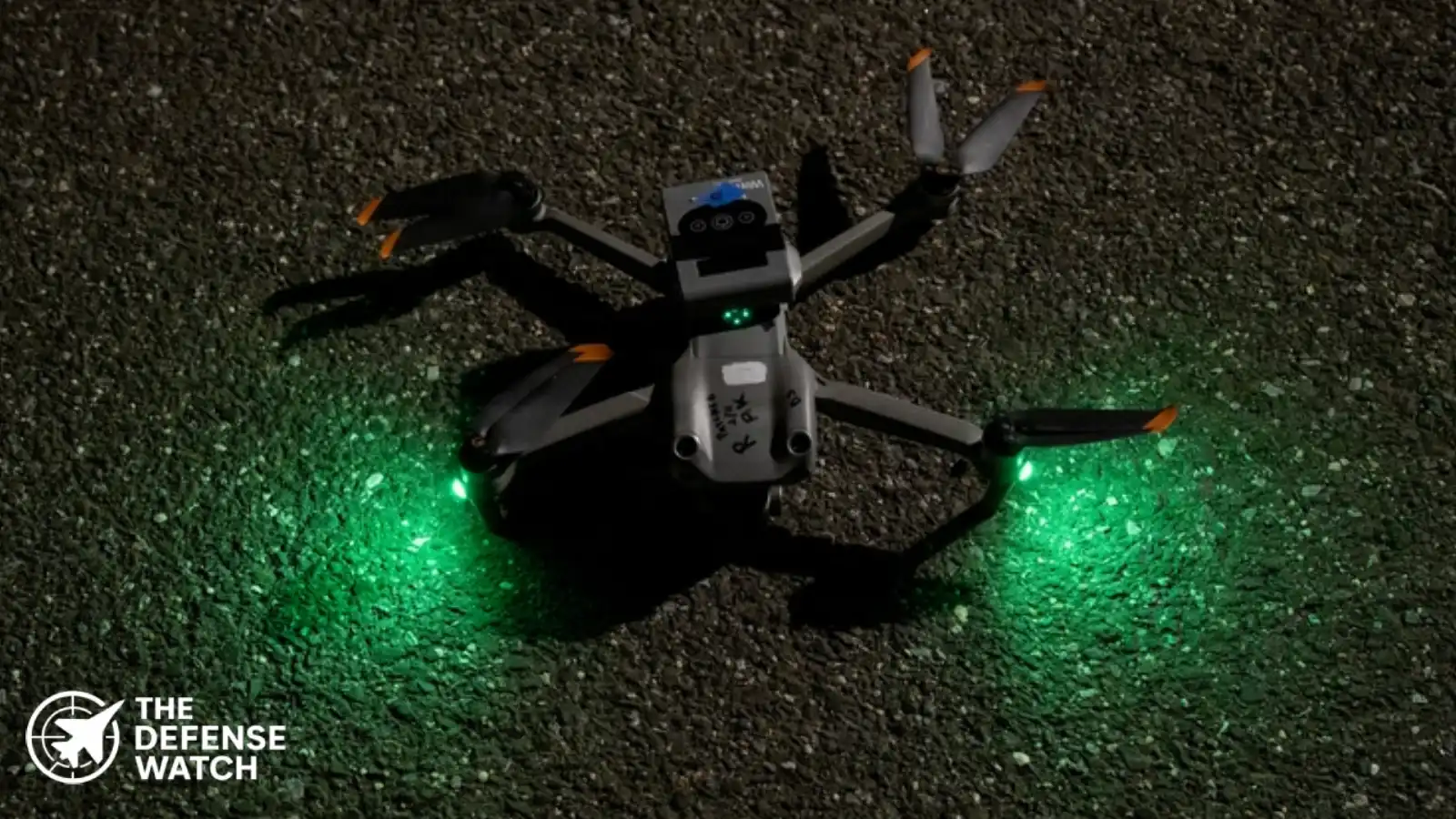
The growing role of autonomous weapon systems in modern warfare is prompting an intense debate within the United States over ethics, accountability, and the future of armed conflict. As the Pentagon advances artificial intelligence (AI)-enabled capabilities across drones, missile defenses, and decision-support systems, policymakers, academics, and military leaders are weighing how far the U.S. should go in deploying lethal systems without direct human control.

Contents
Autonomous Weapon Systems Spark U.S. Ethics Debate Amid Rapid Military AI IntegrationPentagon Pushes AI in WarfightingEthical and Legal ConcernsMilitary Advocates See Tactical AdvantageA Divided Public and Political LandscapeAnalysis: Striking a BalanceFAQs

Pentagon Pushes AI in Warfighting

The Department of Defense (DoD) has long maintained that U.S. military operations should keep “a human in the loop” when making life-or-death decisions. However, the rapid pace of technological development is testing this principle. Programs such as the Air Force’s Collaborative Combat Aircraft (CCA), Navy’s unmanned surface vessels, and Army’s next-generation missile defense interceptors are increasingly reliant on autonomy to react faster than human operators.

In July 2023, the Pentagon updated its Directive 3000.09 on Autonomy in Weapons Systems, which sets boundaries for the testing, approval, and use of autonomous weapons. The directive insists that autonomous systems must be designed to allow commanders to exercise “appropriate levels of human judgment.” Yet critics argue the language leaves room for systems that could act with minimal human oversight.
Source

Ethical and Legal Concerns

Human rights organizations and academics warn that lethal autonomous weapon systems (LAWS) risk violating international humanitarian law if machines independently decide who to target. Questions of accountability remain unresolved: if an autonomous drone mistakenly kills civilians, who bears responsibility—the operator, the commander, or the developer of the algorithm?

- Advertisement -

A growing coalition of countries, including members of the European Union, has pushed for international regulations or bans on fully autonomous weapons. The U.S., while supportive of discussions at the United Nations Convention on Certain Conventional Weapons (CCW), has resisted binding restrictions, preferring a framework of responsible use.

Military Advocates See Tactical Advantage

Proponents within the defense establishment argue that greater autonomy is unavoidable. In high-speed conflicts, such as countering hypersonic missiles or defending against drone swarms, machines can detect and respond in milliseconds—far faster than a human. The Pentagon’s Replicator initiative, announced in 2023, aims to deploy thousands of autonomous drones by the mid-2020s to counter Chinese military mass in the Indo-Pacific.

Military leaders emphasize that autonomy can reduce risk to U.S. personnel by allowing unmanned systems to conduct high-risk missions, from clearing minefields to penetrating contested airspace.

A Divided Public and Political Landscape

Surveys conducted by the Center for Security and Emerging Technology (CSET) suggest that U.S. public opinion is split: while Americans support the use of AI for defensive purposes, most oppose fully autonomous weapons that could independently launch lethal attacks. In Congress, lawmakers have introduced proposals requiring stronger oversight of AI in military applications, but bipartisan consensus remains elusive.

The debate also intersects with great power competition. China and Russia are investing heavily in military AI, and U.S. officials caution that failing to pursue autonomy could leave American forces at a strategic disadvantage.

Analysis: Striking a Balance

The U.S. faces a difficult balancing act: embracing the military advantages of autonomy while maintaining moral credibility and compliance with the laws of war. Analysts note that while full autonomy may remain politically unacceptable, the boundary between “human-in-the-loop” and “human-on-the-loop” systems is narrowing as AI improves.

Ultimately, the outcome of this debate will shape not only U.S. defense doctrine but also the future of international arms control. As adversaries push ahead, the question is not whether the U.S. will use autonomous systems, but how—and under what ethical framework.

FAQs

What are autonomous weapon systems?

Autonomous weapon systems are platforms that can select and engage targets without direct human intervention, often using AI-driven algorithms.

Does the U.S. allow fully autonomous lethal weapons?

No. Current Pentagon policy requires “appropriate human judgment” in lethal actions, though debates continue about how strictly this principle is applied.

Why are autonomous weapons controversial?

Critics fear they could violate international law, lack accountability, and lower the threshold for war by making lethal force easier to deploy.

Are other countries developing autonomous weapons?

Yes. China, Russia, and several other nations are investing heavily in AI-enabled military systems, pushing the U.S. to advance its own programs.

Note: The images are AI-generated.

- Advertisement -
TAGGED:Arms control debatesArtificial intelligence in defenseAutonomous weapon systemsMilitary AI ethicsPentagon policy
Share This Article
Facebook Copy Link Print
ByTeamDefenseWatch
TeamDefenseWatch is the official editorial byline of TheDefenseWatch.com. Working under one umbrella, TheDefenseWatch.com, the team delivers verified, factual reporting on global defense, military technology, aerospace systems, and security developments. Articles are sourced from official statements, defense industry releases, and trusted media, with editorial review to ensure accuracy and clarity.Contact: info@TheDefenseWtach.com
91 Comments
  • Pingback: Helsing Unveils CA-1 Europa UCAV, Targets 2029 Service Entry | TheDefenseWatch.com
  • Pingback: Top 5 U.S. Army Weapons That Define Modern Warfare in 2025
  • Pingback: Militarization vs Weaponization of Space: Key Differences Explained
  • Pingback: China’s Space Militarization: Rising Threat to U.S. Space Dominance
  • Pingback: F-16 Fighter Jet: History, Evolution, and Enduring Role in U.S. Airpower
  • Pingback: Taiwan Defense 2025: Can the U.S. Still Deter China’s Advance? | TheDefenseWatch.com
  • Pingback: Dark Eagle Takes Flight: Latest on U.S. Army’s LRHW Hypersonic Weapon 2025
  • Pingback: Inside the U.S. Army’s Next-Generation Weapons Program: What’s Coming for Future Infantry Lethality
  • Pingback: Army Achieves Breakthrough in Cruise Missile Intercepts with IBCS System
  • Pingback: US-Israel Collaboration on Secure AI Empowers Military Decision Systems
  • Pingback: Indonesia to Acquire 42 Chinese J-10C Fighters in First Non-Western Jet Deal
  • Pingback: Which 5 Air Forces Possess the Costliest Fighter Jet Fleets in the World 2025
  • Pingback: 6 Fighter Jets With the Most Advanced Radar Systems in Service Today 2025
  • Pingback: Chinese Defence Analyst Counters Claim That Indian Air Force Is Superior to Chinese Air Force
  • Pingback: U.S. Declines to Supply Tomahawk Missiles to Ukraine Amid Strategic and Inventory Constraints
  • Pingback: US vs China Military Spending & Capabilities: Who Holds the Edge?
  • Pingback: Pentagon’s New Anti-Leak Policy Sparks Internal Debate Over Secrecy and Trust
  • Pingback: U.S. Military To Integrate Hypersonic Strike Weapon onto Mobile Launchers
  • Pingback: Saab JAS 39 Gripen: Sweden’s Lightweight Multirole Fighter Redefining Airpower
  • Pingback: NASA’s X-59 Quiet Supersonic Aircraft Completes First Test Flight | TheDefenseWatch.com
  • Pingback: U.S. Army Trials Mobile 81 mm Mortar for Rapid “Shoot-and-Scoot” Deployment
  • Pingback: Shield AI and HII Integrate Autonomous Technology to Advance U.S. Navy’s Unmanned Surface Vessel Capabilities
  • Pingback: GA-ASI Showcases Autonomous Fighter Jets, Targets USAF Delivery by 2025
  • Pingback: Pentagon Moves to Install “One Boss” Acquisition Authority to Speed Up Defense Procurement
  • Pingback: China Unveils YJ-1000 Precision-Guided 1-Ton Bomb for Advanced Fighter Fleet
  • Pingback: India’s HAL Reaches 50 % Readiness for Su-57E Stealth Fighter Production
  • Pingback: China’s GJ-11 Stealth Drone Flies Alongside J-20 Fighter in First Public Display
  • Pingback: U.S. Army Certifies Rapid Response Anti-Drone Team to Protect Domestic Bases
  • Pingback: Inside the B-21 Raider Program: How the Future of American Stealth Bombing Compares with the B-2 and China’s H-20
  • Pingback: Lockheed Martin’s Golden Dome Missile Defense System Debuts as New AI-Driven Homeland Shield
  • Pingback: Hypersonic vs Supersonic: Key Differences in Speed, Technology, and Military Impact
  • Pingback: Ukraine and France Sign Historic Defense Agreement for 100 Rafale Fighter Jets and Advanced Air Defense Systems
  • Pingback: Space Debris Damages Chinese Spacecraft, Highlighting Growing Orbital Threat
  • Pingback: Talon-A Hypersonic Aircraft: Stratolaunch Revolutionizes Flight Testing
  • Pingback: Top 5 U.S. Fighter Jets: America’s Most Advanced Combat Aircraft Ranked
  • Pingback: Netanyahu Asserts U.S. Commitment to Israel’s Qualitative Military Edge Amid Saudi F-35 Deal
  • Pingback: Saudi-U.S. F-35 Deal Redefines Middle East Security — But Raises Risk of Technology Leakage
  • Pingback: SR-72 Hypersonic Aircraft: Understanding Hypersonic Speed and the Future of Hypersonic Aviation
  • Pingback: South Korea Nears Deal to Build Two More Miguel Malvar-Class Frigates for the Philippine Navy
  • Pingback: Netherlands to Equip PzH 2000NL Howitzers with First-Ever Dedicated Anti-Drone Net System
  • Pingback: Dark Eagle Hypersonic Missile Signals U.S. Entry Into Global Arms Race
  • Pingback: M1 Abrams Tank: U.S. Main Battle Tank Remains Battlefield Dominant
  • Pingback: U.S. Army’s AH-64E Apache Demonstrates Mature Counter-Drone Capability in Live Fire Exercises
  • Pingback: U.S. Marines’ AH-1Z Viper Fires AIM-9 Sidewinder Missile in Caribbean – Maritime Drill Underlines New Counter-Narcotics Posture
  • Pingback: U.S. Approves $2.68 Billion Air-Strike Weapons Sale to Canada, Paving Way for Major Munitions Transfer
  • Pingback: U.S. Air Force Receives Final QF-16 Drone, Securing a Decade of Live-Fire Training
  • Pingback: How US Military Satellites Counter Russian Satellite Jamming Threats in 2025 | TheDefenseWatch.com
  • Pingback: Turkey Launches Construction of First Indigenous MILDEN Submarine, Marking Major Naval Milestone
  • Pingback: Military Experts Warn of Major Security Hole in AI Chatbots — Threat to U.S. Cyber and Defense Networks
  • Pingback: U.S. Navy Advances Stealth Undersea Drone Technology to Revolutionize Maritime Security Operations
  • Pingback: US and South Korea to Build Navy Underwater Drone Swarms to Counter China
  • Pingback: House Passes $900 Billion Defense Policy Bill, Pressures Pentagon on Boat Strike Video Release
  • Pingback: China YJ 1000 Precision Guided Bomb Expands PLAAF Stand Off Strike Options
  • Pingback: Top 5 Small Arms Used by the U.S. Military Today: A Comprehensive Analysis of Infantry Weapons Systems
  • Pingback: BAE Systems to Upgrade IFF System on South Korea's KF-21 Boramae Fighter
  • Pingback: US Marines Begin Production of MADIS Drone Hunter Vehicles | TheDefenseWatch.com
  • Pingback: Space Force Pushes Next-Gen Space-Based Interceptors | TheDefenseWatch.com
  • Pingback: Babcock Begins Production of Jackal 3 Extenda All-Terrain Vehicles for British Army | TheDefenseWatch.com
  • Pingback: Turkish Drone Shoot Down Explained by Defense Ministry | TheDefenseWatch.com
  • Pingback: US Air Force Upgrades Experimental AI Fighter With Advanced Radar and Mission Systems | TheDefenseWatch.com
  • Pingback: Pentagon Fails Audit 8th Year, Struggles With Financial Reporting | TheDefenseWatch.com
  • Pingback: Sweden Tests Kreuger 100 Interceptor Drone Ahead of Ukraine Mission | TheDefenseWatch.com
  • Pingback: Interagency Task Force 401 Emerges as Key Hub for US Indo Pacific Security Operations
  • Pingback: US Army Black Hawk Overhaul Plan to Extend UH-60M Service Past 2050
  • Pingback: US War Department Teams With Elon Musk’s xAI to Expand Military AI on GenAI.mil | TheDefenseWatch.com
  • Pingback: U.S. Army Confirms Abrams M1E3 as Fifth Generation Main Battle Tank, Ending M1A2 SEPv4 Program | TheDefenseWatch.com
  • Pingback: Israel Fields SIGMA 155 Roem as Automated M109 Replacement | TheDefenseWatch.com
  • Pingback: Japan Unveils Record FY2026 Defense Budget to Expand Unmanned and Stand-Off Forces
  • Pingback: F110-GE-129E Engine Powers New Fighter Upgrades and Production Lines | TheDefenseWatch.com
  • Pingback: US and Türkiye Press Ahead With F-16 Block 70 Sale Talks, Navigate Pricing and Tech Terms | TheDefenseWatch.com
  • Pingback: Unofficial : First Images of US Army’s M1E3 Abrams Tank Prototype Show Early Design Ahead of 2026 Tests | TheDefenseWatch.com
  • Pingback: Royal Navy’s Proteus Drone Set for First Flight in January | TheDefenseWatch.com
  • Pingback: Germany Expands Arrow 3 Missile Defense With USD 3.1B IAI Contract | TheDefenseWatch.com
  • Pingback: UK May See Faslane Nuclear Base Tugboats Built in China Under New Support Vessel Contract | TheDefenseWatch.com
  • Pingback: DARPA Awards $9.6M JAWS Software Contract Modification to STR | TheDefenseWatch.com
  • Pingback: Teledyne FLIR Defense Contract Bulgaria Stryker Recon Systems US Army | TheDefenseWatch.com
  • Pingback: L3Harris Secures $13.1M FMS Contract Modification for Aircraft and Ground Stations | TheDefenseWatch.com
  • Pingback: Roketsan Production Surge 2026 Begins, CEO Says Long-Term Investments Bear Fruit | TheDefenseWatch.com
  • Pingback: Lockheed Martin Secures $99.9M Aegis Weapon System Support Deal | TheDefenseWatch.com
  • Pingback: Ethiopia Becomes First Buyer of Russian Orion-E Combat Drone | TheDefenseWatch.com
  • Pingback: Canada Builds Land-Based Test Facility for River-class Destroyers | TheDefenseWatch.com
  • Pingback: USS John F Kennedy Sea Trials Underway as Second Ford-Class Carrier Moves Toward Delivery | TheDefenseWatch.com
  • Pingback: Qatar Orders Thales Air Surveillance Radars GM400α and GM200 MM/A | TheDefenseWatch.com
  • Pingback: U.S. Army Certifies Artillery and M270 MLRS Units in Europe Ahead of Live-Fire Evaluations | TheDefenseWatch.com
  • Pingback: Boeing Secures $2.8B F-15K Upgrade Contract for Republic of Korea Air Force | TheDefenseWatch.com
  • Pingback: Raytheon Wins DARPA Contract to Develop Maritime Defense System Against Drone Threats | TheDefenseWatch.com
  • Pingback: UK Sonobuoy Contract Strengthens Royal Navy Merlin Anti-Submarine Force | TheDefenseWatch.com
  • Pingback: UK Denies F 35 Kill Switch Claims Despite US System Dependence | TheDefenseWatch.com
  • Pingback: AI Integration in Religious Practice Raises Questions for Military Chaplaincy and Ethics | TheDefenseWatch.com
  • Pingback: China Shows LW-30 Truck-Mounted Laser Weapon at World Defense Show 2026 for Gulf Counter-Drone Defense | TheDefenseWatch.com
  • Pingback: Babcock Secures French Military Pilot Training Contract With French Air Force And Navy | TheDefenseWatch.com

Leave a Reply Cancel reply

Your email address will not be published. Required fields are marked *

Search Defense Systems

Latest Defense Systems

  • B61 Nuclear Bomb B61 Nuclear Bomb
  • Japan E-767 Airborne Japan E-767 Airborne
  • Remington 870 Shotgun Remington 870 Shotgun
  • RUTA B1 Cruise Missile RUTA B1 Cruise Missile
  • XQ-67A Drone XQ-67A Drone
  • B-25 Mitchell Bomber B-25 Mitchell Bomber
  • F-100 Super Sabre F-100 Super Sabre
  • North American F-86 Sabre North American F-86 Sabre
  • North American XB-70 Valkyrie North American XB-70 Valkyrie

Recent Compares

  • J-10C vs JF-17 Thunder: Which Fighter Is More Capable? J-10C vs JF-17 Thunder: Which Fighter Is More Capable? View Comparison →
  • Tejas vs Gripen: Key Differences and Capabilities Tejas vs Gripen: Key Differences and Capabilities View Comparison →
  • Tejas vs MiG-21 Bison: How India Replaced Its Iconic Supersonic Fighter Tejas vs MiG-21 Bison: How India Replaced Its Iconic Supersonic Fighter View Comparison →
  • F-35 vs F-16: Stealth, Sensors and Combat Roles F-35 vs F-16: Stealth, Sensors and Combat Roles View Comparison →
  • Tejas Fighter Jet vs F-16 Fighting Falcon: Capability Compared Tejas Fighter Jet vs F-16 Fighting Falcon: Capability Compared View Comparison →
  • Rafale Fighter Jet vs F-16 Fighting Falcon : Which Fighter Has the Edge? Rafale Fighter Jet vs F-16 Fighting Falcon : Which Fighter Has the Edge? View Comparison →
  • Su-57 Fighter Jet vs J-20 Fighter Jet: Stealth and Air Combat Compared Su-57 Fighter Jet vs J-20 Fighter Jet: Stealth and Air Combat Compared View Comparison →
  • Mirage 2000 vs Tejas Mk1A: Legacy Combat Power vs Indigenous Modernization Mirage 2000 vs Tejas Mk1A: Legacy Combat Power vs Indigenous Modernization View Comparison →
  • Rafale Fighter Jet vs F-22 Raptor: Which Air Dominance Fighter Has the Edge? Rafale Fighter Jet vs F-22 Raptor: Which Air Dominance Fighter Has the Edge? View Comparison →
  • Tejas Fighter Jet vs. Rafale Fighter Jet: India’s Indigenous Fighter Meets France’s Proven Multirole Combat Aircraft Tejas Fighter Jet vs. Rafale Fighter Jet: India’s Indigenous Fighter Meets France’s Proven Multirole Combat Aircraft View Comparison →

Recent Posts

  • Lockheed Martin Tests Mk21A Reentry Vehicle for Sentinel ICBM
  • Lockheed Martin Wins $122.4 Million Trident II Navigation Contract
  • Pentagon Prepares Review of Military Legal System and JAG Corps
  • U.S. and Colombia Launch Southern Vanguard 2027 Exercise
  • CENTCOM Receives 25,000+ Drones and Counter-UAS Systems Under Pentagon Push

You Might Also Like

Army lasers blast drones
Cyber & Space Defense

Army Lasers Blast Drones, Proving Directed Energy Weapons Are Reshaping Counter UAS Warfare

September 7, 2026
China Starlink jamming
AI & Electronic WarfareCyber & Space Defense

China Simulates Jamming Starlink in Large-Scale Electronic Warfare Simulation

November 24, 2025
SkyDefender air and missile defence
Cyber & Space Defense

Thales Unveils SkyDefender Air And Missile Defence Dome For Integrated Threat Protection

September 7, 2026
U.S. military conducting counter-drone testing with layered air defense systems at a testing range
Cyber & Space DefenseCyber Warfare

Joint Interagency Task Force 401 Advances Counter-UAS Capabilities Through Layered Defense Testing at U.S. Base

May 2, 2026

Logo

Copyright © 2026 TheDefenseWatch.com

Helpful Links

  • Home
  • About Us
  • Privacy Policy
  • Terms of Use / Disclaimer
  • U.S. Privacy Notice – CCPA Compliance

Defense Systems

  • Defense Systems
  • Comparisons 
  • Manufacturer
  • Tactical Calculators

Popuplar

Which 5 Air Forces Possess the Costliest Fighter Jet Fleets in the World
Evolving Strategic Value: Carrier Strike Groups in the Indo-Pacific’s Future Security Architecture
Autonomous Weapon Systems Spark U.S. Ethics Debate Amid Rapid Military AI Integration

We report on developments involving military forces, governments, defense companies, research organizations, and security institutions around the world. 

Welcome Back!

Sign in to your account

Username or Email Address
Password

Lost your password?