

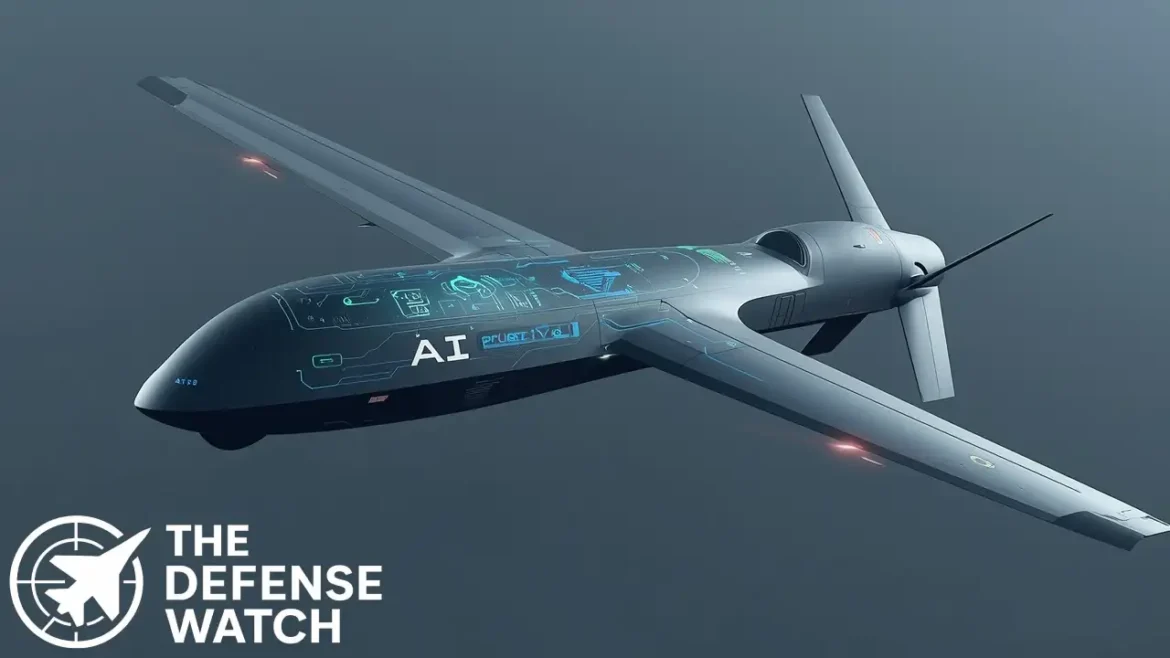
Autonomous Weapon Systems Spark U.S. Ethics Debate Amid Rapid Military AI Integration
The growing role of autonomous weapon systems in modern warfare is prompting an intense debate within the United States over ethics, accountability, and the future of armed conflict. As the Pentagon advances artificial intelligence (AI)-enabled capabilities across drones, missile defenses, and decision-support systems, policymakers, academics, and military leaders are weighing how far the U.S. should go in deploying lethal systems without direct human control.
Pentagon Pushes AI in Warfighting
The Department of Defense (DoD) has long maintained that U.S. military operations should keep “a human in the loop” when making life-or-death decisions. However, the rapid pace of technological development is testing this principle. Programs such as the Air Force’s Collaborative Combat Aircraft (CCA), Navy’s unmanned surface vessels, and Army’s next-generation missile defense interceptors are increasingly reliant on autonomy to react faster than human operators.
In July 2023, the Pentagon updated its Directive 3000.09 on Autonomy in Weapons Systems, which sets boundaries for the testing, approval, and use of autonomous weapons. The directive insists that autonomous systems must be designed to allow commanders to exercise “appropriate levels of human judgment.” Yet critics argue the language leaves room for systems that could act with minimal human oversight.
Source
Ethical and Legal Concerns
Human rights organizations and academics warn that lethal autonomous weapon systems (LAWS) risk violating international humanitarian law if machines independently decide who to target. Questions of accountability remain unresolved: if an autonomous drone mistakenly kills civilians, who bears responsibility—the operator, the commander, or the developer of the algorithm?
A growing coalition of countries, including members of the European Union, has pushed for international regulations or bans on fully autonomous weapons. The U.S., while supportive of discussions at the United Nations Convention on Certain Conventional Weapons (CCW), has resisted binding restrictions, preferring a framework of responsible use.
Military Advocates See Tactical Advantage
Proponents within the defense establishment argue that greater autonomy is unavoidable. In high-speed conflicts, such as countering hypersonic missiles or defending against drone swarms, machines can detect and respond in milliseconds—far faster than a human. The Pentagon’s Replicator initiative, announced in 2023, aims to deploy thousands of autonomous drones by the mid-2020s to counter Chinese military mass in the Indo-Pacific.
Military leaders emphasize that autonomy can reduce risk to U.S. personnel by allowing unmanned systems to conduct high-risk missions, from clearing minefields to penetrating contested airspace.
A Divided Public and Political Landscape
Surveys conducted by the Center for Security and Emerging Technology (CSET) suggest that U.S. public opinion is split: while Americans support the use of AI for defensive purposes, most oppose fully autonomous weapons that could independently launch lethal attacks. In Congress, lawmakers have introduced proposals requiring stronger oversight of AI in military applications, but bipartisan consensus remains elusive.
The debate also intersects with great power competition. China and Russia are investing heavily in military AI, and U.S. officials caution that failing to pursue autonomy could leave American forces at a strategic disadvantage.
Analysis: Striking a Balance
The U.S. faces a difficult balancing act: embracing the military advantages of autonomy while maintaining moral credibility and compliance with the laws of war. Analysts note that while full autonomy may remain politically unacceptable, the boundary between “human-in-the-loop” and “human-on-the-loop” systems is narrowing as AI improves.
Ultimately, the outcome of this debate will shape not only U.S. defense doctrine but also the future of international arms control. As adversaries push ahead, the question is not whether the U.S. will use autonomous systems, but how—and under what ethical framework.
FAQs
Autonomous weapon systems are platforms that can select and engage targets without direct human intervention, often using AI-driven algorithms.
No. Current Pentagon policy requires “appropriate human judgment” in lethal actions, though debates continue about how strictly this principle is applied.
Critics fear they could violate international law, lack accountability, and lower the threshold for war by making lethal force easier to deploy.
Yes. China, Russia, and several other nations are investing heavily in AI-enabled military systems, pushing the U.S. to advance its own programs.
Note: The images are AI-generated.