US Navy F/A-18 Block III Upgrade Program Marks Shift In Carrier Aviation Sustainment
The US Navy F/A-18 Block III upgrade program has reached a key milestone with the completion of the first fully in house modernization of a Super Hornet aircraft. This step reflects a growing effort within naval aviation to strengthen sustainment capacity, shorten upgrade timelines, and maintain carrier strike readiness in an increasingly contested global environment.
At a time when naval forces are balancing high operational demand with aging airframes, the ability to conduct advanced upgrades internally is becoming a strategic advantage. It reduces dependence on external production lines and helps ensure that carrier air wings remain combat ready even during surge deployments.
- The US Navy has completed its first fully in house F A 18 Block III Super Hornet upgrade at a naval aviation maintenance facility.
- The effort supports a broader strategy to increase fleet readiness and reduce reliance on external contractor led upgrade lines.
- F A 18 Block III enhancements include improved cockpit systems, advanced networking, and extended service life structural improvements.
- The upgrade program is aligned with US Navy plans to sustain carrier air wing capability through the next decade.
- Officials say in house modification capability strengthens operational flexibility during high demand deployment cycles.
This development also highlights a broader modernization push across US naval aviation, where incremental upgrades are being used to extend platform relevance while next generation aircraft programs continue to mature.
In House Upgrade Capability Expands Naval Aviation Flexibility
The completion of the first US Navy F/A-18 Block III upgrade performed entirely within a Navy controlled facility represents more than a technical milestone. It signals a shift in how the service manages its fleet modernization pipeline.
Traditionally, major upgrades to the F/A-18 fleet have relied heavily on contractor led facilities and industrial partners such as Boeing. While those partnerships remain central, the introduction of in house capability gives the Navy more control over scheduling and throughput.
This is especially important for carrier strike groups, where aircraft availability directly impacts mission readiness. By internalizing part of the upgrade process, the Navy can better manage maintenance cycles and reduce downtime for deployed squadrons.
From an operational perspective, this flexibility helps address one of the most persistent challenges in naval aviation, balancing modernization with constant global deployments.
What The F/A-18 Block III Upgrade Brings To The Fleet
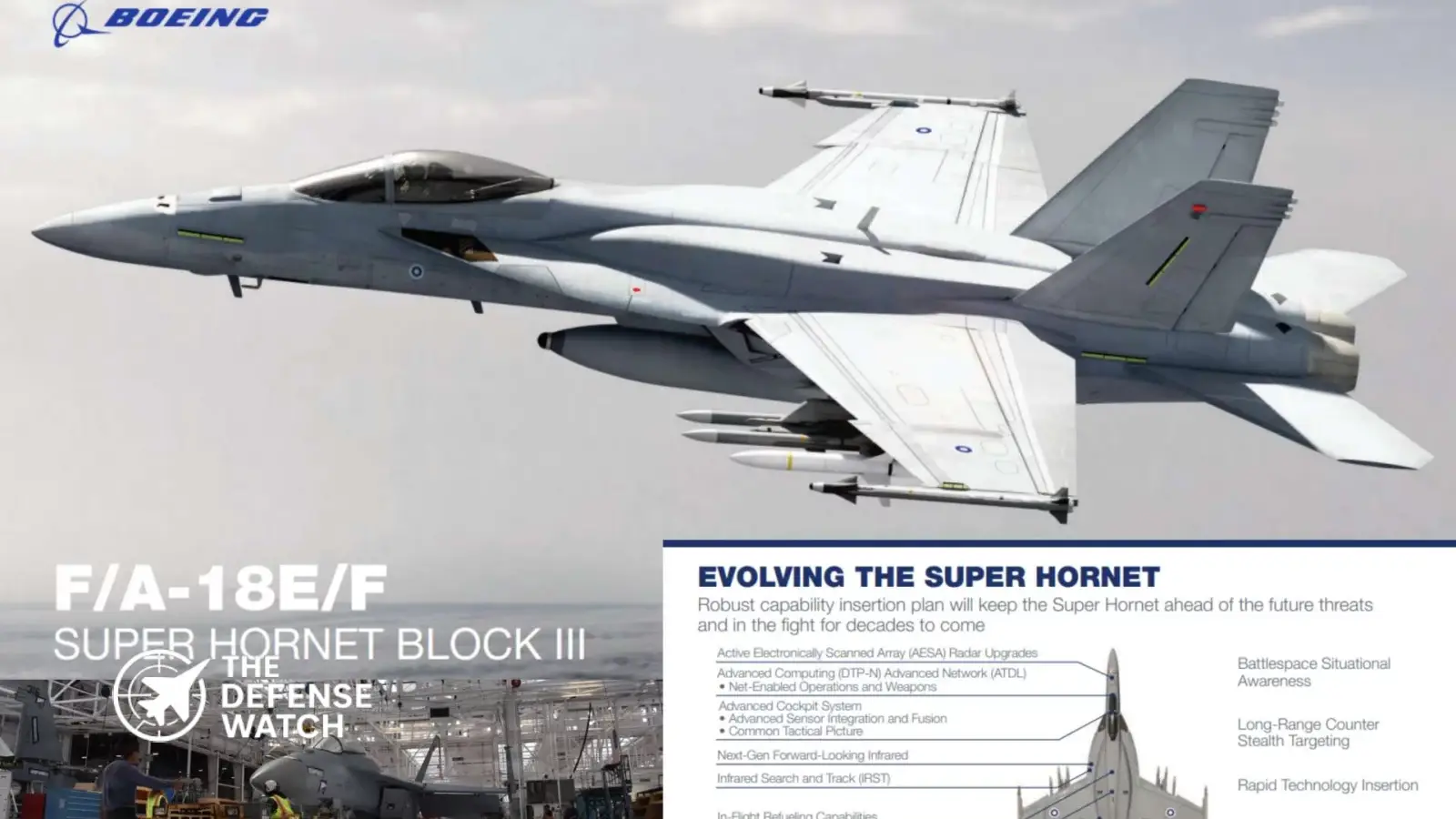
The F/A-18 Block III configuration is designed to keep the Super Hornet relevant well into the next decade. It introduces a range of improvements focused on survivability, situational awareness, and networked warfare capability.
Key enhancements typically associated with the Block III standard include:
Improved cockpit systems with a large area display for better pilot situational awareness
Advanced networking capabilities for integration into carrier strike group data links
Structural enhancements that extend service life by thousands of flight hours
Reduced radar signature improvements in selected configurations
Enhanced mission systems for multi domain operationsThese upgrades are not designed to transform the Super Hornet into a new aircraft. Instead, they extend the operational relevance of an already proven platform, ensuring it can continue operating alongside fifth generation assets such as the F 35C.
Strategic Context For Carrier Strike Readiness
The US Navy F/A-18 Block III upgrade effort comes at a time when carrier strike groups are operating in more contested maritime environments. Naval planners are increasingly focused on distributed operations, long range strike capability, and integration across air, sea, and space based sensors.
Within that framework, the Super Hornet remains the backbone of carrier air wings. Its versatility allows it to perform strike missions, air superiority roles, electronic warfare support, and reconnaissance tasks depending on mission configuration.
By upgrading the fleet through Block III enhancements, the Navy is effectively bridging the gap between legacy fourth generation aircraft and emerging next generation systems.
From an analysis standpoint, this approach reflects a pragmatic force structure strategy. Instead of waiting for full fleet replacement cycles, the Navy is investing in incremental upgrades that deliver immediate capability improvements.
Industrial And Sustainment Implications
The decision to execute the first in house F/A-18 Block III upgrade also carries implications for the US defense industrial base.
It suggests a gradual shift toward hybrid sustainment models where both government facilities and industry partners share responsibility for modernization work. This can improve resilience in the supply chain, especially during periods of high operational tempo or industrial bottlenecks.
It also reflects broader Pentagon priorities focused on readiness, depot level maintenance efficiency, and cost control across aging tactical aircraft fleets.
While contractor support remains essential for major structural and avionics upgrades, in house capability allows the Navy to absorb some workload internally, potentially accelerating delivery timelines for deployed squadrons.
Operational Impact On Carrier Air Wings
For carrier air wings, the F/A-18 Block III upgrade program directly translates into higher mission availability and improved combat effectiveness.
Aircraft that complete the upgrade cycle return with improved digital systems, better connectivity with carrier strike group networks, and extended service life margins. This helps squadrons maintain high readiness levels even during extended deployments.
It also reduces logistical strain, as fewer aircraft need to rotate through external modification lines at any given time.
In the long term, this approach supports sustained carrier presence across multiple theaters without degrading fleet readiness.
Analytical Perspective
The completion of the first in house F/A-18 Block III upgrade is not a radical shift in capability, but it is a meaningful evolution in sustainment strategy.
The US Navy is signaling that future readiness will depend not only on new platforms, but also on how efficiently existing fleets can be upgraded and maintained.
This is particularly relevant as peer and near peer competitors continue to expand their naval aviation and missile capabilities. Maintaining high sortie generation rates and aircraft availability will remain a core determinant of carrier strike group effectiveness.
From an E E A T standpoint, this development aligns with established Navy modernization patterns and reflects publicly documented sustainment goals for the Super Hornet fleet.
Get real time update about this post category directly on your device, subscribe now.