

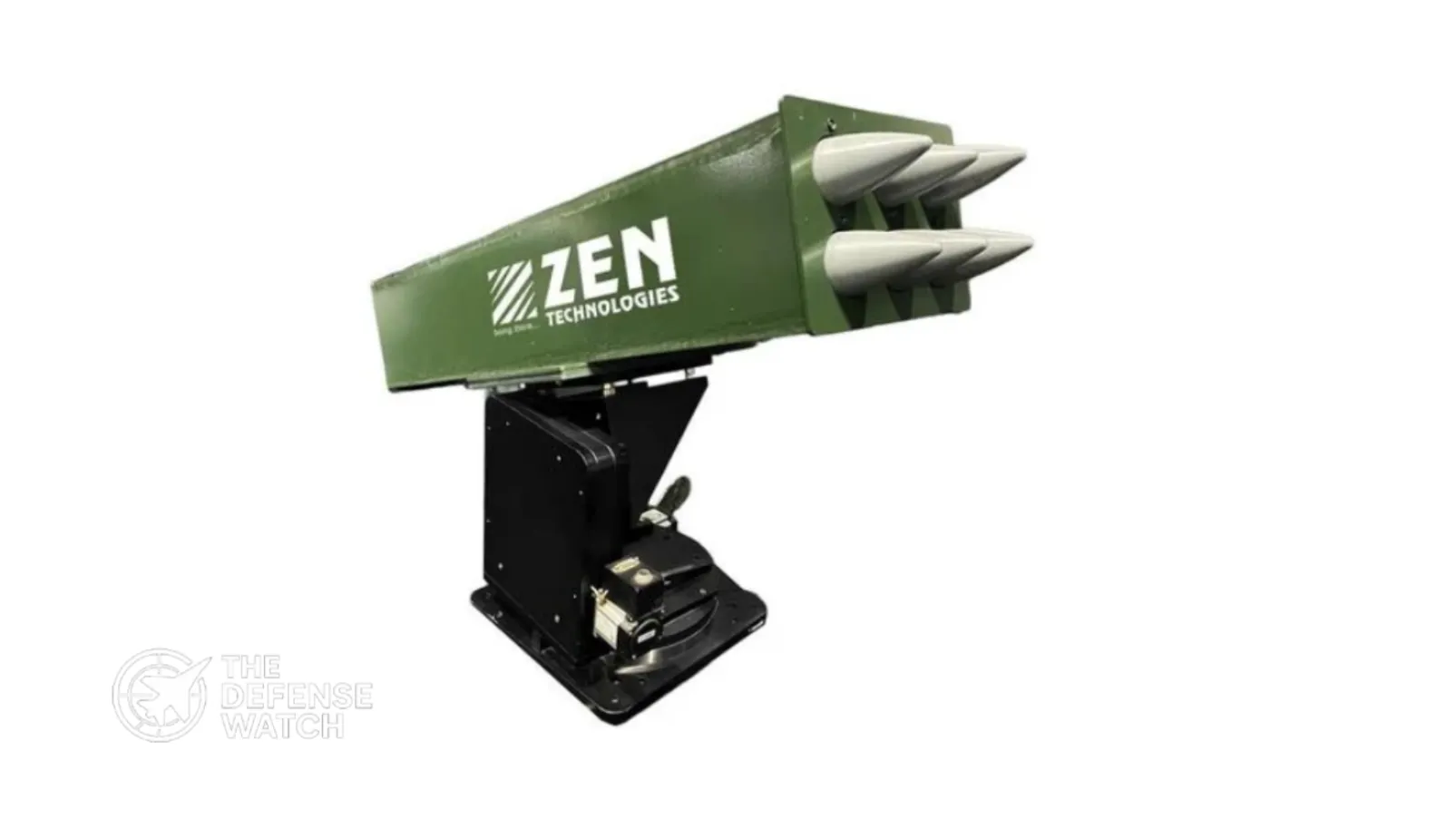
India Expands Air Defense Capacity With Zen Technologies License
Zen Technologies air defense cannons moved into focus after the Indian government granted the company a manufacturing license covering several rapid-fire weapon calibers used in layered air defense systems. The approval authorizes production of 12.7mm, 23mm, 30mm, and 40mm cannons under India’s Arms Act, 1959.
- India granted Zen Technologies an arms manufacturing license under the Arms Act, 1959.
- Approval covers 12.7mm, 23mm, 30mm, and 40mm cannons.
- Systems are intended for air defense, naval operations, and counter-UAS missions.
- Cannons are positioned as last-layer defenses against drones and low-flying threats.
- Move supports India’s indigenous defense manufacturing strategy.
The company said the systems are designed for air defense, naval operations, and counter-unmanned aircraft system (C-UAS) roles. In practical terms, these cannons are often used as the final protective layer against drones, loitering munitions, helicopters, and other low-altitude threats that evade longer-range missile systems.
For India, the decision reflects a broader shift in military planning. Recent conflicts worldwide have shown that inexpensive drones can threaten expensive military assets, logistics hubs, and critical infrastructure. Rapid-fire cannon systems paired with radar and electro-optical sensors remain one of the most cost-effective answers to mass drone attacks.
Why Zen Technologies Air Defense Cannons Matter
Zen Technologies has been known primarily for training simulators, anti-drone solutions, and military technology systems. This new license expands the company deeper into hard-kill weapon manufacturing, potentially opening a new revenue stream while aligning with India’s self-reliance defense strategy.
That matters because India has increasingly prioritized domestic production over imports. Building cannon systems locally can reduce procurement delays, improve sustainment support, and create export opportunities if products meet international demand.
The approved calibers also matter strategically:
- 12.7mm systems can support anti-drone and vehicle defense roles
- 23mm and 30mm cannons are common short-range air defense calibers
- 40mm systems can offer heavier firepower for point defense and naval use
Counter-Drone Warfare Driving Demand
The rise of one-way attack drones and loitering munitions has changed procurement priorities globally. Missile interceptors are effective, but they can be expensive when used against low-cost drones. Cannons using programmable ammunition or radar cueing can offer a cheaper shot-per-kill option.
That likely explains why Zen Technologies air defense cannons were framed as systems for modern asymmetric threats. If integrated with sensors and automated fire-control networks, such weapons could help defend bases, fuel depots, border sites, and mobile formations.
Market And Strategic Outlook
While no contract awards were announced alongside the license, regulatory approval is often the first step before prototype development, military trials, and procurement competitions.
India’s defense sector has seen growing investment in air defense and anti-drone systems after regional tensions and lessons from Ukraine and the Middle East. This suggests demand for locally built short-range protection systems may continue rising over the next several years.
For U.S. and allied observers, the move is another sign that regional powers are investing heavily in layered defenses where guns, electronic warfare, and missiles operate together.
