
Pakistan’s $1.5 Billion Sudan Arms Deal Collapses Under Saudi Pressure
Pakistan’s ambitious Sudan arms deal has been suspended after Saudi Arabia withdrew financial backing and urged Islamabad to terminate the agreement, dealing a significant blow to Pakistan’s expanding defense export program and revealing the degree to which Gulf financing shapes Islamabad’s arms diplomacy.
- Pakistan has placed a $1.5 billion weapons and aircraft deal with Sudan on hold following direct pressure from Saudi Arabia.
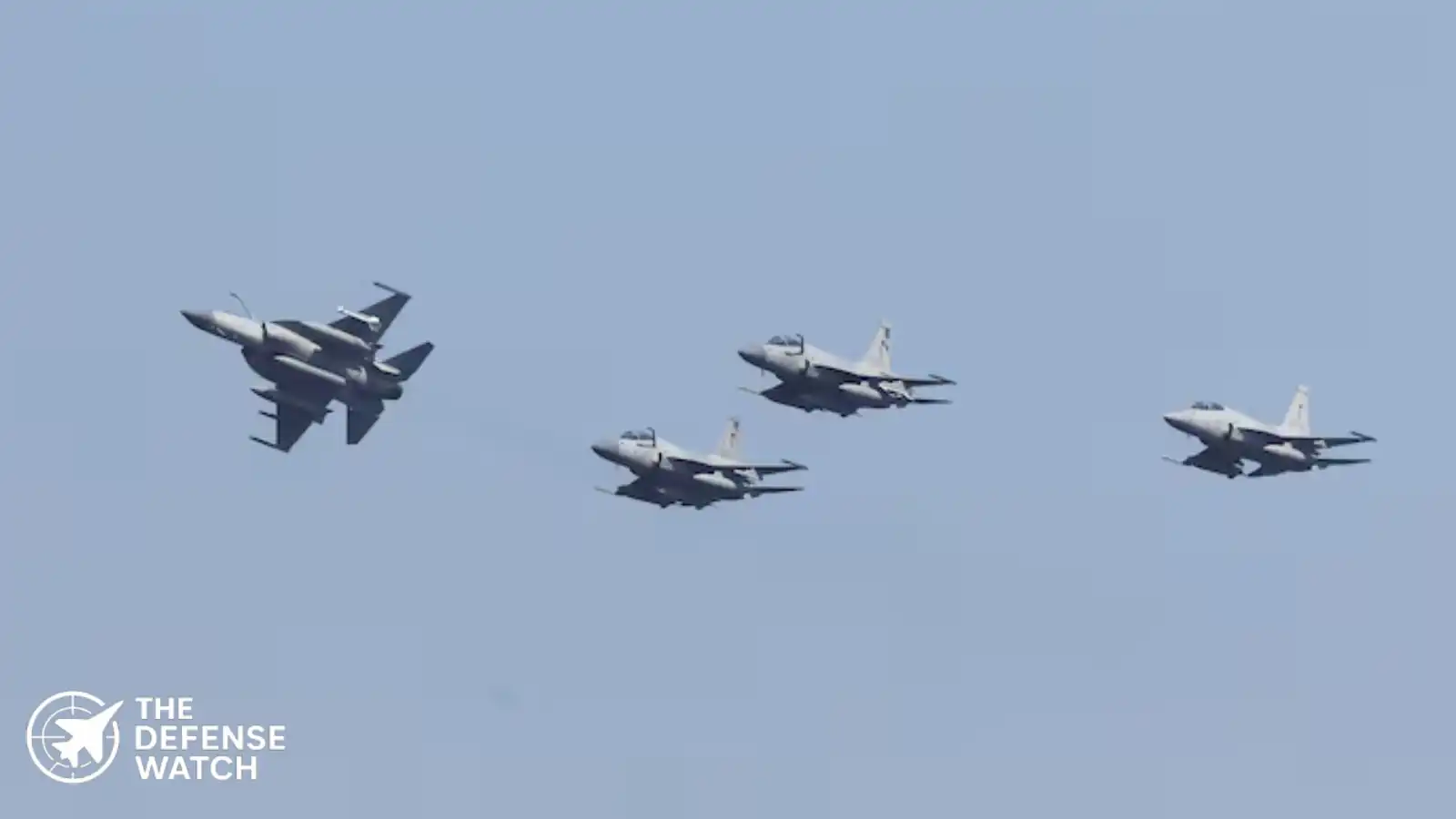
- The proposed package included 10 K-8 Karakoram light attack aircraft, over 200 drones, advanced air defense systems, and potentially JF-17 Thunder fighter jets.
- Saudi Arabia withdrew financing for the deal and urged Islamabad to terminate the agreement entirely, citing concerns about involvement in African proxy conflicts.
- The suspension follows Pakistan’s separate $4 billion-plus arms deal with Libya’s eastern-based Libyan National Army, finalized in December 2025.
- The halt underscores how Gulf financial leverage shapes Pakistani defense export strategy and the limits of Islamabad’s arms diplomacy independence.
The Big Picture
Pakistan has emerged as one of the most aggressive new entrants in the global defense export market over the past two years. Defense exports reportedly reached all-time highs in 2025, with officials attributing the surge to the perceived battle-tested performance of platforms like the JF-17, following Pakistan’s deployment of the aircraft in its conflict with India.
Islamabad has leveraged those combat credentials to pursue large-scale arms agreements across the Middle East and Africa—markets where Western suppliers face sanctions constraints or political complications. In December 2025, Pakistan signed a deal worth more than $4 billion with Libya’s eastern-based Libyan National Army, one of its largest-ever arms deals, covering 16 JF-17 fighter jets, 12 Super Mushshak trainer aircraft, and additional equipment for land, sea, and air operations.
The Sudan deal was intended to be the next major milestone in that trajectory. Its collapse—driven not by Pakistani hesitation but by Gulf financial pressure—exposes the structural dependency at the heart of Islamabad’s defense export model.
What’s Happening
Pakistan has put a $1.5 billion deal to supply weapons and jets to Sudan on hold after Saudi Arabia asked for the agreement to be terminated and said it would not finance the purchase, two Pakistani security sources and a diplomatic source told Reuters.
The proposed package included over 200 drones for reconnaissance and loitering attacks, 10 K-8 Karakoram light attack aircraft, advanced air defense systems, PAC MFI-395 Super Mushshak training aircraft, and potentially JF-17 Thunder fighter jets jointly developed with China.
Reuters first reported the deal was in its final stages in January 2026, noting it had been brokered by Saudi Arabia, though no Saudi financing was disclosed at that time. The April 20 report confirms that Riyadh’s role extended well beyond brokerage—it was the deal’s financial backbone.
One meeting in March between Sudanese military officials and Saudi representatives reportedly contributed to the withdrawal of financing, following a broader Saudi reassessment of its involvement in regional conflicts.
Neither Pakistan’s military nor Sudan’s armed forces responded to requests for comment. The Saudi government media office also did not immediately respond.
Why It Matters
The suspension is significant for three reasons. First, it stalls a deal that Sudan’s military badly needs. Assistance from Pakistan, especially drones and jets, could help Sudan’s army regain the air supremacy it had toward the start of its war with the RSF, which has increasingly used drones to gain territory, eroding the army’s position.
Second, it signals the outer boundary of Pakistan’s defense export autonomy. Islamabad can negotiate and structure deals, but without Gulf financing—particularly Saudi liquidity—it cannot always close them. Pakistan is currently operating under a $7 billion IMF program, following a short-term deal to avert a sovereign default in 2023, and won IMF support after Saudi Arabia and other Gulf allies provided financial and deposit rollovers. That financial dependency translates directly into leverage over Pakistan’s foreign policy decisions, including arms sales.
Third, the collapse demonstrates how Saudi Arabia uses economic relationships as instruments of foreign policy restraint—a form of soft-power veto that rarely requires public statements.
Strategic Implications
Saudi objectives in Sudan appear centered on preventing the collapse of the national army as the backbone of the state, achieved through political acceptance and regional facilitation rather than direct intervention. Riyadh’s decision to pull financing is therefore not a withdrawal of support for Sudan’s military per se—it reflects a recalibration of how Saudi Arabia wants to be seen externally.
Some Western countries had advised Riyadh to stay away from proxy wars in Africa, a factor that sources say influenced Saudi Arabia’s decision to signal that Pakistan should terminate the deal. This advisory pressure, likely from Washington or European capitals, illustrates how diplomatic signaling cascades through financial relationships: Western governments pressure Riyadh, Riyadh pressures Islamabad, and Islamabad suspends the deal.
This cascade model matters for assessing Pakistan’s future export ambitions. Every deal Pakistan structures through Gulf financing channels carries an embedded political risk—the financier can pull out if it faces external pressure. For Pakistan to truly operate as an independent defense exporter, it will need either sovereign financing mechanisms, deferred payment arrangements with buyers, or access to alternative credit structures that bypass Gulf intermediaries.
The Libya deal, by contrast, appears to have proceeded without similar complications—possibly because Libya’s eastern forces secured their own financing, or because the Gulf political environment around that transaction was cleaner. The divergence between the two deals is instructive.
Competitor View
From an Indian perspective, the suspension is a minor strategic relief. New Delhi has watched Pakistan’s defense export surge with concern, particularly JF-17 proliferation into regions where India has strategic interests. A Sudan deal falling apart reduces one potential theater of expanded Pakistani air power projection, even if temporarily.
For the UAE, the outcome is more complex. The UAE has been accused of providing logistical support to the RSF in Sudan, a charge it officially denies. A Pakistan-supplied weapons package to Sudan’s army would have directly countered UAE-aligned interests in the conflict. Riyadh’s intervention—whether coordinated with Abu Dhabi or not—effectively preserved that battlefield balance.
China will monitor the outcome closely. The JF-17 is a joint Pakistan-China platform, and expanded export sales benefit both Chinese defense industry revenues and Beijing’s influence in target markets. A stalled Sudan deal is a missed commercial and strategic opening for Beijing’s broader Africa engagement strategy.
What To Watch Next
The immediate question is whether the deal remains suspended or formally collapses. Pakistani security sources described the deal as placed “on hold” rather than terminated—suggesting Islamabad is leaving the door open if Saudi Arabia reverses course or alternative financing emerges.
Sudan’s military will continue to seek external suppliers. Analysts note the pause may also affect other potential arms agreements under discussion, including a separate multibillion-dollar deal involving Libya, which is reportedly under review amid shifting Saudi strategic priorities.
For Pakistan, the priority will be insulating future defense export pipelines from single-point financial dependency. Developing deferred payment options for cash-constrained buyers, or structuring deals through bilateral government-to-government credit rather than Gulf-brokered financing, would reduce exposure to this kind of pressure.
The JF-17’s export calendar—including active discussions with Iraq, Bangladesh, Azerbaijan, Nigeria, and Myanmar—will also bear watching. Iraq has expressed keen interest in the JF-17 and Super Mushshak trainers, with advanced talks underway. Unlike the Sudan deal, many of those potential buyers have direct procurement budgets that do not require Saudi intermediation.
Capability Gap
The suspended deal would have addressed a critical deficit in Sudan’s military toolkit. The RSF has increasingly relied on drones to capture territory, crippling the army’s formations and dominance—a capability gap the Pakistan package, with its 200-plus drone component and light attack aircraft, was specifically designed to close. The Defense Post
Without this deal, Sudan’s army remains at an aerial disadvantage against RSF drone operations. Alternative suppliers are limited: Western governments face humanitarian and legal constraints on arms transfers to Sudan; Russia and China have their own political and commercial calculations. Pakistan was, effectively, the most accessible and cost-competitive option available.
The suspension therefore has direct battlefield consequences. Sudan’s military will likely continue to press for the deal’s revival or seek alternative procurement pathways—potentially at higher cost and longer lead times.
The Bottom Line
Saudi Arabia’s financial veto over Pakistan’s Sudan arms deal confirms that Islamabad’s defense export ambitions, however commercially impressive, remain structurally constrained by the Gulf financial dependencies that underwrite Pakistan’s broader economic stability.
Get real time update about this post category directly on your device, subscribe now.

