European Commission Defense Projects Funding Expands EU Military Capabilities
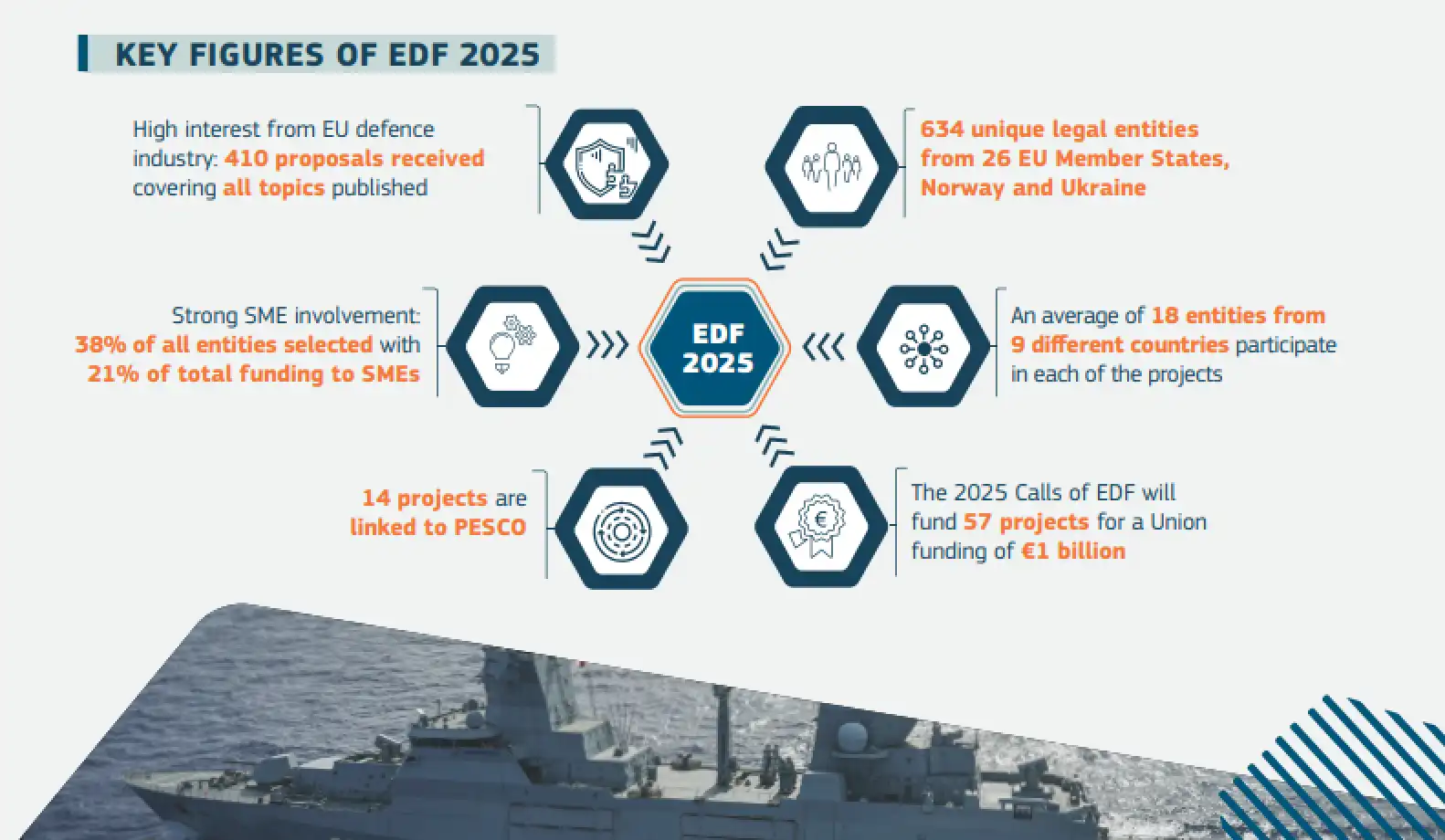
European Commission defense projects funding has reached €1.07 billion, covering 57 new collaborative initiatives aimed at strengthening Europe’s military capabilities and industrial base. The funding, announced under the European Defence Fund framework, underscores a coordinated push to accelerate innovation and close critical capability gaps across EU member states.
- European Commission allocates €1.07 billion to 57 collaborative defense projects.
- Funding supports areas such as drones, space systems, cyber defense, and next-gen combat technologies.
- Initiative aims to strengthen EU strategic autonomy and reduce reliance on external suppliers.
- Projects fall under the European Defence Fund framework with multinational participation.
- Investment reflects growing urgency driven by regional security threats and NATO alignment goals.
The Big Picture
European defense spending has shifted from fragmented national efforts toward coordinated, multinational investment. The European Commission is using centralized funding to drive interoperability, standardization, and industrial resilience across the bloc.
Russia’s war in Ukraine and evolving NATO requirements have forced European governments to prioritize readiness and technological modernization. The European Commission defense projects funding reflects this urgency, particularly in areas where Europe has historically depended on external suppliers, including the United States.
The initiative also aligns with broader EU ambitions to build strategic autonomy in defense production while remaining interoperable with NATO forces.
What’s Happening
The European Commission approved €1.07 billion in funding for 57 defense projects involving companies and research institutions across multiple EU member states. These projects fall under the European Defence Fund, which supports collaborative development of defense technologies.
The funded programs span a wide range of domains, including unmanned systems, space-based capabilities, cyber defense, naval systems, and next-generation combat technologies. Several projects focus on improving battlefield awareness, secure communications, and advanced sensors.
Participation requires cross-border cooperation, ensuring that multiple European defense firms and research entities contribute to each project. This structure is designed to strengthen the European defense industrial base and reduce duplication of effort.
The funding decision represents one of the largest coordinated EU investments in defense research and development to date.
Why It Matters
European Commission defense projects funding directly addresses long-standing inefficiencies in Europe’s defense ecosystem. Historically, fragmented procurement and limited collaboration have led to duplicated systems, interoperability challenges, and higher costs.
By funding multinational programs, the EU is pushing member states toward shared standards and joint capability development. This approach improves operational effectiveness in coalition environments, particularly within NATO frameworks.
The investment also accelerates innovation in emerging technologies such as artificial intelligence, autonomous systems, and cyber resilience. These areas are increasingly central to modern warfare and are critical for maintaining competitiveness against peer adversaries.
Strategic Implications
The funding initiative strengthens Europe’s ability to sustain high-intensity operations and reduces reliance on external defense suppliers. This shift enhances long-term strategic resilience, especially in scenarios where supply chains may be contested or disrupted.
The European Commission defense projects funding also signals a deeper integration of European defense industries. By encouraging joint development, the EU is building a more cohesive industrial base capable of scaling production during crises.
For NATO, this development could improve burden-sharing. Stronger European capabilities reduce pressure on U.S. forces while enhancing alliance-wide readiness.
However, the effort must balance autonomy with interoperability. Systems developed under EU programs must remain compatible with NATO standards to ensure seamless integration during joint operations.
Competitor View
Russia is likely to view the funding as part of a broader European effort to strengthen military readiness following the Ukraine conflict. Increased investment in drones, cyber capabilities, and advanced sensors directly addresses operational lessons observed in the war.
China may interpret the move as a step toward reducing Europe’s dependence on global supply chains, particularly in dual-use technologies such as semiconductors and space systems. The emphasis on indigenous development aligns with broader trends in technological sovereignty.
Regional actors will likely see the initiative as reinforcing Europe’s long-term defense posture rather than signaling immediate escalation.
What To Watch Next
Upcoming milestones will include project development phases, prototype testing, and eventual integration into national and EU-level defense frameworks.
Observers should track how quickly funded technologies transition from research to operational deployment. Historically, European defense programs have faced delays due to complex multinational coordination.
Another key indicator will be follow-on funding. Continued investment will determine whether the European Commission defense projects funding translates into sustained capability growth.
Capability Gap
The funding targets several known capability gaps within European forces, including limited drone integration, fragmented cyber defense infrastructure, and insufficient space-based surveillance assets.
It also addresses interoperability challenges across national militaries, which have hindered joint operations in the past.
However, limitations remain. Multinational projects often face bureaucratic hurdles, and aligning requirements across multiple countries can slow progress. Additionally, funding levels, while significant, may still fall short of the scale needed to fully match U.S. or Chinese defense innovation ecosystems.
The Bottom Line
The European Commission’s €1.07 billion investment marks a decisive step toward a more integrated, capable, and strategically autonomous European defense posture.