US Navy Blackbeard Hypersonic Missile Moves Into MACE Program
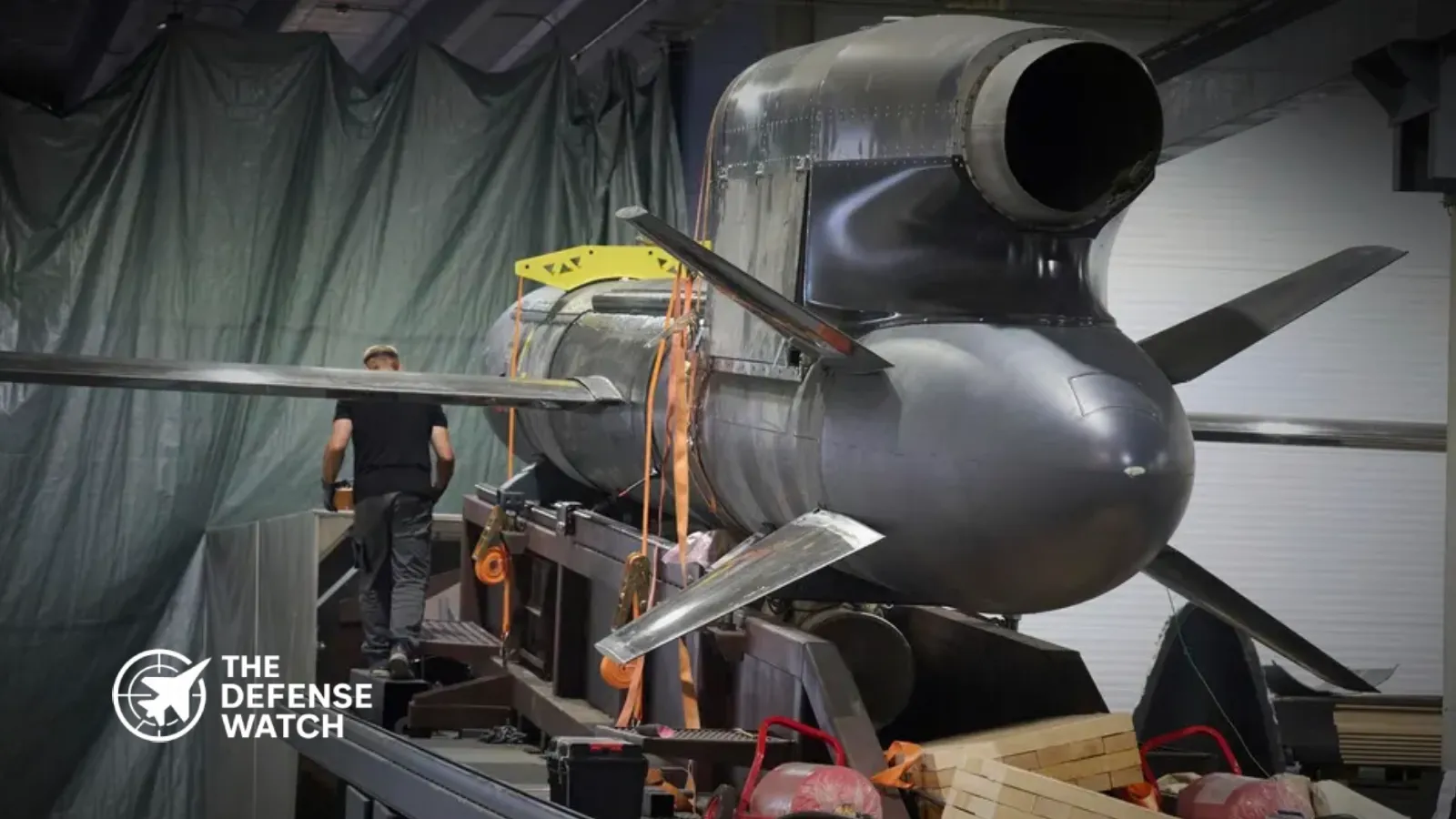
The Blackbeard hypersonic missile has been formally identified by the US Navy as the first candidate weapon for the Modular Attack Cruise Engine (MACE) program, marking a notable step in the service’s push to field advanced hypersonic strike capabilities.
The confirmation ties the emerging Blackbeard system directly to a broader Pentagon effort focused on modular, scalable propulsion and weapon design. The MACE program is intended to accelerate the development of next-generation cruise and hypersonic weapons adaptable across multiple platforms.
This development signals a shift from concept exploration toward early integration of a specific weapon system within the Navy’s future strike architecture.
- US Navy confirmed the Blackbeard hypersonic missile as the first candidate weapon for the MACE program.
- MACE aims to develop modular hypersonic strike capabilities for future naval platforms.
- Blackbeard is designed to deliver high-speed, long-range precision strike against time-sensitive targets.
- The program reflects growing US focus on countering peer hypersonic advancements.
- Development aligns with broader Pentagon efforts to field operational hypersonic weapons this decade.
What The MACE Program Is Designed To Achieve
The MACE initiative centers on creating a modular propulsion framework that can support different classes of weapons, including hypersonic systems. Instead of developing single-purpose missiles, the program emphasizes flexibility, allowing upgrades and variants to be introduced more rapidly.
By linking the Blackbeard hypersonic missile to MACE, the Navy appears to be testing a model where propulsion, guidance, and payload components can evolve independently while maintaining interoperability.
This approach reflects lessons learned from earlier acquisition programs, where rigid designs limited adaptability in fast-changing threat environments.
Blackbeard Hypersonic Missile: Early Role And Capabilities
While technical details remain limited, the Blackbeard hypersonic missile is expected to focus on high-speed, long-range precision strike missions. Its inclusion in the MACE program suggests it could serve as a testbed for propulsion technologies as well as an operational weapon candidate.
Hypersonic systems typically travel at speeds above Mach 5, reducing reaction time for adversaries and complicating interception. In a naval context, this capability is particularly relevant for engaging heavily defended or time-sensitive targets at extended ranges.
The Blackbeard system may also support distributed maritime operations, where US forces rely on dispersed platforms to complicate enemy targeting.
Strategic Context: Closing The Hypersonic Gap
The decision to advance the Blackbeard hypersonic missile comes amid increasing global investment in hypersonic weapons, particularly by China and Russia. Both countries have tested and, in some cases, fielded systems designed to evade traditional missile defenses.
For the United States, integrating hypersonic capabilities into naval forces is seen as essential to maintaining credible deterrence in contested maritime regions such as the Indo-Pacific.
The Navy’s approach, focusing on modularity through MACE, may offer a faster pathway to deployment compared to traditional acquisition cycles.
Analysis: Why Blackbeard Matters Now
The linkage between the Blackbeard hypersonic missile and the MACE program suggests a more pragmatic phase in US hypersonic development. Rather than pursuing isolated flagship systems, the Navy is aligning weapon design with scalable infrastructure.
This could reduce long-term costs and improve upgrade cycles, especially as propulsion and guidance technologies continue to evolve.
At the same time, the lack of publicly available technical data indicates the program is still in early stages. Operational timelines, deployment platforms, and performance benchmarks remain undefined.
However, the move signals intent. The Navy is not only investing in hypersonic speed, but also in the architecture needed to sustain and expand that capability over time.