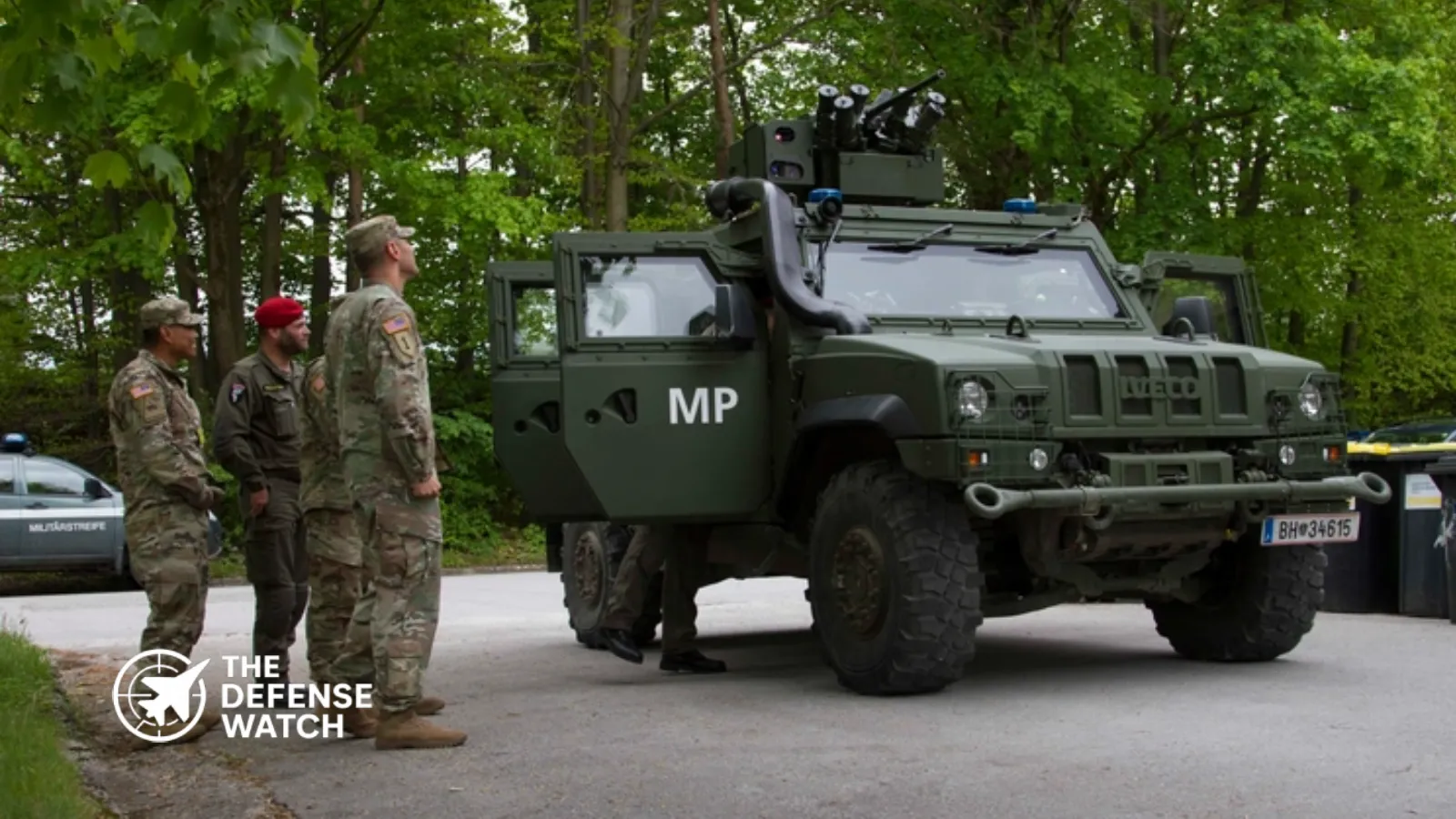
- Rheinmetall’s planned acquisition of Iveco’s military trucks business has been delayed.
- The delay stems from Leonardo’s pending €1.7 billion purchase of Iveco Defence Vehicles.
- The transaction forms part of a broader restructuring of Iveco’s commercial and defense operations.
- Rheinmetall had expected the military truck unit handover by the end of March 2026.
- The deal reflects growing consolidation in Europe’s land defense vehicle sector.
Rheinmetall Iveco Military Trucks Deal Delayed
The Rheinmetall Iveco military trucks deal has been delayed after Italy’s Leonardo has yet to finalize its acquisition of Iveco Defence Vehicles, creating a temporary pause in a broader restructuring of Europe’s land defense vehicle industry.
Executives at the German defense manufacturer confirmed the delay during an analyst call on March 11, noting that Rheinmetall expected to receive the military truck unit by the end of March but must now wait until Leonardo completes its purchase of the defense division.
The delay highlights the complex chain of transactions reshaping the European military vehicle market.
The Big Picture
European defense companies are undergoing rapid consolidation as governments increase defense spending and seek greater industrial sovereignty.
The restructuring surrounding Iveco illustrates this shift. The Italian truck maker has agreed to split its operations into two separate transactions.
India’s Tata Motors is acquiring Iveco’s commercial truck and bus business in a deal valued at approximately €3.8 billion, while Italy’s state-controlled Leonardo will purchase the defense unit Iveco Defence Vehicles (IDV) for €1.7 billion.
These moves aim to strengthen national control over strategic military manufacturing while enabling global partnerships in the commercial vehicle sector.
For Europe’s defense industry, the transaction reflects a broader effort to build stronger regional land systems capabilities amid rising geopolitical tensions and increased military spending across NATO.
What’s Happening
Rheinmetall had reached a handshake agreement to acquire the military truck operations from Leonardo once the Italian defense company completes its purchase of Iveco Defence Vehicles.
However, Leonardo has not yet finalized its acquisition from Iveco, delaying Rheinmetall’s next step.
Rheinmetall CEO Armin Papperger said the delay stems directly from the earlier transaction in the chain.
“The first deal between Iveco and Leonardo had a delay, and then our deal has also a delay,” Papperger said during the analyst call.
According to company officials, Rheinmetall expected the military truck business to transfer by the end of March 2026 but remains in regular contact with Leonardo regarding the timeline.
Leonardo has previously stated that its acquisition of Iveco Defence Vehicles should close during the first quarter of 2026, pending regulatory and procedural completion.
Why It Matters
Military logistics vehicles are critical assets for modern armed forces.
While tanks and armored vehicles often dominate headlines, heavy military trucks serve as the backbone of military logistics networks. They transport troops, ammunition, fuel, missile systems, and engineering equipment across operational theaters.
Companies such as Rheinmetall, Iveco Defence Vehicles, and Oshkosh Defense play major roles in this sector.
For Rheinmetall, the acquisition would expand its footprint in the wheeled military vehicle segment and strengthen its supply chain for NATO customers.
The move also complements the company’s broader land systems portfolio, which includes armored vehicles, artillery systems, and logistics platforms used by multiple European militaries.
Strategic Implications
The Rheinmetall Iveco military trucks deal forms part of a wider trend toward consolidation in Europe’s defense industrial base.
Several strategic implications stand out.
First, the transaction would deepen cooperation between German and Italian defense manufacturers. Rheinmetall and Leonardo already operate a joint venture focused on armored vehicles, strengthening cross-border industrial integration.
Second, acquiring the military truck unit would allow Rheinmetall to broaden its logistics vehicle production capabilities at a time when NATO members are rapidly expanding their military inventories.
European militaries are increasing procurement of transport trucks, armored logistics vehicles, and heavy mobility platforms to support expanded ground forces and high-intensity operations.
Third, the deal highlights Europe’s desire to keep sensitive defense manufacturing within allied industrial networks rather than allowing acquisitions by external companies.
Competitor View
Competitors are closely watching the consolidation of Europe’s land vehicle sector.
Russia maintains a large domestic military truck industry, supplying vehicles for logistics and missile platforms across its armed forces.
China has also expanded its military logistics vehicle production through companies such as Shaanxi Automobile Group and Dongfeng Motor Corporation.
Both countries rely heavily on domestic vehicle manufacturing to support large-scale military mobility.
From that perspective, European consolidation efforts may be interpreted as an attempt to strengthen NATO’s industrial base and ensure sustained production capacity during prolonged conflicts.
Such capacity has become a strategic priority following the war in Ukraine and the surge in European defense budgets.
What To Watch Next
The next milestone is the completion of Leonardo’s acquisition of Iveco Defence Vehicles.
Once that transaction closes, negotiations between Leonardo and Rheinmetall can formally proceed regarding the military trucks unit.
Analysts expect several developments to follow.
First, Rheinmetall could integrate the truck business into its existing land systems structure.
Second, the company may expand production capacity to meet rising European military demand.
Third, additional joint projects between Rheinmetall and Leonardo could emerge as the two firms deepen their industrial cooperation.
Capability Gap
European militaries face persistent logistics mobility challenges.
Large-scale land operations require thousands of reliable transport vehicles capable of operating across difficult terrain while supporting armored formations.
The integration of Iveco’s military truck technology with Rheinmetall’s defense systems could help address several capability gaps.
These include:
- high-mobility logistics vehicles
- protected transport trucks
- integrated support vehicles for missile and artillery systems
However, the sector also faces constraints such as supply chain pressures, production bottlenecks, and workforce shortages that could slow expansion efforts.
The Bottom Line
The Rheinmetall Iveco military trucks deal remains strategically important for Europe’s defense industry, but its progress now depends on the timely completion of Leonardo’s acquisition of Iveco Defence Vehicles.
Get real time update about this post category directly on your device, subscribe now.