
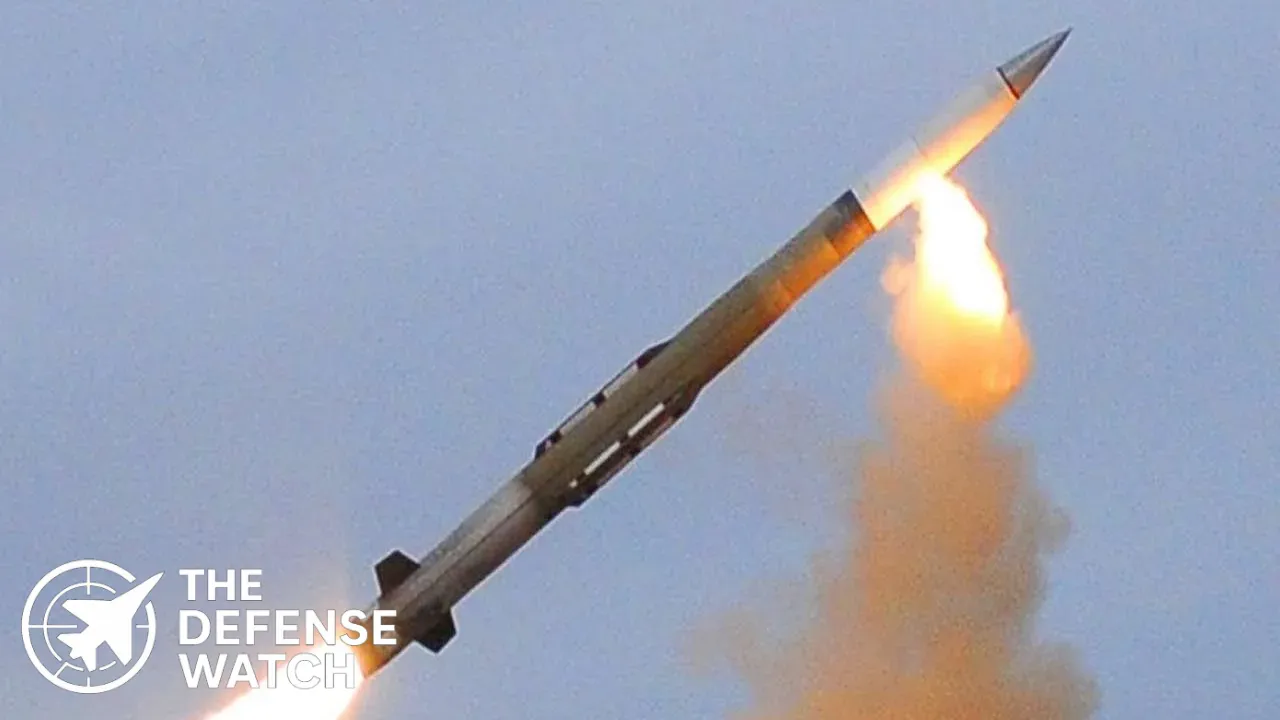
Boeing Moves to Triple PAC-3 Seeker Output Amid Record Demand
Boeing announced during the Dubai Air Show 2025 that it will triple production of Patriot PAC-3 missile seekers, responding to accelerating demand from European NATO members and global partners replenishing stockpiles following the war in Ukraine. The expansion is anchored by a new 40,000-square-foot manufacturing facility built specifically to break long-standing supply bottlenecks in seeker production.
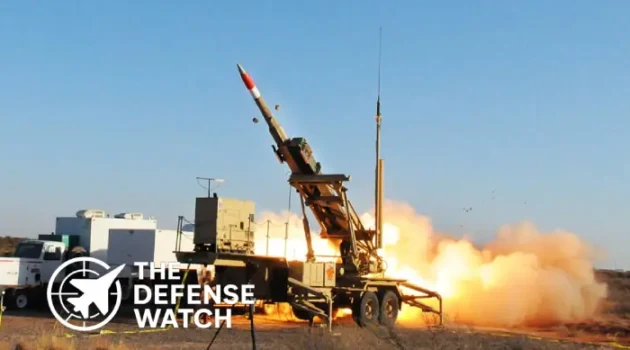
The move positions Boeing at the center of one of the most stressed supply chains in Western missile defense, as the Patriot PAC-3 interceptor remains the most widely deployed ballistic missile defense asset across NATO, the Middle East, and Asia-Pacific.
Background: Patriot Demand Soars After Ukraine War
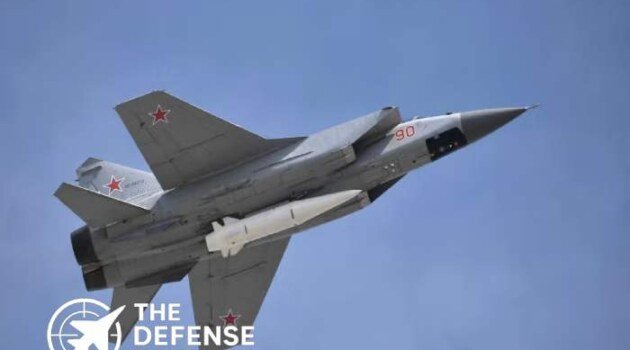
The Patriot system has experienced unprecedented global demand since Russia’s full-scale invasion of Ukraine in 2022. Ukraine’s successful use of Patriot batteries to intercept Kinzhal hypersonic missiles and other ballistic threats reshaped European defense planning and triggered one of the largest missile procurement surges since the Cold War.
European nations—among them Germany, Poland, Romania, the Netherlands, Spain, Sweden, and Greece—are simultaneously:
- Supplying interceptors and batteries to Ukraine
- Rebuilding their own depleted stocks
- Preparing for potential high-intensity conflict scenarios on NATO’s eastern flank
This surge exposed a critical industrial bottleneck: insufficient production of PAC-3 seekers, the highly specialized guidance component manufactured solely by Boeing.
Inside the Expansion: Boeing’s New Seeker Production Facility
A Strategic Early Investment
Steve Parker, head of Boeing Defense, Space & Security, told reporters that Boeing anticipated the demand spike years earlier and began investing in new production capacity before customers formally placed orders.
“We saw this coming and had to build ahead of the need,” Parker said at Dubai Air Show, emphasizing that waiting for contracts would have put the entire Patriot industrial ecosystem at risk.
The result was a dedicated, state-of-the-art center in Huntsville, Alabama, focused on eliminating bottlenecks in:
- precision electronics
- micro-machining
- sensor assembly
- final integration and testing
The new capacity has already helped Boeing push production beyond 500 PAC-3 seekers in 2024, with further increases expected in 2025.
Critical Link in a Three-Company Ecosystem
The Patriot supply chain relies on a tri-partner model:
- Raytheon → ground radar and fire control
- Lockheed Martin → PAC-3 and PAC-3 MSE interceptors
- Boeing → Ka-band active radar seeker
Of these, the seeker has become the pacing item for global production. NATO officials have acknowledged that increasing missile output was impossible without expanding seeker manufacturing first.
What the PAC-3 Seeker Does—and Why It Matters
The Missile’s “Eye and Brain”
The Boeing-built seeker enables the PAC-3 interceptor’s hit-to-kill capability, distinguishing it from earlier Patriot generations that relied on semi-active homing.
Key advantages:
- Ka-band radar offers ultra-fine resolution
- Actively acquires and tracks targets in terminal flight
- Enables the missile to identify a warhead among debris or decoys
- Permits the ground radar to engage multiple threats simultaneously
This is vital against:
- maneuvering ballistic missiles
- hypersonic glide vehicles
- cruise missiles
- saturation attacks
Combat-Proven Performance
PAC-3 interceptors equipped with Boeing seekers have demonstrated real-world effectiveness in Ukraine, intercepting:
- Kinzhal hypersonic missiles
- Iskander ballistic missiles
- Shahed drones
- Russian cruise missiles
The Pentagon describes these intercepts as “operational proof” that Western missile defense systems can counter advanced Russian designs.
Industrial Strain and Labor Issues
Boeing’s expansion comes as the company grapples with a prolonged labor dispute at its St. Louis plant, where workers producing military aircraft and MQ-25 drones launched a strike after contract negotiations stalled.
Although the PAC-3 seeker line is based in Alabama, Parker said the St. Louis stoppage highlights “how thin the industrial margin for error has become” across the defense sector.
Defense analysts warn that any sustained disruption could ripple across multiple weapons programs at a time when demand for U.S. systems is at a generational peak.
Strategic and Policy Implications for NATO
1. Europe’s Missile Defense Plans Depend on U.S. Industry
NATO’s future integrated air and missile defense (IAMD) plans—especially Germany’s European Sky Shield Initiative (ESSI)—assume accelerated PAC-3 interceptor deliveries through the late 2020s.
Without Boeing’s seeker expansion, European plans would face multi-year delays.
2. U.S. Arsenal Needs Rebuilding
The United States has transferred interceptors and full Patriot batteries to Ukraine, drawing down its own stockpiles. Pentagon officials privately acknowledge that replenishing U.S. inventories will take years.
3. Rising Threat From Russia and China
Both Russia and China continue developing:
- maneuvering reentry vehicles (MaRVs)
- hypersonic glide vehicles
- stealthier cruise missiles
- electronic warfare countermeasures
Tripling PAC-3 seeker output ensures the U.S. and allies can field interceptors capable of engaging next-generation threats.
What’s Next: A Race to Restore Stockpiles
Boeing’s new seeker facility is part of a broader incentive package worth roughly $2.7 billion aimed at easing pressure on PAC-3 production lines over the next five years.
Defense officials say the first major capacity increase will become visible between 2026 and 2027, when NATO expects a noticeable rise in available interceptors.
For European allies, the metric that matters is simple: full missile canisters and ready Patriot batteries on the eastern flank.
Conclusion: A Pivotal Test for U.S. Missile Defense Industry
Boeing’s decision to triple PAC-3 seeker production marks one of the most significant industrial moves in the Western missile defense sector since the Cold War. As NATO accelerates rearmament and the U.S. refills critical inventories, the PAC-3 seeker will remain a decisive pacing factor for the Alliance’s ability to deter and defeat ballistic and hypersonic threats.
The next five years will test whether U.S. industry can expand fast enough to meet the demands of modern high-intensity warfare—while sustaining the global network of partners that rely on Patriot as their primary shield.
Get real time update about this post category directly on your device, subscribe now.

4 comments
[…] to the Israeli Defense Ministry’s press release, the production expansion will include both interceptor missiles and the test infrastructure required for sustained […]
[…] to 1,000 kilometers, far beyond current HIMARS munitions. Unlike traditional ballistic rockets, the missile incorporates a guidance seeker, enabling it to engage moving targets. This feature reflects lessons learned from recent conflicts, […]
[…] and aging services, surveillance firing and stockpile reliability activities, and support for Patriot PAC-3 Missile Support Centers. The sale also covers operator and maintenance support, publications and technical […]
[…] awarded a purchase order to Tecnobit, part of Grupo Oesía, authorizing the firm to establish a production line for specialized PAC-3 Missile Segment Enhancement (MSE) cables and harnesses. The signing took place in Madrid alongside […]