USS Abraham Lincoln CO Addresses Crew Welfare Concerns After Extended Deployment
The commanding officer of the USS Abraham Lincoln said temporary supply constraints and plumbing disruptions aboard the aircraft carrier occurred primarily during March and April, when the ship was supporting U.S. combat operations against Iran. His comments came on October 8, as the carrier returned to Naval Air Station North Island, California, after an extended deployment that renewed scrutiny of sailor welfare and the Navy’s ability to sustain forces at sea.
Capt. Daniel Keeler said the ship maintained its combat mission despite the logistical pressures. However, his account also placed the reported problems within a wider operational challenge: keeping thousands of sailors supplied during a prolonged deployment with limited opportunities to return to port.
The Department of War described the deployment as lasting 322 days. Independent reporting by USNI News counted 321 days from the carrier’s departure on November 21, 2025, to its return on October 8, 2026. The difference reflects a discrepancy in how the duration was reported, rather than a reason to treat the two figures as interchangeable.
What the commanding officer said about conditions aboard Lincoln
Responding to questions about reports of shortages of food and potable water, along with plumbing problems, Keeler said the most difficult period occurred while the carrier strike group was conducting combat operations in the spring.
He told reporters that the crew had been informed that some supplies could become limited temporarily because of operational demands. Keeler nevertheless rejected the suggestion that the ship lacked the food necessary to carry out its mission.
According to the commanding officer, the carrier continued to conduct its assigned operations without missing a mission. He said the ship served four meals a day, with between 14,000 and 16,000 meals provided daily across the crew.

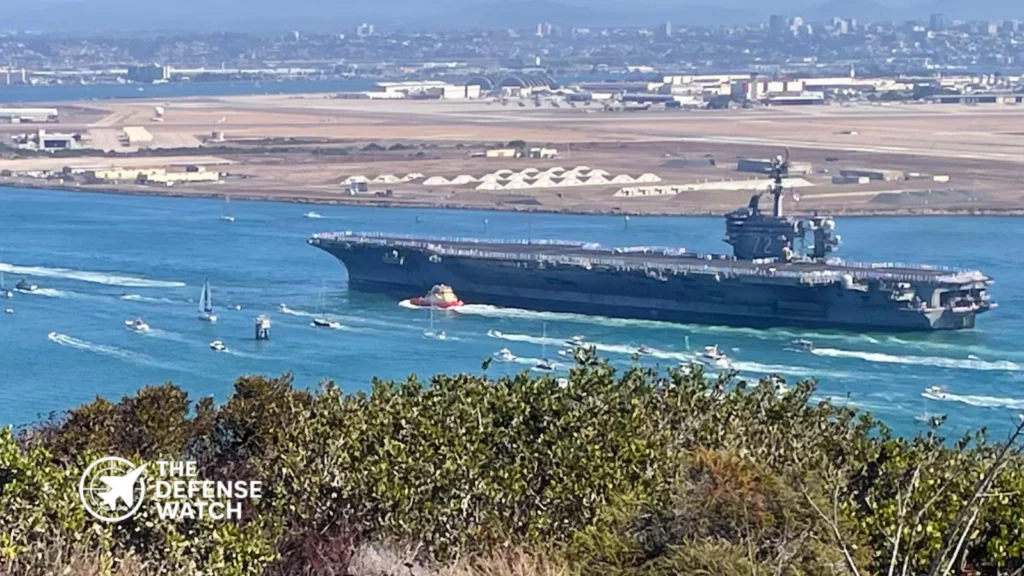
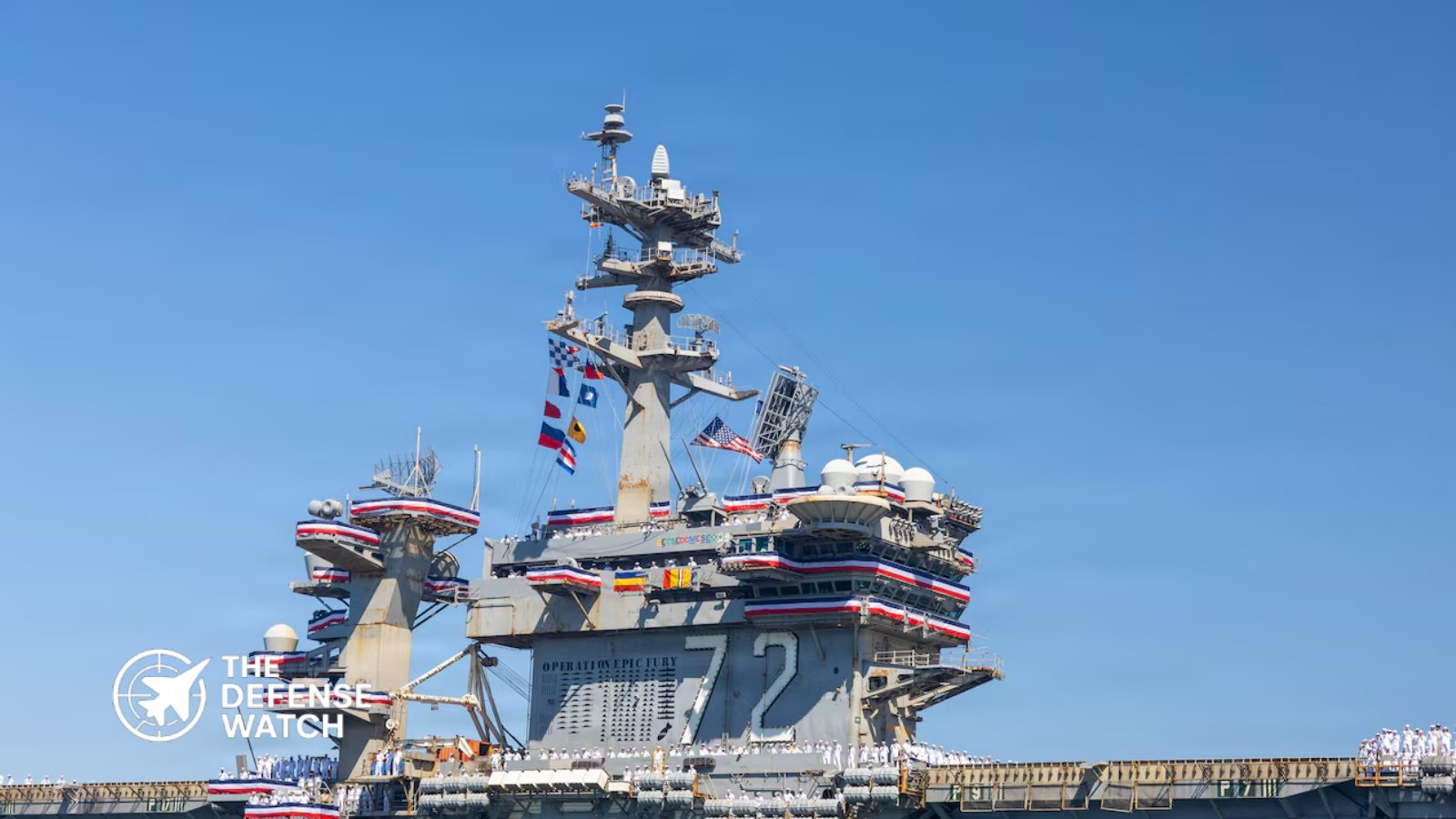
The aircraft carrier USS Abraham Lincoln, the flagship of Carrier Strike Group 3, returns to its home port of San Diego, Oct. 8, 2026, following a 10-month deployment to the U.S. 5th and 7th Fleet areas of operations. (Image: DoW) Those remarks establish the command’s account of food service and operational continuity. They do not, on their own, independently resolve every reported concern about the availability of particular food items, drinking water or other everyday necessities during the deployment.
Keeler also addressed plumbing disruptions, describing clogged toilets and similar maintenance problems as recurring issues aboard a large warship. He said trained sailors repaired equipment when it failed and characterized the problems experienced during the deployment as falling within what he considered the normal range for an aircraft carrier, despite the additional demands of combat.
The distinction matters. A carrier can remain operationally effective while individual systems or services experience temporary interruptions. Mission completion is an important measure of military performance, but it does not by itself establish that every aspect of crew living conditions remained satisfactory throughout an unusually long deployment.
Combat logistics tested the carrier strike group’s supply chain
Rear Adm. Robert E. Loughran, commander of Carrier Strike Group 3, said Operation Epic Fury required the Navy to adapt how it supplied deployed forces in the Middle East.
Loughran described a rapid expansion of the logistical burden after combat began, with supply lines extending while the number of forces operating in the theater increased. He said the Navy adjusted its approach to supplying deployed ships rather than relying solely on requests made by individual vessels as needs arose.
The comments point to a central difficulty in sustaining carrier strike groups during extended operations. A carrier depends on a continuous flow of food, fresh water, spare parts, fuel and other supplies. Its escorts have their own requirements, and the entire formation must remain supported while operating at a distance from established bases.
Replenishment at sea allows the Navy to transfer essential supplies without requiring a ship to enter port. But replenishment schedules, available cargo, weather, operational movements and the location of supporting logistics vessels all affect what can be delivered and when.
Combat can make those calculations more difficult. Ships may need to remain on station, follow changing tasking or operate in areas where routine logistics movements are constrained. When deployments extend beyond their planned duration, the Navy must also manage the cumulative effect on personnel, maintenance and resupply requirements.
Loughran’s remarks suggest that the Navy intends to apply lessons from the operation to future supply planning. His public comments, however, did not provide detailed figures showing how much the revised logistics approach improved delivery times or reduced shortages.
The deployment’s duration raises wider personnel concerns
Lincoln’s return also closes a demanding period for its crew and illustrates the pressure that extended carrier deployments can place on sailors and their families.
USNI News reported that the carrier spent 265 consecutive days at sea before making a logistics stop in Thailand in September and subsequently stopping in Guam. The deployment had initially been intended for the Indo-Pacific but shifted toward the Middle East as operational requirements changed.
The deployment also prompted concerns about mental health. USNI News reported that eight sailors attempted suicide during the deployment, underscoring that personnel welfare extends beyond food service and maintenance. The report does not establish that any single onboard condition caused those incidents, and that distinction should be preserved in coverage of the issue.
The Navy now faces the task of returning the carrier and its crew to their regular cycle of maintenance, training and preparation. Extended operations can complicate that schedule, particularly when a ship has already spent substantial time deployed before being redirected to a new theater.
The Lincoln’s experience also raises questions about how the Navy plans for contingencies that extend deployments well beyond their original schedules. Adequate food and water, functioning sanitation systems, access to medical and mental health care, and reliable communication with families remain essential requirements, even when operational demands are high.
What the Navy’s account establishes, and what remains unresolved
Keeler’s remarks provide the command’s explanation for the reported supply and plumbing problems. They also establish that Navy leadership considers the deployment an example of maintaining operational performance under difficult logistical conditions.
However, the public statements cited here do not provide a detailed, independent accounting of the duration or frequency of supply shortages, water availability or plumbing failures. Nor do they quantify the effects of those problems on individual sailors.
That information would help distinguish temporary disruptions associated with combat operations from more persistent shortcomings in deployment planning or onboard support. It would also help establish whether the changes described by Loughran will reduce the likelihood of similar problems during future extended missions.
For now, the carrier’s return demonstrates the Navy’s ability to sustain a major combat platform through a prolonged deployment. Assessing the full outcome requires considering both the missions completed and the conditions under which the crew carried them out.
Get real time update about this post category directly on your device, subscribe now.