Executive Summary
- NASA has awarded SpaceX a $946 million contract modification for three additional International Space Station crew missions, Crew-15, Crew-16 and Crew-17.
- The award raises SpaceX’s NASA Commercial Crew mission total to 17 and the company’s total CCtCap contract value to $5.92 billion, with performance extending through 2030.
- The decision preserves an operational U.S. crew transportation capability based on Falcon 9 and Crew Dragon, while NASA continues working to maintain a second commercial crew provider through Boeing.
NASA has awarded SpaceX three additional crew transportation missions to the International Space Station under a $946 million modification to its Commercial Crew Transportation Capability contract, extending the company’s contracted ISS crew operations through 2030. The missions, designated Crew-15, Crew-16 and Crew-17, increase the number of SpaceX crew missions ordered under the contract to 17 and raise its total CCtCap contract value to $5.92 billion.
The award comes as NASA seeks to maintain regular U.S. access to the ISS while preserving two commercial crew providers. SpaceX’s Crew Dragon and Falcon 9 system is already certified and operating in NASA’s crew rotation program, while Boeing’s Starliner remains part of the agency’s broader commercial crew strategy.
NASA Adds Three More SpaceX Crew Missions
NASA described the September 18 modification as a firm-fixed-price, indefinite-delivery/indefinite-quantity contract modification. The $946 million value covers all three missions and associated mission services rather than only the launch vehicles.
The contract includes:
| Contract element | Coverage |
|---|---|
| Missions | Crew-15, Crew-16, Crew-17 |
| Modification value | $946 million |
| Total SpaceX CCtCap value | $5.92 billion |
| Total missions under contract | 17 |
| Performance period | Through 2030 |
| Launch system | Falcon 9 |
| Crew spacecraft | Crew Dragon |
| Crew capacity | Up to four astronauts |
| Additional services | Ground, launch, in-orbit, return and recovery |
| ISS support | Cargo transportation and lifeboat capability |
NASA said the modification includes ground processing, launch operations, in-orbit operations, return and recovery, cargo transportation for each mission, and the capability for the docked spacecraft to serve as an emergency lifeboat for the station.
The three missions therefore represent a broader transportation service than a conventional launch contract. NASA is purchasing an integrated crew transportation capability covering the spacecraft and its operations before, during and after each ISS expedition.
Why NASA Is Extending SpaceX’s Role
The immediate operational reason is continuity.
SpaceX was certified by NASA for crew transportation in November 2020. Its Crew Dragon and Falcon 9 system has since become an established component of the agency’s ISS crew rotation architecture. NASA said the company’s Crew-12 mission was in orbit at the time of the September 18 award.
The Government Accountability Office’s 2026 assessment similarly identified SpaceX and Boeing as NASA’s two Commercial Crew providers and noted that SpaceX had completed 12 NASA crewed missions as of March 2026. NASA’s certification process requires each provider’s space transportation system to meet agency human-spaceflight requirements before operational crew missions.
That operational history matters because crew transportation is not simply a launch service. NASA needs a system that can repeatedly transport astronauts to the station, remain available during their expedition, and provide a return path if normal station operations are disrupted.
The new contract consequently extends an already qualified transportation architecture instead of introducing an untested system into the ISS crew rotation schedule.
The Boeing Factor and Crew Transportation Redundancy
NASA’s Commercial Crew Program was created in part to establish U.S. crew transportation capability following the retirement of the Space Shuttle and reduce dependence on Russian Soyuz transportation.
NASA selected SpaceX and Boeing for the program in 2014. The two-provider structure is intended to provide redundancy so that a technical problem affecting one spacecraft does not eliminate U.S. access to the station.
That objective remains important even as SpaceX receives additional missions.
Boeing’s Starliner experienced significant technical problems during its 2024 crewed flight test. NASA ultimately returned the spacecraft without its astronauts, while astronauts Butch Wilmore and Suni Williams returned to Earth aboard a SpaceX Dragon after spending considerably longer at the station than originally planned. Reuters reported that episode as an important factor in SpaceX becoming NASA’s principal provider for regular crew rotations.
NASA’s latest award does not formally eliminate the two-provider strategy. In its announcement, the agency explicitly said the modification helps maintain access to the ISS with two commercial crew industry partners. NASA also said the sole-source modification does not prevent it from pursuing additional transportation services in the future.
Falcon 9 and Crew Dragon Remain the Near-Term Workhorse
The award also illustrates the value of an established crew transportation system during a period when the commercial space industry is developing larger and newer spacecraft.
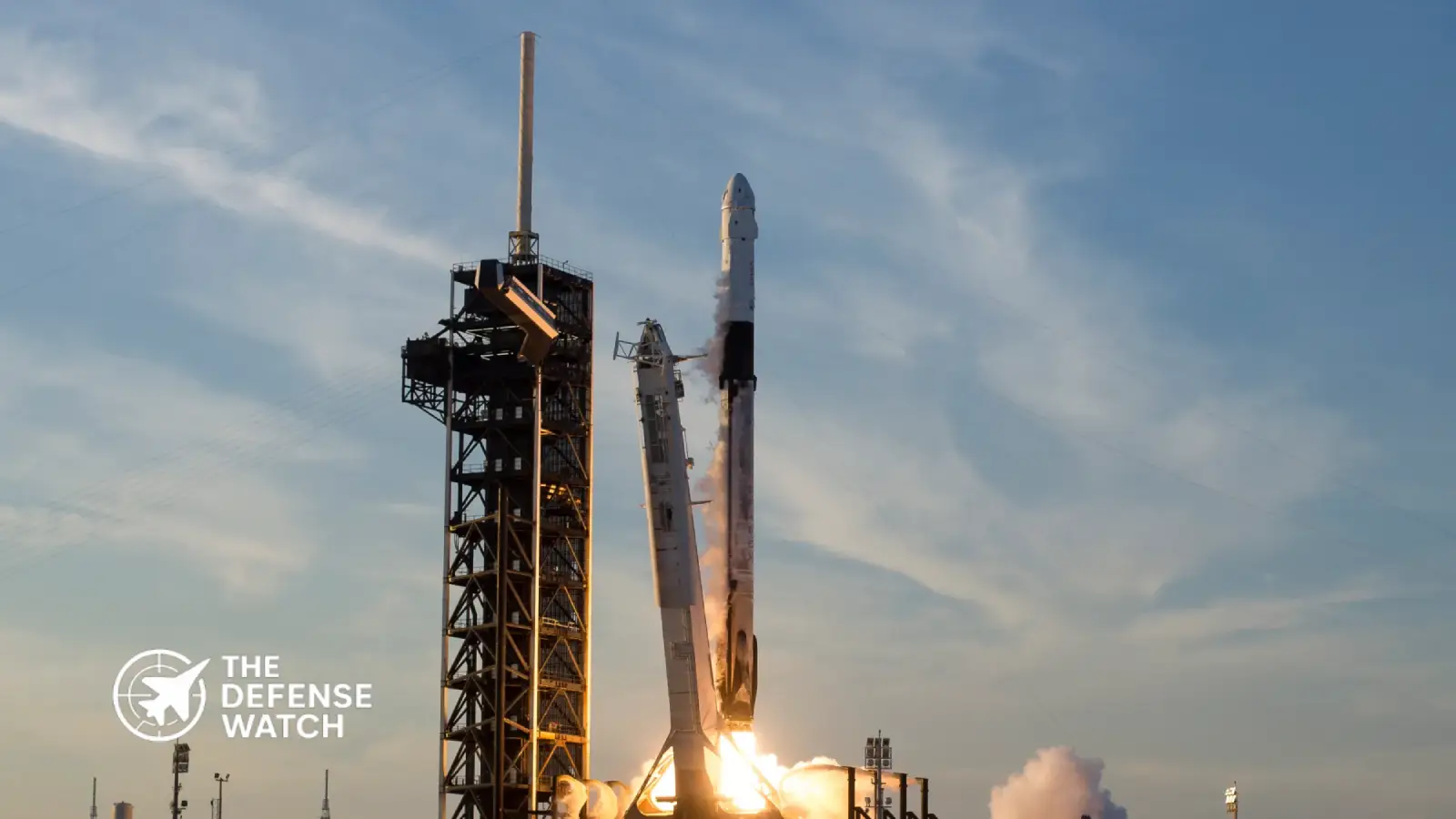
For these missions, NASA continues to rely on the operational combination of Falcon 9 and Crew Dragon. NASA states that the system can transport up to four astronauts and critical cargo to the ISS.
The significance is less about introducing a new capability than extending an existing one.
Repeated crew rotations provide NASA with an established operational process covering astronaut training, launch preparation, rendezvous and docking, station integration, recovery and post-flight operations. Extending the contract through 2030 allows those processes to remain part of the agency’s ISS transportation architecture while NASA manages the transition to the next phase of human spaceflight.
The arrangement also gives NASA a transportation system that is already integrated with the station’s operational requirements. The contract’s lifeboat provision is particularly important because a crew spacecraft docked to the ISS can serve as an emergency return vehicle for its assigned astronauts.
What the $946 Million Covers
The $946 million figure should not be interpreted as the price of three launch vehicles alone.
NASA’s contract description includes multiple mission phases and support functions. Those services cover the preparation of both astronauts and spacecraft, launch, operations in orbit, return to Earth, recovery, cargo transportation and emergency lifeboat capability.
A simple division of the modification by three would produce an average of about $315 million per mission, but that is not an official NASA per-flight price. The contract bundles multiple services, and NASA has not published a mission-by-mission cost breakdown in the announcement.
That distinction is important when assessing commercial crew economics. The value of the contract reflects an end-to-end transportation service rather than merely the marginal cost of placing a capsule into orbit.
Strategic Importance for U.S. Human Spaceflight
The award provides NASA with additional schedule certainty for ISS crew transportation through the end of the decade.
NASA’s current station operations require a continuous ability to rotate crews, deliver specialized cargo and maintain a return capability for astronauts. The new missions add three more SpaceX flights to that transportation plan while the agency continues to maintain Boeing as a second commercial crew option.
From an industrial perspective, the decision also extends the operational life of the Crew Dragon and Falcon 9 combination within NASA’s human-spaceflight program.
For SpaceX, the award adds another three missions to a contract that now totals $5.92 billion. For NASA, it provides additional access to an already certified transportation system without waiting for another provider to become fully operational.
The arrangement does not resolve the longer-term question of how NASA will maintain redundancy between commercial crew systems. That will depend in part on Boeing’s progress toward operational Starliner missions and on NASA’s future procurement decisions.
ISS Operations Continue While Crew-13 Prepares
The contract modification arrives as NASA and SpaceX prepare for the next crew rotation.
NASA was targeting an early October launch for Crew-13 as of September 16 and reported that the four-person crew had entered preflight quarantine on September 17. The mission is scheduled to carry NASA astronauts Jessica Watkins and Luke Delaney, Canadian Space Agency astronaut Joshua Kutryk and Roscosmos cosmonaut Sergey Teteryatnikov.
The timing highlights how the new award fits into an already active flight sequence rather than representing a standalone procurement.
NASA is continuing routine crew and cargo operations at the ISS while preparing successive commercial crew missions. SpaceX’s next contracted missions will build on that existing operational framework.
What to Watch Through 2030
Several factors will determine how the expanded contract affects NASA’s broader crew transportation architecture.
Boeing’s Starliner progress: NASA’s two-provider model depends on having more than one operational U.S. crew transportation system. Further Starliner development and certification milestones will therefore remain important to the agency’s redundancy strategy.
Crew Dragon operational tempo: NASA will continue to depend on Falcon 9 and Dragon reliability for regular ISS crew rotations. The new contract extends that dependency through additional missions.
ISS transition planning: The new missions extend SpaceX’s contracted ISS transportation role through 2030, placing them within a period when NASA is also preparing for the eventual transition from the ISS to commercial low-Earth-orbit destinations.
Future commercial crew procurement: NASA explicitly retained the ability to seek additional transportation services. The $946 million modification therefore should be viewed as an expansion of the current contract, not a final statement of all future NASA crew transportation requirements.
Bottom Line
NASA’s $946 million modification adds three SpaceX crew missions to the ISS transportation schedule and raises the company’s Commercial Crew contract value to $5.92 billion. The missions extend the Falcon 9 and Crew Dragon system’s contracted role through 2030 and provide NASA with additional capacity based on a system already certified for human spaceflight.
The broader significance is the balance between operational continuity and provider redundancy. SpaceX is supplying an established crew transportation capability, while NASA’s continued support for Boeing reflects the agency’s stated objective of maintaining two commercial crew partners rather than relying indefinitely on a single system.