

Executive Summary
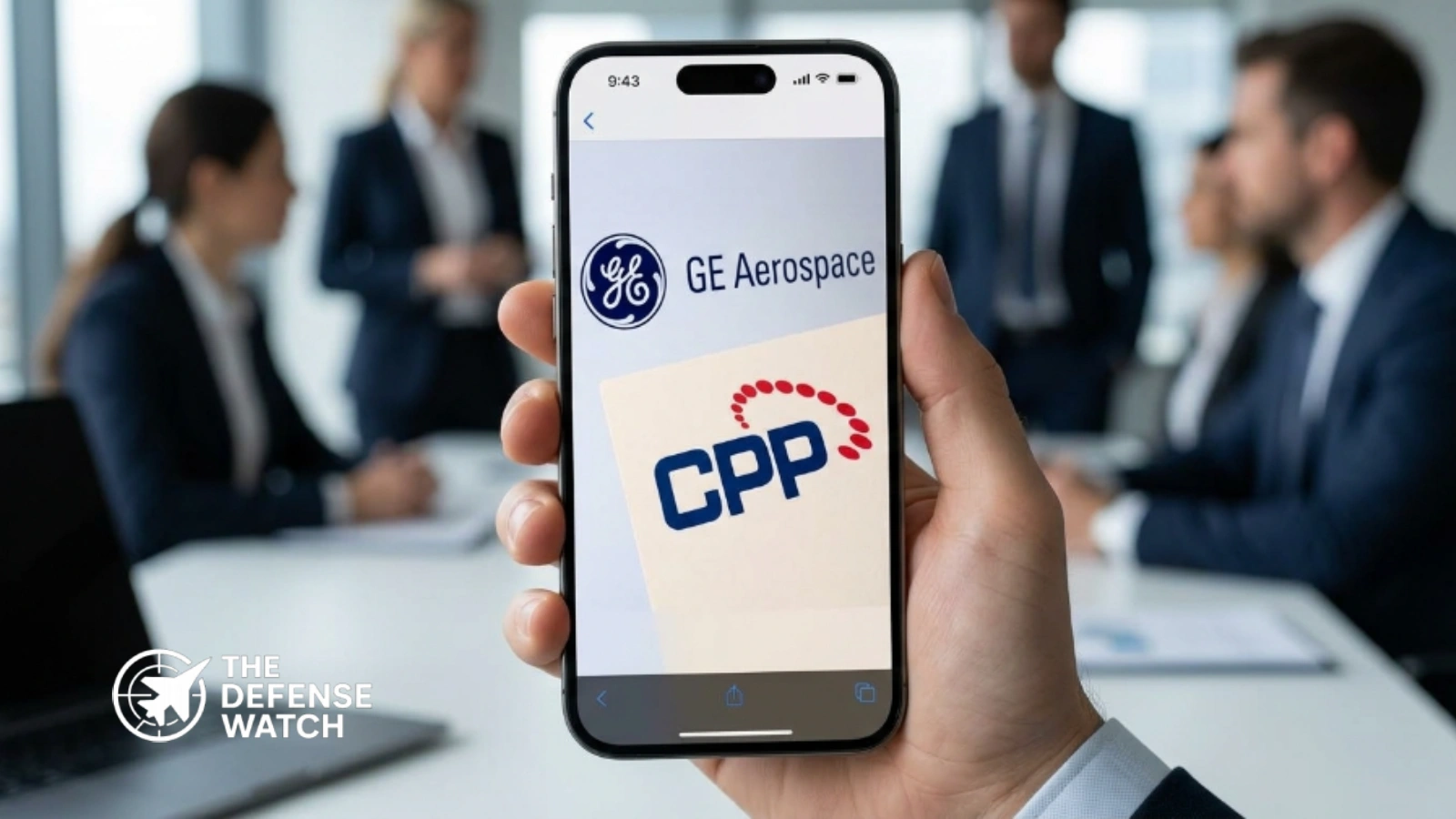
- GE Aerospace says its planned $11.75 billion acquisition of Consolidated Precision Products, or CPP, is a targeted response to constrained casting capacity rather than the beginning of a broad vertical integration strategy. CFO Rahul Ghai described CPP as a unique situation during a Morgan Stanley conference on September 17.
- CPP has about 6,600 employees across more than 20 facilities and manufactures highly engineered castings and subassemblies for commercial aerospace, defense and other industrial applications. GE said it plans to finance the transaction with $7 billion in cash and the remainder through new debt, with closing expected in the second half of 2027.
- The strategic issue extends beyond one acquisition. GE says aerospace manufacturing capacity remains constrained in several areas, while its own defense propulsion portfolio is moving toward more advanced systems such as the XA102 adaptive cycle engine. That makes supplier capacity, manufacturing quality and production speed important factors in the transition from engine design to production.
GE Aerospace does not intend to use its planned acquisition of Consolidated Precision Products as a template for bringing every major part of its supply chain in house, Chief Financial Officer Rahul Ghai said September 17. Speaking at the Morgan Stanley Laguna Conference, Ghai characterized the $11.75 billion CPP transaction as a specific case in which GE believes direct ownership can improve production, delivery performance and the introduction of new airfoil technology.
The distinction matters because aerospace manufacturers have faced persistent constraints in castings, forgings, machining, electronics and other specialized industrial processes. GE’s approach indicates that the company is seeking a mix of ownership, supplier investment and operational support rather than attempting to recreate the entire manufacturing chain internally.
CPP Deal Targets a Specific Manufacturing Bottleneck
GE announced the agreement to acquire CPP on September 8. The transaction values the company at $11.75 billion, with GE planning to provide $7 billion in cash and finance the remainder with new debt. The transaction remains subject to regulatory approval and other customary closing conditions and is expected to close in the second half of 2027.
CPP, headquartered in Cleveland, Ohio, manufactures highly engineered castings and subassemblies. GE said the company produces investment and precision sand castings using materials including superalloys, titanium, aluminum, magnesium and steel. Its products serve commercial aerospace and defense customers as well as other industrial markets.
| Item | Confirmed information |
|---|---|
| Buyer | GE Aerospace |
| Target | Consolidated Precision Products |
| Announced transaction value | $11.75 billion |
| Cash financing | $7 billion |
| Remaining financing | New debt |
| CPP workforce | Approximately 6,600 |
| CPP facilities | More than 20 |
| Expected closing | Second half of 2027 |
| Main industrial focus | Highly engineered castings and subassemblies |
GE has been a CPP customer for more than 15 years. That existing relationship gives GE familiarity with the supplier’s manufacturing processes and creates a direct connection between the acquisition and the engine maker’s existing supply chain.
The company has said that it expects to use its FLIGHT DECK operating system and manufacturing expertise to improve processes, quality and output at CPP. GE also linked ownership of CPP to its plans to accelerate the introduction of enhanced airfoil technology.
GE Rejects Broad Vertical Integration Strategy
Ghai’s September 17 comments provide an important qualification to the acquisition.
Asked about whether the CPP transaction could lead to additional vertical integration, Ghai said broad vertical integration was not the solution. He described CPP as a unique situation where GE believes it can add value to the operation while also accelerating the introduction of a new airfoil technology.
That approach leaves GE dependent on a large external supplier network.
Ghai said GE is working with suppliers through joint improvement activities and has more than 500 engineers deployed into its supply base to help address yields, quality problems and industrial bottlenecks. He also said GE is working with suppliers on additional capital investment and providing clearer demand signals to support production planning.
This creates a hybrid supply chain model. GE can directly control selected industrial capabilities where ownership offers a clear manufacturing or technology advantage, while using supplier partnerships and shared investment for other bottlenecks.
Why Full Vertical Integration Is Difficult
A modern aircraft engine depends on a large network of specialized processes. Bringing every casting, forging, machining, coating, electronics and materials operation inside the prime contractor would require substantial capital, skilled labor and management capacity.
It could also reduce flexibility if demand shifts between commercial, aftermarket and defense programs.
GE’s stated strategy instead places CPP inside the company while retaining a broader external supply base. The company has explicitly said CPP is only one part of its effort to increase capacity and improve supplier performance.
Defense Implications Extend Beyond CPP
Although the acquisition covers commercial aerospace as well as defense, the manufacturing issue has direct relevance to military propulsion.
GE said CPP produces castings for military aircraft, weapon systems and helicopters. However, GE has not publicly identified every military engine or program that could receive components from CPP after the transaction closes. Specific future defense production impacts therefore should not be assumed from the acquisition announcement alone.
The timing is significant because GE is simultaneously advancing several defense propulsion programs.
On September 14, GE announced progress toward assembly of its XA102 adaptive cycle engine under the U.S. Air Force’s Next Generation Adaptive Propulsion program. GE said the engine is being developed using model based engineering and that manufacturing and inspection processes are being connected to the digital design environment.
The XA102 program illustrates why industrial capacity matters to next generation propulsion. Advanced engine designs do not become operational capabilities simply through successful engineering demonstrations. Specialized manufacturing, inspection, supplier qualification and repeatable production processes must also mature alongside the design.
GE has said the XA102 is intended to support future combat aircraft requiring greater range, survivability and thermal management for advanced sensors and weapons. The company has not stated that the CPP transaction is specifically tied to XA102 production, so the two developments should be treated as related industrial context rather than a confirmed program connection.
Supply Chain Capacity Remains the Larger Issue
The most important point from Ghai’s comments is that the CPP acquisition does not remove the broader aerospace capacity problem.
Reuters reported that Ghai expects the capacity squeeze across several parts of the aerospace industry to persist rather than disappear quickly. The company is therefore combining direct ownership with supplier support, capacity expansion and operational improvements.
This reflects a wider aerospace manufacturing challenge. Engine demand has increased while manufacturers must simultaneously support new production, aftermarket requirements and the transition to more advanced propulsion technologies.
For defense programs, the problem can be more acute because specialized military components may require additional qualification, testing and manufacturing controls. Expanding capacity is therefore not simply a matter of adding machines. Workforce availability, process maturity, quality performance and certification can all affect the time required to increase output.
What the CPP Acquisition Changes
The acquisition gives GE direct control over a major precision casting supplier, but its strategic effect should be measured against the company’s broader manufacturing network.
| Area | Potential effect of CPP acquisition |
|---|---|
| Casting capacity | Adds direct ownership of specialized production capacity |
| Supplier control | Gives GE greater operational control over CPP |
| Airfoil development | GE expects integration to accelerate introduction of new airfoil technology |
| Defense manufacturing | CPP already serves military aircraft and weapon system markets |
| Supply chain resilience | Provides an additional internally controlled manufacturing base |
| Broader vertical integration | GE says the transaction is not a model for integrating every part of its value chain |
| Program timing | Transaction is not expected to close until the second half of 2027 |
The distinction between supply chain resilience and complete vertical integration is important. Ownership can reduce dependence on a supplier for a particular manufacturing process, but it does not eliminate the need for external suppliers elsewhere in the production system.
For GE, the value of CPP therefore appears tied to the specific manufacturing capabilities that the company believes it can improve under direct ownership.
Commercial Demand Also Shapes the Decision
The acquisition is not exclusively a defense industrial strategy.
CPP supplies commercial aerospace customers, while GE is managing strong demand across commercial engine production and aftermarket services. Reuters reported that GE’s GEnx engine deliveries increased 50% year over year in the second quarter, with Ghai expecting additional year over year and sequential growth in the third quarter.
That commercial demand provides an important context for the transaction. GE is allocating capital to a manufacturing asset that can support multiple parts of its business rather than creating a facility dedicated exclusively to a single military program.
The result is a supply chain decision with both commercial and defense implications.
The Industrial Base Question
The CPP transaction also highlights a larger issue for the U.S. aerospace industrial base: production capacity can become a strategic constraint even when the underlying technology is mature.
Engine manufacturers can have strong designs and large order books while still facing delays caused by specialized suppliers. In that environment, improving the output of existing factories can be as important as developing new manufacturing technologies.
GE’s use of more than 500 engineers across its supplier network, along with joint process improvement and capital investment, shows that the company is pursuing several methods simultaneously.
CPP represents the ownership component of that strategy.
It does not represent a wholesale retreat from the supplier model.
What to Watch Through 2027
The next significant milestones will be operational rather than simply financial.
First, GE must secure regulatory approval and complete the CPP transaction, which is currently expected in the second half of 2027.
Second, investors and defense customers will be able to assess whether GE can actually improve CPP’s production performance after integration. GE has said that increasing output and improving delivery performance are central objectives of the transaction.
Third, the wider supplier network will remain important. GE’s own comments indicate that the company expects to continue working with external suppliers rather than bringing every stage of engine production inside the company.
Finally, progress on next generation propulsion programs such as XA102 will provide another test of how effectively advanced engine designs can move from digital engineering into repeatable manufacturing. GE announced September 14 that XA102 is moving toward its first engine assembly.
Bottom Line
GE Aerospace’s planned acquisition of CPP is best understood as a targeted intervention in a constrained part of the aerospace manufacturing chain, rather than the beginning of a broad vertical integration campaign.
The $11.75 billion transaction gives GE control of a major precision casting supplier and is intended to improve capacity, delivery performance and the transition of new airfoil technologies into production. But Ghai’s comments make clear that GE still expects to rely heavily on external suppliers, joint investments and engineering support across the wider industrial base.
For defense propulsion, the significance will depend on execution. CPP’s existing work for military aerospace customers provides a defense connection, while GE’s parallel progress on next generation propulsion shows why manufacturing capacity is increasingly important to the delivery of advanced military engines. The available evidence does not establish a direct CPP connection to any specific future defense engine program, so that relationship should not be assumed until GE or a government customer provides additional details.
