

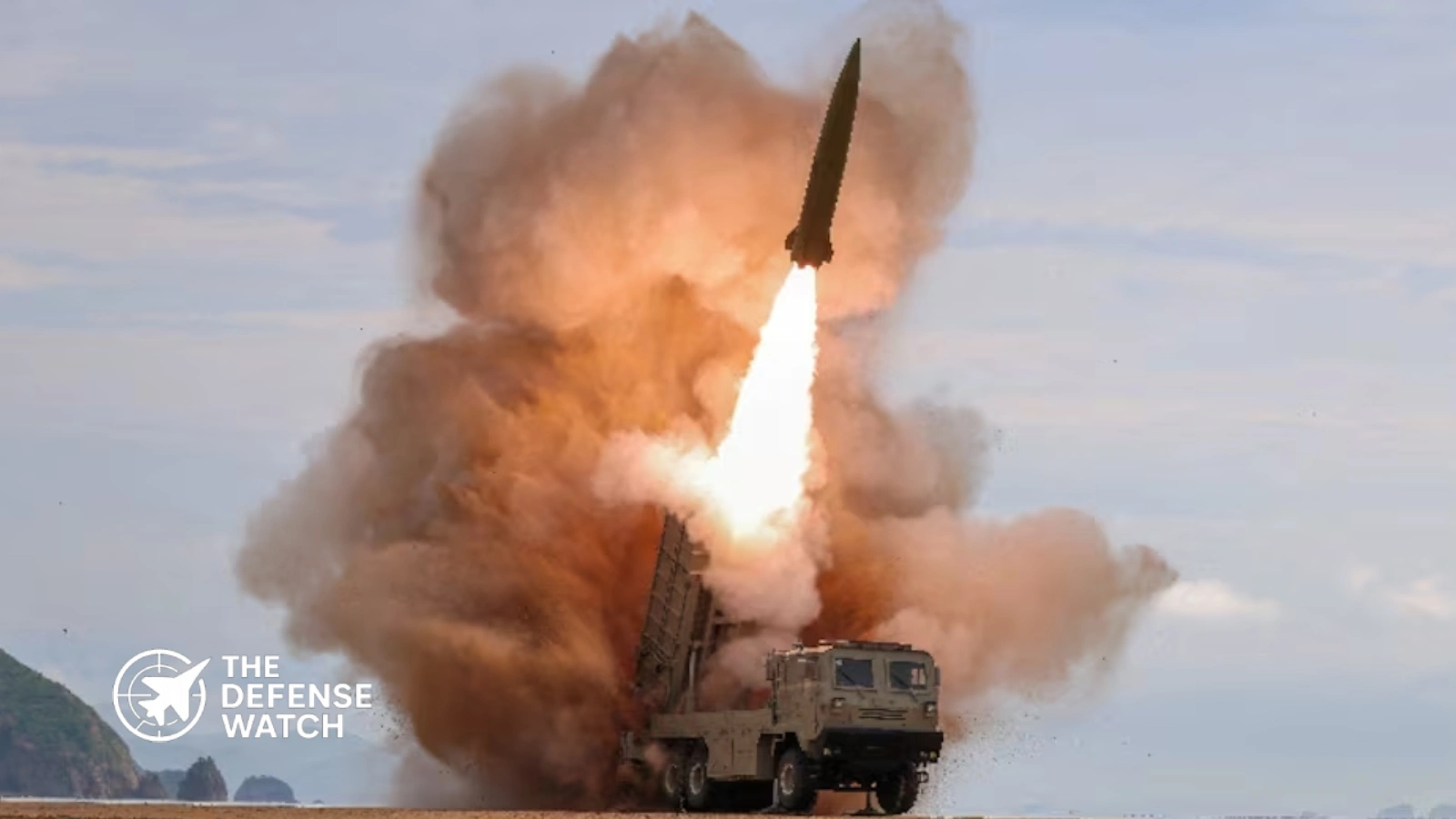
North Korea Live Fire Drills Combine Multiple Strike Systems
North Korea live fire drills on Saturday involved five army units and a mix of missile, artillery and unmanned systems, according to North Korean state media and reporting reviewed by Reuters. The exercise came one day after South Korea, the United States and Japan completed the five day Freedom Edge 26 exercise focused on regional defense and interoperability.
North Korea described the activity as a joint firepower attack drill involving long range artillery and missile units. The Korean Central News Agency said the exercise included attack drones, tactical cruise missiles, tactical ballistic missiles and large caliber multiple rocket launchers.
Takeaways
North Korea combined missiles, artillery and attack drones in a reported joint firepower exercise involving five army units.
South Korea’s military separately reported that North Korea launched several short range ballistic missiles from the Wonsan area toward the East Sea on Saturday. The missiles traveled about 250 kilometers, according to the Joint Chiefs of Staff.
The launch was the latest in a series of North Korean ballistic missile activities during 2026. Reuters reported that the September 12 event was believed to be the 13th known ballistic missile launch event by North Korea this year.
What North Korea Tested
The exercise is notable because it did not focus on a single missile or artillery system. Instead, North Korea presented a combination of weapons operating as part of a broader firepower network.
According to KCNA, the drill included:
| System Type | Reported Role |
|---|---|
| Tactical ballistic missiles | Short range strike capability |
| Tactical cruise missiles | Precision strike capability |
| Attack drones | Unmanned attack operations |
| Large caliber multiple rocket launchers | Concentrated artillery fire |
| Long range artillery | Extended fire support |
North Korean officials said the exercise was intended to strengthen troop morale and improve combat readiness. The country’s state media framed the drill as a demonstration of the ability to deliver concentrated firepower against an opposing force.
The specific models, quantities and performance characteristics of the systems used were not fully disclosed in the North Korean report. That limits independent assessment of how representative the drill was of North Korea’s operational missile and artillery inventory.
South Korea Tracked Short Range Ballistic Missiles
South Korea’s Joint Chiefs of Staff detected several short range ballistic missiles launched from the Wonsan area at about 5:20 a.m. on September 12. The weapons flew approximately 250 kilometers toward the East Sea, with South Korean and U.S. intelligence authorities continuing to assess their precise specifications.
The launches occurred shortly after Freedom Edge 26 concluded on September 11.
The five day exercise brought together South Korean, U.S. and Japanese maritime, air, medical and cyber forces. U.S. Pacific Fleet said the exercise was designed to improve coordination, interoperability and trilateral defensive readiness across multiple domains.
The United States, South Korea and Japan had announced Freedom Edge 26 as a multi domain exercise designed to strengthen cooperation against evolving regional threats. The exercise included enhanced real time information sharing, synchronized coordination and air defense scenarios.
Integrated Firepower Is the Key Development
The most significant aspect of the North Korea live fire drills was the reported integration of different weapon categories rather than the range of any single missile.
Reuters quoted Lim Eul-chul, a professor at Kyungnam University’s Institute for Far Eastern Studies, who described the exercise as a demonstration of an integrated strike network. He said the drill appeared to show North Korea coordinating drones, cruise missiles, ballistic missiles and rocket artillery through a unified command and control structure.
From a military planning perspective, combining weapons with different flight profiles can complicate defensive operations. Ballistic missiles, cruise missiles, drones and rocket artillery impose different detection, tracking and engagement requirements on air and missile defense networks.
That does not by itself demonstrate that North Korea has overcome regional missile defenses. However, repeated exercises involving multiple weapon types provide Pyongyang with opportunities to train command procedures, communications and coordination between different units.
The distinction is important. North Korean state media claims about battlefield effectiveness cannot be independently verified solely from the exercise report.
Timing After Freedom Edge 26
The timing of the drill is also significant.
Freedom Edge 26 concluded on September 11 after five days of training involving the United States, South Korea and Japan. North Korea launched the short range ballistic missiles the following day.
The sequence reinforces the long standing pattern in which major allied exercises on and around the Korean Peninsula are followed by North Korean weapons demonstrations or strong political criticism.
South Korea has described Freedom Edge as defensive and focused on responding to North Korea’s nuclear and missile threats. North Korea has consistently criticized such exercises as hostile military activity.
The latest drill therefore carries both an operational and signaling dimension. Operationally, it allows North Korean units to practice coordinated fires. Politically, the timing places the demonstration directly against the backdrop of increased trilateral military cooperation.
What the Drill Means for Regional Defense
The reported exercise underscores a continuing challenge for South Korean, U.S. and Japanese forces: the need to maintain defenses against a diverse mix of North Korean strike systems.
North Korea possesses a large artillery force positioned around the Korean Peninsula, alongside an expanding inventory of short range ballistic and cruise missiles. The country has also increasingly incorporated unmanned systems into military exercises and weapons demonstrations.
A mixed attack involving different systems could require defenders to combine counter battery operations, short range air defense, electronic warfare, fighter aircraft, missile defense and other sensors and interceptors.
For U.S. and South Korean forces, this makes sensor integration and rapid information sharing particularly important. Freedom Edge 26 itself emphasized real time data sharing and synchronized operations, reflecting the growing importance of a connected regional defense architecture.
Japan also remains an important part of the regional security picture because North Korean ballistic missiles can travel over or toward waters surrounding Japan. Trilateral information sharing is intended to improve the speed and accuracy of warning and response.
North Korea’s 2026 Missile Activity
Reuters reported that the September 12 launch was believed to be North Korea’s 13th known ballistic missile launch event of 2026. North Korean state media has not consistently reported every recent weapons test, making South Korean and allied tracking an important source for establishing the sequence of launches.
The September activity also followed another North Korean projectile launch reported on August 20. South Korean authorities have continued monitoring North Korean military movements while maintaining coordination with the United States and Japan.
The latest exercise therefore fits into a broader pattern of continued missile development and military training rather than representing an isolated weapons event.
Bottom Line
The latest North Korea live fire drills combined ballistic missiles, cruise missiles, attack drones and large caliber artillery in a single reported exercise involving five army units.
South Korea confirmed the launch of several short range ballistic missiles that traveled about 250 kilometers into the East Sea. The activity followed the conclusion of Freedom Edge 26, the latest trilateral U.S., South Korean and Japanese exercise.
The available evidence does not establish that the drill introduced a new missile capability. Its importance lies primarily in the reported integration of multiple strike systems and the continued training of North Korean forces to coordinate different forms of firepower.
For regional militaries, the development reinforces the importance of integrated sensors, command and control, missile defense and rapid information sharing across the Korean Peninsula and surrounding Indo Pacific region.
