North Korea Fires Ballistic Missile Toward East Sea
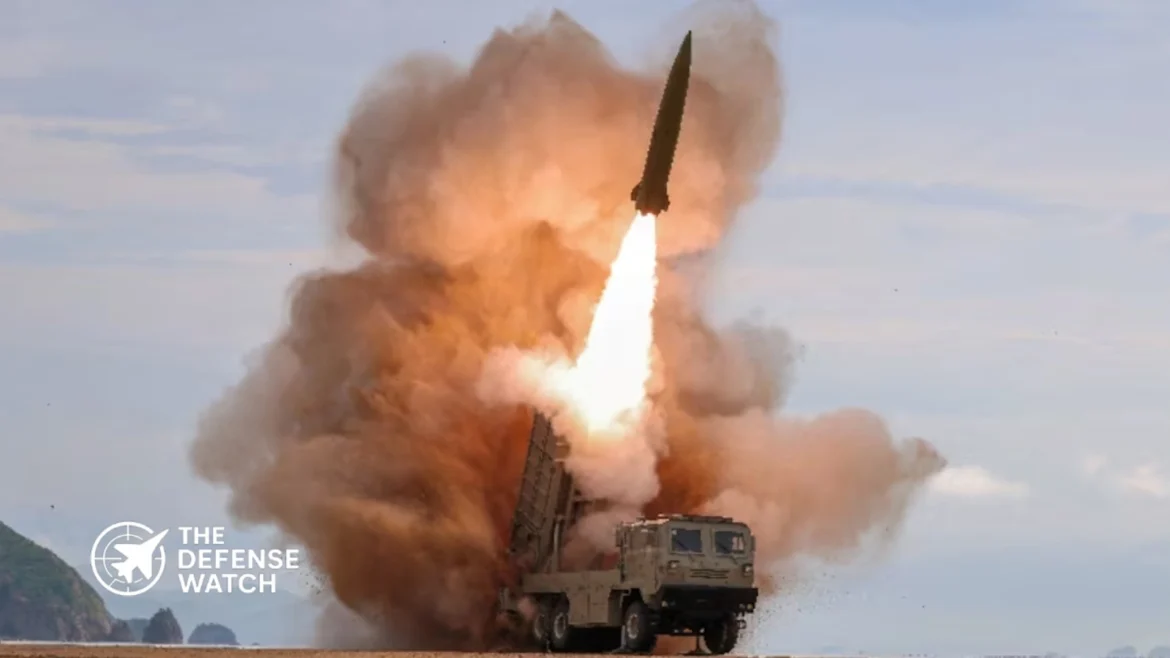
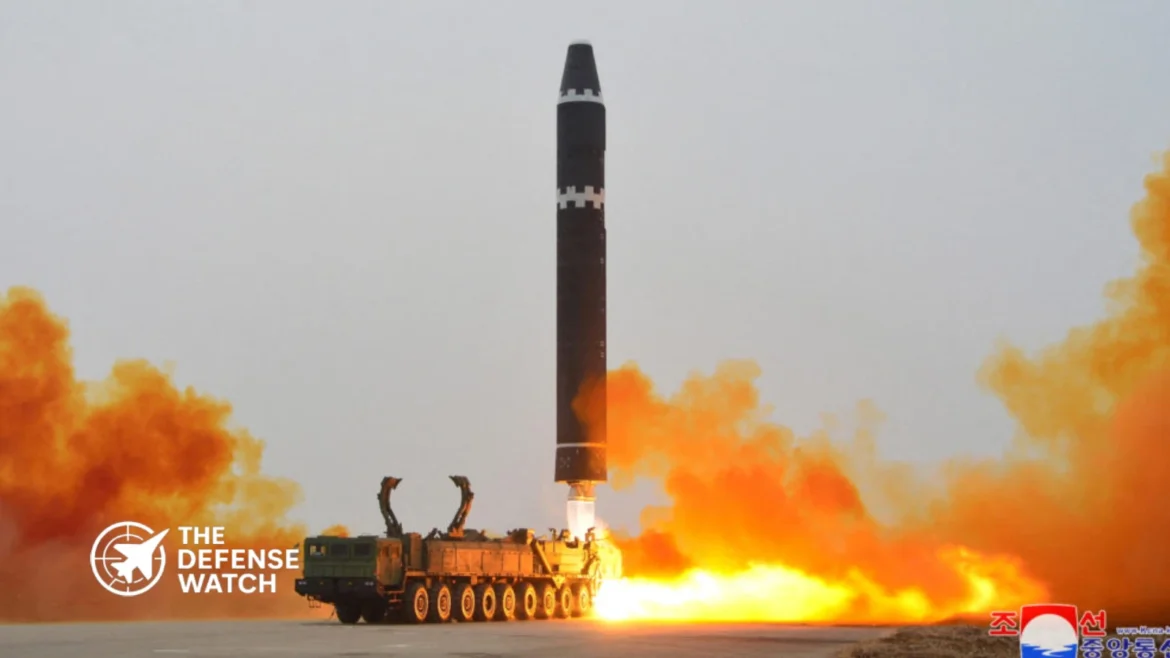
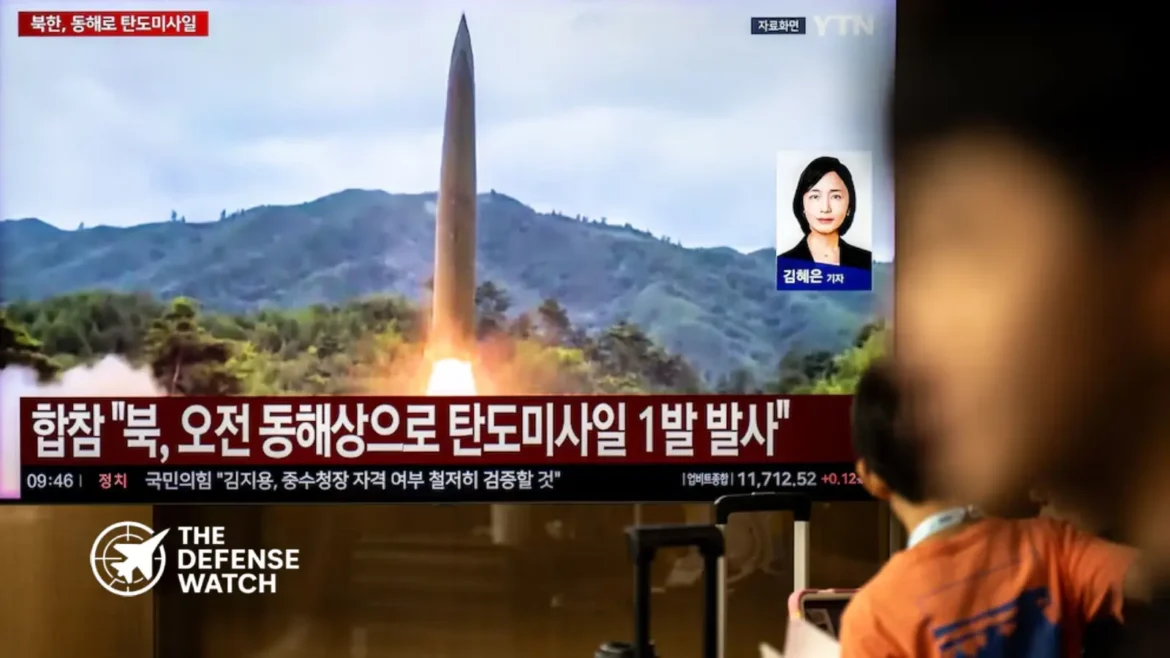
North Korea launched a ballistic missile from the Wonsan area toward the East Sea on October 3, adding another weapons test to a year of sustained missile activity and coming amid renewed tensions along the inter-Korean border.
South Korea’s Joint Chiefs of Staff detected the launch at about 6:30 a.m. local time and said the missile traveled more than 700 kilometers before falling into the sea. South Korean and U.S. authorities were analyzing the flight data to determine the missile’s precise characteristics.
Japan’s Defense Ministry separately assessed that at least one ballistic missile had been launched from North Korea’s eastern coast. Japanese data put the flight distance at approximately 680 kilometers and the maximum altitude at about 90 kilometers. Tokyo said the missile fell outside Japan’s exclusive economic zone and reported no damage to aircraft or ships.
The difference between the South Korean and Japanese flight estimates does not establish a different weapon. Both governments were still analyzing the launch, and the publicly available information did not initially identify a specific missile designation.
From unidentified launch to North Korean missile claim
The launch was initially reported by South Korea simply as a ballistic missile, with the exact type still under assessment.
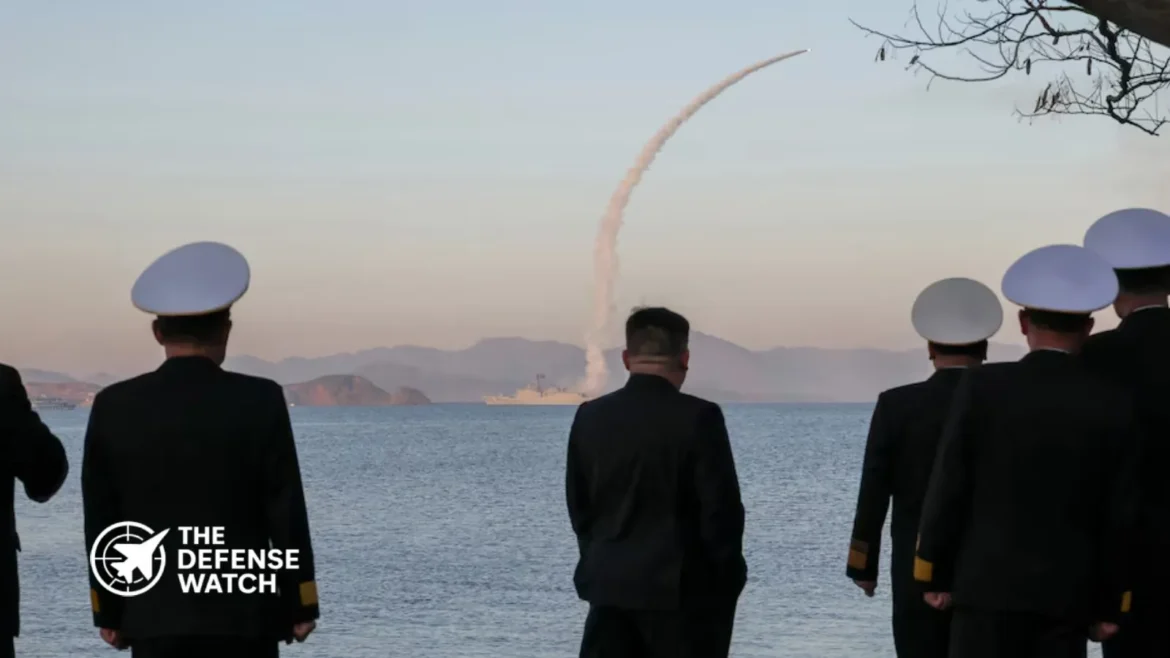
That changed later on October 3 when Kim Yo Jong, the sister of North Korean leader Kim Jong Un and a senior ruling-party official, said Pyongyang had conducted a test involving an intermediate-range strategic missile. North Korean state media also said Kim Jong Un supervised the firing drill.
North Korea claimed the weapon incorporated a flight mode designed to alter its trajectory and said artificial intelligence technology had been applied to the missile. Kim Yo Jong further claimed that the weapon could change its flight path at low altitude.
To model ballistic flight paths and intercept tracking windows, see our Missile Range & Time-of-Flight Calculator or test radar coverage with the Radar Detection Range Calculator.
Those technical claims remain North Korean assertions. Pyongyang did not provide supporting evidence for the claims about trajectory behavior or artificial intelligence, and neither South Korea nor Japan publicly confirmed those characteristics.
That distinction is important because the basic event, a ballistic missile launch from the Wonsan area, is independently supported by South Korean and Japanese authorities. The more specific claims about the weapon’s guidance, maneuverability and onboard technology are not independently established.
Why the Wonsan launch matters
The launch also has a geographic and operational dimension.
Wonsan is located on North Korea’s east coast, providing direct access to the East Sea for missile testing. The area has been used for previous launches, including a September 20 event in which South Korea said North Korea fired two short-range ballistic missiles toward the same body of water.
The latest missile also followed an August 12 launch from the Wonsan area in which South Korea reported a flight of more than 700 kilometers. At that time, South Korean and U.S. authorities were still analyzing the missile’s exact specifications.
The recurring use of Wonsan illustrates the importance of eastern coastal launch areas to North Korea’s missile testing activity. Launches from the region allow Pyongyang to conduct flight tests over maritime areas while South Korean, U.S. and Japanese forces collect tracking data.
The border dispute adds another layer
The missile launch occurred less than two weeks after a September 21 landmine explosion in the Demilitarized Zone injured three South Korean soldiers, two seriously.
South Korea has attributed the mines to North Korea and demanded an apology. Pyongyang has denied responsibility, with Kim Yo Jong rejecting Seoul’s allegations and warning against South Korean action against North Korean border fortifications.
The missile test therefore occurred against an already deteriorating inter-Korean security environment. Reuters reported that an analyst at Seoul’s Sejong Institute viewed the launch as potentially intended to draw a response from South Korea, while also raising the possibility that North Korea was testing a new missile type.
That interpretation remains an assessment rather than an established North Korean motive.
What the flight data does and does not show
The available launch data provides some useful limits on what can be concluded.
South Korea reported a flight of more than 700 kilometers. Japan reported approximately 680 kilometers and an estimated maximum altitude of about 90 kilometers. Japan also assessed that the missile fell outside its exclusive economic zone.
Those figures are consistent with a ballistic missile flight over the East Sea, but they do not by themselves establish the missile’s full operational range, warhead configuration, guidance technology or intended role.
North Korea’s subsequent description of the weapon as an intermediate-range strategic missile is also significant, but the designation came from Pyongyang rather than from an independent technical assessment. A reduced-range launch of a longer-range missile can produce a flight profile that does not reveal the weapon’s maximum operational range.
For that reason, the October 3 launch should not be used on its own to assign a definitive missile designation or performance envelope.
Regional missile defense implications
For South Korea, Japan and the United States, repeated North Korean launches provide opportunities to collect data on missile trajectories, launch signatures and flight behavior.
Japan’s Ministry of Defense said its authorities were coordinating analysis with the United States and South Korea. Seoul likewise said its military was sharing information with Washington and Tokyo and had increased surveillance for possible additional launches.
The immediate military value of the October 3 test therefore extends beyond the missile itself. Each launch contributes to the continuing intelligence picture used by the three countries to understand North Korea’s missile force.
At the same time, the available information does not establish that the latest missile demonstrated a new ability to defeat South Korean, Japanese or U.S. missile defenses. North Korea’s claims concerning maneuverability and artificial intelligence require further evidence before their operational significance can be assessed.
North Korea has now conducted missile tests on more than 10 occasions during 2026, according to Reuters. Several have involved weapons that Pyongyang has presented as new or improved systems, while others have occurred during periods of heightened friction with Seoul and Washington.
The October 3 launch consequently fits into a broader pattern of continued missile development rather than standing alone as an isolated event.
For now, the clearest confirmed facts are the launch location, ballistic trajectory and approximate flight distance. The exact missile type and the validity of North Korea’s claims about advanced guidance remain matters for further analysis by South Korean, U.S. and Japanese authorities.