Britain Expands Atlantic Bastion As Underwater Threat Grows
Britain is planning an additional £1.5 billion investment over four years in the Atlantic Bastion programme, a Royal Navy initiative designed to counter Russian submarine activity and strengthen protection of critical infrastructure across the North Atlantic. The reported funding would expand a force combining warships, maritime patrol aircraft, autonomous surface vessels and uncrewed underwater systems.
- Britain Expands Atlantic Bastion As Underwater Threat Grows
- Takeaways
- What The £1.5 Billion Expansion Means
- Type 26 Frigates Remain Central To The Architecture
- Autonomous Systems Could Increase Coverage
- Protecting Cables And Pipelines Is A Separate Challenge
- P-8A Poseidon Fleet Also Gets Additional Funding
- Project Proteus Adds Another Autonomous Layer
- Why Atlantic Bastion Matters To NATO
- The Main Challenge Is Integration, Not Just Procurement
- Britain Is Moving Toward A Hybrid Navy
- What Comes Next
- Conclusion
Takeaways
Britain is expanding Atlantic Bastion into a wider crewed and autonomous maritime surveillance architecture aimed at countering Russian underwater activity and protecting critical seabed infrastructure.
Atlantic Bastion was launched in December 2025 as part of Britain’s broader transformation of anti-submarine warfare. The UK Ministry of Defence says the programme is intended to combine autonomous platforms and advanced sensors with existing Royal Navy ships and aircraft, creating a network able to detect, track and respond to underwater threats across large areas of ocean.
The programme has gained greater urgency following a series of British disclosures about Russian submarine and intelligence activity around the North Atlantic and UK waters.
In April 2026, Defence Secretary John Healey said British and allied forces had responded to a Russian operation involving an Akula-class submarine and two specialist submarines associated with Russia’s Main Directorate of Deep Sea Research, or GUGI. British aircraft flew more than 450 hours during the operation, while a Royal Navy frigate covered several thousand nautical miles.
What The £1.5 Billion Expansion Means
The reported £1.5 billion allocation would represent a significant expansion of Atlantic Bastion beyond its initial experimentation and technology-development phase.
Defence Industry Europe reports that the programme will combine at least 13 Type 26 anti-submarine warfare frigates with autonomous surface and underwater platforms. It also says AI-enabled acoustic detection systems will feed information into Britain’s Digital Targeting Web.
The figure should, however, be presented with an important qualification. The report itself states that the spending figures are indicative and do not constitute binding commitments. Projects can still be reprioritized, delayed, rescoped or cancelled depending on government approvals, affordability and contracting decisions.
That distinction matters because Atlantic Bastion is better understood as a capability architecture than a single procurement programme.
| Area | Atlantic Bastion Approach |
|---|---|
| Primary mission | North Atlantic anti-submarine warfare |
| Main threat | Russian submarines and underwater activity |
| Crewed platforms | Type 26 frigates and maritime patrol aircraft |
| Uncrewed platforms | Autonomous surface and underwater systems |
| Sensors | Networked acoustic and seabed surveillance systems |
| Data processing | AI-supported acoustic detection |
| Command architecture | Digital Targeting Web |
| Infrastructure focus | Cables, pipelines and critical seabed assets |
| Geographic focus | North Atlantic, High North and UK approaches |
Type 26 Frigates Remain Central To The Architecture
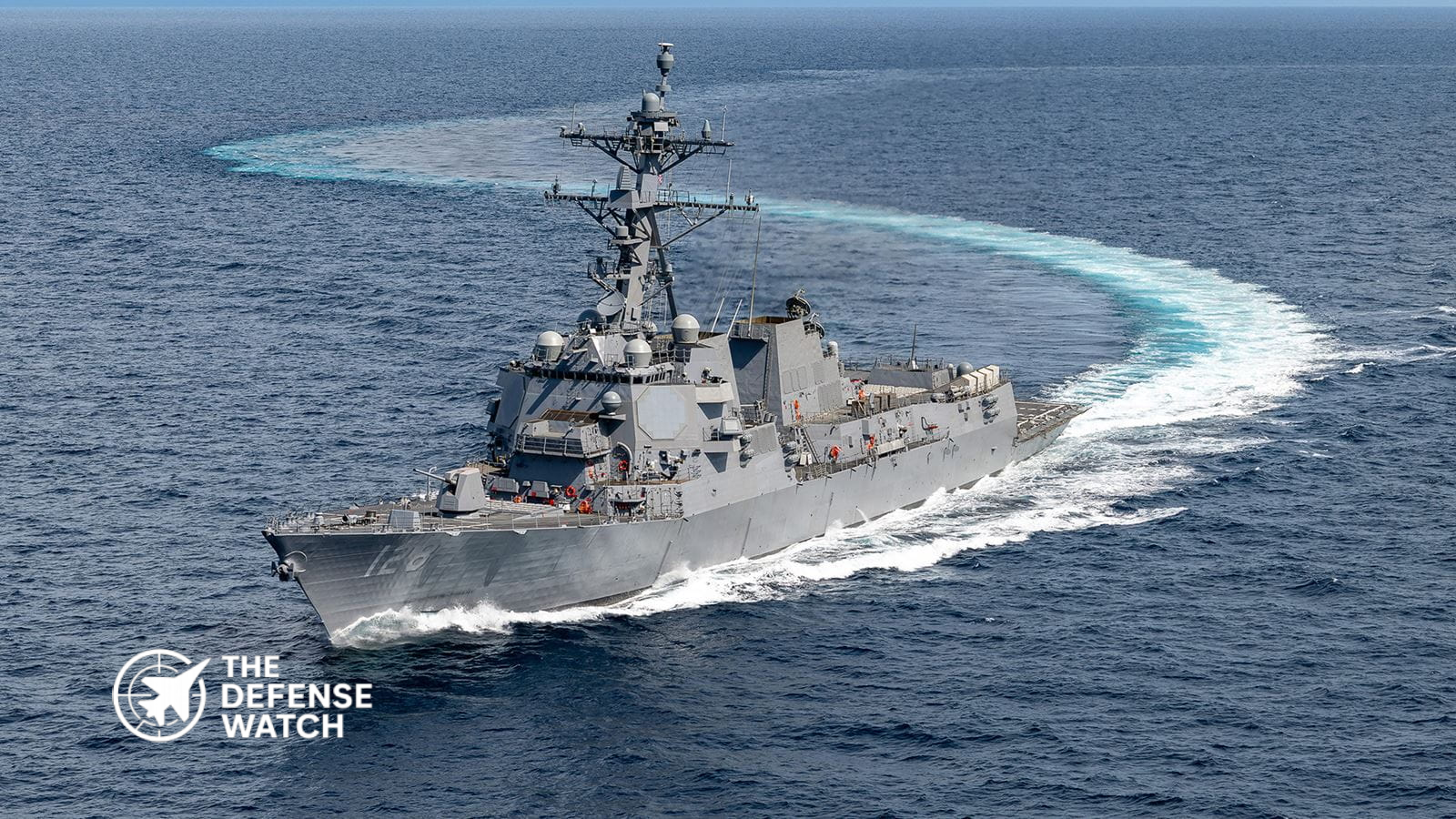
The Type 26 frigate is particularly important because it was designed around anti-submarine warfare.
The Royal Navy’s future undersea force is expected to use the frigates as the high-end crewed component of a wider sensor network. Their role will not simply be to search independently for submarines, but to operate alongside aircraft, autonomous platforms and fixed or deployable sensors.
The UK’s 2025 Strategic Defence Review specifically identified Atlantic Bastion as the Royal Navy’s plan for securing the North Atlantic against the persistent and growing underwater threat posed by Russia. It called for a layered sensor network operating above, on and below the surface.
That architecture includes Type 26 frigates with mission bays, uncrewed surface vessels and uncrewed underwater vehicles. The review also called for AI-powered acoustic detection systems to be integrated into Britain’s Digital Targeting Web.
This is an important change in anti-submarine warfare.
Traditional ASW depends heavily on relatively small numbers of expensive crewed platforms. A network incorporating autonomous systems can instead distribute sensors over a much wider area, allowing crewed ships and aircraft to concentrate on areas where the available data indicates a higher probability of submarine activity.
Autonomous Systems Could Increase Coverage
The Royal Navy has already begun testing technologies that could form part of this architecture.
In April, the service reported demonstrations with industry involving autonomous and uncrewed technology for the underwater battlespace. The trials included advanced underwater sensors, autonomous platforms, lethality systems and digital architecture designed to connect them.
Parliamentary evidence in May provided further insight into the development schedule. Defence Minister Al Carns said 18 programmes were running within the wider effort, with initial uncrewed gliders expected in 2026, a jet-powered drone targeted for 2027 and uncrewed escort ships targeted for 2029.
The operational value is straightforward: autonomous platforms can remain at sea for extended periods, collect environmental and acoustic data and operate in locations where deploying a crewed ship would be unnecessarily expensive or risky.
The technical challenge is equally significant. Underwater communications are difficult, acoustic conditions vary sharply with temperature and depth, and autonomous systems must distinguish submarines from commercial vessels, marine activity and natural background noise.
That makes data fusion as important as the sensors themselves.
Protecting Cables And Pipelines Is A Separate Challenge
Atlantic Bastion is also aimed at a broader security problem: protecting the infrastructure beneath the North Atlantic.
The UK’s National Security Strategy says 99 percent of the country’s international data traffic travels through subsea cables. It also estimates that £65 billion of UK economic activity relies on the subsea cable industry.
The government has separately proposed stronger protections for subsea telecommunications infrastructure after an increase in suspicious activity around critical cables. It says the UK has about 64 subsea cables and that most cable damage is accidental, commonly associated with fishing activity or vessel anchors.
This creates a difficult operational problem for military planners.
A military force must be able to identify suspicious activity without treating every vessel operating near a cable as a hostile actor. The distinction between routine commercial activity, intelligence collection, preparation for sabotage and an actual attack can be difficult to establish in real time.
Atlantic Bastion’s networked approach is intended to improve that picture by combining information from multiple sources rather than relying on one ship or aircraft.
P-8A Poseidon Fleet Also Gets Additional Funding
Atlantic Bastion is not being developed in isolation from Britain’s existing maritime patrol force.
The UK government has allocated an additional £100 million to support its P-8 submarine-hunting aircraft. The aircraft provide a long-range crewed surveillance capability that can complement surface ships and autonomous systems.
This combination is important for the North Atlantic.
A Type 26 can provide persistent surface presence and advanced acoustic capabilities, while a P-8 can cover large areas rapidly and deploy airborne sensors. Autonomous platforms can provide additional surveillance nodes without consuming the crew and operating capacity of a frigate or maritime patrol aircraft.
The resulting force is therefore designed around layered surveillance rather than one dominant platform.
Project Proteus Adds Another Autonomous Layer
The UK is also using Project Proteus to develop autonomous aviation technology for maritime operations.
According to the reported Atlantic Bastion plan, Project Proteus has received £60 million and produced a full-size autonomous helicopter developed by Leonardo in Yeovil. The aircraft is intended to support anti-submarine warfare, maritime patrol and logistics missions alongside crewed platforms.
The broader significance is that Britain is testing autonomy across several domains simultaneously.
Underwater vehicles can provide persistent seabed sensing. Surface drones can patrol and carry sensors. Autonomous aircraft can extend the reach of ships. Crewed frigates and patrol aircraft can then provide higher-end detection, classification and response capabilities.
Why Atlantic Bastion Matters To NATO
The North Atlantic is a critical operating area for NATO because it connects North America with Europe and provides the maritime approaches to the European continent.
Russian submarines operating in the North Atlantic can threaten military sea lines of communication, monitor NATO naval activity and potentially approach critical infrastructure.
The UK’s Strategic Defence Review therefore assigns the Royal Navy a central role in protecting the North Atlantic and critical undersea infrastructure.
The programme also aligns with Britain’s expanding cooperation with Norway and other NATO allies.
In June, the UK government said it was working with European allies on underwater infrastructure protection and highlighted cooperation with Norway through the Lunna House agreement, which is intended to deliver a combined fleet of submarine-hunting frigates and uncrewed systems.
This matters because the underwater battlespace does not stop at national maritime boundaries. Russian submarines moving through the Norwegian Sea, North Atlantic and approaches to the UK can cross multiple areas of interest during a single deployment.
A distributed NATO surveillance network therefore offers advantages over separate national systems.
The Main Challenge Is Integration, Not Just Procurement
The most important element of Atlantic Bastion may ultimately be the network connecting its platforms.
Adding autonomous vehicles without integrating their data would create another collection of independent systems. The UK’s stated objective is different: sensors, aircraft, ships and autonomous vehicles are intended to contribute to a common operational picture.
AI can assist by processing large volumes of acoustic information faster than human operators can do manually. But the system still requires trained personnel to validate detections, assess uncertainty and determine whether an observation represents a genuine threat.
The Digital Targeting Web is intended to shorten the path between detection and operational decision-making. The Strategic Defence Review says more than £1 billion is being invested in the wider digital architecture, with delivery planned from 2027.
For anti-submarine warfare, that time advantage can be decisive. A submarine is a mobile target operating in an environment where detection can be intermittent and classification can remain uncertain.
Britain Is Moving Toward A Hybrid Navy
Atlantic Bastion is part of a wider British effort to build what the Strategic Defence Review calls a New Hybrid Navy.
The concept combines traditional crewed warships and submarines with autonomous systems, digital networks and AI-enabled decision support. The UK government has also announced new hybrid warship concepts intended to coordinate uncrewed systems operating in the air, on the surface and underwater.
For Britain, the attraction is partly about scale.
The North Atlantic is too large for a small number of crewed ships and aircraft to maintain continuous surveillance everywhere. Autonomous systems could increase the number of sensing nodes available to commanders without requiring every platform to carry a large crew.
That does not make crewed ships less important. Instead, it changes their role within the force.
High-value warships and aircraft can become command, control and response platforms while autonomous systems extend the overall sensor footprint.
What Comes Next
The immediate priority is likely to be continued testing and deployment of autonomous sensors and supporting digital systems.
The original Atlantic Bastion programme received £14 million in combined Ministry of Defence and industry seed funding during its initial development phase. The UK said 26 companies submitted proposals for anti-submarine sensor technology, while 20 firms demonstrated technologies ranging from major defence systems to SME-developed solutions.
The next phase will determine how quickly those technologies can transition from demonstrations to operational capability.
The reported £1.5 billion expansion would provide a substantially larger financial framework, but the government’s own qualification that the figures remain indicative means individual capabilities should not yet be treated as fully funded procurement programmes.
For the Royal Navy and NATO, however, the strategic direction is clear.
Britain is rebuilding its North Atlantic anti-submarine posture around a combination of Type 26 frigates, P-8A maritime patrol aircraft, autonomous platforms, advanced acoustic sensors and shared digital networks.
The objective is not simply to hunt submarines. It is to maintain sufficient awareness of the seabed and the surrounding maritime environment to deter interference, identify suspicious activity and preserve the resilience of the infrastructure on which Britain’s economy and NATO’s military mobility depend.
Conclusion
Atlantic Bastion represents one of the UK’s clearest shifts toward a networked approach to maritime security.
The reported £1.5 billion expansion would strengthen a programme already moving from technology demonstrations toward operational deployment. Its effectiveness will depend less on any single platform than on the ability to combine autonomous sensors, crewed aircraft, warships and digital systems into a persistent North Atlantic surveillance architecture.
For NATO, the programme also addresses a wider requirement: maintaining awareness across a maritime region where Russian submarine operations, critical infrastructure and transatlantic military routes intersect.
If delivered as planned, Atlantic Bastion would give Britain a larger and more distributed anti-submarine warfare force, while providing NATO with another layer of surveillance across the northern maritime approaches.