

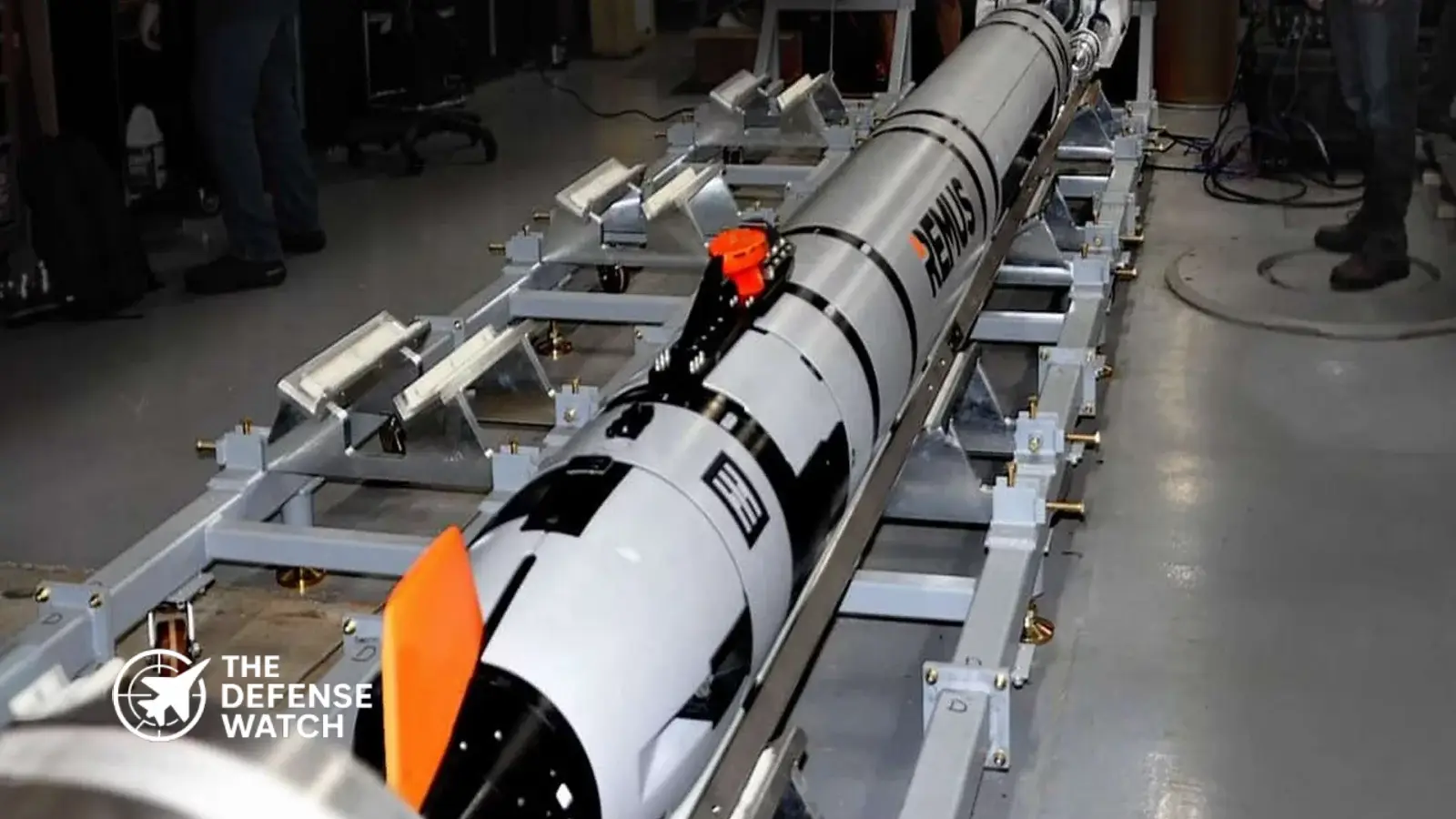
HII Torpedo Tube UUV Launch System Advances U.S. Navy Submarine Reach
The U.S. Navy UUV launch system effort moved forward this week after HII announced it had secured a contract from the Defense Innovation Unit to deliver a Torpedo Tube Launch and Recovery (TTLR) system for Navy submarines. The capability is designed to autonomously deploy and recover HII REMUS unmanned underwater vehicles directly through standard submarine torpedo tubes.
- HII has received a Defense Innovation Unit contract to provide the U.S. Navy with a Torpedo Tube Launch and Recovery system.
- The system enables submarines to autonomously deploy and recover REMUS unmanned underwater vehicles through torpedo tubes.
- Capability supports intelligence, surveillance, reconnaissance, mine countermeasures, and seabed warfare missions.
- Contract follows successful 2025 launch and recovery trials aboard USS Delaware, a Virginia-class submarine.
- Program strengthens U.S. Navy manned-unmanned teaming in contested undersea environments.
The award reflects a broader Pentagon push to give submarines more mission options without increasing crew exposure or requiring boats to surface. In practical terms, the TTLR system could let attack submarines conduct reconnaissance, route surveys, mine detection, and seabed monitoring while preserving stealth.
Why The Contract Matters Now
Submarines remain among the U.S. military’s most survivable assets, but their numbers are limited and global demand is rising. Adding autonomous systems can multiply what each submarine can do on patrol.
That matters most in contested areas such as the Indo-Pacific, North Atlantic, and chokepoints where adversaries are expanding anti-access and area-denial networks. Instead of moving a submarine directly into risk, commanders could send a smaller unmanned vehicle ahead to map waters, inspect infrastructure, or search for mines.
This contract therefore is not just about hardware. It is about extending submarine presence without exposing a strategic platform unnecessarily.
Proven In Real-World Testing
The deal follows operational milestones achieved in 2025. According to HII, the USS Delaware (SSN-791) completed three fully autonomous launch and recovery sorties of a REMUS 600 vehicle through a torpedo tube during an overseas deployment. Additional recovery testing was later conducted at Seneca Lake, New York.
Those tests are significant because recovery is often harder than launch. Returning an unmanned vehicle safely into a moving submarine’s torpedo tube requires precise navigation, timing, and reliable control systems.
ISR, Mine Warfare, And Seabed Security
The new submarine torpedo tube UUV capability supports several missions increasingly central to naval competition:
- Intelligence, surveillance, and reconnaissance (ISR)
- Mine countermeasures in denied waters
- Hydrographic and route surveys
- Inspection of undersea cables or seabed infrastructure
- Pre-strike battlespace preparation
These missions have become more urgent as global navies focus on protecting underwater infrastructure and securing maritime supply routes.
Competitive Pressure In Undersea Warfare
China and Russia continue investing in submarines, seabed sensors, autonomous systems, and long-range maritime surveillance. The U.S. response increasingly centers on distributed, networked capabilities rather than relying only on larger platforms.
That makes the HII TTLR contract strategically relevant. Instead of waiting years for new submarine hulls, the Navy can increase capability by upgrading boats already in service.
For defense planners, that is a faster and often cheaper path to operational advantage.
Industry Positioning
HII said it has delivered more than 750 REMUS vehicles to over 30 countries and remains one of the two builders of U.S. nuclear-powered submarines. The company’s experience in both crewed and uncrewed maritime systems likely strengthened its position for this award.
Bottom Line
The U.S. Navy UUV launch system contract signals that undersea warfare is shifting toward mixed fleets of submarines and autonomous vehicles. If fielded at scale, torpedo tube-launched drones could give U.S. submarines longer reach, better situational awareness, and safer access to contested waters.
That combination may become essential in any future maritime conflict.
