What Makes a Missile “Hypersonic”?
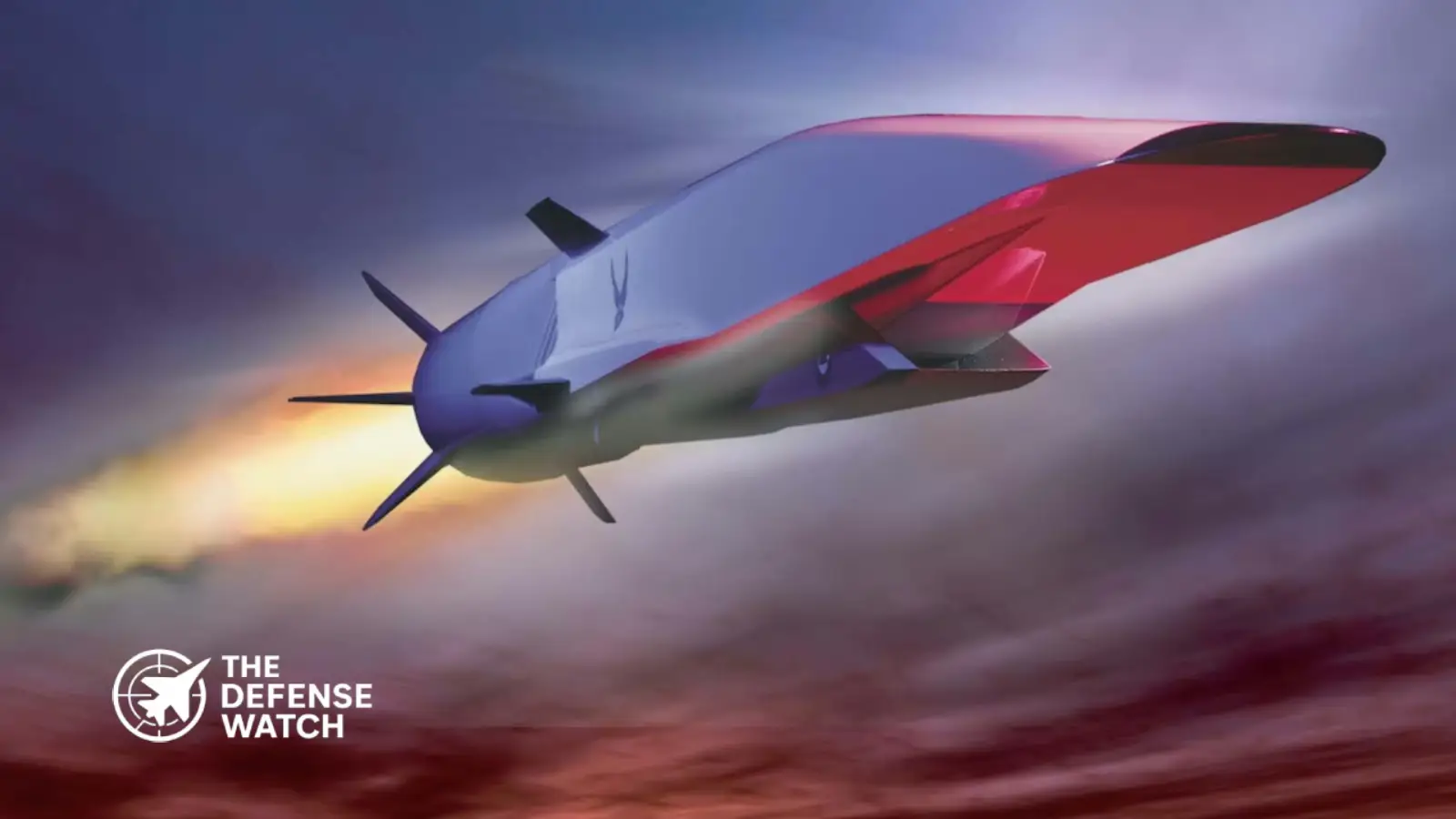
Understanding how hypersonic missiles work begins with a deceptively simple threshold: speed. Any vehicle traveling above Mach 5 — roughly 3,800 mph at sea level — is classified as hypersonic. But raw velocity is only part of the story. What separates the new generation of hypersonic weapons from Cold War-era ballistic missiles is their ability to maneuver throughout the entire flight path, operating in an atmospheric corridor that existing radar networks and missile defenses were never designed to cover.
- Hypersonic missiles travel at Mach 5 or faster — at least five times the speed of sound — and can maneuver in flight, unlike traditional ballistic missiles.
- Two primary types exist: Hypersonic Glide Vehicles (HGVs) boosted by rockets, and Hypersonic Cruise Missiles (HCMs) powered by air-breathing scramjet engines.
- The U.S. Pentagon’s FY2026 budget allocated $3.9 billion for hypersonic weapons development, reflecting maturing programs across Army, Navy, and Air Force.
- In April 2026, the U.S. Army’s Dark Eagle hypersonic missile was placed under USSTRATCOM command — on par with nuclear-capable delivery systems.
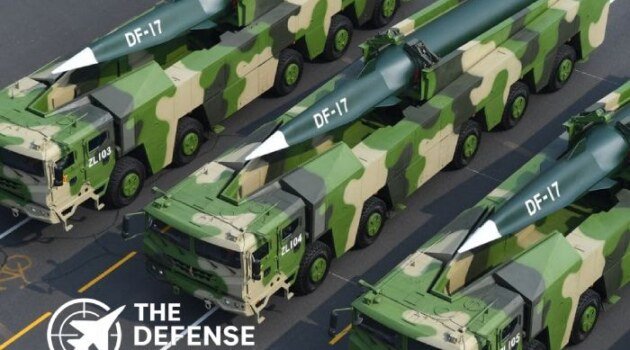
- Russia’s Avangard HGV reportedly reaches Mach 20–27; China’s DF-17 has an estimated range of 1,800–2,500 km and can strike regional targets within minutes.
Traditional intercontinental ballistic missiles (ICBMs) arc high into space and follow predictable parabolic trajectories. Ground-based radars can plot an ICBM’s path within seconds of launch and calculate an impact point with high confidence. As aerospace engineers have noted, hypersonic weapons fly much higher than subsonic cruise missiles but much lower than ICBMs — occupying a “sweet spot” in the atmosphere where neither air-defense batteries nor space-based interceptors currently operate effectively.
That combination of extreme speed and unpredictable maneuvering is what makes understanding how hypersonic missiles work so strategically important in 2026.
The Two Architectures: HGVs vs. Scramjet Cruise Missiles
Modern hypersonic weapons fall into two distinct engineering families, each with different propulsion physics, flight profiles, and operational trade-offs.
Hypersonic Glide Vehicles (HGVs)
A Hypersonic Glide Vehicle is a warhead-like payload mounted atop a conventional rocket booster. The rocket accelerates the vehicle to the upper atmosphere — sometimes briefly exiting into near-space — before releasing it. From that point, the glide vehicle uses aerodynamic lift and its own momentum to navigate toward its target, performing sharp lateral maneuvers that can defeat intercept geometry.
The physics behind HGV flight involve a technique called skip reentry: the vehicle enters and briefly exits the upper atmosphere multiple times, extending its effective range while keeping its altitude far below what missile defense tracking systems anticipate. According to defense analysts, this non-ballistic glide trajectory limits detection windows and makes impact prediction nearly impossible until the final seconds of flight.
Russia’s Avangard — mounted atop modified SS-19 ICBMs — is the most-cited example, reportedly sustaining speeds between Mach 20 and Mach 27. China’s DF-ZF glide vehicle, carried by the DF-17 ballistic missile, entered PLA Rocket Force service and was publicly unveiled at a military parade in 2019.
Hypersonic Cruise Missiles (HCMs) and Scramjet Propulsion
The second category — and the more technically demanding one — is the Hypersonic Cruise Missile. Where an HGV coasts unpowered after booster separation, an HCM sustains hypersonic flight using an air-breathing engine. That engine is a scramjet: a Supersonic Combustion Ramjet.
A conventional jet engine uses rotating compressor blades to slow incoming air before combustion. A scramjet eliminates those moving parts entirely. Instead, it relies on the vehicle’s own forward speed to compress incoming air. At Mach 5 and above, air enters the engine intake at supersonic velocity, mixes with fuel — typically liquid hydrogen or a hydrocarbon — and ignites in a combustion chamber where airflow never slows below supersonic speeds. The resulting exhaust generates thrust. Defense researchers describe scramjets as elegant in concept but extraordinarily difficult in practice: fuel and air spend mere milliseconds together before exiting the engine, demanding ultra-precise injection and ignition timing at conditions that replicate a small controlled explosion on a repeating cycle at hypersonic velocity.
Because scramjets cannot generate thrust from a standing start, HCMs must first be accelerated to near-hypersonic speeds using a rocket booster before the air-breathing engine can ignite. Once active, however, a scramjet-powered missile can sustain its speed over longer distances than an HGV can glide.
Analyst Take: The scramjet’s fundamental limitation — it must be moving fast before it can start — is also the reason scramjet HCMs are operationally complex to deploy. They require launch platforms that can themselves reach supersonic speed, such as aircraft or naval vertical-launch systems with high-energy boosters. This creates an asymmetry: nations with robust fast-launch infrastructure (carrier-based aircraft, nuclear submarines) can field HCMs more flexibly, while nations relying on ground-based launch pads face longer reaction timelines. In practice, that distinction is reshaping how navies think about hypersonic strike range and survivability.
The Physics of Surviving Hypersonic Flight
At Mach 5 and above, aerodynamic heating becomes an existential engineering challenge. Air molecules striking the vehicle’s leading edges cannot dissipate heat fast enough, generating surface temperatures that can exceed 2,000°C (3,600°F) — hotter than many metals will withstand. Managing that thermal environment is one of the primary reasons hypersonic programs take decades and billions of dollars to mature.
Modern hypersonic weapons use ultra-high-temperature ceramics (UHTCs), carbon-carbon composites, and ablative coatings to survive reentry-like heating during sustained atmospheric flight. These same materials must simultaneously remain structurally stable under the immense aerodynamic loads generated by maneuvering at hypersonic velocity — forces that can exceed hundreds of G-equivalents on structural components.
The plasma sheath that forms around a hypersonic vehicle at peak velocity also creates a secondary problem: communications blackout. Ionized gas absorbs and reflects radio frequencies, temporarily cutting the missile off from GPS signals and uplink commands. Current programs are developing frequency-selective antenna designs and alternative mid-course guidance solutions — including inertial navigation with terminal sensor updates — to maintain accuracy through this blackout window.
Global Hypersonic Race: Status in 2026
Country System Type Speed Status (2026) Russia Avangard HGV Mach 20–27 Operational (ICBM-boosted) Russia Zircon (3M22) HCM (Scramjet) Mach 8–9 Operational (frigates/submarines) China DF-17 / DF-ZF HGV Mach 5–10 Operational (PLA Rocket Force) China YJ-21 HGV (anti-ship) Mach 6+ Operational (carrier-launched) China CJ-1000 HCM (Scramjet) ~Mach 6 Unveiled 2025; development phase United States Dark Eagle (LRHW) HGV Mach 5+ STRATCOM-authorized, Apr 2026 United States HACM HCM (Scramjet) Mach 5+ Targeted deployment FY2027 United States HAVOC (Ursa Major) HCM (Liquid rocket) Mach 5+ Debuted Feb 2026; multi-platform The United States: Playing Catch-Up With New Architecture
The U.S. spent much of the early 2020s absorbing costly program setbacks. The AGM-183A ARRW suffered multiple test failures before its cancellation in 2023. The Navy’s Conventional Prompt Strike (CPS) program, pairing a solid-rocket booster with a Common Hypersonic Glide Body (C-HGB), only achieved its first full success in June 2024, followed by a second successful test in December 2024. A joint Army-Navy test in March 2026 validated a shared booster architecture — a sign that Washington is finally moving from development to fielding.
In a significant command restructuring, a congressional report dated April 7, 2026 confirmed that Dark Eagle now operates under a direct chain from national leadership through USSTRATCOM — the same oversight framework used for nuclear systems — reflecting how seriously planners view the weapon’s strategic weight despite its conventional warhead. Each Dark Eagle battery fields eight missiles, though production remains constrained to an estimated one to two missiles per month, forcing strict target prioritization.
On the industrial side, Colorado-based Ursa Major debuted the HAVOC missile system in February 2026, a liquid-rocket-powered hypersonic weapon designed for multi-platform deployment including fighter aircraft, bombers, ground launchers, and even space-based delivery. The system’s ability to alter speed mid-flight and interface with a range of propulsion options signals a deliberate push toward modular, scalable hypersonic architecture.
China: Broadening the Threat Portfolio
Beijing’s hypersonic program is characterized by diversity and operational urgency. The DF-17 and its DF-ZF glide body are already assigned to the PLA Rocket Force as conventional strike tools targeting regional military infrastructure. The YJ-21 — a carrier-launched anti-ship hypersonic missile — adds a naval dimension, with analysts warning it directly threatens U.S. carrier strike groups operating in the Western Pacific.
In 2025, China unveiled the CJ-1000, a long-range scramjet-powered cruise missile believed capable of sustaining approximately Mach 6 across thousands of kilometers. Simultaneously, Beijing completed the JF-22 hypersonic wind tunnel in Huairou District — reportedly the fastest in the world, capable of simulating speeds up to Mach 30 — signaling long-term investment in next-generation aerodynamic research that will feed future hypersonic designs.
Russia: Operational Reality and Performance Questions
Russia maintains the longest operational hypersonic track record. The Avangard HGV entered service aboard UR-100N UTTH ICBMs and represents the most mature boost-glide system in any national inventory. The Zircon scramjet cruise missile was deployed aboard the Admiral Gorshkov frigate in 2023 and has reportedly been used in strikes on Ukrainian infrastructure in 2024. Western analysts note, however, that Russian performance claims are frequently overstated and that sanctions-driven component shortages have complicated production timelines.
Strategic Analysis: The hypersonic arms race is not simply a speed competition — it is fundamentally a contest over reaction time and deterrence stability. When a hypersonic missile can close on a high-value target in under ten minutes with no predictable trajectory, the decision window for political leadership compresses to near zero. This creates a dangerous structural pressure toward launch-on-warning postures and automated response doctrines. The April 2026 U.S. decision to place Dark Eagle under STRATCOM command — typically reserved for nuclear systems — reflects an acknowledgment that hypersonic conventional weapons have crossed into strategic deterrence territory, blurring the line between conventional and nuclear escalation in ways arms control frameworks have not yet addressed.
The Interception Problem: Why Defenses Are Struggling
Current missile defense architecture was designed around two known threat profiles: slow cruise missiles (which fly low and straight) and ballistic missiles (which arc through space on predictable paths). Hypersonic weapons confound both tracking paradigms simultaneously.
Ground-based radar networks have inherent horizon limitations — a hypersonic glide vehicle flying at 40–60 km altitude is invisible to surface radar until it is dangerously close to its target. Space-based infrared satellites can detect the rocket booster at launch but typically lose track once the glide vehicle separates and its thermal signature drops. Persistent tracking through the full flight envelope requires a proliferated low-Earth orbit sensor layer — exactly what the U.S. Space Development Agency is building, but which will not be fully operational until the late 2020s.
Even with continuous tracking, intercepting a maneuvering vehicle traveling at Mach 5–10 in the near-space corridor is geometrically brutal: an interceptor would require exceptional closing speed and prediction accuracy across a rapidly shrinking engagement window.
Emerging Propulsion: Solid-Fuel Ramjets and Multi-Mode Engines
Not all hypersonic development is centered on scramjets. GE Aerospace’s ATLAS program completed the first supersonic flight tests of a solid-fuel ramjet over Kennedy Space Center in 2025, mounted to an F-104 Starfighter. Engineers consider solid-fuel ramjets more practical for near-term tactical weapons because they eliminate the plumbing complexity of liquid-fuel systems while still providing the range and speed improvements over conventional solid-rocket missiles.
Combined-cycle engines — which integrate a turbine mode for low-speed operation with a scramjet or ramjet mode at high speed — represent the next frontier. These “turbine-based combined cycle” (TBCC) concepts could eventually allow hypersonic weapons to operate from conventional runways or slow-moving ships without requiring an initial rocket boost, dramatically broadening the operational options available to military planners.
FAQs
What is the minimum speed required for a missile to be classified as hypersonic?A missile must sustain speeds greater than Mach 5 — approximately 3,800 mph at sea level — to be classified as hypersonic. The critical distinction from mere high-speed weapons is the ability to maneuver at those speeds throughout the flight path, not just briefly exceed the threshold during a terminal dive.
How does a scramjet engine differ from a conventional jet engine?A conventional jet engine uses spinning compressor blades to slow and compress incoming air before combustion. A scramjet has no moving parts — it relies entirely on the vehicle’s forward speed to compress air, and combustion takes place in a supersonic airflow environment. This makes scramjets far simpler mechanically but requires the vehicle to already be traveling at near-hypersonic speeds before the engine can ignite.
Can existing missile defense systems intercept a hypersonic missile?Not reliably with current architecture. Ground-based radars cannot track hypersonic glide vehicles until they are very close to their targets due to Earth’s curvature and the vehicles’ low flight altitude. Space-based sensors lose track after booster separation. A new proliferated satellite sensor layer combined with directed-energy or kinetic interceptors specifically designed for the near-space corridor is the most credible near-term solution — but it remains years from full deployment.
What is the U.S. Dark Eagle, and why was it placed under STRATCOM command in 2026?The Dark Eagle, formally the Long Range Hypersonic Weapon (LRHW), is the U.S. Army’s first operational hypersonic boost-glide missile system. Despite carrying a conventional (non-nuclear) warhead, it was placed under USSTRATCOM command authority in April 2026 because its speed and global reach make it a strategic asset. The new command chain requires national-level authorization for every strike, aligning it with oversight protocols previously reserved for nuclear delivery systems.
Which country currently leads the hypersonic missile race?Russia and China currently lead in terms of operational deployed systems. Russia fields the Avangard HGV and the Zircon scramjet cruise missile; China operates the DF-17/DF-ZF and YJ-21. The United States has closed the operational gap significantly through 2025–2026, with Dark Eagle achieving STRATCOM authorization and multiple new programs accelerating toward deployment, but Washington is widely assessed as trailing Beijing and Moscow in sheer numbers of fielded hypersonic weapons.
Get real time update about this post category directly on your device, subscribe now.