

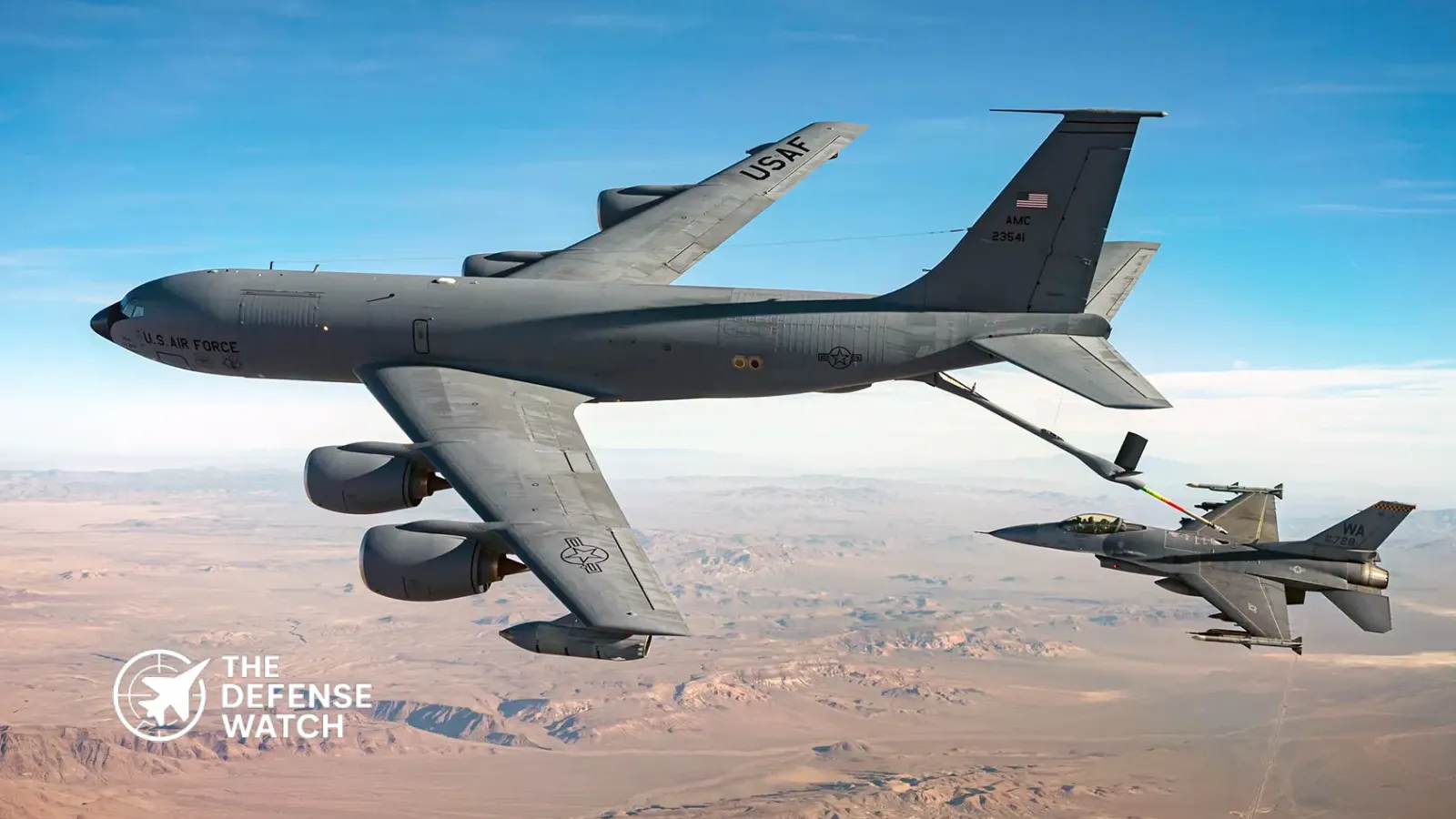
- A US Air Force KC-135 Stratotanker crashed in western Iraq on March 12, 2026 while supporting Operation Epic Fury.
- US Central Command confirmed two aircraft were involved in the incident, with one tanker lost and another landing safely.
- Officials stated the crash occurred in friendly airspace and was not caused by hostile or friendly fire.
- Search and rescue operations were launched for the crew as the Pentagon investigates the cause of the incident.
- The loss highlights the operational risks facing aerial refueling forces supporting high tempo combat operations.
KC-135 Tanker Crash In Iraq
The KC-135 tanker crash in Iraq occurred on March 12, 2026 when a US Air Force aerial refueling aircraft supporting Operation Epic Fury went down in western Iraq during a mission linked to ongoing military operations against Iran.
US Central Command confirmed that two aircraft were involved in the incident and that one KC-135 Stratotanker was lost while the second aircraft landed safely. Officials emphasized the crash took place in friendly airspace and was not caused by hostile or friendly fire. Rescue efforts were launched to locate the crew while investigators began assessing what led to the accident.
The Big Picture
The KC-135 tanker crash in Iraq comes during an intense phase of US air operations in the Middle East tied to the broader campaign against Iran. Operation Epic Fury has involved large scale deployments of US aircraft, naval assets, and personnel across the region.
Aerial refueling aircraft are a central component of these operations. Tankers allow strike fighters, bombers, surveillance aircraft, and electronic warfare platforms to remain airborne for extended periods, enabling long range missions and sustained combat sorties.
The US Air Force relies heavily on the KC-135 fleet for this mission. First introduced in the late 1950s, the aircraft remains one of the backbone platforms of US aerial refueling operations, supporting combat missions across multiple theaters worldwide.
High sortie rates during large scale operations place significant demands on tanker units. Aircraft must often fly multiple missions per day while coordinating with numerous receivers such as fighters and bombers operating across wide geographic areas.
What’s Happening
US Central Command confirmed that the tanker crash occurred during a sortie connected to Operation Epic Fury.
Officials stated that:
Two aircraft were involved in the incident.
One KC-135 tanker went down in western Iraq.
The second aircraft landed safely after the event.Initial statements from CENTCOM stressed that the accident did not result from hostile action or friendly fire.
Authorities have not publicly disclosed the precise cause of the incident. Search and rescue operations were initiated shortly after the crash as military officials worked to locate and recover the crew.
The KC-135 typically carries multiple crew members depending on mission configuration, including pilots and a boom operator responsible for controlling the refueling system.
Why It Matters
The KC-135 tanker crash in Iraq highlights the operational importance and inherent risk associated with aerial refueling missions.
Mid air refueling remains one of the most complex and demanding tasks in military aviation. Tankers must maintain extremely precise flight paths while receiver aircraft maneuver within close proximity to connect to the refueling boom.
These operations frequently occur at night, over long distances, and in congested operational environments involving multiple aircraft.
During high intensity campaigns such as Operation Epic Fury, the number of refueling sorties increases dramatically. Tankers become essential enablers for combat aircraft conducting strike missions, intelligence flights, and air defense patrols.
A loss of a tanker aircraft therefore represents more than an aviation accident. It directly affects operational capacity and sortie generation across the entire air campaign.
Strategic Implications
Aerial refueling assets represent one of the most critical enablers of US global airpower. Tankers extend the reach of combat aircraft and allow the United States to project force far beyond the range of forward bases.
Operations connected to the conflict with Iran rely heavily on this capability. Fighters and bombers often operate from distant bases or aircraft carriers, requiring multiple refueling cycles to complete long range strike missions.
The KC-135 tanker crash in Iraq therefore underscores the central role these aircraft play in sustaining US air operations in the Middle East.
Even a single aircraft loss can temporarily reduce available refueling capacity, particularly during periods of sustained combat operations.
The incident also highlights the logistical complexity of modern air campaigns. Tanker scheduling, airspace management, and mission coordination must function seamlessly to support dozens of aircraft operating simultaneously across large regions.
Competitor View
Strategic competitors will closely monitor operational incidents such as the KC-135 tanker crash in Iraq.
Iran and allied regional militias are likely to examine the event for indications of operational strain within the US air campaign. Even accidents unrelated to hostile action can influence perceptions of operational sustainability.
Russia and China also track US tanker operations closely. Both countries have invested heavily in long range strike capabilities and aerial refueling fleets to replicate similar expeditionary airpower capabilities.
Operational mishaps therefore provide insight into the complexity and demands associated with sustaining global air operations.
What To Watch Next
Investigators from the US Air Force and US Central Command will conduct a detailed accident investigation to determine the cause of the crash.
Key factors that investigators typically examine include:
Aircraft mechanical performance
Crew actions and procedures
Flight data and communications
Environmental conditions
Interaction between aircraft involved in the incidentAdditional details about the aircraft, crew status, and operational context are expected to emerge as recovery operations continue.
The Pentagon may also review tanker mission procedures or operational tempo if the investigation identifies contributing factors related to operational stress or coordination.
Capability Gap
The loss of a KC-135 tanker also highlights the long term transition underway within the US aerial refueling fleet.
The Air Force is gradually replacing aging KC-135 aircraft with the newer KC-46 Pegasus tanker. However, the legacy fleet continues to carry a large portion of the operational workload.
Many KC-135 aircraft remain in service despite decades of use. Although they have undergone extensive upgrades, the aircraft’s age increases maintenance demands and operational complexity.
Until the KC-46 fleet reaches full operational capacity, the KC-135 will remain a critical component of US global airpower.
The Bottom Line
The KC-135 tanker crash in Iraq underscores both the central importance and operational risk of aerial refueling aircraft that sustain US combat operations across the Middle East.


