

Executive Summary:
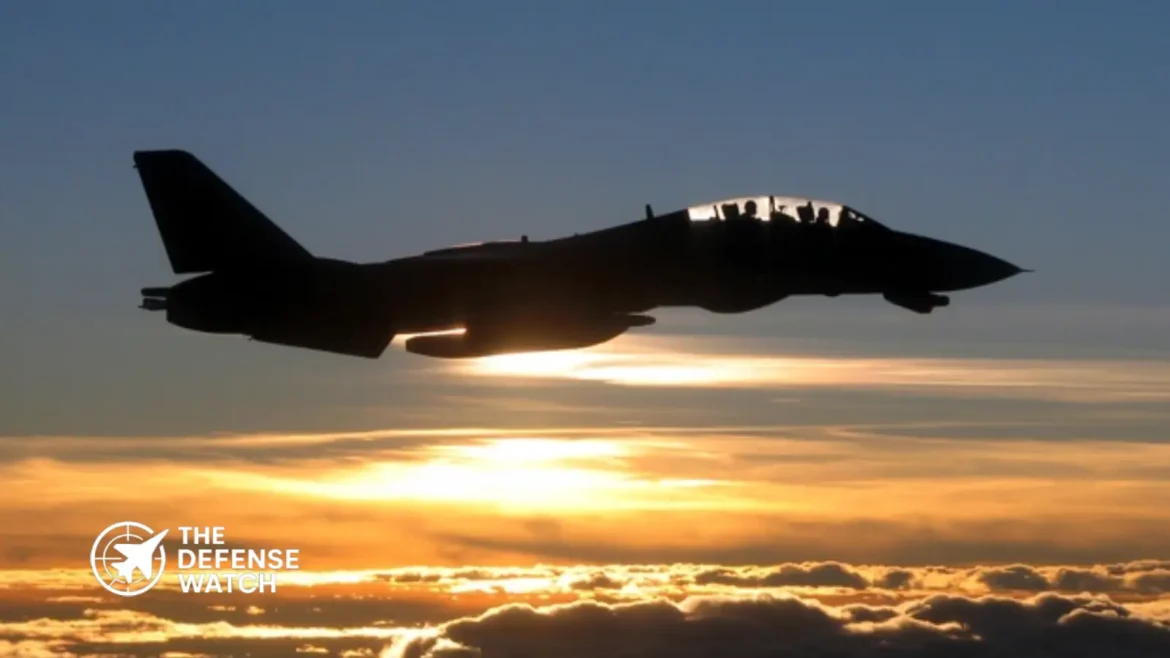
The U.S. Congress is advancing legislation that could preserve three retired F-14D Tomcat fighters and potentially return one aircraft to flying condition. The Maverick Act would transfer the jets from Navy storage to the U.S. Space & Rocket Center in Alabama for heritage and educational use.
Congress Advances F-14 Tomcat Preservation Effort
The future of the iconic Grumman F-14 Tomcat may be changing after nearly two decades in retirement, as U.S. lawmakers move forward with legislation aimed at preserving three remaining aircraft and potentially restoring one to flight status.
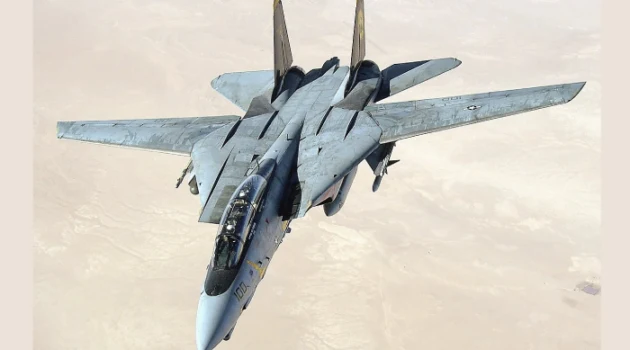
The proposed legislation, known as the Maverick Act, has already passed the U.S. Senate by unanimous consent and is now under consideration in the House of Representatives. The bill would authorize the transfer of three retired F-14D Tomcats from storage at Davis-Monthan Air Force Base in Arizona to the U.S. Space & Rocket Center Commission in Huntsville, Alabama.
The legislation was introduced in the Senate by Tim Sheehy and co-sponsored by Mark Kelly. In the House, companion legislation was introduced by Abe Hamadeh.
One F-14 Could Potentially Fly Again
The most significant provision in the Maverick Act allows the Secretary of the Navy to provide excess spare parts needed to make one of the aircraft either flyable or suitable for static display.
If approved and technically feasible, the restored aircraft could appear at public airshows, commemorative events, and naval aviation heritage demonstrations. The three aircraft identified in the legislation carry Bureau Numbers 164341, 164602, and 159437.
The proposed transfer would come with strict limitations. The aircraft would be fully demilitarized and stripped of any combat capability or weapons release functionality before transfer. Lawmakers also emphasized that the legislation does not reopen foreign transfer pathways for the aircraft.
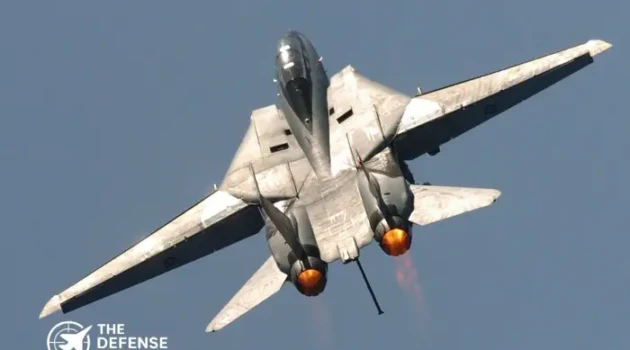
The F-14 Tomcat was retired by the U.S. Navy in 2006 after more than three decades of service. The aircraft gained worldwide recognition for its variable-sweep wing design, long-range interception capability, and operational role aboard U.S. aircraft carriers during the Cold War and post-Cold War era.
Why The F-14 Was Previously Destroyed
The congressional effort marks a major shift in long-standing U.S. policy toward retired F-14 airframes.
After the Tomcat left Navy service, the Pentagon ordered most surviving aircraft dismantled or destroyed to prevent spare parts from reaching Iran, the only foreign operator of the aircraft. Iran acquired F-14s before the 1979 Islamic Revolution and continued operating portions of the fleet for decades despite sanctions.
That policy led to the scrapping of nearly all retired U.S. Navy F-14s. Many aviation experts believed the aircraft would never fly again in the United States because of severe parts shortages and structural modifications made during retirement processing.
Online aviation communities and former maintainers have debated whether surviving airframes remain structurally recoverable. Some observers claim critical wing box structures were intentionally cut during demilitarization, while others argue a limited number of preserved aircraft may still be viable for restoration.
Technical And Financial Challenges Remain
Even if the Maverick Act becomes law, returning an F-14 Tomcat to flight would remain a highly complex undertaking.
The F-14 was one of the most maintenance-intensive fighter aircraft ever operated by the U.S. Navy. Maintaining the swing-wing fighter required extensive logistics support, specialized tooling, and a large supply chain that no longer exists.
Unlike legacy warbirds such as the P-51 Mustang or F-4 Phantom, the Tomcat fleet was deliberately removed from long-term civilian restoration pipelines. Many spare parts were destroyed, and no commercial production network remains active for critical systems.
Still, the legislation reflects growing interest in preserving Cold War aviation history as public demand for historic military aircraft demonstrations continues to expand. The F-14 also remains one of the most recognizable U.S. naval aircraft ever built, partly due to its continued cultural visibility through films and aviation media.
Strategic Symbolism Beyond Heritage
While the Maverick Act is primarily framed as a heritage preservation initiative, the proposal also carries symbolic value for U.S. naval aviation history.
The Tomcat represented the peak of Cold War carrier-based fleet defense and served as a central component of Navy air superiority strategy for decades. Restoring even one aircraft to flying condition would provide the United States with a highly visible heritage platform linked to naval aviation history and carrier warfare evolution.
The move also comes during a broader period of renewed interest in preserving legacy American combat aircraft as museums, private organizations, and veterans groups seek to maintain public engagement with military aviation history.
Whether one of the aircraft ultimately returns to the skies will depend on engineering feasibility, funding, regulatory approvals, and long-term maintenance support. However, the fact that Congress is now openly considering the possibility marks a major reversal from the post-retirement policy that once ensured the F-14 would never fly again.
US Report Says Australia Rejects Taiwan Defense Pledge, Threatens Nuclear Submarine Sale
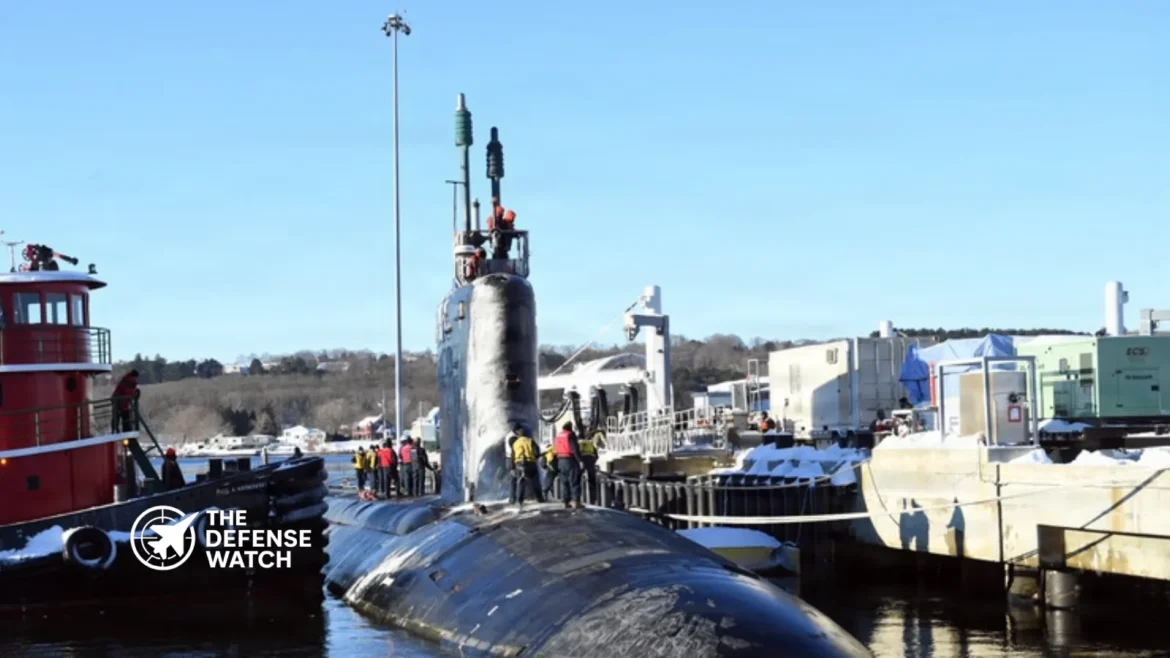
A recent US Congress Research Service (CRS) report highlights Australia’s refusal to explicitly commit to defending Taiwan if conflict with China occurs, adding new strain to the AUKUS security partnership and raising the possibility that the United States might not sell Virginia-class nuclear submarines to Australia.
(adsbygoogle = window.adsbygoogle || []).push({});The report suggests US policymakers should consider retaining control of the submarines rather than transferring them to the Royal Australian Navy, a move framed as necessary to preserve deterrence and ensure US access to advanced undersea capability in a Taiwan contingency.
Report Focuses on Taiwan Security Commitment
The CRS analysis, published in late January, cites public statements by Australian Deputy Prime Minister and Defense Minister Richard Marles noting that Australia has not promised to support the United States militarily if China and the US go to war over Taiwan.
That reticence is described as a core tension in the trilateral Australia-UK-US (AUKUS) pact, which was originally intended to boost allied capability in the Indo-Pacific by transferring nuclear-powered submarines to Australia. In practical terms, the report warns that submarines sold to Canberra might not be available for fighting in a Taiwan Strait crisis if Canberra chooses not to commit them.
Strategic and Security Concerns Over Transfer
The CRS report raises two main concerns tied to a potential submarine sale. One is allied interoperability and strategic alignment, particularly whether Australia would make its most advanced platforms available in a high-end conflict involving Taiwan. The second is information security risk, with the report warning that Australia faces frequent cyberattacks linked to China. These attacks could expose sensitive nuclear submarine technologies if shared too broadly.
US Industrial Capacity Limits
The report also highlights US Navy shipyard capacity constraints. American yards currently build about 1.2 submarines per year, requiring a significant ramp-up to meet both US Navy and allied demand. To supply Australia under the original AUKUS plan, capacity would need year-on-year growth beyond what current infrastructure supports.
Alternate Proposal: US Retains Subs, Deploys Forward
In response to these issues, the report outlines a proposal where the United States does not sell any Virginia-class submarines to Australia. Instead, the boats would remain under US Navy control but operate from Australian bases. That concept aims to keep advanced undersea capability close at hand while avoiding concerns over allied operational commitments and industrial strain.
(adsbygoogle = window.adsbygoogle || []).push({});Under this scenario, Australia could redirect funds toward other defense needs such as long-range anti-ship missiles and unmanned systems, or invest in capabilities tailored to its own territorial defense.
Broader Implications for AUKUS and Indo Pacific
This shift could reshape expectations for AUKUS. The original vision centered on deep industrial and capability sharing to counter Chinese maritime and nuclear strengths. Redefining the nuclear submarine element signals both the limits of current allied commitment frameworks and the tensions inherent in balancing national priorities within a coalition.
The debate also comes as broader Western defense planning increasingly focuses on Taiwan as a potential flashpoint. Multiple US defense reviews and media reports have highlighted growing Chinese military capability and intentions in the region, prompting allied force posture and planning adjustments.
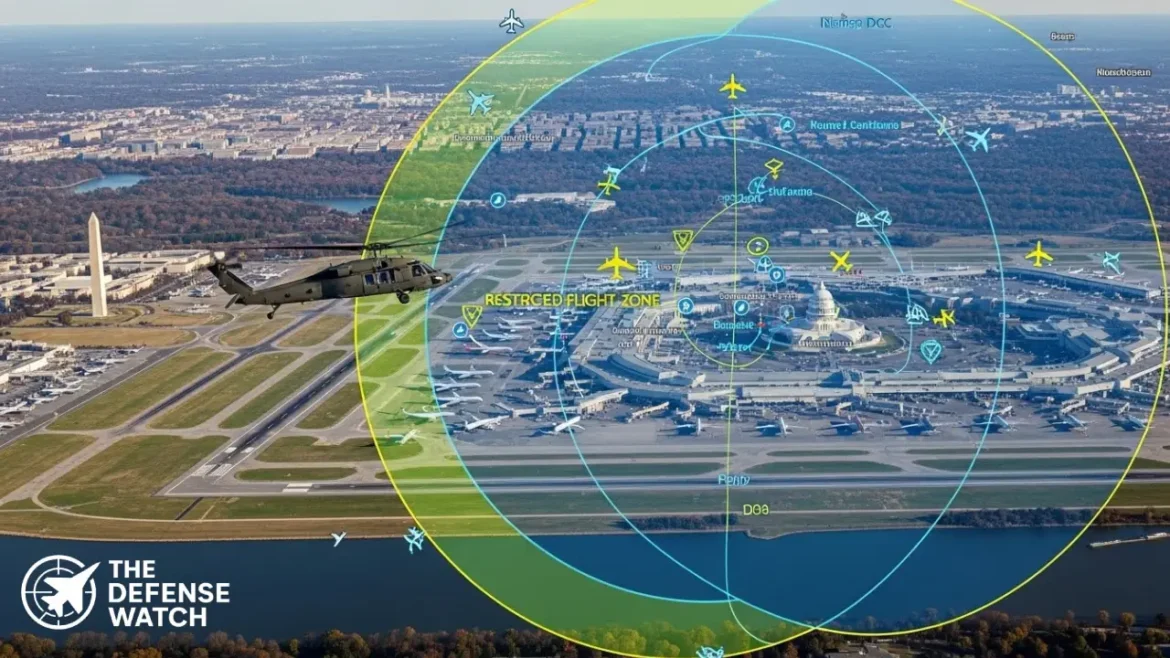
Congress is considering a major change to how the US military operates helicopters near Washington, D.C. A new provision in the annual defense policy would require military helicopters — especially those flying near Ronald Reagan Washington National Airport (DCA) — to broadcast safety alerts to help prevent collisions with commercial aircraft.
The move comes after a tragic mid-air collision on January 29, 2025, in which a US Army UH-60 Black Hawk helicopter lacking a key safety system collided with an American Airlines regional jet, killing all 67 people aboard both aircraft.
Why It Matters
Mixed traffic of helicopters and commercial planes around DCA has long posed safety risks. From October 2021 to December 2024, data shows more than 15,000 encounters in which helicopters and jets came dangerously close — including 85 incidents judged as “close calls” with vertical separation under 200 feet.
In many of these cases, commercial pilots received automated collision alerts from their onboard traffic systems, prompting evasive maneuvers or aborted landings.
After the January crash, the Federal Aviation Administration (FAA) imposed significant route restrictions. That included shutting down a key helicopter route used for decades and limiting helicopter operations when certain runways are in use.
Even so, the concern remains that some military helicopters still fly without transmitting position data, because of exceptions related to sensitive missions.
What the Legislation Proposes
The draft legislation would:
- Require military helicopters flying near DCA to broadcast position alerts — unless the Department of Defense determines a waiver is needed after a formal risk assessment.
- Mandate that the Pentagon report all past and future near-miss incidents involving military and commercial aircraft over the last decade.
- Force safety reviews at major airports and a safety-coordination audit by the U.S. Army Inspector General for military flight operations near civilian airspace.
In effect, the measure aims to close a gap that allowed military helicopters to operate near commercial flights without transmitting their location.
The legislation would not necessarily eliminate all exceptions. Waivers might be permitted in national-security scenarios or where officials deem there is no risk to commercial air traffic.
Context and Previous Actions
Following the crash in January, the National Transportation Safety Board (NTSB) issued urgent recommendations asking the FAA to permanently ban helicopter traffic over certain zones near DCA when some runways are in use. The board called the situation “an intolerable risk to aviation safety.”
In March the FAA announced a permanent closure of the specific helicopter route involved in the accident, and limited mixed traffic of helicopters and fixed-wing aircraft in high-risk areas.
By June, the FAA published updated charts reducing the size of helicopter zones near DCA and adding a new transition route south of the airport, designed to keep helicopters and airliners safer. The changes also formalized the use of automatic position-broadcasting (ADS-B Out) for all aircraft in the restricted zones, with few exceptions.
Still, some military helicopters continued flying with transponders disabled under the claim of sensitive missions. The Army’s head of aviation acknowledged that after the crash, helicopters were still “flying over the nation’s capital” without broadcasting position data because the missions were deemed sensitive.
That reality triggered strong criticism from some lawmakers. For example, Eleanor Holmes Norton, DC’s non-voting delegate to Congress, urged that helicopters near DCA be required to use ADS-B except in narrow security-related exceptions.
What Could Change
If Congress approves the new defense-policy provision, nearly all military helicopters flying near DCA — including training flights or VIP transport — would need to broadcast their positions to surrounding air traffic and controllers. That would make them visible to other aircraft and reduce the likelihood of mid-air collisions.
Defense officials would also have to provide more transparency about past near-misses and conduct safety audits. That information could inform broader changes in how military and civilian flights are coordinated nationwide around busy airports.
However, the bill leaves open the possibility of waivers for certain missions. Some national-security flights or sensitive operations might still bypass the broadcasting requirement, if the Pentagon deems them necessary.
What Comes Next
The new defense policy is now under consideration in Congress. If passed, it could mark a major shift in how the military integrates into civilian airspace around busy airports such as DCA.
Beyond the Capitol airspace, the change could lead to broader adoption of similar safety requirements in other cities where military and commercial air traffic overlap.