
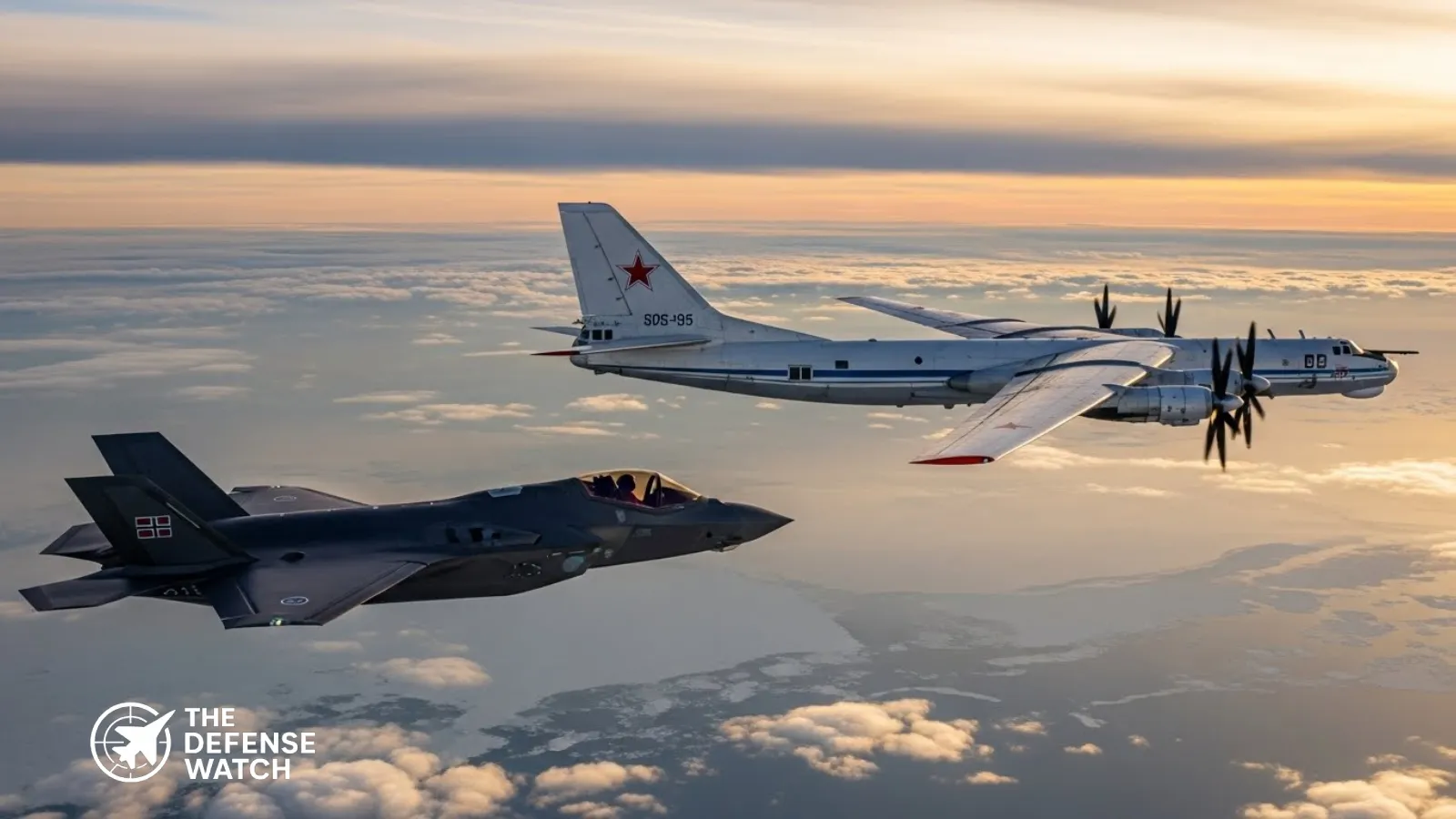
NATO scrambled fighter jets on Christmas Day after Russian Tu-95 strategic bombers conducted a long range patrol near Norway, underscoring continued Russian military activity close to alliance airspace during the war in Ukraine.
Russia’s Ministry of Defense said two Tu-95MS nuclear capable bombers carried out a seven hour flight over the Norwegian and Barents Seas. NATO officials confirmed that allied aircraft were launched to monitor and escort the Russian planes while they flew near NATO controlled airspace. No violations of sovereign airspace were reported.
The incident occurred during a period when Russian long range aviation activity has increasingly drawn NATO responses, particularly in the Arctic and North Atlantic regions.
Background: Rising Arctic Air Activity
The Arctic has become a more active military theater since Russia’s invasion of Ukraine in 2022. Long range bomber patrols by Russia, often involving Tu-95 or Tu-160 aircraft, have resumed with greater frequency along NATO’s northern flank.
Norway occupies a key strategic position in this region. It shares a land border with Russia and hosts NATO radar, surveillance, and air policing assets that monitor activity over the Norwegian Sea, Barents Sea, and Arctic approaches.
NATO routinely scrambles aircraft when unidentified or non communicating military planes approach alliance airspace. These intercepts are standard practice and are designed to identify aircraft, ensure flight safety, and signal presence rather than escalate tensions.
Details of the Russian Bomber Mission
According to Russia’s Defense Ministry, the Tu-95 bombers flew with support aircraft and followed a planned route over international waters. Russian officials stated that all flights complied with international aviation rules and that crews practiced long range mission tasks.
The Tu-95MS, known by NATO as Bear H, is a Cold War era bomber that remains a core part of Russia’s strategic aviation force. Despite its age, the aircraft has been modernized to carry cruise missiles, including the Kh-101 and Kh-102, which have been used in strikes against Ukraine.
NATO did not disclose which member states launched fighter jets, but Norway typically conducts such intercepts using F-35A stealth fighters based at Evenes Air Station. Allied aircraft from the United Kingdom or the United States also regularly support Arctic air policing missions.
NATO Response and Air Policing Role
NATO officials emphasized that the response was routine and defensive. Air policing missions are a permanent part of NATO’s collective defense posture, especially in regions bordering Russia.
These missions involve quick reaction alert aircraft that can be airborne within minutes of a potential airspace approach. Intercepts are closely coordinated through NATO’s integrated air and missile defense network.
While such encounters are usually professional, NATO has expressed concern in the past about Russian aircraft flying without transponders or failing to communicate with civilian air traffic control, increasing the risk of accidents.
Why the Tu-95 Still Matters
Although first introduced in the 1950s, the Tu-95 remains relevant due to its long range and missile carrying capability. The aircraft can fly thousands of miles and launch cruise missiles without entering defended airspace.
During the Ukraine war, Tu-95 bombers have been used to launch missile attacks from Russian airspace, reducing their exposure to air defenses. This role has renewed attention on the platform and its strategic value.
Flights near NATO airspace also serve a signaling function. They allow Russia to demonstrate readiness, test NATO response times, and maintain pilot proficiency in long duration missions.
Expert and Policy Perspective
Defense analysts say these patrols are part of a broader pattern of military messaging rather than preparation for direct conflict.
Arctic security experts note that Russia views the High North as vital for nuclear deterrence, submarine operations, and access to the North Atlantic. Maintaining an air presence supports these goals and reinforces Moscow’s claim to regional influence.
For NATO, consistent intercepts help reassure member states and demonstrate alliance unity. Norway has invested heavily in surveillance systems, new aircraft, and cooperation with allies to monitor Russian activity in the region.
The incident also highlights how the Ukraine war has extended its impact far beyond Eastern Europe, increasing military friction in air and maritime domains across the alliance perimeter.
What to Watch Next
NATO officials expect Russian long range aviation activity to continue into 2026, particularly around symbolic dates and major exercises. Future flights may coincide with naval deployments or missile drills in the Arctic.
At the same time, NATO members are expanding Arctic readiness through joint exercises, infrastructure upgrades, and improved command and control systems.
While these intercepts remain routine, they reflect a security environment where vigilance has become a constant requirement.
Closing Assessment
The Christmas Day Tu-95 flight near Norway and NATO’s rapid response underline the persistent strain in NATO Russia relations. As the war in Ukraine continues, the Arctic and North Atlantic are likely to remain active zones of military signaling and monitoring rather than calm peripheries.
Get real time update about this post category directly on your device, subscribe now.

