Executive Summary: A Spanish F-18 operating under NATO’s enhanced Air Policing mission shot down an unidentified drone after it entered Romanian airspace early August 16 near GalaÈ›i, close to the Moldovan border. The engagement was the fourth drone shootdown reported over Romania this year and underscores the growing burden on NATO fighters and air-defense networks along the alliance’s eastern flank.
Spanish F-18 Shoots Down Drone Over Romania
A Spanish F-18 fighter has shot down a drone that breached Romanian airspace, marking the latest confrontation involving an unmanned aircraft near NATO’s eastern frontier. Romania’s Ministry of National Defence said the target was detected early Sunday, August 16, and was intercepted after entering Romanian territory from the direction of Moldova.
The incident occurred near Galați, approximately 24 kilometers north of the city, according to Romanian authorities cited by Reuters. The drone was destroyed at about 5:01 a.m. local time, with debris falling in an uninhabited area between Băleni and Cudalbi in Galați County. No injuries or significant property damage were reported.
Romania has not publicly established the launcher’s identity for the latest drone. Early reporting has described it as suspected Russian, but the investigation remains underway. That distinction is important because drones operating around the Ukraine conflict have crossed NATO airspace for different reasons, including possible navigation disruption and loss of control.
Two Spanish F-18s Were Scrambled
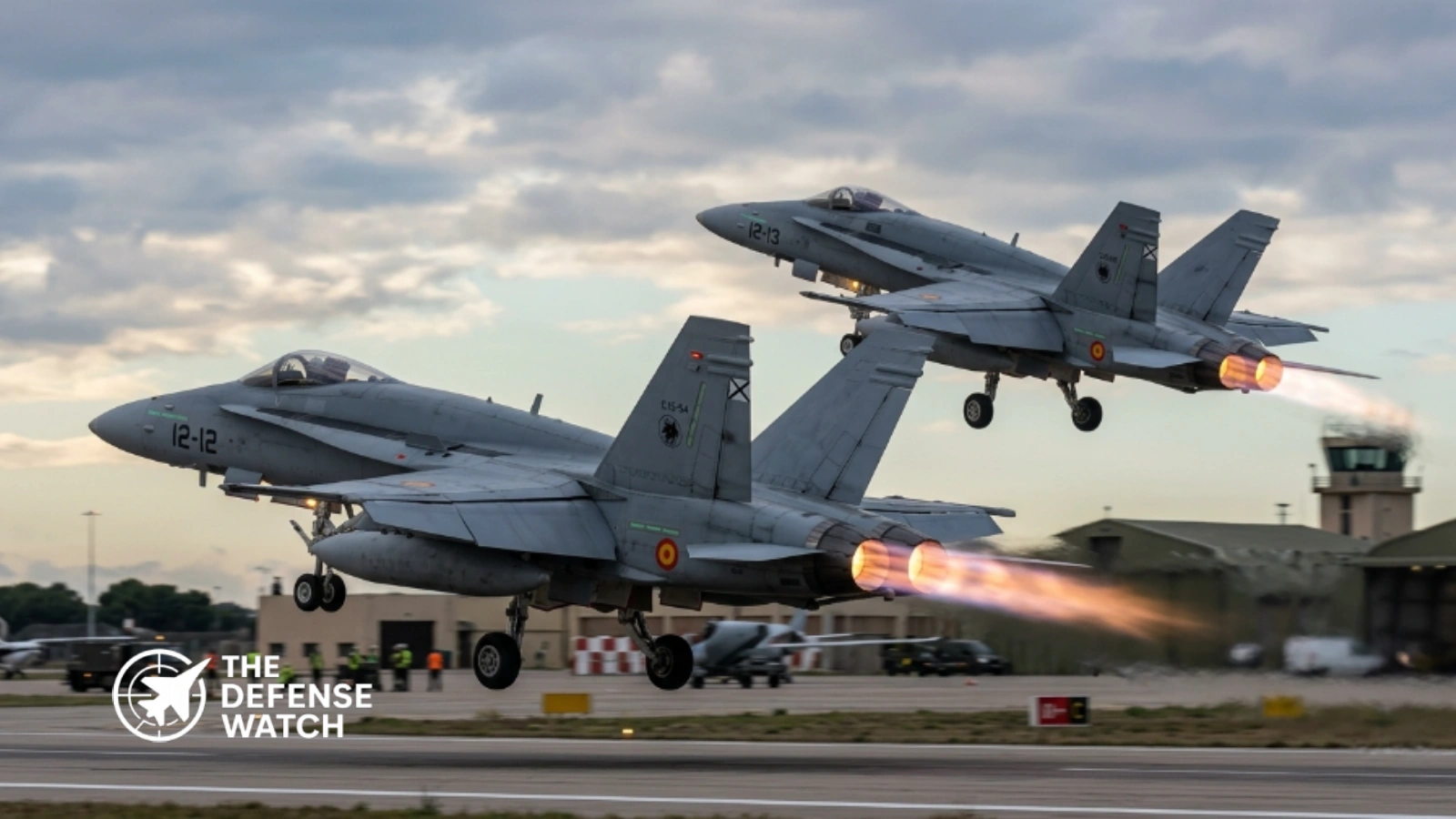
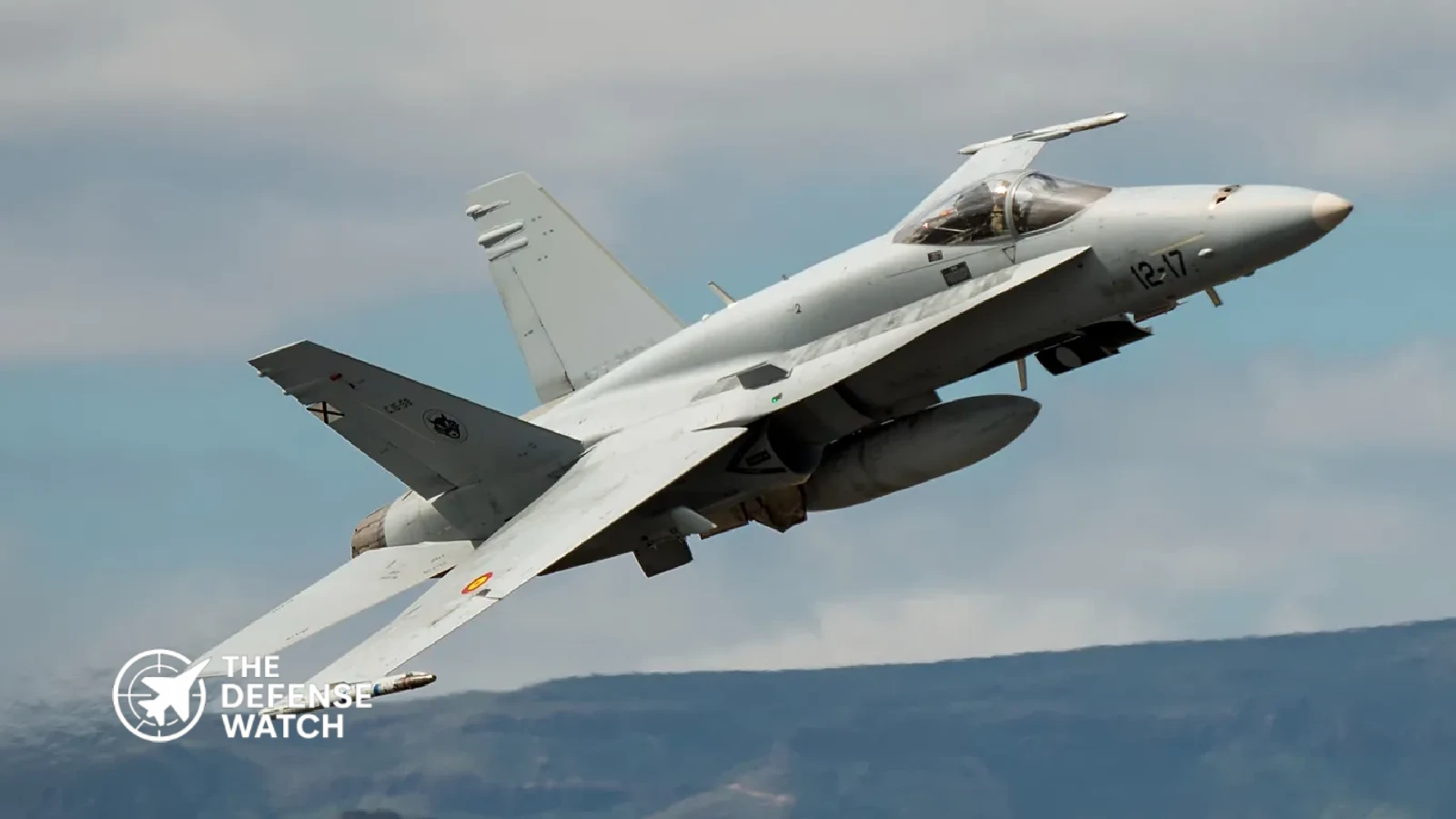
Two Spanish F-18s deployed to Romania were scrambled after the drone was detected. The aircraft were already assigned to NATO’s enhanced Air Policing mission and were operating from Mihail Kogălniceanu Air Base on Romania’s Black Sea coast.
Spain deployed its Paznic tactical air detachment to Romania in late July. The current deployment includes about 200 personnel, seven F-18M fighters, an A400M transport aircraft during the first part of the mission, and three NH-90 helicopters scheduled for the final phase, with the helicopters assigned in part to counter-uncrewed-aircraft missions.
The Spanish deployment is scheduled to support NATO’s enhanced Air Policing mission for four months. Its location at Mihail Kogălniceanu gives NATO a forward fighter presence close to the Black Sea and the Ukrainian border.
The choice to use a fighter against a drone also illustrates a difficult operational problem. A fast jet provides the speed, sensors and weapons needed for a rapid response, but routinely using high-end fighter aircraft against inexpensive unmanned systems can impose substantial costs in fuel, maintenance, flight hours and readiness.
How NATO’s Air Policing Command Chain Works
The interception was not simply a national Romanian response. It took place inside NATO’s Integrated Air and Missile Defence System, which connects surveillance sensors, command centers, national control facilities and Quick Reaction Alert aircraft.
NATO’s Allied Air Command, headquartered at Ramstein Air Base in Germany, oversees the alliance’s Air Policing mission. The mission operates around the clock and is ultimately conducted under the responsibility of the Supreme Allied Commander Europe.
For Romania, NATO’s command-and-control architecture has a particularly important role. The Combined Air Operations Centre at Torrejón, Spain, coordinates Air Policing activities in the southern part of NATO’s European airspace, while Romanian Control and Reporting Centres provide the local tactical picture and control aircraft operating in Romanian airspace.
NATO describes the CAOCs as responsible for planning, directing, coordinating, monitoring and reporting Air Policing operations. Quick Reaction Alert fighters remain ready to launch when surveillance systems identify an unknown, potentially unsafe or otherwise suspicious aircraft.
A previous NATO operation in Romania illustrates the process. In April 2025, the CAOC at Torrejón issued an Alpha-Scramble order after a potential threat was detected. Italian Eurofighters and Romanian F-16s subsequently operated under the direction of Romania’s Control and Reporting Centre.
That architecture matters because a drone crossing a national border can move faster than traditional political decision-making. NATO’s Air Policing system is designed to shorten the distance between detection, identification, authorization and interception.
Romania Has Faced Repeated Drone Incursions
The August 16 shootdown follows a series of increasingly serious drone incidents in Romanian airspace.
Romanian officials reported in May that a Russian Geran-2 drone entered Romanian territory and crashed onto an apartment building in Galați, injuring two people. A subsequent technical investigation identified the system as a Russian-made Geran-2, a one-way attack unmanned aircraft.
Romania has also used its own F-16 fighters during previous airspace incidents. In July, Romanian authorities reported two separate drone shootdowns within successive days, with Romanian F-16s and allied aircraft involved in the response.
The Romanian Defence Ministry said in May that 14 incidents involving Russian drones entering Romanian airspace had been recorded since the beginning of 2026 at that point, including three involving drones carrying explosive charges.
The August incident therefore represents more than an isolated encounter. It is part of a sustained air-defense challenge facing a NATO member positioned directly alongside the war zone.
The Eastern Flank Is Becoming a Counter-Drone Test
Romania is not facing this problem alone.
On August 14, an Italian NATO fighter shot down a drone that entered Latvian airspace. Italian Eurofighters and Turkish F-16s were involved in the response, while authorities investigated the origin of the unmanned aircraft.
Earlier incidents this year also involved drones entering the airspace of Estonia, Latvia, Lithuania and Finland. Some of those cases have been associated with Ukrainian military drones whose navigation may have been affected by Russian electronic warfare, although the circumstances differ from incident to incident.
Bulgaria has also experienced a recent incident. On August 8, a drone believed to be Ukrainian crossed from Romania into Bulgarian airspace and exploded near infrastructure associated with the Trans-Balkan gas pipeline. Bulgarian authorities said the incident appeared accidental and was not believed to have been intentional.
Taken together, these incidents demonstrate why NATO increasingly treats small unmanned aircraft as an air-defense problem rather than simply an aviation nuisance.
Why Fighter Interceptions Are Operationally Significant
The immediate advantage of using an F-18 is responsiveness. A fighter can cover substantial distances quickly, climb above low-altitude threats and use its onboard sensors to identify and engage an aircraft before it reaches populated areas.
The challenge is efficiency.
Small drones can be considerably cheaper than the fighter aircraft, air-to-air weapons and support infrastructure used to intercept them. NATO officials have therefore increasingly emphasized the need for dedicated counter-drone capabilities rather than relying exclusively on traditional fighter interceptors.
NATO Secretary General Mark Rutte highlighted this issue in June, saying the alliance needed to deploy more counter-drone technology so that it would become less dependent on expensive traditional interceptors. He also pointed to the Eastern Sentry effort as a mechanism for improving cooperation from the Black Sea and Türkiye through Romania and Bulgaria and toward the Baltic and High North regions.
This points toward a layered model for NATO’s eastern defenses.
Layer Primary Function Ground and airborne sensors Detect and track low-altitude targets Control and Reporting Centres Build the recognized air picture and direct aircraft NATO CAOCs Coordinate regional Air Policing and interception missions QRA fighters Rapid identification and engagement Ground-based air defenses Defend key areas against aircraft, missiles and drones Counter-UAS systems Provide lower-cost responses to smaller drones Electronic warfare Disrupt or defeat selected unmanned systems The objective is not to replace fighters. It is to ensure that expensive fighter aircraft remain available for threats that genuinely require their capabilities.
Why Romania Matters to NATO
Romania occupies a critical position on NATO’s southeastern flank. Its territory borders Ukraine, Moldova and the Black Sea region, putting Romanian airspace close to an active combat zone where Russian and Ukrainian forces conduct large-scale drone operations.
Mihail Kogălniceanu has consequently become an important hub for allied air operations in the region. NATO has used the base for enhanced Air Policing deployments involving several allied air forces, while Romania continues to operate its own F-16s.
The base also provides NATO with a forward location for surveillance and rapid response. Its importance extends beyond Romania because air incidents near the Black Sea can quickly become multinational problems.
For Washington and other NATO capitals, the lesson is straightforward. Eastern-flank air defense increasingly requires a network capable of detecting low-cost unmanned systems, determining whether they are hostile or accidentally diverted, and responding proportionally before they reach civilian areas or critical infrastructure.
What Happens Next
Romanian authorities are investigating the wreckage from the latest drone to establish its origin and characteristics. Until that investigation is complete, attributing the launch of the aircraft should be treated cautiously.
The broader pattern, however, is already clear. NATO aircraft are increasingly being called upon to respond to unmanned systems crossing the alliance’s borders, while member states are developing additional counter-drone measures to reduce the pressure on high-end fighter fleets.
The Spanish F-18 engagement therefore has significance beyond the individual drone. It demonstrates that NATO’s Air Policing architecture can move from detection to fighter interception in a matter of minutes, while also exposing a central challenge for European air defense: how to protect large areas of allied territory against growing numbers of relatively inexpensive unmanned threats without consuming disproportionate amounts of high-value combat aviation resources.
As drone warfare continues to shape the security environment around the Black Sea and Baltic regions, that balance between fighter readiness, ground-based defenses, electronic warfare and dedicated counter-UAS systems will remain a central issue for NATO’s eastern-flank posture.
French Rafale Baltic Deployment Strengthens NATO Air Policing
The French Rafale Baltic deployment marks a renewed commitment by NATO to safeguard its eastern airspace, with France taking a leading role in the long-running Baltic Air Policing mission.
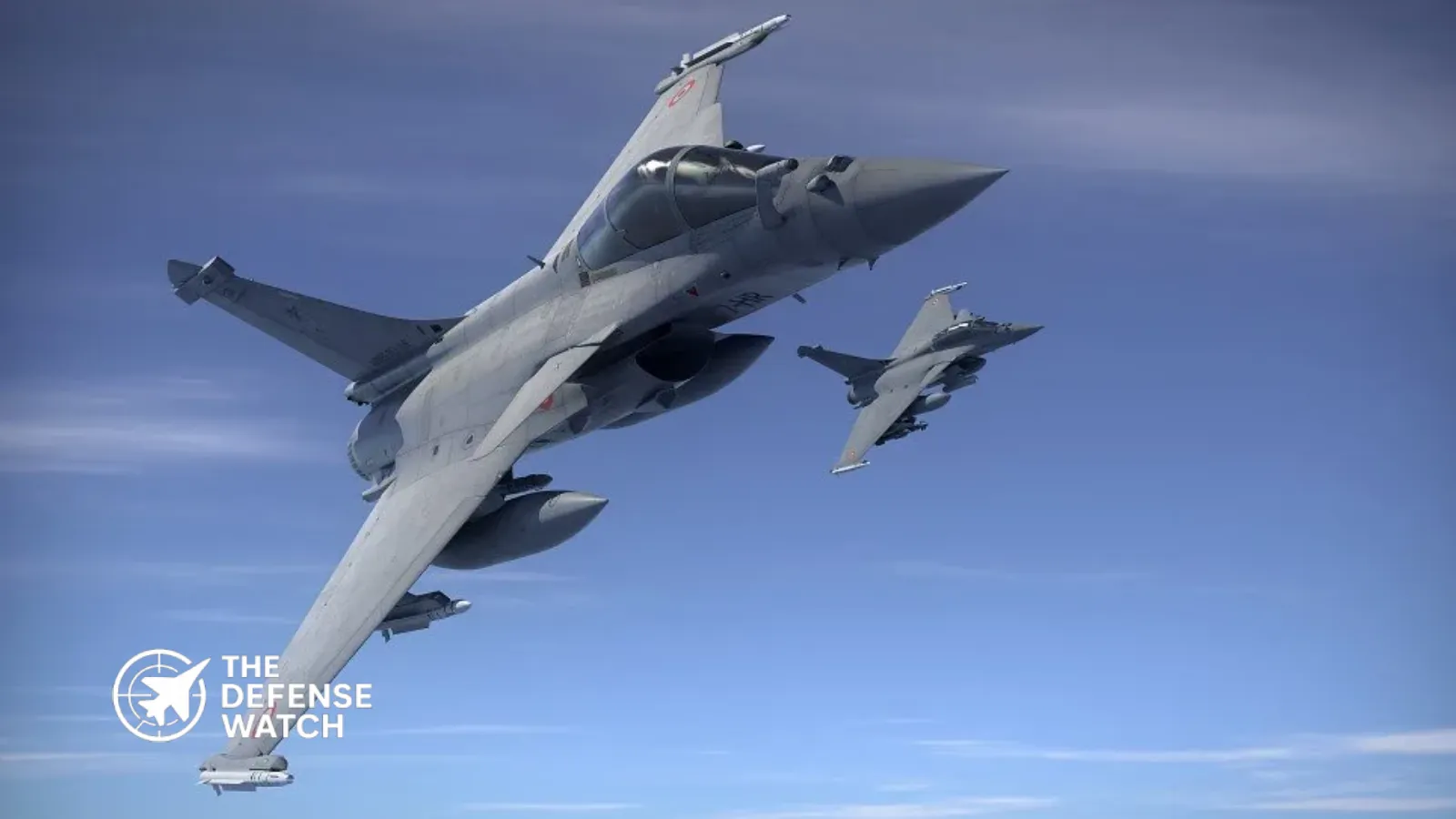
French Air and Space Force units have deployed Dassault Rafale jets to the Baltic region, where they will conduct quick reaction alert duties. These operations involve intercepting and identifying aircraft approaching NATO airspace without filed flight plans or transponder signals.
The Baltic Air Policing mission, launched in 2004, remains a cornerstone of NATO’s collective defense framework, particularly for member states such as Estonia, Latvia, and Lithuania, which lack their own full-scale air defense fighter fleets.
- France has deployed Rafale fighter jets to lead NATO’s Baltic Air Policing mission.
- The deployment is part of NATO’s rotational air defense effort over Estonia, Latvia, and Lithuania.
- Rafale aircraft will operate from a Baltic base to intercept and identify unidentified aircraft near NATO airspace.
- The mission underscores NATO’s response to heightened military activity near its eastern flank.
- France’s leadership role highlights its growing contribution to alliance air defense operations.
Operational Role And Mission Scope
Under the current rotation, French Rafale fighters are tasked with maintaining continuous readiness to respond to airspace violations or unidentified aircraft movements. These missions are coordinated through NATO’s integrated air and missile defense system, ensuring rapid response across allied airspace.
The Rafale’s multirole capability allows it to perform air superiority, interception, and reconnaissance missions within a single platform. Equipped with advanced radar, electronic warfare systems, and beyond-visual-range missiles, the aircraft enhances NATO’s ability to monitor and control contested airspace.
Operationally, Baltic Air Policing sorties often involve shadowing Russian military aircraft operating near NATO borders. While such encounters typically remain professional and non-confrontational, they reflect persistent strategic competition in the region.
Strategic Context And Regional Security Implications
The French Rafale Baltic deployment comes amid sustained tensions between NATO and Russia, particularly following increased military activity along NATO’s eastern flank.
From a strategic standpoint, the deployment serves multiple purposes. First, it reinforces NATO’s deterrence posture by maintaining a visible and credible air defense presence. Second, it distributes operational burden among member states, demonstrating alliance cohesion.
France’s leadership in this rotation also reflects a broader shift toward greater European contributions within NATO. As European nations expand defense spending and operational roles, missions like Baltic Air Policing provide a practical framework for burden sharing.
Capability Impact Of Rafale Deployment
The introduction of Rafale fighters into the Baltic rotation enhances mission capability in several ways. Compared to legacy aircraft often used in earlier rotations, the Rafale offers improved sensor fusion, network-centric warfare integration, and extended operational range.
These features are particularly relevant in the Baltic region, where rapid response times and situational awareness are critical. The ability to integrate with NATO command systems allows Rafale units to operate seamlessly alongside other allied aircraft and ground-based assets.
Moreover, the deployment highlights the flexibility of the Rafale platform, which has seen increasing export success and operational use across multiple theaters. Its performance in NATO missions reinforces its standing as a key European multirole fighter.
Alliance Signaling And Deterrence
Beyond operational duties, the French Rafale Baltic deployment carries significant signaling value. NATO rotations in the Baltic states are closely watched by both allies and adversaries, serving as a barometer of alliance resolve.
By assigning advanced aircraft and experienced crews to the mission, France and NATO send a clear message regarding their commitment to collective defense. This is particularly important in regions where airspace incursions and military probing activities remain frequent.
At the same time, the mission maintains a defensive posture, focused on surveillance and interception rather than escalation. This balance is central to NATO’s strategy of deterrence without provocation.
Outlook For Baltic Air Defense Operations
Looking ahead, Baltic Air Policing is expected to remain a persistent requirement as long as regional security dynamics remain unchanged. Rotational deployments, including the current French Rafale presence, will continue to adapt based on threat assessments and operational needs.
The integration of more advanced aircraft into these rotations suggests a gradual evolution of the mission from basic air policing toward a more robust air defense framework. This shift aligns with NATO’s broader efforts to strengthen its eastern defenses.
- ► British fighter jets have deployed to Romania as part of NATO’s enhanced air policing mission.
- â–º RAF Typhoon aircraft will conduct quick reaction alert duties and joint training operations.
- ► Deployment reinforces NATO’s eastern flank amid continued regional security tensions.
- â–º UK forces will operate alongside Romanian and allied air units to improve interoperability.
- â–º The mission highlights sustained allied commitment to deterrence and collective defense.
British Fighter Jets Deploy To Romania Under NATO Mission
British fighter jets deploying to Romania mark the latest step in NATO’s effort to strengthen air defense along its eastern flank, as regional security concerns remain elevated.
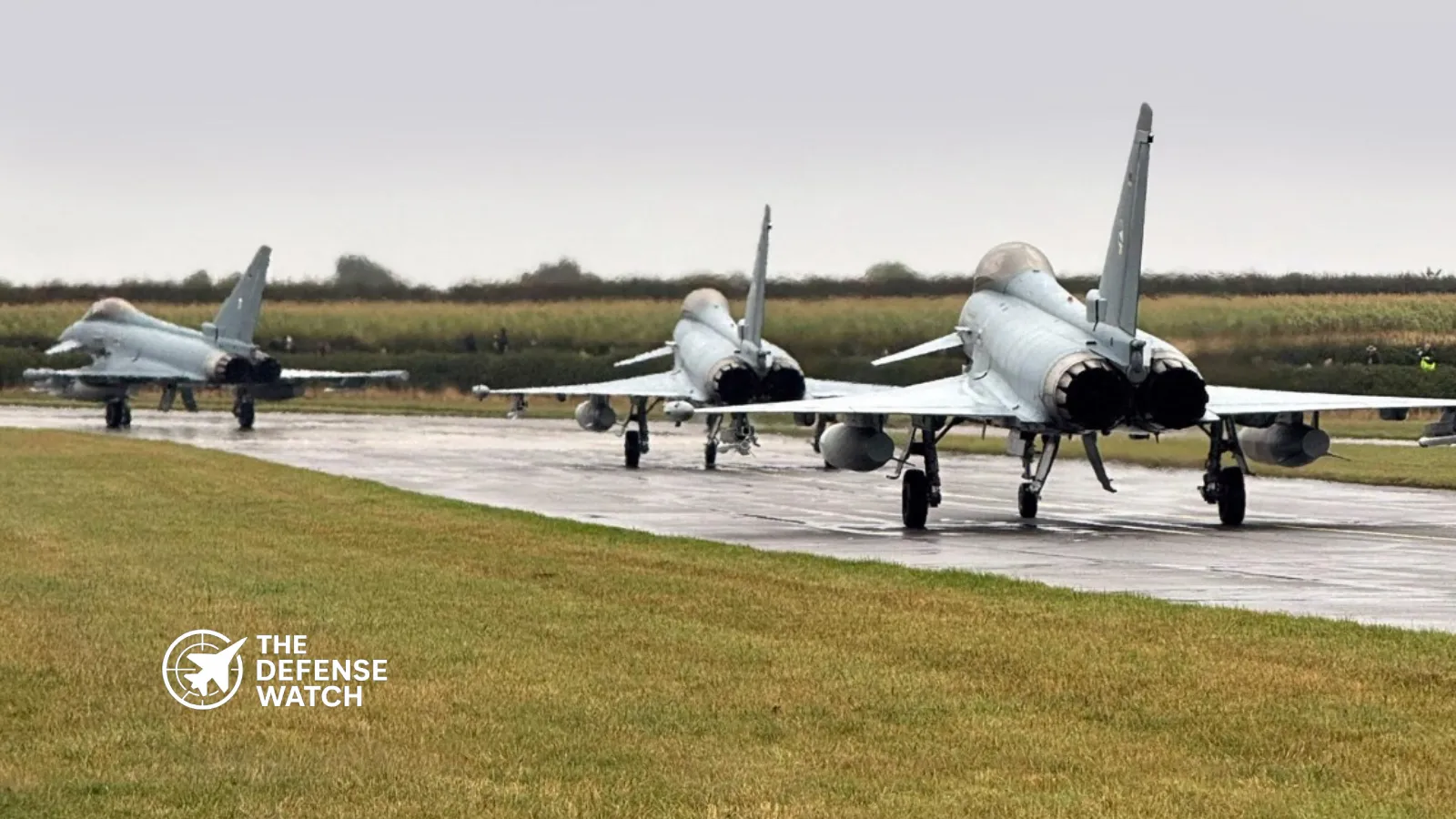
The United Kingdom has deployed Royal Air Force Typhoon fighter aircraft to Romania to support NATO’s enhanced Air Policing mission. The deployment places advanced multi-role fighters closer to the alliance’s southeastern frontier, enabling faster response times and improved situational awareness.
The mission is part of NATO’s long-standing rotational air policing framework, designed to safeguard the airspace of member states and deter potential incursions.
RAF Typhoons Take On Air Policing And Deterrence Role
The deployed aircraft are Eurofighter Typhoon jets operated by the Royal Air Force, one of NATO’s most capable quick reaction alert platforms.
These jets are tasked with intercepting unidentified aircraft, conducting patrols, and maintaining constant readiness. Operating from Romanian airbases, they will integrate with local and allied air defense networks.
Air policing missions typically involve round-the-clock alert status, ensuring aircraft can scramble within minutes if required. This rapid response capability is central to NATO’s deterrence posture, particularly in regions close to contested airspace.
Strategic Importance Of Romania In NATO’s Eastern Flank
Romania has become a critical hub for NATO operations in Eastern Europe. Its geographic position near the Black Sea places it at the intersection of key strategic corridors.
The deployment of British fighter jets to Romania underscores the growing importance of the region in alliance planning. NATO has steadily increased its presence across Eastern Europe since 2014, with air, land, and maritime forces rotating through frontline states.
From a strategic perspective, Romania offers several advantages:
- Proximity to potential flashpoints
- Established NATO infrastructure
- Access to Black Sea operational areas
This makes it a natural location for forward-deployed air assets.
Interoperability And Joint Training With Allies
Beyond air policing, the deployment also supports joint training with Romanian and other NATO forces. These exercises are designed to improve interoperability, a key requirement for multinational operations.
Pilots and ground crews will operate in integrated environments, sharing data, tactics, and procedures. This ensures that forces from different nations can function seamlessly during real-world contingencies.
Such training also enhances readiness across the alliance, reducing response times and improving coordination in complex scenarios.
Analysis: Reinforcing Deterrence Through Forward Presence
The British fighter jets deployment to Romania reflects a broader shift in NATO’s operational posture toward persistent forward presence.
Rather than relying solely on reinforcement from Western Europe, NATO is positioning high-end capabilities closer to potential areas of concern. This approach shortens decision cycles and strengthens deterrence by demonstrating immediate readiness.
From a military standpoint, deploying Typhoon aircraft provides several advantages:
- High-performance air superiority capability
- Advanced radar and sensor integration
- Flexibility for both defensive and offensive roles
At the same time, the rotational nature of these deployments allows NATO to distribute operational burden among member states while maintaining a continuous presence.
The move also signals political commitment. By deploying frontline assets, the UK reinforces its role as a leading contributor to NATO operations and underscores alliance cohesion.
Broader Geopolitical Context
The deployment comes amid ongoing tensions in Eastern Europe and increased military activity in the Black Sea region. NATO has responded by expanding its air policing missions and increasing the frequency of multinational exercises.
British participation in these missions aligns with broader alliance objectives, including deterrence, reassurance of member states, and maintaining stability in contested regions.
While air policing is defensive in nature, its visibility plays a significant role in signaling resolve. Regular patrols and rapid intercept capabilities serve as a clear message of readiness.
Operational Outlook
The British fighter jets in Romania are expected to remain on rotation for a defined period, during which they will conduct patrols, training sorties, and joint exercises.
Future deployments are likely to continue as part of NATO’s rotational model, ensuring sustained coverage of the alliance’s eastern airspace.
As NATO adapts to evolving threats, forward deployments like this are expected to remain a central component of its defense strategy.
Swedish Fighter Jets Intercept Russian Tu-22M Bomber Over Baltic Sea (H2)
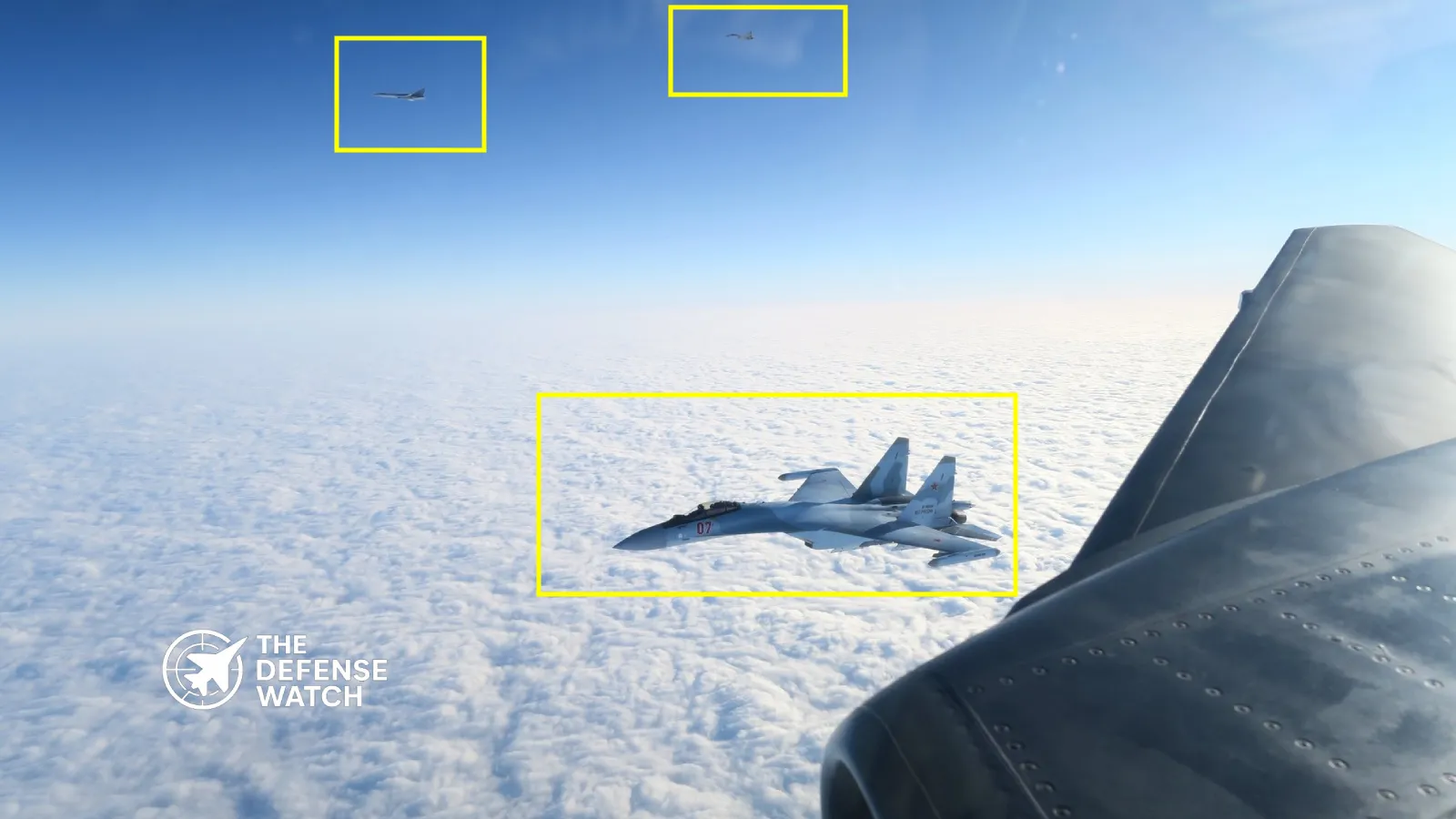
Swedish fighter jets intercepted a Russian Tu-22M long-range bomber escorted by two Su-35S fighters over the Baltic Sea on January 22, 2026, as part of routine NATO air policing operations. This encounter happened in international airspace and did not include any reported violation of sovereign territory, according to official reports from the Swedish Armed Forces.
Intercept Details
Radar networks detected the formation approaching the Swedish maritime identification zone, prompting Sweden’s Quick Reaction Alert (QRA) fighters to launch. Saab JAS 39 Gripen aircraft were scrambled to visually identify and shadow the Russian flight, which consisted of a Tu-22M bomber flanked by two Sukhoi Su-35S fighters.
Swedish authorities stated the mission was carried out in close coordination with NATO’s Baltic Air Policing units. The Russian aircraft remained in international airspace throughout the operation and did not enter Swedish or NATO airspace.
Strategic Context
Russian long-range aviation flights over the Baltic Sea have triggered frequent air policing responses from Sweden and other NATO members. These missions serve to monitor activity near alliance airspace and allow QRA forces to identify and record aircraft movements.
The Tu-22M series of bombers can carry long-range cruise missiles and form a core part of Russia’s long-range strike capability. Escorting fighters like the Su-35S add air-superiority protection and extend sensor coverage for the bomber formation.
NATO Air Policing and Regional Activity
Since Sweden joined NATO in 2024 it has increased its participation in alliance air policing missions. Swedish Gripen fighters have been deployed alongside other NATO QRA forces to maintain continuous surveillance of the Baltic air domain.
Past intercepts have involved a range of Russian aircraft including reconnaissance platforms and long-range bombers, with NATO aircraft visually identifying and shadowing these flights to ensure safety and adherence to international norms.
Operational Purpose
Intercept missions like this one are defensive in nature. They provide visual identification of aircraft approaching monitored airspace and help confirm that flights comply with international rules for the use of airspace. Swedish and NATO air forces use these operations to gather data, maintain readiness, and uphold collective defense commitments in the region.
Sweden Leads NATO Icelandic Air Policing Mission for First Time
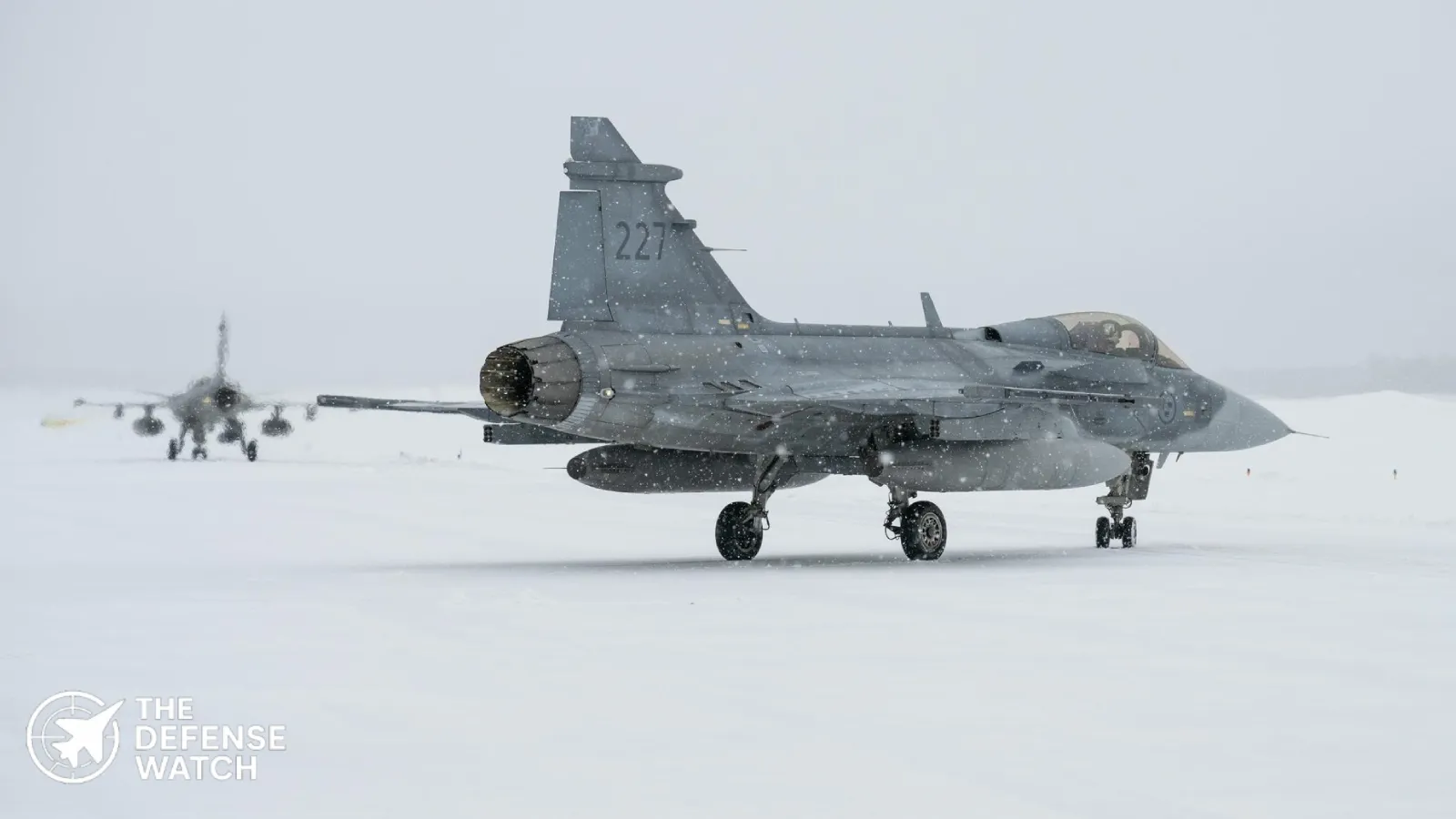
Sweden will lead the NATO Icelandic Air Policing mission for the first time since joining the alliance, marking a major milestone in Stockholm’s integration into NATO’s collective defense structure. Beginning in February, the Swedish Air Force will deploy JAS 39 Gripen fighter aircraft to Iceland, operating from Keflavik Air Base to support peacetime air surveillance and safeguard NATO airspace.
The deployment places Sweden in a leadership role within one of NATO’s long standing air defense missions and highlights the growing operational integration of Nordic air forces inside the alliance framework.
What the Icelandic Air Policing Mission Involves
Iceland does not maintain a standing air force, relying instead on NATO allies to conduct air policing missions from Keflavik Air Base. These rotations ensure continuous monitoring of Icelandic airspace and rapid response capability in the North Atlantic region.
Under the NATO Icelandic Air Policing mission, participating nations deploy fighter aircraft, aircrew, and support personnel for limited periods. The mission focuses on air surveillance, identification of unknown aircraft, and readiness to respond to potential airspace violations, all conducted during peacetime under NATO command and control arrangements.
Sweden’s assumption of mission leadership means it will be responsible not only for flying sorties but also for coordinating daily operations, planning activities, and working closely with NATO’s Combined Air Operations Centre.
Gripen Deployment to Keflavik Air Base
The Swedish Air Force will deploy Gripen multirole fighters, along with pilots, maintenance crews, and command staff. The Gripen is designed for dispersed operations, high sortie rates, and interoperability with NATO systems, making it well suited for air policing tasks in challenging environments.
Operating from Keflavik Air Base, the Swedish detachment will integrate with NATO air command structures, use alliance standard procedures, and coordinate with other allied forces operating in the North Atlantic. The deployment also allows Sweden to demonstrate its ability to sustain expeditionary air operations alongside NATO partners.
Strategic Importance for NATO and the Nordic Region
Sweden leading the NATO Icelandic Air Policing mission carries strategic weight beyond the immediate task of air surveillance. It signals a shift in the security architecture of Northern Europe, where Nordic countries are taking on more prominent roles in alliance operations.
The North Atlantic and Arctic adjacent regions have gained increased attention due to rising military activity, long range aviation operations, and strategic competition. Iceland’s geographic position makes it a key node for monitoring air traffic between North America and Europe.
By leading this mission, Sweden contributes directly to NATO’s deterrence posture while gaining operational experience in alliance led missions. It also strengthens cooperation with Iceland, Norway, Denmark, and other NATO air forces active in the region.
Sweden’s Growing Role Inside NATO
Since joining NATO, Sweden has moved quickly to align its forces with alliance standards and operational concepts. Participation in air policing missions is a visible and practical way to contribute to collective defense while building trust and familiarity with NATO command structures.
Taking command of the Icelandic Air Policing mission represents a step beyond participation. It reflects confidence from NATO allies in Sweden’s planning, leadership, and operational capabilities.
For the Swedish Air Force, the mission provides real world experience in leading multinational operations, managing logistics abroad, and operating under NATO rules of engagement and reporting chains.
Implications for Air Defense and Interoperability
The mission also reinforces interoperability between the Gripen and NATO systems, including command and control networks, identification procedures, and secure communications. These elements are essential for effective collective air defense.
From a modernization perspective, the deployment demonstrates how non US fighter platforms can integrate seamlessly into NATO air operations, contributing to burden sharing and operational diversity within the alliance.
Looking Ahead
Sweden’s leadership of the NATO Icelandic Air Policing mission is expected to conclude after the scheduled rotation, but its impact will extend well beyond the deployment period. The experience gained will inform future Swedish contributions to NATO air operations and strengthen the alliance’s overall air defense posture in the North Atlantic.
As NATO continues to adapt to evolving security challenges, Sweden’s role in Iceland underscores the alliance’s emphasis on shared responsibility, regional expertise, and credible peacetime defense operations.
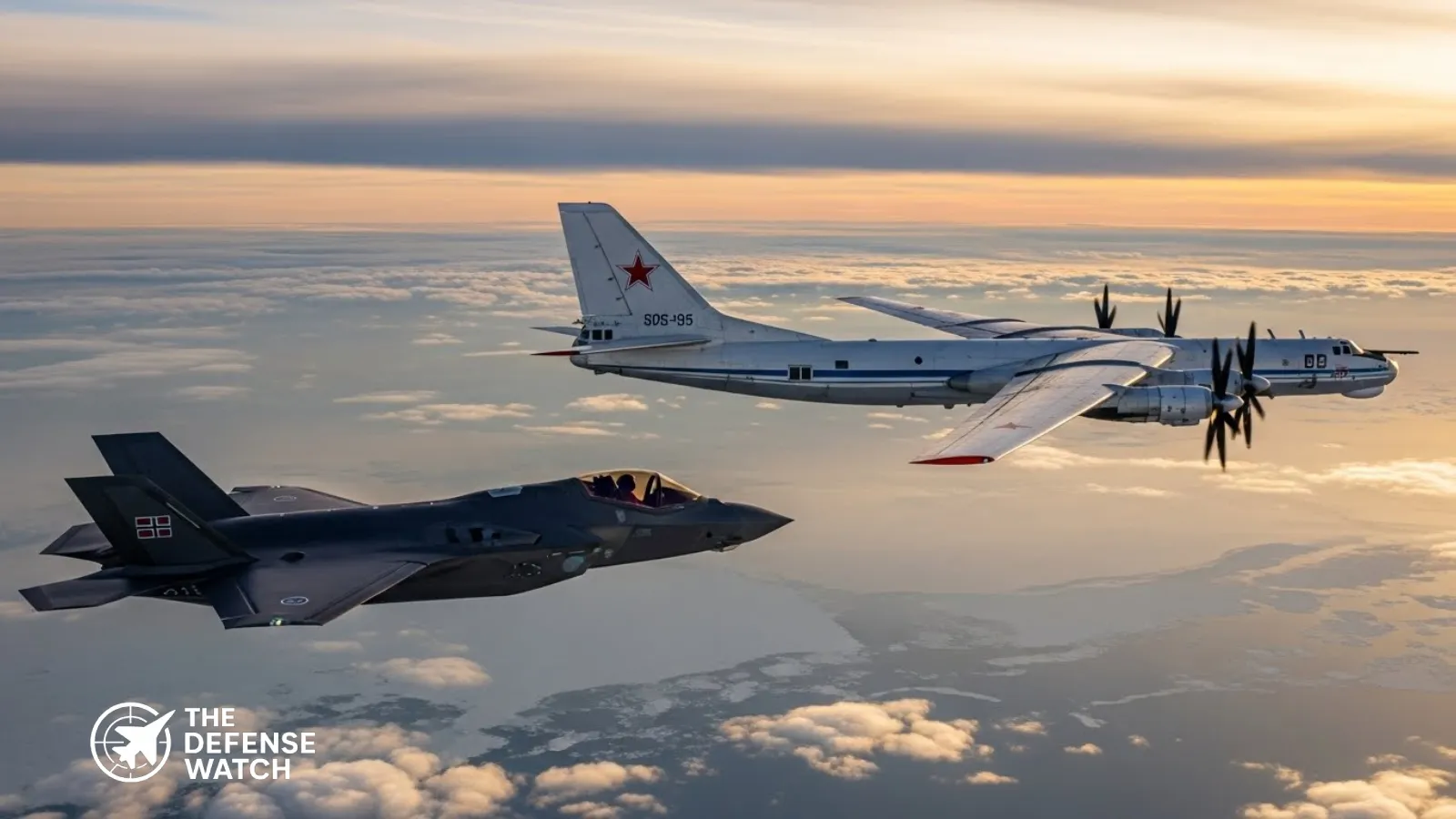
NATO scrambled fighter jets on Christmas Day after Russian Tu-95 strategic bombers conducted a long range patrol near Norway, underscoring continued Russian military activity close to alliance airspace during the war in Ukraine.
Russia’s Ministry of Defense said two Tu-95MS nuclear capable bombers carried out a seven hour flight over the Norwegian and Barents Seas. NATO officials confirmed that allied aircraft were launched to monitor and escort the Russian planes while they flew near NATO controlled airspace. No violations of sovereign airspace were reported.
The incident occurred during a period when Russian long range aviation activity has increasingly drawn NATO responses, particularly in the Arctic and North Atlantic regions.
Background: Rising Arctic Air Activity
The Arctic has become a more active military theater since Russia’s invasion of Ukraine in 2022. Long range bomber patrols by Russia, often involving Tu-95 or Tu-160 aircraft, have resumed with greater frequency along NATO’s northern flank.
Norway occupies a key strategic position in this region. It shares a land border with Russia and hosts NATO radar, surveillance, and air policing assets that monitor activity over the Norwegian Sea, Barents Sea, and Arctic approaches.
NATO routinely scrambles aircraft when unidentified or non communicating military planes approach alliance airspace. These intercepts are standard practice and are designed to identify aircraft, ensure flight safety, and signal presence rather than escalate tensions.
Details of the Russian Bomber Mission
According to Russia’s Defense Ministry, the Tu-95 bombers flew with support aircraft and followed a planned route over international waters. Russian officials stated that all flights complied with international aviation rules and that crews practiced long range mission tasks.
The Tu-95MS, known by NATO as Bear H, is a Cold War era bomber that remains a core part of Russia’s strategic aviation force. Despite its age, the aircraft has been modernized to carry cruise missiles, including the Kh-101 and Kh-102, which have been used in strikes against Ukraine.
NATO did not disclose which member states launched fighter jets, but Norway typically conducts such intercepts using F-35A stealth fighters based at Evenes Air Station. Allied aircraft from the United Kingdom or the United States also regularly support Arctic air policing missions.
NATO Response and Air Policing Role
NATO officials emphasized that the response was routine and defensive. Air policing missions are a permanent part of NATO’s collective defense posture, especially in regions bordering Russia.
These missions involve quick reaction alert aircraft that can be airborne within minutes of a potential airspace approach. Intercepts are closely coordinated through NATO’s integrated air and missile defense network.
While such encounters are usually professional, NATO has expressed concern in the past about Russian aircraft flying without transponders or failing to communicate with civilian air traffic control, increasing the risk of accidents.
Why the Tu-95 Still Matters
Although first introduced in the 1950s, the Tu-95 remains relevant due to its long range and missile carrying capability. The aircraft can fly thousands of miles and launch cruise missiles without entering defended airspace.
During the Ukraine war, Tu-95 bombers have been used to launch missile attacks from Russian airspace, reducing their exposure to air defenses. This role has renewed attention on the platform and its strategic value.
Flights near NATO airspace also serve a signaling function. They allow Russia to demonstrate readiness, test NATO response times, and maintain pilot proficiency in long duration missions.
Expert and Policy Perspective
Defense analysts say these patrols are part of a broader pattern of military messaging rather than preparation for direct conflict.
Arctic security experts note that Russia views the High North as vital for nuclear deterrence, submarine operations, and access to the North Atlantic. Maintaining an air presence supports these goals and reinforces Moscow’s claim to regional influence.
For NATO, consistent intercepts help reassure member states and demonstrate alliance unity. Norway has invested heavily in surveillance systems, new aircraft, and cooperation with allies to monitor Russian activity in the region.
The incident also highlights how the Ukraine war has extended its impact far beyond Eastern Europe, increasing military friction in air and maritime domains across the alliance perimeter.
What to Watch Next
NATO officials expect Russian long range aviation activity to continue into 2026, particularly around symbolic dates and major exercises. Future flights may coincide with naval deployments or missile drills in the Arctic.
At the same time, NATO members are expanding Arctic readiness through joint exercises, infrastructure upgrades, and improved command and control systems.
While these intercepts remain routine, they reflect a security environment where vigilance has become a constant requirement.
Closing Assessment
The Christmas Day Tu-95 flight near Norway and NATO’s rapid response underline the persistent strain in NATO Russia relations. As the war in Ukraine continues, the Arctic and North Atlantic are likely to remain active zones of military signaling and monitoring rather than calm peripheries.