Raytheon JPALS Upgrade Strengthens Navy Precision Landing Capability
Raytheon’s $206 million JPALS contract marks another significant step in the U.S. Navy’s push to modernize navigation resilience across carrier and expeditionary aviation fleets. The award covers design, engineering, integration, testing, and verification of M-Code Global Positioning System capability for the AN/USN-3(V)1 Joint Precision Approach and Landing System (JPALS).
The contract was awarded by the Naval Air Systems Command in Patuxent River, Maryland, and was issued on a sole-source basis.
- Raytheon received a $206.2 million U.S. Navy contract for JPALS modernization.
- The upgrade adds secure M-Code GPS capability to the AN/USN-3(V)1 Joint Precision Approach and Landing System.
- Four engineering development models will be produced for the Navy.
- Work will take place in Fullerton, California, and Cedar Rapids, Iowa.
- Program completion is scheduled for April 2030.
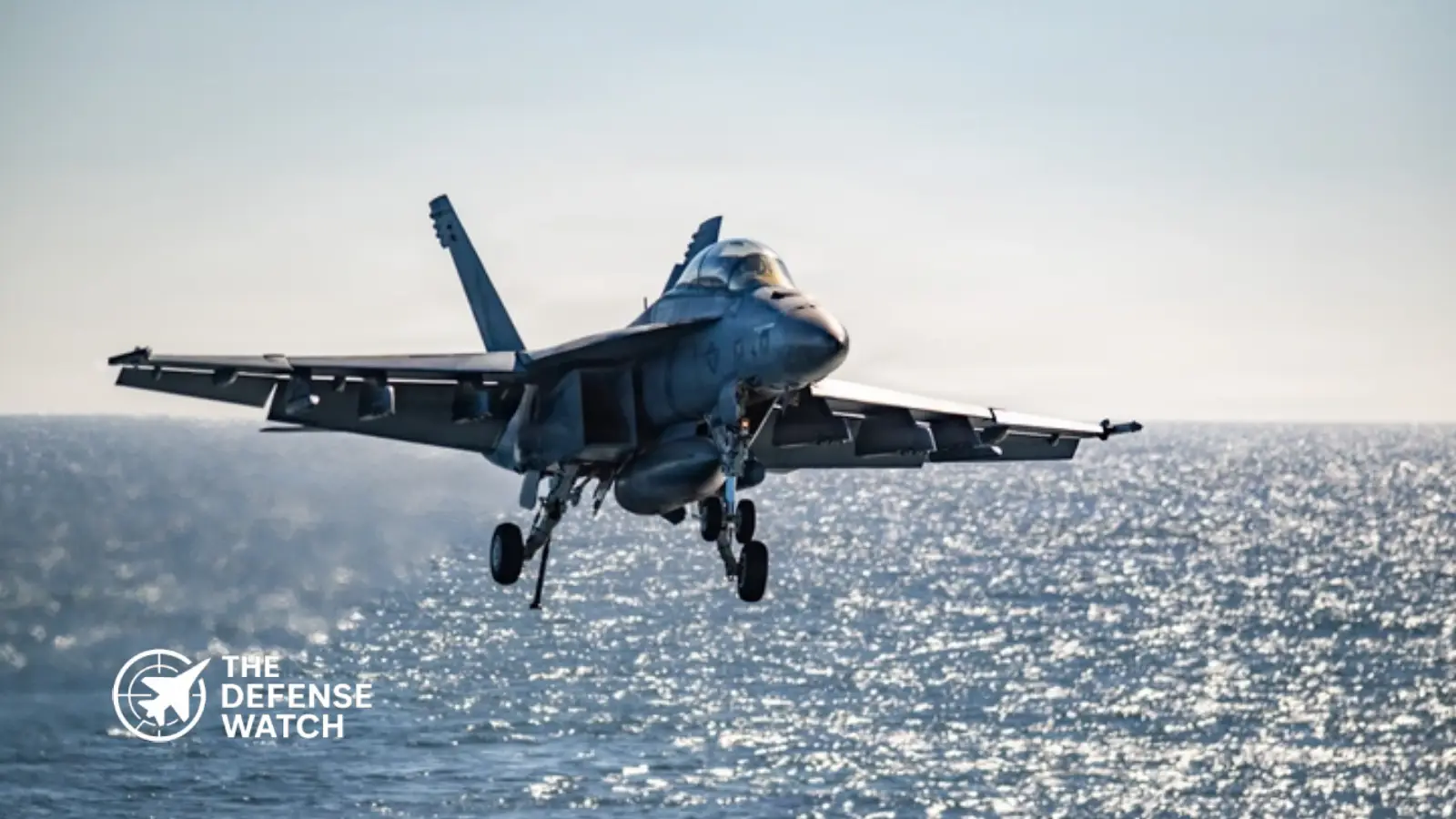
JPALS is a critical precision landing aid used to guide aircraft safely onto aircraft carriers and other challenging operating environments. It provides accurate positioning and approach data in poor weather, low visibility, or high-tempo operations where conventional landing methods may be less effective.
Why M-Code Matters For Navy Operations
The most important element of this contract is the integration of M-Code GPS, the U.S. military’s encrypted and jam-resistant GPS signal. M-Code is designed to improve resistance against spoofing, signal interference, and electronic warfare attacks.
That matters because modern military operations increasingly assume contested electromagnetic environments. Potential adversaries have invested heavily in jamming and GPS disruption tools. A landing system that depends on vulnerable navigation signals creates operational risk, especially for carrier aviation.
By adding M-Code capability, the Navy is working to ensure JPALS remains functional during high-end conflict scenarios where navigation denial could be routine.
This is more than a software refresh. It is a survivability upgrade.
What The Contract Includes
Under the agreement, Raytheon will provide:
- Design and systems engineering work
- Integration of M-Code GPS into JPALS
- Testing and validation
- Four engineering development models for the Navy
- Support through final completion in April 2030
Initial funding totals $11.5 million from Fiscal Year 2026 Navy research, development, test and evaluation accounts.
The multi-year timeline suggests the Navy is prioritizing thorough developmental testing before broader fielding.
Where The Work Will Be Done
Program workshare is split between two established U.S. defense industrial locations:
- Fullerton, California (60 percent)
- Cedar Rapids, Iowa (40 percent)
This distribution reflects the specialized electronics, avionics, and integration expertise required for secure navigation systems.
Strategic Analysis: Carrier Air Wings Need Assured Navigation
Aviation operations at sea demand extreme precision. Carrier landings already rank among the most difficult maneuvers in military aviation. If GPS signals are degraded during combat, the challenge grows sharply.
That makes the Raytheon JPALS contract strategically relevant beyond its dollar value. It supports the Navy’s broader transition toward systems that can operate under cyber pressure, electronic attack, and degraded space support.
The Navy is not simply buying hardware. It is reducing a future vulnerability.
As U.S. planners focus on Indo-Pacific contingencies and peer-level threats, resilient navigation and recovery systems for carrier aircraft become increasingly important.
Industrial Impact
For Raytheon, the award reinforces its role in military avionics, precision systems, and secure navigation technologies. The company remains a major supplier across missile defense, sensors, radar, and naval aviation support systems.
Defense contracts tied to PNT (positioning, navigation, and timing) resilience are expected to remain a priority area as the Pentagon modernizes legacy GPS-dependent platforms.
Outlook
If development milestones stay on schedule, the Navy could field upgraded JPALS capabilities later this decade. That would give carrier and expeditionary aviation units a more secure landing architecture suited for contested operations.
In practical terms, secure landing systems may receive less public attention than fighters or missiles, but they are essential to keeping combat aircraft effective at sea.