

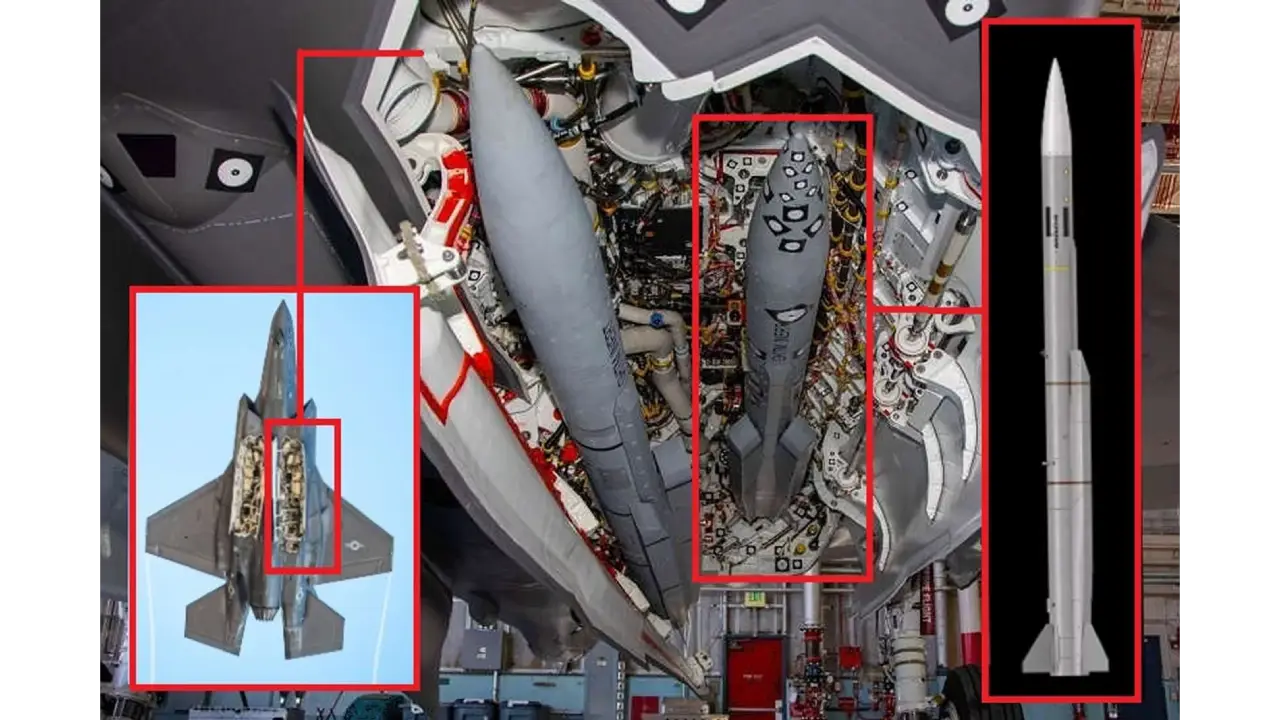
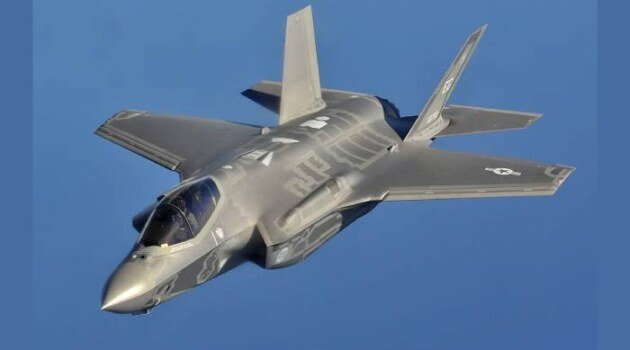
Officials from MBDA, Lockheed Martin and the F-35 Joint Program Office announced that the fifth-generation stealth fighter F-35A Lightning II has successfully passed a key series of ground-based integration tests with the long-range air-to-air missile MBDA Meteor. The trials were conducted at Edwards Air Force Base, California. The ground vibration testing and fit checks confirmed that Meteor can be securely carried and released from the F-35A’s internal weapons bay — preserving the aircraft’s stealth profile.
This achievement brings the F-35A and Meteor pairing a step closer to actual flight testing — with only one ground test remaining before airborne evaluations begin.
Why It Matters: Context for F-35 and Meteor
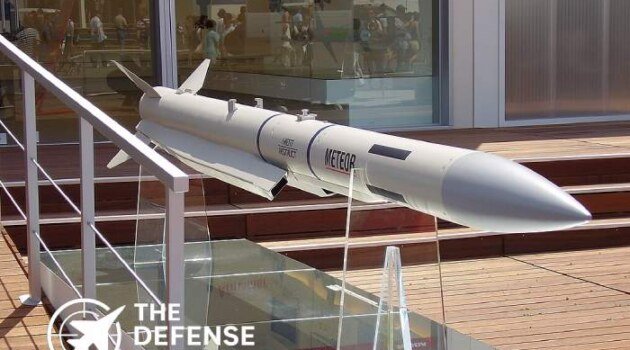
The MBDA Meteor missile is a ramjet-propelled beyond-visual-range air-to-air missile (BVRAAM) developed by a six-nation European consortium. It provides extended range, high endgame kinematics, and a “no-escape zone” that significantly improves interception probabilities compared with traditional boost-glide missiles.
Meteor is already operational on multiple European fighters (e.g., Eurofighter Typhoon, Saab Gripen, Dassault Rafale), and integrating it on F-35 significantly enhances the jet’s long-range air combat capability.
Earlier this year — on 28 February 2025 — a short-takeoff/vertical-landing (STOVL) variant, F-35B Lightning II, conducted the first test flights carrying an inert Meteor missile, flown by the U.S. Marine Corps out of Naval Air Station Patuxent River in Maryland. That exercise helped collect environmental and fit data as part of the broader effort to integrate the missile across F-35 variants.
For F-35A — a conventional takeoff and landing variant — integration has been sponsored by Italy, while the UK leads the F-35B campaign.
What the Ground Tests Showed
- Structural fit and clearance: Engineers verified that the Meteor missile can be safely housed within the F-35A’s internal weapons bay, ensuring no compromise to stealth features during carriage.
- Vibration and mechanical integrity: Through ground vibration testing, the structural and mechanical response of the missile-aircraft combination under various stress conditions was validated — a prerequisite for safe carriage and release under operational flight loads.
- Release mechanism verified: Fit checks confirmed that the missile launch rails, ejection clearance, and geometry are compatible with internal carriage and expected launch envelope.
According to the joint statement from MBDA and Lockheed Martin, only one more ground test remains before certification to begin flight trials with the Meteor on F-35A.
Meteor’s Capabilities: Why It’s Significant
Meteor’s ramjet propulsion allows the missile to maintain thrust throughout its flight — rather than relying solely on a quick boost phase followed by an unpowered glide (as with many traditional missiles). This ensures high speed, sustained energy, and superior maneuverability until intercept.
The missile uses inertial midcourse navigation updated via two-way data link, combined with an active radar seeker for terminal guidance. Dual fusing — proximity and impact — enhances lethality against manoeuvring aerial targets.
With these features, Meteor provides a “large no-escape zone,” making it far more difficult for potential adversaries to evade — a capability that aligns with modern air-to-air combat requirements of fifth-generation fighters.
What This Means for Operators: Strategic and Operational Impact
- Extended reach and lethality: Once operational, F-35As equipped with Meteor will gain a long-range BVR capability — enabling them to engage threats at greater standoff distances while leveraging their stealth to avoid detection.
- Interoperability between allies: With both UK (F-35B) and Italy (F-35A) spearheading integration, allied air forces operating F-35 may standardize on the Meteor missile, simplifying logistics and shared operations.
- Modernizing air force arsenals: For nations using European air-to-air munitions, integrating Meteor onto a widely fielded platform like F-35 enhances deterrence and parity against high-end threats.
What Comes Next: Flight Testing and Future Timeline
With ground integration tests now complete — save for one final ground test — the next phase is to begin flight tests of the Meteor missile on F-35A. These trials will validate safe separation, aerodynamics, release dynamics, and system performance under real-world flight conditions.
If successful, operational deployment could follow — allowing air forces operating F-35A to add Meteor as part of their combat loadout. The exact timeline remains unspecified.

12 comments
[…] deadline for a demonstrator aircraft was originally set for 2027, with operational capability expected around 2040, but repeated delays have pushed back timelines and raised questions about […]
[…] test campaign will include both ground and flight operations. Data collected will support a planned production decision later in 2026 on retrofitting the radar […]
[…] SM 2 autopilot test station effort will be carried out across several U.S. locations. Tucson, Arizona, will host the majority of the work at 69 […]
[…] ULTRA drone is built to carry payloads of up to 100 kg while operating from short and austere runways. Its twin engine configuration and conventional airframe allow it to […]
[…] development coincides with unprecedented Chinese fishing militia operations demonstrating coordinated naval blockade capabilities near Taiwan, signaling Beijing’s evolving maritime control […]
[…] remarks captured by the interview video, TUSAŞ leadership confirmed ongoing ground testing and preparation for flight activity. Local industry media circulation around the video suggests a […]
[…] the taxi runs, the MQ‑25A will continue ground tests and prepare for its first flight attempt once certification criteria are met. Navy and Boeing […]
[…] for Defense Development and other local partners. Development began in the mid 2010s, with early ground testing followed by flight trials starting in recent […]
[…] The Project Ranger campus is being developed as a fully integrated hypersonic research and production site. According to details released by Castelion, the facility will support the full lifecycle of hypersonic weapon development, from early design and rapid prototyping to ground testing and flight operations. […]
[…] As the Army moves through LRIP deliveries and operational testing, the focus will be on data collection, performance validation and preparing units for fielding. Industry and service officials aim for a full-rate production decision later this year as part of the radar’s transition from test units to operational capability. […]
[…] of enemy vessels operating near […]
[…] contract, valued at $98,871,411, provides sustaining engineering services to maintain operational capability of fielded avionics intermediate shop automatic test equipment. The award was issued on Feb. 20, […]