


What Is Happening: Russia’s S-500 Threat to U.S. Stealth Jets
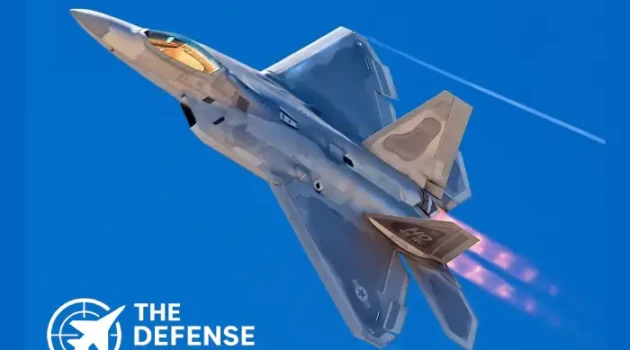
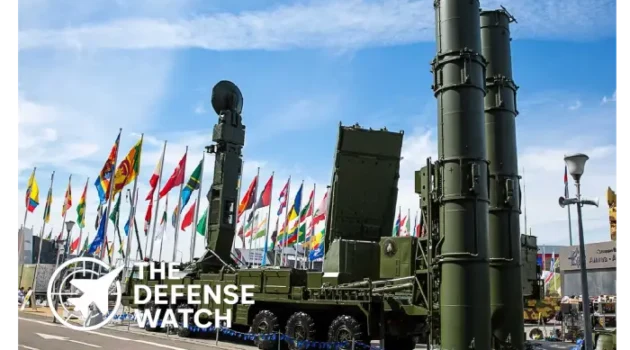
Russia is promoting its S-500 “Prometheus” air-defense system as capable of targeting U.S. fifth-generation stealth aircraft like the F-22 Raptor and F-35 Lightning II, according to multiple Russian defense sources and open-source defense reporting.
Authorities claim the S-500 can engage targets at ranges up to 600 km and altitudes up to 200 km, putting it in a new class of “hybrid” air-and-space defense.
Background: Why the S-500 Matters
The S-500, developed by Almaz-Antey, is viewed by Russian officials as a key pillar in their next-generation layered air defense architecture — sitting above systems like the S-400 and alongside emerging systems such as the A-235 ABM.
Moscow contends that the S-500 bridges tactical air defense and strategic missile defense: it’s designed to counter not just aircraft, but hypersonic missiles, ballistic warheads, and even low Earth orbit satellites.
Its radar suite is a multi-band architecture, which Moscow argues gives S-500 the ability to detect and track very low-observable stealth targets.
Key Features & Claimed Capabilities
Radar and Tracking Systems
- The S-500 reportedly uses a combination of 91N6A(M) S-band, 96L6-TsP C-band, 76T6 multimode, and 77T6 ABM engagement radars.
- These radars operate in multiple frequency bands (L-, S-, and X-band), which proponents say helps in detecting stealth aircraft optimized to evade narrower-band radars.
- According to some reports, these radars can detect ballistic targets up to 2,000 km away, and aerodynamic (aircraft) threats up to 800 km.
Interceptors and Engagement
- For air defense roles, the S-500 is said to employ 40N6M long-range interceptor missiles.
- For ballistic or hypersonic threats, it reportedly uses kinetic 77N6-N and 77N6-N1 missiles, capable of “hit-to-kill” interception.
- Russia claims it can engage up to 10 targets simultaneously, with a very fast reaction time (~3–4 seconds).
- The engagement ceiling is claimed to be around 200 km, which would allow the system to intercept threats in near-space.
Mobility & Deployment
- The S-500 is mobile — its radar and launch units are mounted on wheeled chassis, allowing redeployment.
- It is reportedly being integrated into Russia’s existing air defense mix, working alongside S-400, S-350, and Pantsir systems.
- According to some Russian analysts, S-500 units have been deployed to strategically critical locations, including Crimea.
Expert Analysis & Policy Implications
Technical Credibility & Challenges
- While Moscow’s claims are ambitious, independent verification of the S-500’s full performance (especially against stealth aircraft) remains limited.
- Analysts note that detecting stealth is one challenge; achieving a fire-control solution and intercepting such targets is a separate, technically difficult step.
- Hypersonic and ballistic intercept capabilities are central to the system’s appeal. The 77N6 series missiles, if they perform as claimed, would represent a significant leap in Russia’s ability to engage high-speed warheads.
- Some analysts are cautious: while the system may be theoretically capable, operational readiness, production scale, and real-world performance remain open questions.
Strategic Impact & Geopolitical Considerations
- If the S-500 genuinely threatens F-22 and F-35 aircraft, it could complicate NATO planning, particularly for operations near or within range of deployed S-500 units.
- The claimed anti-satellite (ASAT) capability adds a space dimension to Russia’s air defense posture, raising concerns about the securitization of low Earth orbit, especially for ISR and comms satellites.
- For countries that consider buying advanced Russian air defenses (e.g., India), the S-500 could be a force multiplier — but its “game-changing” status depends on whether its high-end claims hold in practice.
- From a policy perspective, even if S-500’s full potential is not yet realized, its perception as a “stealth killer” could be leveraged for deterrence and strategic signaling.
What to Watch Next
- Deployment Scale: How many S-500 regiments Russia will operationalize, and where.
- Export Prospects: Which countries may acquire S-500 and what conditions would apply.
- Operational Tests: Any publicized live-fire tests targeting stealth or hypersonic targets.
- Countermeasures: How NATO and U.S. defense planners adapt to the S-500 threat, possibly via tactics, electronic warfare, or new platforms.
Conclusion
Russia’s S-500 “Prometheus” system represents a bold claim in modern air defense: long-range engagement, multispectral radar, and the ability to threaten fifth-generation stealth fighters like the F-22 and F-35. While many of these claims come from Moscow or Russian-aligned defense outlets, the system’s development underscores how air defense is evolving — merging anti-aircraft, ABM, and space-defense roles. Whether the S-500 fulfills its promised “stealth killer” reputation will depend on further testing, deployment, and real-world performance.

1 comment
[…] and targeting command-and-control platforms. While independent verification remains limited, the claim has drawn attention due to the aircraft’s reported association with directed-energy research […]