

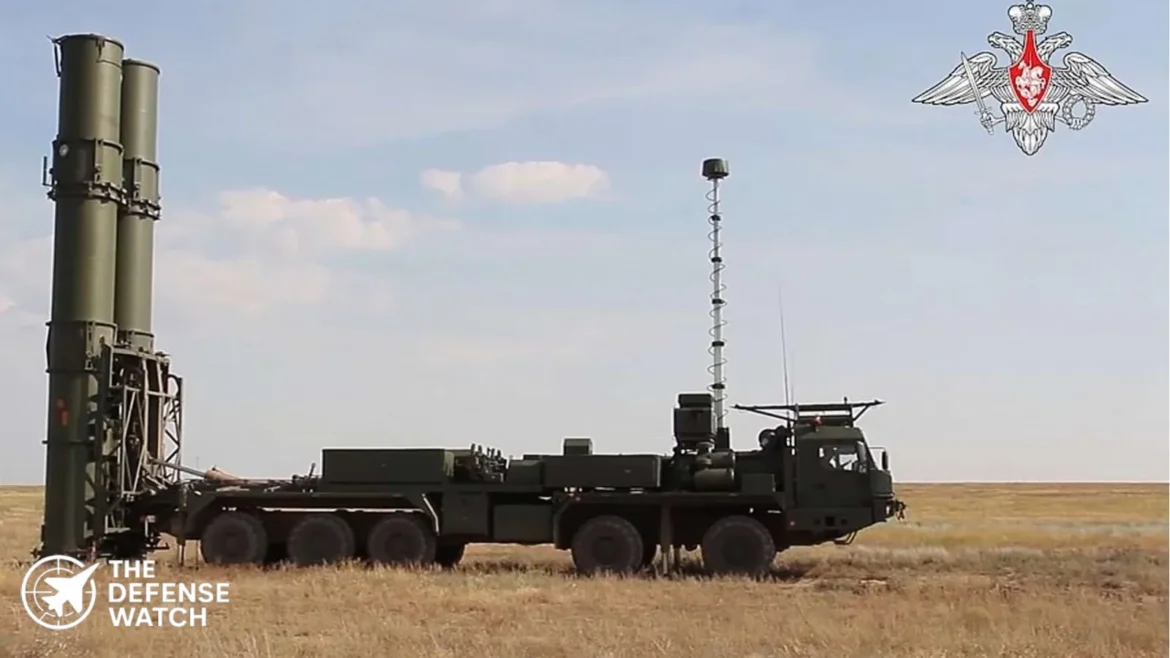
Russia Confirms First Combat Deployment of S-500 System
Russia has officially placed its S-500 missile defense system on combat duty for the first time, marking a significant milestone in the country’s long running effort to modernize its strategic air and missile defense network. The announcement confirms that the next generation system, known as S-500 Prometey, is no longer limited to testing and training roles and has entered operational service.
The deployment was confirmed by Russian defense industry and military sources in early 2025, signaling that at least one S-500 unit has reached full readiness status. While Moscow did not disclose the exact deployment location, previous statements suggest that the system is intended to protect critical strategic regions, including areas surrounding Moscow and key military infrastructure.
The move represents a major step in Russia’s layered air and missile defense strategy and places the Russia S-500 missile defense system among the most advanced operational platforms of its kind.
What Is the S-500 Missile Defense System
The S-500 Prometey is designed to counter a wide range of aerial threats, including ballistic missiles, hypersonic glide vehicles, cruise missiles, advanced aircraft, and low orbit satellites. Unlike earlier systems, it is intended to operate beyond traditional air defense roles, bridging the gap between air defense and strategic missile defense.
Russian officials have stated that the S-500 can intercept targets at ranges exceeding 500 kilometers and at altitudes reaching near space. This capability allows it to engage intermediate range ballistic missiles and emerging hypersonic threats, which have become a central concern for major military powers.
The Russia S-500 missile defense system is expected to complement existing platforms such as the S-400 and the legacy A-135 and A-235 missile defense systems, forming a multi layered shield over key regions.
From Testing to Combat Duty
Development of the S-500 began more than a decade ago, with initial testing phases accelerating in the late 2010s. Russian defense officials previously confirmed successful test launches against ballistic and aerodynamic targets, including high speed objects simulating hypersonic weapons.
Until now, however, the system had not been formally declared operational. The announcement of combat duty status indicates that the system has met military requirements for reliability, command integration, and sustained readiness.
According to Russian sources, the first deployed unit includes advanced radar arrays, command vehicles, and interceptor launchers capable of operating independently or as part of a wider integrated defense network.
Strategic Role in Russia’s Defense Doctrine
The deployment aligns with Russia’s emphasis on strategic deterrence and homeland defense. Moscow has consistently highlighted missile defense as a critical element of national security, particularly amid rising tensions with NATO and continued development of long range precision strike systems by the United States and its allies.
The Russia S-500 missile defense system is expected to play a central role in defending against both conventional and nuclear threats, especially during the early phases of a potential conflict. Its ability to engage targets in near space also reinforces Russia’s interest in countering space based surveillance and strike assets.
Military analysts note that while the system does not replace existing air defense platforms, it significantly expands engagement envelopes and reaction times.
Integration With Existing Air Defense Systems
Russian air defense doctrine relies heavily on layered coverage. The S-500 is designed to work alongside the S-400 and S-300 families, with each system covering different ranges and target types.
Lower altitude threats such as cruise missiles and unmanned aerial vehicles remain the responsibility of shorter range systems, while the S-500 focuses on high altitude, high speed targets. This layered approach increases survivability and complicates enemy strike planning.
The integration of the Russia S-500 missile defense system into this structure suggests that Russia is preparing for increasingly complex aerial threat environments.
International Attention and Strategic Implications
The operational deployment of the S-500 has drawn close attention from Western defense analysts and policymakers. The system’s claimed capabilities, particularly against hypersonic weapons and ballistic missiles, directly intersect with ongoing debates over missile defense effectiveness and strategic stability.
While independent verification of performance claims remains limited, the system’s entry into combat duty indicates confidence within Russia’s defense establishment. Analysts caution, however, that initial deployment does not necessarily imply large scale fielding in the near term.
Production capacity, cost, and training requirements are likely to limit the number of S-500 units available in the short term, making early deployments highly selective.
What Comes Next
Russian officials have previously indicated plans to expand S-500 production and deploy additional units in coming years. Future upgrades may also enhance interceptor capabilities and sensor performance as hypersonic and space based threats continue to evolve.
The first combat deployment represents a symbolic and operational milestone, reinforcing Russia’s message that it intends to maintain parity with, or superiority over, advanced missile defense developments elsewhere.
As the Russia S-500 missile defense system moves from initial deployment to broader service, its real world impact on regional and global security dynamics will be closely watched.

Russia Debuts Tor-E2 at Dubai Airshow
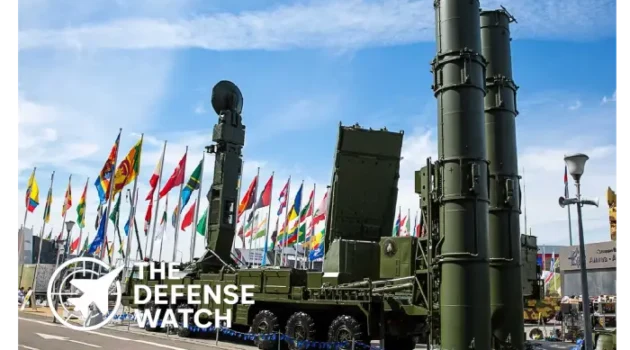
At the Dubai Airshow 2025, Russia officially displayed the Tor-E2 short-range air defense (SHORAD) system for the first time on the international export stage, showcasing its full combat configuration.
Presented by Rosoboronexport and Almaz-Antey, the Tor-E2 drew attention as a centerpiece of Russia’s 1,000-square-meter pavilion, where Moscow is exhibiting more than 850 defense systems. The system features a vertical-launch architecture that enables 360-degree coverage, a critical capability in countering fast, low-signature threats.
Why It Matters: Context Behind the Display
The Tor-E2’s presence in Dubai is more than a product reveal—it is a strategic signal. Russia’s global arms exports have taken a hit in recent years, particularly since the onset of the Ukraine war. Presenting a fully configured Tor-E2 marks Moscow’s intent to regain footing in the SHORAD market, especially in regions like the Middle East, where demand for layered air defense is growing.
Moreover, Russia’s expansive display of air defense hardware—including systems like the Pantsir-SMD-E—reflects its ambition to reassert relevance in the integrated air-defense export domain.
System Details: What Makes Tor-E2 Stand Out
360° Engagement & Vertical Launch
- The Tor-E2 uses a cold vertical-launch system, enabling it to engage targets in any direction without needing to rotate its launcher.
- This design reduces reaction time and supports rapid follow-up shots.
Missile Load & Performance
- Each combat vehicle carries 16 sealed transport-launch containers with 9M338 missiles ready to fire.
- Engagement range: up to 12 km, or up to 15 km with the 9M331D variant.
- Maximum intercept altitude: ~10 km.
- The system can track four target channels simultaneously, enabling quick prioritization.
- Its missiles — particularly the 9M338KE — offer enhanced range (~16 km), command guidance, and warheads optimized for low-RCS (radar cross-section) threats like UAVs and cruise munitions.
Mobility & Deployability
- Tor-E2 can deploy from “march to combat” in about 3 minutes, even from short halts.
- The system supports “link” mode: one vehicle remains silent and receives target data from another, firing only when needed—boosting survivability against anti-radiation missiles.
Operational Use & Integration
- Designed for maneuver brigades, as well as base and infrastructure defense.
- Compatible with layered defense architectures; can integrate with systems like Buk, S-350, and MANPADS or gun-based VSHORAD.
- Interoperability pitch: a Tor-E2 battery can plug into a wide range of command and control networks, including legacy and NATO-standard systems.
Strategic & Policy Perspective
Russia’s decision to showcase Tor-E2 at Dubai comes amid a broader export revival. While its defense exports declined sharply in recent years, the Kremlin is signaling a return to business-as-usual through high-visibility demonstrations.
- Export pitch: By bringing Tor-E2 to Dubai, Russia is trying to revive interest in its high-end SHORAD offerings among Gulf states and other non-aligned customers.
- Combat-proven narrative: Russia highlights that Tor family systems have seen real-world use in Syria and Ukraine, enhancing the credibility of its export variants.
- Interoperability strategy: Emphasizing integration with legacy C2 systems could appeal to countries with mixed inventories or less reliance on Western networks.
- Long-term positioning: Rosoboronexport seems to be turning the Dubai showcase into a business-development exercise, not just a product demonstration.
- Industrial messaging: The presence of Tor-E2 is part of a bigger pitch that includes technology transfer, modular production, and long-term cooperation—a message echoed across other systems on show.
What to Watch Next
- Export Commitments: Whether any contracts for Tor-E2 are signed during or after the airshow will be a key indicator of Russia’s export rebound.
- Regional Appetite for SHORAD: Gulf states and other interested buyers may see Tor-E2 as a cost-effective, modern SHORAD solution amid growing drone and cruise-missile threats.
- Integration Deals: Watch for announcements around integration of Tor-E2 into clients’ existing air defense systems or command architecture.
- Competition: How Tor-E2 competes against Western and Chinese SHORAD systems in terms of cost, capabilities, and long-term service offerings could shape the next generation of regional air-defense procurement.

What Is Happening: Russia’s S-500 Threat to U.S. Stealth Jets
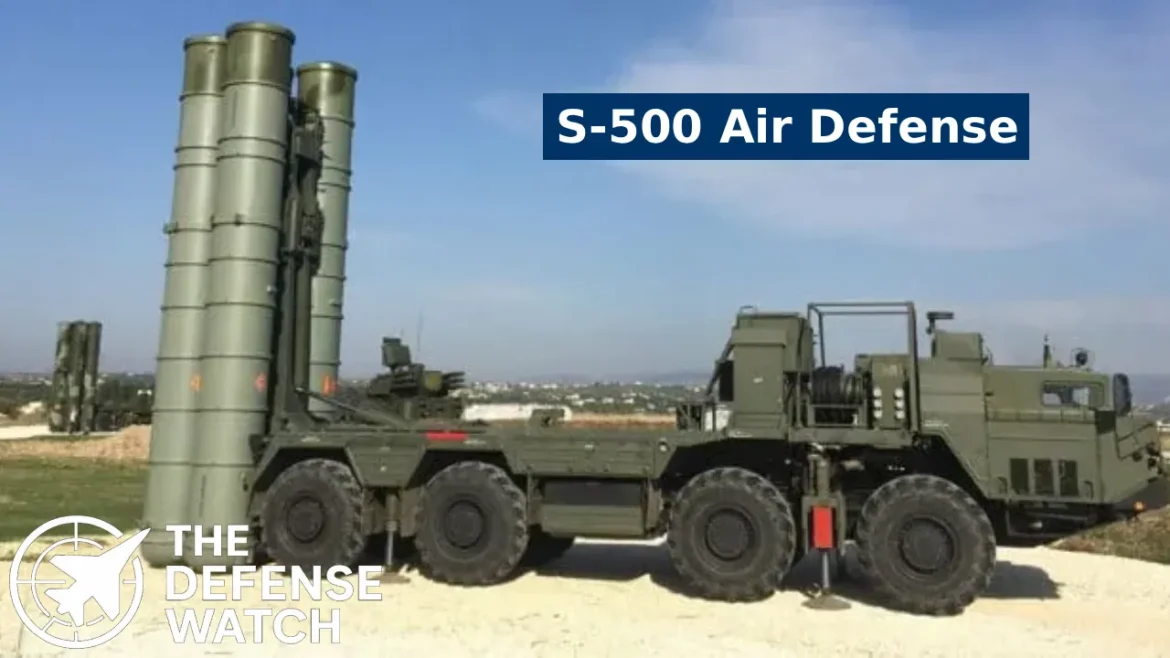
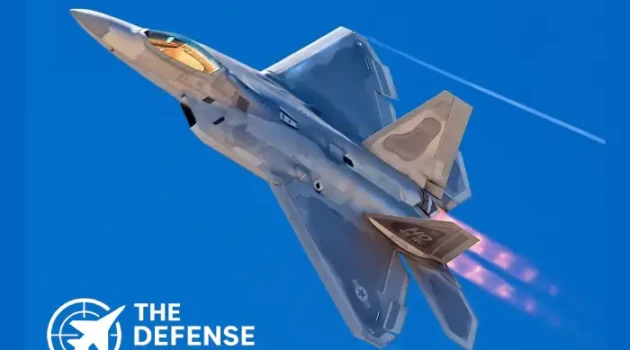
Russia is promoting its S-500 “Prometheus” air-defense system as capable of targeting U.S. fifth-generation stealth aircraft like the F-22 Raptor and F-35 Lightning II, according to multiple Russian defense sources and open-source defense reporting.
Authorities claim the S-500 can engage targets at ranges up to 600 km and altitudes up to 200 km, putting it in a new class of “hybrid” air-and-space defense.
Background: Why the S-500 Matters
The S-500, developed by Almaz-Antey, is viewed by Russian officials as a key pillar in their next-generation layered air defense architecture — sitting above systems like the S-400 and alongside emerging systems such as the A-235 ABM.
Moscow contends that the S-500 bridges tactical air defense and strategic missile defense: it’s designed to counter not just aircraft, but hypersonic missiles, ballistic warheads, and even low Earth orbit satellites.
Its radar suite is a multi-band architecture, which Moscow argues gives S-500 the ability to detect and track very low-observable stealth targets.
Key Features & Claimed Capabilities
Radar and Tracking Systems
- The S-500 reportedly uses a combination of 91N6A(M) S-band, 96L6-TsP C-band, 76T6 multimode, and 77T6 ABM engagement radars.
- These radars operate in multiple frequency bands (L-, S-, and X-band), which proponents say helps in detecting stealth aircraft optimized to evade narrower-band radars.
- According to some reports, these radars can detect ballistic targets up to 2,000 km away, and aerodynamic (aircraft) threats up to 800 km.
Interceptors and Engagement
- For air defense roles, the S-500 is said to employ 40N6M long-range interceptor missiles.
- For ballistic or hypersonic threats, it reportedly uses kinetic 77N6-N and 77N6-N1 missiles, capable of “hit-to-kill” interception.
- Russia claims it can engage up to 10 targets simultaneously, with a very fast reaction time (~3–4 seconds).
- The engagement ceiling is claimed to be around 200 km, which would allow the system to intercept threats in near-space.
Mobility & Deployment
- The S-500 is mobile — its radar and launch units are mounted on wheeled chassis, allowing redeployment.
- It is reportedly being integrated into Russia’s existing air defense mix, working alongside S-400, S-350, and Pantsir systems.
- According to some Russian analysts, S-500 units have been deployed to strategically critical locations, including Crimea.
Expert Analysis & Policy Implications
Technical Credibility & Challenges
- While Moscow’s claims are ambitious, independent verification of the S-500’s full performance (especially against stealth aircraft) remains limited.
- Analysts note that detecting stealth is one challenge; achieving a fire-control solution and intercepting such targets is a separate, technically difficult step.
- Hypersonic and ballistic intercept capabilities are central to the system’s appeal. The 77N6 series missiles, if they perform as claimed, would represent a significant leap in Russia’s ability to engage high-speed warheads.
- Some analysts are cautious: while the system may be theoretically capable, operational readiness, production scale, and real-world performance remain open questions.
Strategic Impact & Geopolitical Considerations
- If the S-500 genuinely threatens F-22 and F-35 aircraft, it could complicate NATO planning, particularly for operations near or within range of deployed S-500 units.
- The claimed anti-satellite (ASAT) capability adds a space dimension to Russia’s air defense posture, raising concerns about the securitization of low Earth orbit, especially for ISR and comms satellites.
- For countries that consider buying advanced Russian air defenses (e.g., India), the S-500 could be a force multiplier — but its “game-changing” status depends on whether its high-end claims hold in practice.
- From a policy perspective, even if S-500’s full potential is not yet realized, its perception as a “stealth killer” could be leveraged for deterrence and strategic signaling.
What to Watch Next
- Deployment Scale: How many S-500 regiments Russia will operationalize, and where.
- Export Prospects: Which countries may acquire S-500 and what conditions would apply.
- Operational Tests: Any publicized live-fire tests targeting stealth or hypersonic targets.
- Countermeasures: How NATO and U.S. defense planners adapt to the S-500 threat, possibly via tactics, electronic warfare, or new platforms.
Conclusion
Russia’s S-500 “Prometheus” system represents a bold claim in modern air defense: long-range engagement, multispectral radar, and the ability to threaten fifth-generation stealth fighters like the F-22 and F-35. While many of these claims come from Moscow or Russian-aligned defense outlets, the system’s development underscores how air defense is evolving — merging anti-aircraft, ABM, and space-defense roles. Whether the S-500 fulfills its promised “stealth killer” reputation will depend on further testing, deployment, and real-world performance.
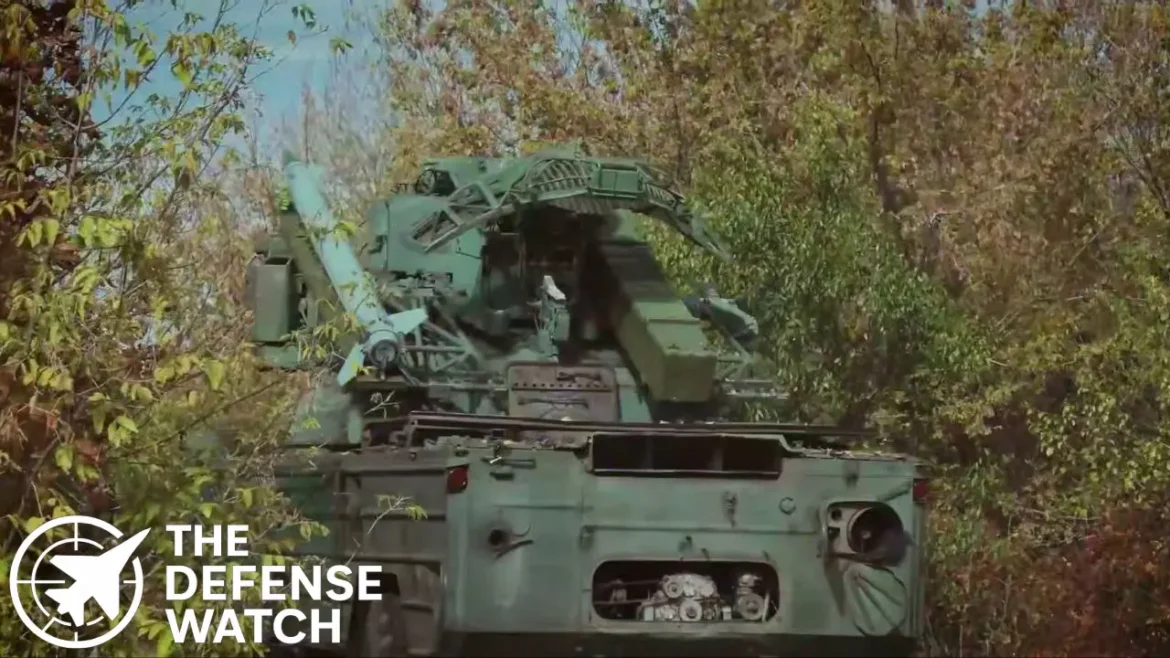
Recent footage from Russian military channels reveals a troubling development for Moscow’s air defense capabilities: Cold War-era surface-to-air missiles from the 1970s are being jury-rigged onto more modern launcher systems, suggesting Russia may be running critically low on interceptor missiles as Ukraine’s relentless drone campaign continues to intensify.
The imagery shows a combat-ready 9K33M3 Osa-AKM system loaded with aging 9M33 missiles—hardware designed five decades ago—instead of the standard 9M33M3 missiles the launcher was built to carry. Defense analysts view this improvised configuration as a potential indicator that Russia’s air defense missile production cannot keep pace with consumption rates driven by Ukrainian unmanned aerial vehicle operations.
Cold War System Adapted for Modern Shortages
The Osa air defense system entered Soviet service in 1970 as the 9K33, carrying four 9M33 missiles without protective transport-launch containers. The system underwent significant upgrades throughout the following decade. In 1975, the 9K33M2 Osa-AK variant increased missile capacity to six rounds and introduced the improved 9M33M2 missile, which required different mounting hardware and was stored in sealed containers.
The final major upgrade came in 1980 with the 9K33M3 Osa-AKM, featuring enhanced 9M33M3 missiles with modernized proximity fuzes and updated electronics designed specifically for engaging helicopters and low-flying aircraft. This represented a two-generation leap in capability over the original system.
What Russian forces have now done is reverse this technological progression. Mechanics appear to have salvaged original 9M33 mounting brackets from decommissioned 9K33 systems and bolted them directly onto Osa-AKM launchers—a configuration never intended by Soviet designers. Photographs show one obsolete 9M33 missile mounted alongside a newer containerized round, creating a mismatched hybrid system.
Implications for Russian Air Defense Capacity
This improvisation carries significant strategic implications. While the modification required minimal technical effort—possibly no software changes whatsoever—its necessity suggests Russian stockpiles of modern 9M33M3 interceptors are running dangerously low. There is no publicly available evidence that production of these missiles continues, and if it does, output appears insufficient to meet operational demands.
Ukraine’s drone warfare strategy has proven remarkably effective at forcing exactly this kind of resource exhaustion. By deploying large numbers of relatively inexpensive unmanned systems—many costing a fraction of the missiles used to intercept them—Ukrainian forces are imposing unsustainable attrition on Russian air defense stocks.
The decision to reintroduce 50-year-old missiles into frontline service, even on systems no longer considered primary air defense assets, indicates the shortage extends beyond elite units to reserve and secondary formations. Russia should theoretically possess substantial reserves of 9M33 missiles in storage, as the naval Osa-M variant deployed on Russian warships also uses this ammunition type.
U.S. Defense and Strategic Context
For U.S. defense planners, this development offers several key insights. First, it validates Western assessments that sustained attrition warfare—even with asymmetric weapons like drones—can strain Russian logistics and industrial capacity despite Moscow’s vast Cold War inheritance.
Second, it demonstrates the vulnerability of air defense networks to high-volume, low-cost aerial threats. The U.S. military has invested heavily in counter-drone technologies, but the Ukrainian model shows how quantity can overwhelm quality when interceptor production cannot match consumption rates.
Third, the situation highlights Russia’s limited defense industrial reconstitution capacity. Despite transitioning to a wartime economy, Moscow appears unable to scale production of critical munitions fast enough to replace combat losses. This suggests Western sanctions on electronics and precision components are having measurable effects on Russian military manufacturing.
Interestingly, Ukraine faced similar air defense missile shortages earlier in the conflict and responded with an even more ambitious improvisation: integrating R-73 air-to-air missiles onto Osa launchers. That modification required far more complex engineering than Russia’s current bracket-swapping approach, but it demonstrated how necessity drives innovation under combat pressure.
Future Outlook and Strategic Assessment
The reappearance of obsolete missiles on modernized launchers represents more than a technical curiosity—it signals a critical inflection point in Russia’s ability to sustain air defense operations. As Ukrainian drone production accelerates with Western support, and as attacks on Russian oil infrastructure and military installations intensify, Moscow faces a stark choice: accept degraded air defense coverage or divert resources from other military priorities to interceptor production.
For NATO and U.S. planners, the lesson is clear: long-term attrition strategies backed by industrial capacity can achieve strategic effects even against numerically superior adversaries. The Ukrainian drone campaign has demonstrated that relatively modest investments in unmanned systems can impose disproportionate costs on conventional air defenses.
As the conflict continues, watch for further indicators of Russian air defense stress—including increased reliance on electronic warfare systems, concentration of remaining modern SAMs around critical sites at the expense of forward positions, and potentially even requests for air defense assistance from allies like China or Iran.
The improvised Osa configuration may seem like a minor battlefield adaptation, but it reveals a deeper vulnerability in Russia’s military-industrial complex—one that Ukraine and its Western partners can continue to exploit through sustained pressure on Russian logistics and production capacity.