

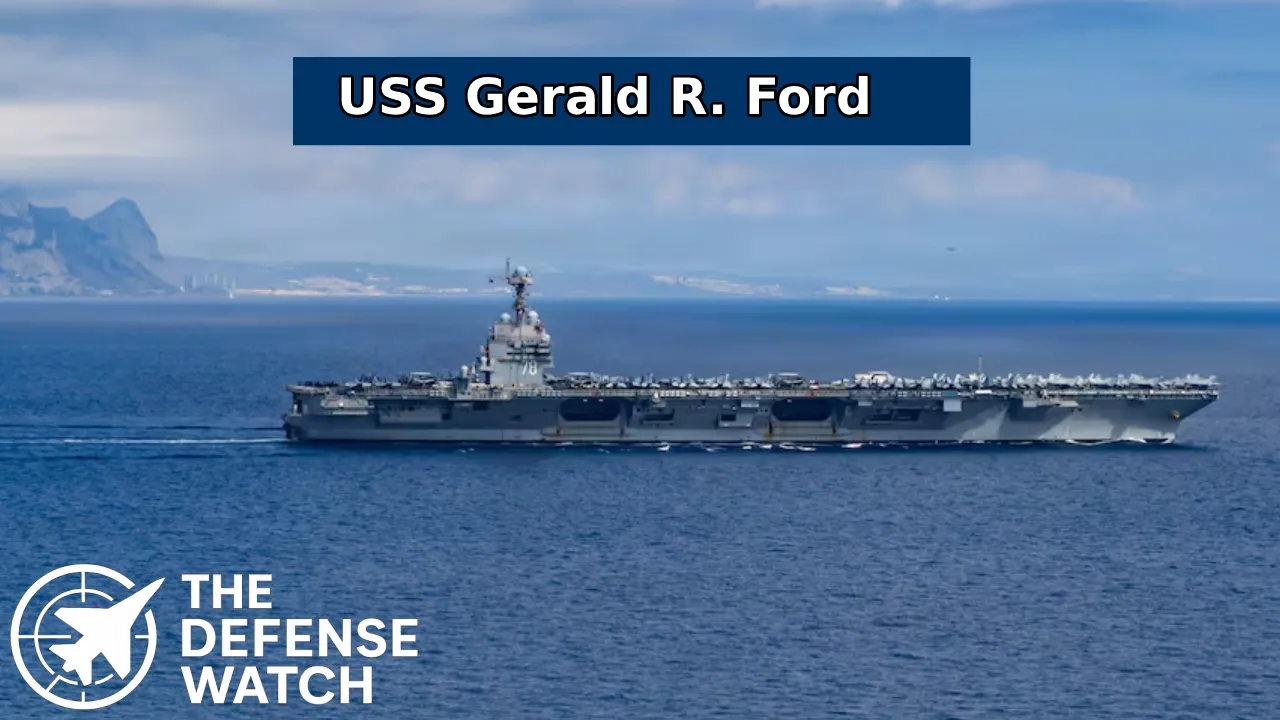
USS Gerald R. Ford Deploys to Latin American Waters
The USS Gerald R. Ford (CVN-78), the U.S. Navy’s newest and largest aircraft carrier, entered the U.S. Southern Command (USSOUTHCOM) area of responsibility on November 11, 2025. The carrier departed the Mediterranean on November 4 as part of a strategic deployment aimed at supporting U.S. counternarcotics operations in Latin America.
Background: Strategic Deployment and Regional Security
The Pentagon had announced in late October that the Gerald R. Ford Carrier Strike Group would transit to the Western Hemisphere to reinforce the U.S. military presence and enhance regional security efforts. The deployment underscores the U.S. commitment to combating illicit trafficking and transnational threats that could affect the safety and prosperity of the United States and its allies in the region.
Details of the Deployment
The USS Gerald R. Ford joins eight other Navy vessels currently operating in the USSOUTHCOM area, including the USS Iwo Jima, USS Fort Lauderdale, USS San Antonio, USS Lake Erie, USS Jason Dunham, USS Gravely, USS Stockdale, and USS Wichita. Combined, these ships carry roughly 6,000 personnel. The Gerald R. Ford alone hosts approximately 4,000 sailors and dozens of tactical aircraft.
The Carrier Strike Group includes nine squadrons from Carrier Air Wing Eight, guided-missile destroyers USS Bainbridge and USS Mahan, and the missile defense command ship USS Winston S. Churchill. Additionally, the USS Gerald R. Ford embarked the Iwo Jima Amphibious Ready Group and a Marine Expeditionary Unit under a joint task force, enhancing the U.S. Navy’s operational flexibility.
“The enhanced U.S. force presence in the USSOUTHCOM AOR will bolster U.S. capacity to detect, monitor, and disrupt illicit actors and activities that compromise the safety and prosperity of the United States homeland and our security in the Western Hemisphere,” said Chief Pentagon Spokesperson Sean Parnell.
Operational Context
This deployment follows a series of military operations in the region targeting vessels suspected of transporting narcotics. Since September, U.S. forces have conducted strikes against drug-carrying ships, reportedly resulting in 19 targeted actions and at least 75 fatalities among those aboard the vessels. While the Pentagon has not disclosed the full operational objectives, the presence of the Gerald R. Ford and its strike group aims to strengthen maritime security and ensure freedom of navigation across Latin American waters.
SOUTHCOM Commander Adm. Alvin Holsey highlighted the strategic intent of the deployment: “Through unwavering commitment and the precise use of our forces, we stand ready to combat the transnational threats that seek to destabilize our region.”
Looking Ahead: Regional Impact and Strategic Significance
The deployment of the USS Gerald R. Ford Carrier Strike Group to Latin America represents a significant escalation in U.S. naval presence in the Western Hemisphere. Analysts note that such high-profile deployments serve both operational and deterrence purposes, signaling U.S. commitment to countering narcotics trafficking and regional threats while strengthening ties with partner nations through potential joint exercises and maritime security cooperation.
As the Gerald R. Ford Carrier Strike Group integrates with existing naval assets in the USSOUTHCOM area, ongoing monitoring of illicit maritime activity and coordinated counternarcotics operations are expected to remain a primary focus. The deployment also provides critical training and operational experience for carrier personnel in complex maritime environments.

35 comments
[…] the Caribbean Basin and eastern Pacific. Advanced intelligence-driven operations—often involving U.S. Navy P-8A Poseidon patrol aircraft, Coast Guard cutters, and special operations forces—have disrupted dozens of high-speed […]
[…] expected to enter the Caribbean Sea in the coming days, with its presence described as a “flex of American military power not seen in Latin America for generations.” While no direct operations have been confirmed, analysts note that the […]
[…] about escalation control. The presence of mobile air-defense units like TOR-M2E in proximity to U.S. naval and air assets increases the risk of miscalculation or accidental […]
[…] March 2025, MDA and the U.S. Navy successfully demonstrated that HBTSS data could detect, track, and perform a simulated engagement […]
[…] Super Hornet remains the primary U.S. Navy fighter, performing air-to-air combat, strike missions, and maritime interdiction. Its reliability […]
[…] directed-energy weapons are maturing from experimental prototypes to real, deployable defenses. The U.S. Navy, Air Force, and Army have all pursued similar high-energy laser (HEL) programs — Britain’s […]
[…] November 2025, the USS Gerald R. Ford Carrier Strike Group entered the Caribbean Sea, with 4,000 sailors and dozens of military aircraft aboard the lead ship, as part […]
[…] to the edge of the ship. This unique shape accommodates advanced radar arrays, with the lead ship USS Gerald R. Ford equipped with the Dual Band Radar system featuring six separate AESA arrays providing […]
[…] with BRP Jose Rizal about 14 nautical miles northwest of Botolan, Zambales, and is expected to enter operational service […]
[…] and Surveillance): Developed by Lockheed Martin, this ~60 kW laser is mounted on the U.S. Navy’s Arleigh Burke–class destroyer USS Preble. HELIOS can engage small drones, fast-attack boats, and other light threats, while also […]
[…] U.S.-approved military sales to the UK typically reinforce existing defense integration arrangements, including shared communications architectures and combined maritime task group operations. […]
[…] the U.S. has deployed naval assets — including the USS Gerald R. Ford carrier strike group — to the Caribbean, underscoring a significant escalation in military presence near Venezuelan […]
[…] F/A-18 Super Hornet remains one of the U.S. Navy’s principal multirole carrier-based fighters — valued for its flexibility, range, and capability in […]
[…] disciplined choice that puts capability in the fleet on a responsible timeline.” Chief of Naval Operations Adm. Daryl Caudle and Marine Corps Commandant Gen. Eric Smith also endorsed the selection as a key […]
[…] threat. In response, the Chinese Ministry of Defense dismissed the claims, asserting Japanese aircraft had repeatedly flown near Chinese naval operations, creating dangerous […]
[…] The FDI frigate is a next generation surface combatant developed by Naval Group for the French Navy. The program was launched to replace older La Fayette class frigates and to provide a modern, digitally designed platform optimized for high intensity naval operations. […]
[…] The Navy frames such live-fire drills as part of routine readiness and deterrence posture to counter potential aggression, strengthen alliances and partnerships, and sustain forward naval presence. […]
[…] sustained presence of amphibious strike groups like Tripoli’s in the Indo-Pacific underscores US commitment to allied support and […]
[…] sole standing maritime operational headquarters. It plays a central role in planning and directing naval operations, coordinating standing maritime groups, and integrating maritime capabilities across the alliance. […]
[…] is split across the U.S. Navy and five allied […]
[…] fishing militia floating barriers could overwhelm maritime traffic, block commercial ports, disrupt naval operations, serve as decoys, and create target saturation overwhelming adversary defenses. This capability […]
[…] Corps investment in sustainment infrastructure as the CH 53K fleet continues to grow. As more aircraft enter operational service, demand increases for maintenance capacity, trained personnel, and specialized […]
[…] the past decade, China has steadily increased its naval presence in the Indian Ocean, Gulf of Aden, and Middle East through anti piracy patrols, port visits, and […]
[…] part of broader Department of Defense efforts to counter evolving maritime threats. Recent U.S. Navy operational assessments have highlighted the need for distributed defensive capabilities that can protect […]
[…] capabilities are increasingly important as the U.S. Navy pursues distributed maritime operations and seeks to reduce risk to crewed platforms. AI enabled perception allows unmanned systems to […]
[…] Following the port departure, the destroyer conducted a routine maritime exercise with an Israeli Navy vessel in the Red Sea, reinforcing interoperability between the two navies. Joint drills such as these are part of ongoing efforts to align U.S. and Israeli naval operations in shared waters. […]
[…] undersea sensing is increasingly important for naval operations. Autonomous platforms like gliders extend situational awareness across vast ocean areas with […]
[…] in the Indo-Pacific. The region has seen increased military activity, including expanded naval operations and air patrols by regional […]
[…] The unmanned system carries a gyro-stabilized electro-optical/infrared sensor suite and Automatic Identification System capable of detecting vessels across several hundred kilometers. This sensor package supports intelligence, surveillance, and reconnaissance missions critical to modern naval operations. […]
[…] The Aquitaine stop at Glasgow is part of a broader pattern of NATO member navies calling at UK ports, especially on the west coast, in and around the GIUK gap. The GIUK (Greenland-Iceland-United Kingdom) gap remains a key strategic maritime corridor for trans-Atlantic security and alliance naval operations. […]
[…] Carrier strike group escort operations are among the most demanding at sea. They require precise coordination of ASW, air defense, surface warfare, and logistics under simulated contested conditions. Includes frequent communications, shared sensor data, and tight tactical formations. […]
[…] French carrier strike group, including Charles de Gaulle, repositioned from the Mediterranean into the North Atlantic for the […]
[…] robustness but also Spain’s commitment to maintaining them as a core component of allied naval operations,” a Navy spokesperson […]
[…] UCAV is capable of fully autonomous takeoffs and landings, a key requirement for sustained naval operations where deck space and launch windows are limited. Its foldable wing design allows efficient storage […]
[…] a naval operations standpoint, such missions demand careful coordination, intelligence support, and clear rules of […]