

Executive Summary:
The Royal Navy High North exercises feature HMS Prince of Wales leading a multinational carrier strike group in Arctic conditions. The deployment highlights NATO coordination and the UK’s focus on operating in contested northern waters.
Royal Navy High North Exercises Highlight Arctic Focus
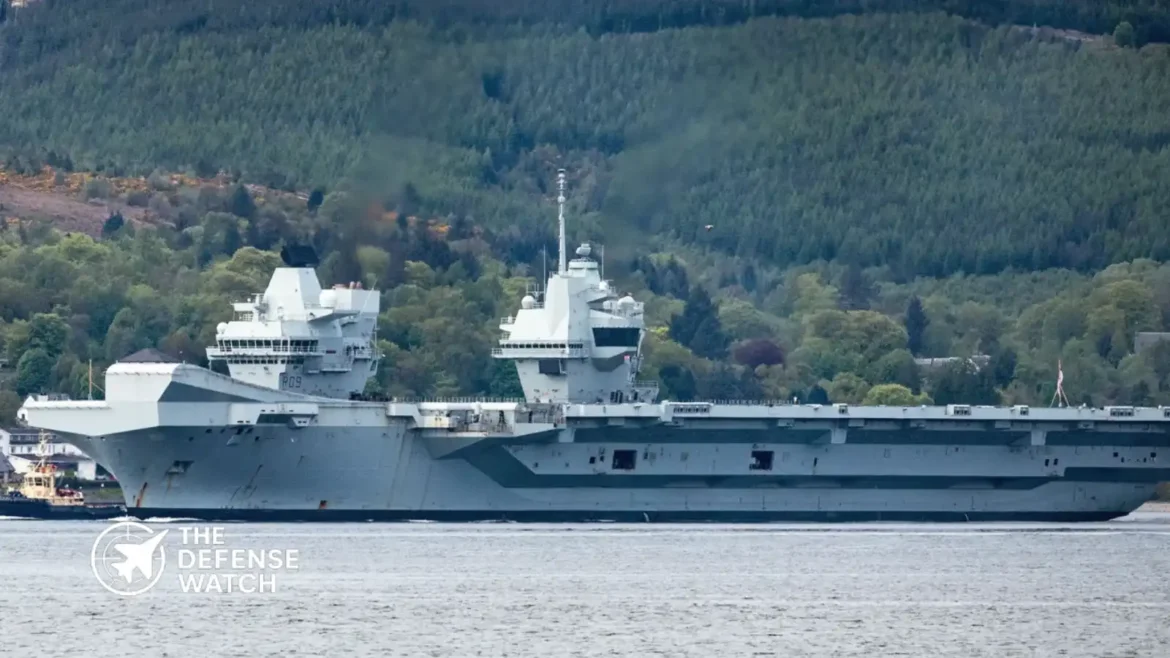
The Royal Navy High North exercises have entered a new phase with HMS Prince of Wales leading a UK-led carrier strike group into northern waters, underscoring a renewed emphasis on Arctic and sub-Arctic operations.
The deployment brings together a mix of British, allied, and partner naval assets operating in challenging cold-weather conditions. According to defense reporting from Navy Lookout, the exercise aims to validate the UK’s ability to sustain carrier strike operations in the High North, a region gaining strategic importance due to increased military activity and climate-driven accessibility.
The presence of Royal Navy assets in the region aligns with broader NATO efforts to strengthen deterrence and interoperability near Russia’s northern maritime approaches.
Carrier Strike Group Operations In Harsh Conditions
At the center of the Royal Navy High North exercises is the UK Carrier Strike Group built around HMS Prince of Wales. The force includes escorts such as destroyers and frigates, support ships, and embarked air wings operating from the carrier deck.
Aircraft operations in cold and unpredictable weather conditions are a key focus. The deployment tests sortie generation rates, deck handling, and maintenance cycles under Arctic stressors, which differ significantly from operations in temperate or tropical environments.
These exercises also evaluate logistics chains, including fuel, munitions, and resupply in remote regions where infrastructure is limited. Sustaining a carrier strike group in such conditions requires coordination across naval, air, and support elements, often involving allied contributions.
NATO Integration And Strategic Messaging
The Royal Navy High North exercises are not conducted in isolation. Allied participation reflects NATO’s ongoing push to reinforce collective defense in northern Europe. Nations including Norway and other regional partners regularly integrate into these operations, providing local expertise and additional capabilities.
From a strategic standpoint, the deployment signals NATO’s ability to operate in proximity to Russian Northern Fleet activity. The High North remains a critical theater due to its proximity to key sea lines of communication and strategic deterrence assets, including submarine-based nuclear forces.
While the exercise is framed as defensive and routine, its timing and scale carry clear signaling value. It demonstrates readiness and reinforces alliance cohesion in a region where competition is intensifying.
Expanding UK Carrier Strike Doctrine
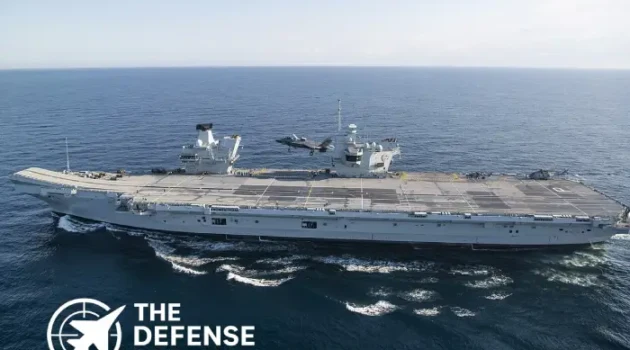
The Royal Navy High North exercises also reflect the evolution of the UK’s carrier strike doctrine. Since the reintroduction of carrier capability with the Queen Elizabeth-class, the UK has focused on global deployments, including the Indo-Pacific.
Operating in the High North adds another layer to this doctrine. Arctic-capable carrier operations require adjustments in training, equipment, and operational planning. Cold weather affects everything from aircraft performance to sensor reliability and crew endurance.
By deploying HMS Prince of Wales in these conditions, the Royal Navy is building a more flexible and resilient carrier force capable of operating across a wider range of environments. This adaptability is increasingly important as geopolitical competition expands into previously less contested regions.
Operational Challenges And Lessons Learned
Conducting Royal Navy High North exercises presents several challenges. Ice conditions, limited daylight during certain periods, and rapidly changing weather patterns complicate navigation and flight operations.
Communication systems and sensors must also function reliably in extreme cold, while crews require specialized training to operate safely. These factors make Arctic exercises a critical testing ground for both equipment and personnel.
The lessons learned from these deployments are likely to inform future procurement and modernization efforts. Enhancements in cold-weather gear, ship systems, and aircraft modifications could emerge as priorities as the UK refines its Arctic posture.
Broader Implications For Maritime Security
The Royal Navy High North exercises highlight a broader shift in maritime security dynamics. As melting ice opens new routes and access points, the Arctic is becoming more accessible to commercial and military activity.
This trend is driving increased interest from major powers, including Russia and NATO members. The UK’s participation in High North operations reflects a recognition that future maritime competition will extend into these.
For the United States and its allies, maintaining a credible presence in the High North is essential for ensuring freedom of navigation and monitoring strategic movements. The integration of UK carrier strike capabilities into this framework adds depth to NATO’s overall posture.
US Supercarrier USS Gerald R. Ford Heads Toward Middle East Amid Iran Tensions
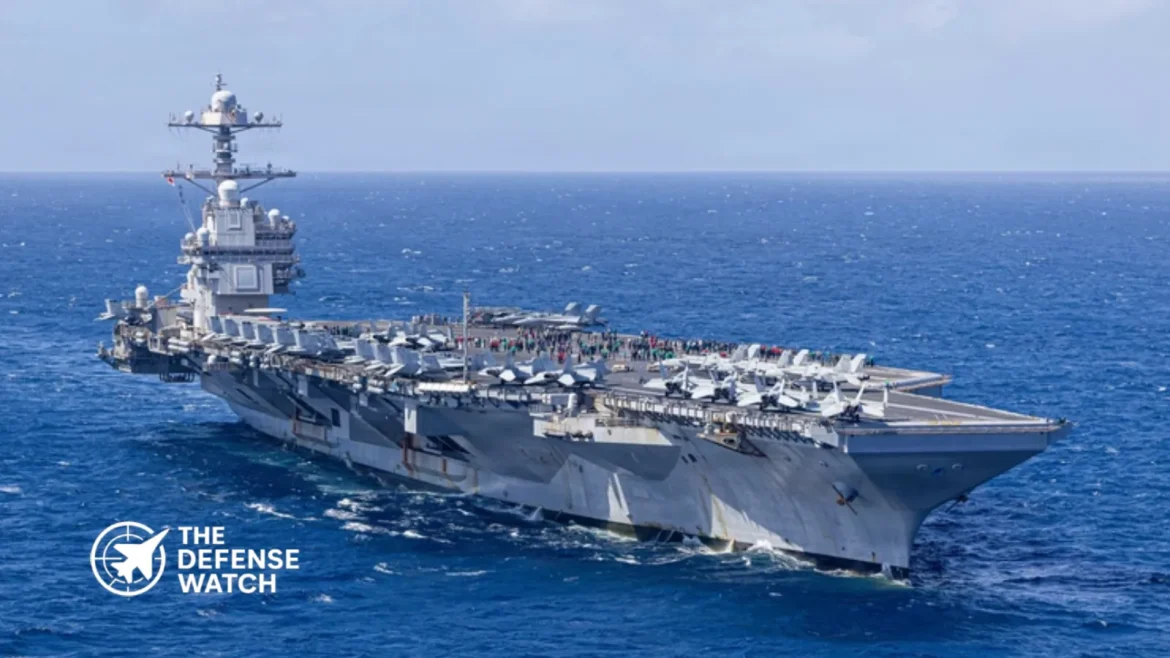
The US Navy’s USS Gerald R. Ford supercarrier is underway from the Caribbean Sea toward the Middle East in a move aimed at strengthening American naval presence near Iran.
(adsbygoogle = window.adsbygoogle || []).push({});The redeployment will likely position two US carrier strike groups in or near the Arabian Sea, extending sustained air operation and deterrence capabilities across the region.
Carrier Movement and Force Posture
The USS Gerald R. Ford, the lead ship of its class, has been at sea since June 2025 and is one of the most capable warships in the US fleet, displacing about 100,000 tons and able to airlift more than 75 aircraft.
Its movement toward the Middle East comes as the USS Abraham Lincoln carrier strike group is already operating in the region with several guided missile destroyers. The addition of Ford’s strike group will expand the overall carrier presence.
US Strategic Context
Pentagon officials have not publicly confirmed details, but media and defence outlets report the deployment reinforces US naval power amid renewed tensions with Tehran. Regional governments have warned that any military miss-step could trigger wider instability.
(adsbygoogle = window.adsbygoogle || []).push({});President Joe Biden’s administration has emphasized deterrence and maritime security, while affirming diplomacy remains open, even as military assets reposition to respond to possible contingencies. A White House spokesperson noted that maintaining freedom of navigation and regional stability remains a priority. (Public statements, January 2026 press brief)
Capability and Mission Scope
By operating two carrier strike groups, the US Navy gains broader options for air operations, maritime security missions, and rapid response to crises. Carriers serve as mobile airfields with integrated command and control, supporting a range of missions from combat air patrols to humanitarian missions.
Carrier strike groups also include guided missile cruisers, destroyers, and support ships, adding layered air defence and anti-submarine capabilities that are important in contested waters like the Strait of Hormuz and Gulf of Oman.
(adsbygoogle = window.adsbygoogle || []).push({});Regional Security Dynamics
Tensions between the US and Iran have been a backdrop to extended deployments of US forces in the Middle East. US officials cite Iran’s support for proxy groups, missile and drone activity across the region, and threats to commercial shipping as factors influencing force posture. Independent analysts note that a robust naval presence is intended to deter attacks and reassure regional allies. (Defense and security briefings, January–February 2026)
What Comes Next
With the USS Gerald R. Ford en route and the USS Abraham Lincoln already positioned, the US Navy’s expanded footprint will be among the largest at sea near the Middle East in recent years. Observers say the forces could conduct continuous air operations if needed, reinforce deterrence against hostile actions, and support broader US strategy in the region.
US officials stress that diplomatic efforts remain active, even as military assets reposition.

Royal Fleet Auxiliary Tanker Returns Home After Record Deployment
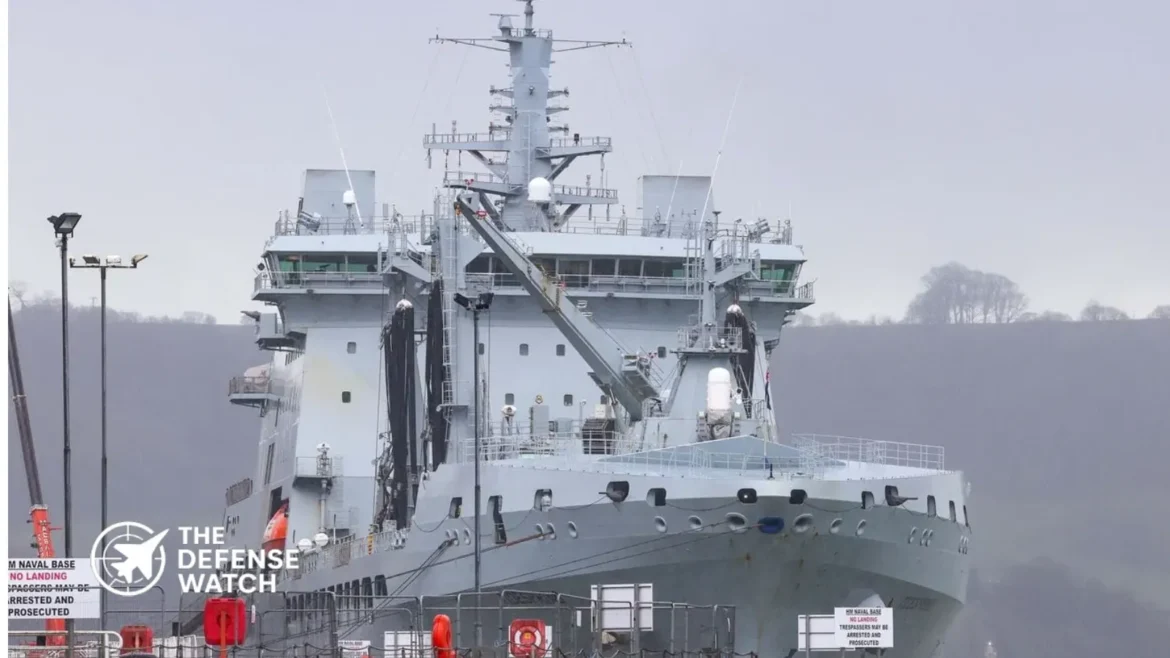
RFA Tidespring sailed into Plymouth on February 6, 2026, marking the conclusion of a 291-day deployment that saw the Royal Fleet Auxiliary tanker travel 45,954 nautical miles while providing critical logistics support to the UK Carrier Strike Group’s Operation Highmast.
(adsbygoogle = window.adsbygoogle || []).push({});The Tide-class fast fleet tanker was the final vessel from the 2025 deployment to return to the United Kingdom, arriving two months after flagship HMS Prince of Wales and escorts HMS Richmond and HMS Dauntless completed their homecoming in late November 2025.
According to the Royal Navy, Tidespring’s extended mission demonstrated the essential role of naval logistics in sustaining modern carrier operations across global theaters.
Unprecedented Replenishment Operations
During the nine-and-a-half-month deployment, RFA Tidespring conducted 79 replenishments at sea, averaging approximately three refueling operations per week while attached to the carrier strike group.
The vessel delivered more than 30,000 cubic meters of diesel fuel—equivalent to filling 12 Olympic-sized swimming pools—and 4,200 cubic meters of aviation fuel to Royal Navy, NATO, and international allied vessels operating alongside HMS Prince of Wales.
Beyond fuel, Tidespring provided critical supplies including food and fresh water to sustain the multinational force during extended operations far from shore-based logistics infrastructure.
Global Route and Strategic Significance
Operation Highmast represented the UK’s second major carrier strike group deployment to the Indo-Pacific region, following the 2021 deployment led by HMS Queen Elizabeth. The eight-month operation involved warships and personnel from 13 nations, including Australia, France, India, Italy, Japan, Malaysia, New Zealand, Singapore, South Korea, and the United States.
After the core strike group returned to UK waters in November 2025, Tidespring broke away from the formation at the end of October and transited around the Cape of Good Hope en route to Gibraltar. The tanker made a brief stop at the British territory of St. Helena before arriving at Gibraltar, where she underwent maintenance and hosted senior officers and VIPs.
(adsbygoogle = window.adsbygoogle || []).push({});Following Gibraltar’s New Year celebrations, Tidespring departed for the final leg of her journey home, navigating through stormy conditions in the Bay of Biscay before sailing up the Hamoaze into Plymouth on February 5, 2026.
Tide-Class Capabilities Enable Extended Operations
The RFA Tidespring is one of four Tide-class fast fleet tankers that form the backbone of the Royal Fleet Auxiliary’s replenishment capabilities. At 37,000 tons displacement, these vessels represent the largest ships currently serving in the RFA fleet.
Built by Daewoo Shipbuilding & Marine Engineering in South Korea and commissioned in 2017, the Tide-class tankers measure 200.9 meters in length with a beam of 28.6 meters. The vessels feature double-hull construction, significantly improving safety and environmental protection compared to their single-hulled predecessors.
Each Tide-class tanker is equipped with three abeam replenishment at sea stations for diesel fuel, aviation fuel, and fresh water, plus an additional astern replenishment rig. The vessels also feature flight decks capable of accommodating Chinook-sized helicopters, enabling vertical replenishment operations.
With a maximum speed of 26.8 knots and a range of 18,200 nautical miles, these tankers can keep pace with modern carrier strike groups during high-tempo operations. The ships can carry 19,000 cubic meters of liquid cargo, with tanks configurable between diesel and aviation fuel depending on operational requirements.
(adsbygoogle = window.adsbygoogle || []).push({});Operation Highmast Achievement
Operation Highmast marked several historic milestones for the Royal Navy and its international partners. The deployment saw HMS Prince of Wales achieve Full Operational Capability, qualifying the carrier for NATO frontline duties.
For the first time, the UK deployed 24 F-35B Lightning II stealth fighters during an operational carrier deployment, with aircraft from RAF No. 617 Squadron “The Dambusters” and Royal Navy 809 Naval Air Squadron embarked aboard Prince of Wales.
The strike group participated in major exercises including NATO’s Neptune Strike in the Mediterranean and the Australia-hosted Exercise Talisman Sabre, where HMS Prince of Wales became the first non-U.S. aircraft carrier to participate. In August 2025, a British F-35B made history by landing on the Japanese aircraft carrier JS Kaga, marking the first time a British jet had operated from a Japanese carrier.
The deployment also featured the first-ever joint maritime exercises between British and Indian carrier strike groups, reinforcing strategic partnerships across the Indo-Pacific region.
Royal Fleet Auxiliary Personnel Challenges
While Tidespring’s successful deployment demonstrates the critical capabilities of the RFA fleet, the service continues to face significant personnel shortages that have impacted operational readiness across the auxiliary force.
As of late 2024, the RFA reported severe manpower challenges, with only six of the then-11 vessels able to be crewed on a regular basis. Sister ship RFA Tiderace entered extended readiness in June 2024 due to insufficient crew, remaining inactive for over 16 months despite having no technical faults.
These personnel challenges stem from recruitment and retention difficulties exacerbated by competitive private sector opportunities, extended deployment periods, and compensation concerns. In late 2024, 79 percent of RFA officers reportedly voted for strike action over employment terms.
However, recent reports indicate efforts to return Tiderace to active duty following crew augmentation, suggesting some progress in addressing workforce shortages.
Next Phase of Operations
Now in the hands of the Devonport Alongside Services team, RFA Tidespring will undergo routine maintenance and resupply before resuming Royal Navy support operations in the near future.
(adsbygoogle = window.adsbygoogle || []).push({});The vessel’s 291-day deployment—equivalent to 42 weeks and three days—and circumnavigation of more than twice around the world underscores the sustained operational tempo required to support modern carrier strike group operations in contested global environments.
As geopolitical tensions continue in both European and Indo-Pacific theaters, the Royal Fleet Auxiliary’s replenishment capabilities remain essential to enabling the Royal Navy’s global presence and power projection.
The successful completion of Operation Highmast, supported by Tidespring’s extended logistics mission, demonstrates the UK’s commitment to maintaining maritime security and upholding international order alongside allied and partner nations.
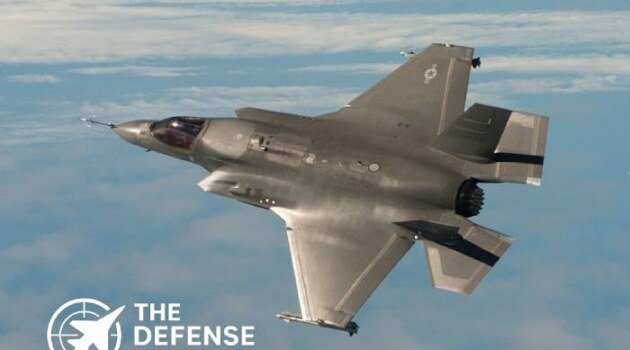
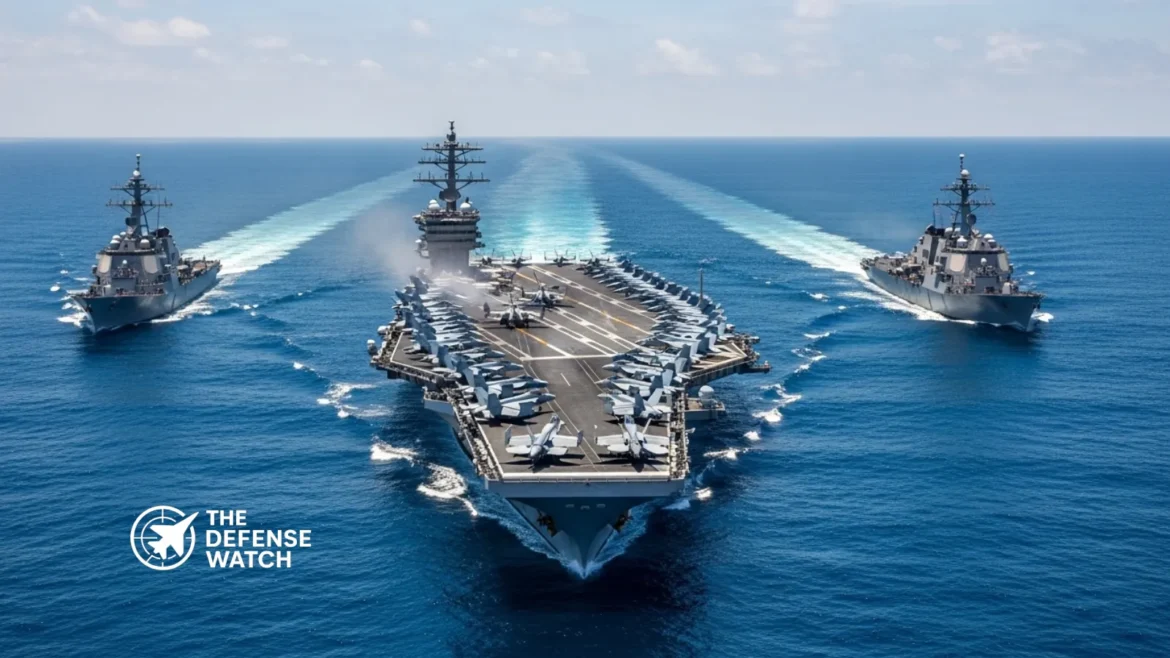
The United States has deployed a major naval force toward Iran as President Donald Trump signals possible military action, marking one of the most serious escalations in U.S. Iran tensions in years. The movement of U.S. Navy assets into the Middle East reflects heightened concern in Washington over regional stability, maritime security, and Iranian military activity.
According to reporting from Army Recognition and U.S. defense officials, the deployment includes carrier strike group elements, guided missile destroyers, and support vessels moving toward key maritime chokepoints near the Persian Gulf and Arabian Sea. The buildup follows a series of public statements by President Trump indicating that military options are under active consideration.
Composition of the U.S. Naval Force
U.S. Navy movements include surface combatants equipped with advanced air and missile defense systems, long range strike capabilities, and integrated command and control networks. Carrier based aircraft provide strike, surveillance, and electronic warfare capabilities that significantly expand U.S. operational reach in the region.
While the Pentagon has not released full details on the force package, officials confirmed that the deployment is intended to deter Iranian aggression, protect U.S. and allied interests, and ensure freedom of navigation in international waters.
The U.S. Fifth Fleet, headquartered in Bahrain, continues to coordinate maritime operations across the Gulf, Red Sea, Arabian Sea, and parts of the Indian Ocean. See also: U.S. Navy expands maritime patrols in the Red Sea.
Trump Signals Possible Military Action
President Trump has publicly stated that Iran must change its behavior or face serious consequences, including the potential use of military force. While stopping short of announcing specific actions, Trump emphasized that all options remain on the table.
Administration officials have linked the naval deployment to concerns over Iranian missile activity, naval harassment incidents, and support for regional proxy forces. The White House has framed the move as defensive, but the scale and timing signal readiness for rapid escalation if conditions deteriorate.
Defense analysts note that naval deployments offer flexible response options, allowing the U.S. to apply pressure without immediate ground involvement.
Strategic Importance of Maritime Posture
Naval power remains a central tool in U.S. strategy toward Iran. The Strait of Hormuz, through which roughly one fifth of global oil supply transits, remains a critical vulnerability. Any disruption could have global economic consequences.
By positioning major naval assets near Iran, the U.S. enhances its ability to conduct maritime security operations, missile defense, and precision strikes. The presence of Aegis equipped destroyers also strengthens regional missile defense coverage for U.S. forces and partners.
This posture aligns with long standing U.S. naval doctrine emphasizing forward presence and deterrence through visible capability.
Iranian Response and Regional Impact
Iranian officials have criticized the U.S. deployment, calling it provocative and destabilizing. Tehran has stated that it will defend its sovereignty and warned against foreign military presence near its waters.
Regional allies, including Gulf states, are closely monitoring the situation. Many rely on U.S. naval power for security assurances, particularly against missile and drone threats.
At the same time, regional actors are urging restraint, concerned that miscalculation at sea could rapidly escalate into a broader conflict.
Implications for U.S. Military Strategy
The deployment highlights the continued centrality of naval forces in U.S. power projection. Carrier strike groups provide unmatched flexibility, allowing rapid shifts between deterrence, signaling, and combat operations.
For the U.S. Navy, sustained operations in the Middle East also place pressure on force readiness and deployment cycles, especially as competition with China and Russia intensifies elsewhere.
Pentagon officials have emphasized that the deployment does not signal abandonment of other theaters, but rather reflects the Navy’s ability to operate globally.
Outlook
While no direct military action has been announced, the presence of a major U.S. naval force near Iran significantly raises the stakes. Diplomatic channels remain active, but the margin for error is narrowing.
Defense planners and regional partners will be watching closely for signs of de escalation or further military signaling in the days ahead.
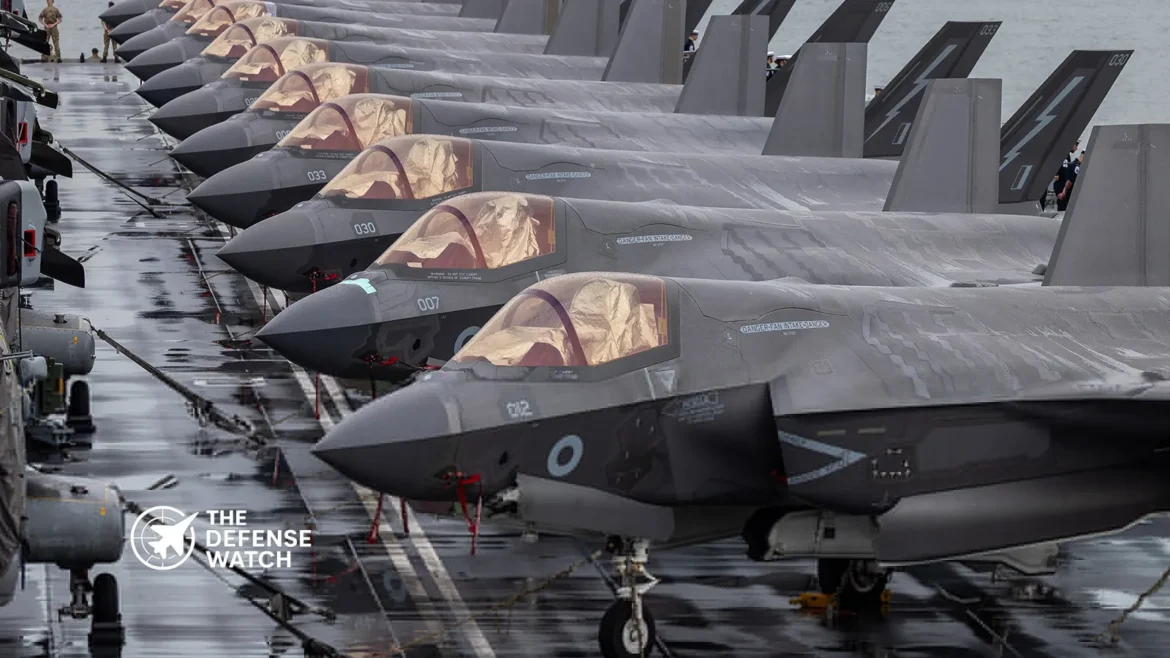
UK F-35 delivery timeline clarified
The UK F-35 delivery timeline now points to the 75th aircraft arriving by the end of 2033, according to a Ministry of Defence parliamentary response. The update provides fresh clarity on how the Lightning II fleet will grow through the next decade.
Responding to a written question in the House of Lords on January 5, 2026, Defence Minister Lord Coaker said the department expects to have taken delivery of its 75th F-35 aircraft by the end of 2033. The question focused on when the UK would reach the 74 aircraft mark under its existing commitment.
Fleet growth through the 2030s
The United Kingdom has so far committed to at least 74 F-35 Lightning II aircraft, with the option to order more in future batches. The program supports both the Royal Air Force and Royal Navy, forming the core of the UK carrier strike capability.
As of mid November 2025, the UK had received 41 F-35 aircraft. That figure was confirmed in a separate parliamentary answer by Veterans and People Minister Louise Sandher-Jones. The total planned deliveries by the end of 2025 stood at 48 aircraft.
RAF and Royal Navy operations
UK F-35 aircraft operate from RAF Marham and regularly deploy aboard the Royal Navy’s Queen Elizabeth class aircraft carriers. The jets are flown by mixed RAF and Royal Navy squadrons and are central to expeditionary air operations at sea.
Deliveries beyond the initial tranche are expected to continue steadily into the 2030s as the fleet moves toward a fully mature force structure.

USS Gerald R. Ford Deploys to Latin American Waters
The USS Gerald R. Ford (CVN-78), the U.S. Navy’s newest and largest aircraft carrier, entered the U.S. Southern Command (USSOUTHCOM) area of responsibility on November 11, 2025. The carrier departed the Mediterranean on November 4 as part of a strategic deployment aimed at supporting U.S. counternarcotics operations in Latin America.
Background: Strategic Deployment and Regional Security
The Pentagon had announced in late October that the Gerald R. Ford Carrier Strike Group would transit to the Western Hemisphere to reinforce the U.S. military presence and enhance regional security efforts. The deployment underscores the U.S. commitment to combating illicit trafficking and transnational threats that could affect the safety and prosperity of the United States and its allies in the region.
Details of the Deployment
The USS Gerald R. Ford joins eight other Navy vessels currently operating in the USSOUTHCOM area, including the USS Iwo Jima, USS Fort Lauderdale, USS San Antonio, USS Lake Erie, USS Jason Dunham, USS Gravely, USS Stockdale, and USS Wichita. Combined, these ships carry roughly 6,000 personnel. The Gerald R. Ford alone hosts approximately 4,000 sailors and dozens of tactical aircraft.
The Carrier Strike Group includes nine squadrons from Carrier Air Wing Eight, guided-missile destroyers USS Bainbridge and USS Mahan, and the missile defense command ship USS Winston S. Churchill. Additionally, the USS Gerald R. Ford embarked the Iwo Jima Amphibious Ready Group and a Marine Expeditionary Unit under a joint task force, enhancing the U.S. Navy’s operational flexibility.
“The enhanced U.S. force presence in the USSOUTHCOM AOR will bolster U.S. capacity to detect, monitor, and disrupt illicit actors and activities that compromise the safety and prosperity of the United States homeland and our security in the Western Hemisphere,” said Chief Pentagon Spokesperson Sean Parnell.
Operational Context
This deployment follows a series of military operations in the region targeting vessels suspected of transporting narcotics. Since September, U.S. forces have conducted strikes against drug-carrying ships, reportedly resulting in 19 targeted actions and at least 75 fatalities among those aboard the vessels. While the Pentagon has not disclosed the full operational objectives, the presence of the Gerald R. Ford and its strike group aims to strengthen maritime security and ensure freedom of navigation across Latin American waters.
SOUTHCOM Commander Adm. Alvin Holsey highlighted the strategic intent of the deployment: “Through unwavering commitment and the precise use of our forces, we stand ready to combat the transnational threats that seek to destabilize our region.”
Looking Ahead: Regional Impact and Strategic Significance
The deployment of the USS Gerald R. Ford Carrier Strike Group to Latin America represents a significant escalation in U.S. naval presence in the Western Hemisphere. Analysts note that such high-profile deployments serve both operational and deterrence purposes, signaling U.S. commitment to countering narcotics trafficking and regional threats while strengthening ties with partner nations through potential joint exercises and maritime security cooperation.
As the Gerald R. Ford Carrier Strike Group integrates with existing naval assets in the USSOUTHCOM area, ongoing monitoring of illicit maritime activity and coordinated counternarcotics operations are expected to remain a primary focus. The deployment also provides critical training and operational experience for carrier personnel in complex maritime environments.