
UK F-35 Fighter Purchase Expands Britain’s Fifth-Generation Airpower
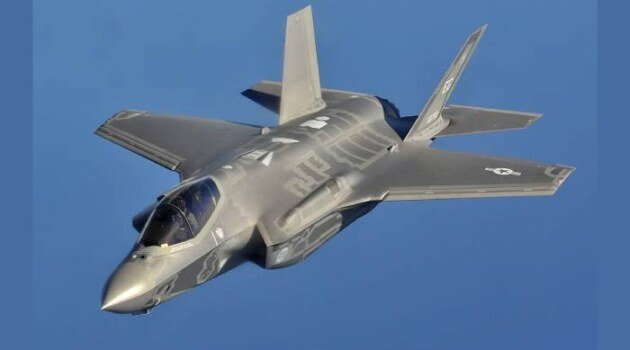
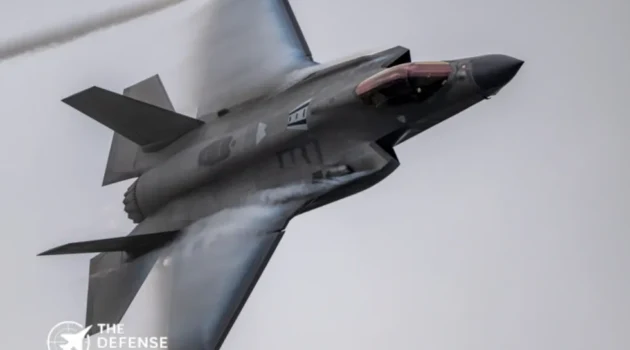
The UK is expanding its F-35 fighter force through a £2.2 billion investment that will add new aircraft and introduce the first F-35A variant into British service. The commitment forms part of the government’s Defence Investment Plan, which links combat-air modernization with NATO obligations and the UK’s defense industrial strategy.
- UK F-35 Fighter Purchase Expands Britain’s Fifth-Generation Airpower
- Takeaways
- £2.2 Billion F-35 Commitment
- F-35A Adds a New NATO Role for the RAF
- Why Britain Is Retaining the F-35B
- UK F-35 Workshare Remains a Major Industrial Benefit
- F-35 Expansion Fits Into a Larger Combat-Air Strategy
- The Operational Challenge Will Be Sustainment
- What the F-35A Means for UK and US Defense Cooperation
- F-35 Purchase Supports a Broader UK Defense Reset
- What Happens Next
- Bottom Line
Takeaways
Britain is expanding its F-35 force as part of a wider airpower and nuclear modernization program, with the first UK F-35A aircraft adding a new NATO mission to the existing F-35B fleet.
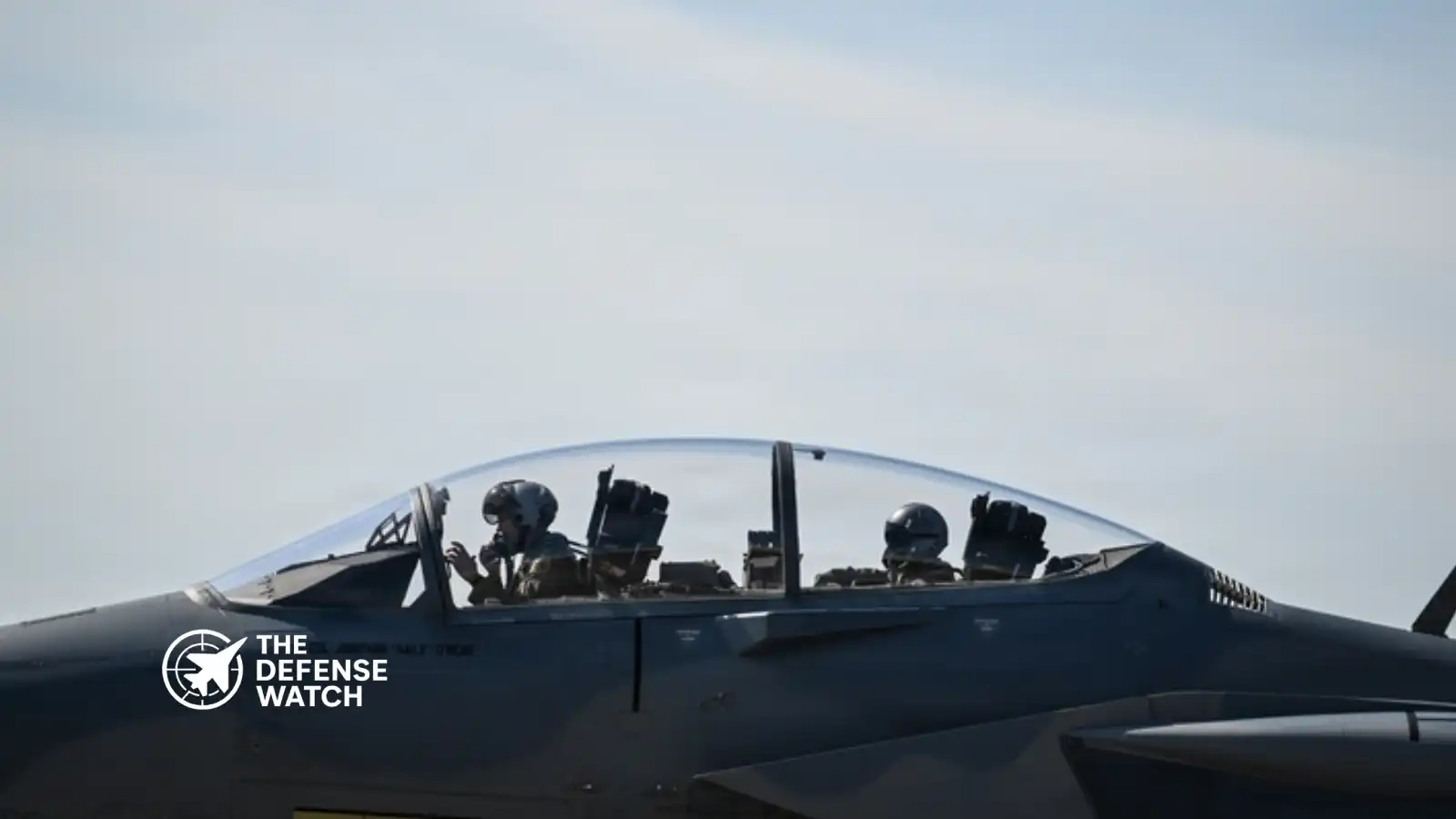
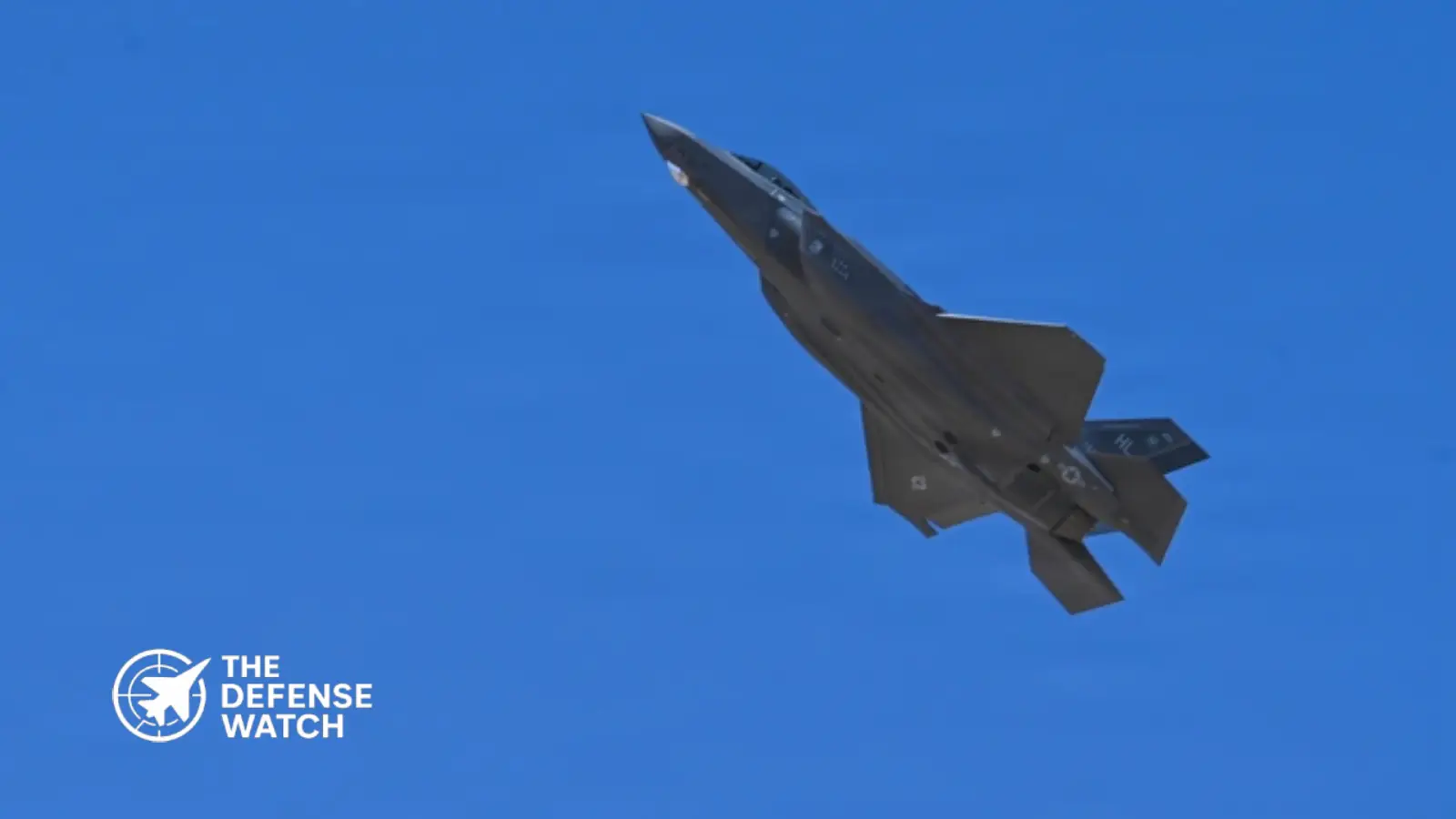
The British government previously confirmed its intention to purchase 12 F-35A fighters and assign them to NATO’s Dual Capable Aircraft nuclear mission. The new aircraft will complement the Royal Air Force’s existing F-35B fleet, which provides both land-based combat capability and the ability to operate from the Royal Navy’s Queen Elizabeth class aircraft carriers.
The distinction between the two variants is strategically important.
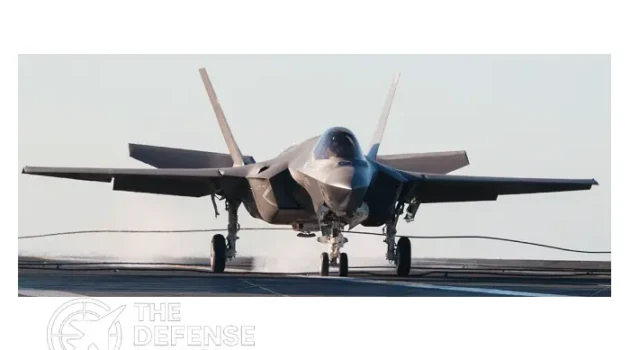
The F-35B uses short takeoff and vertical landing technology and is central to Britain’s carrier strike capability. The F-35A uses conventional takeoff and landing and offers greater internal fuel and weapons capacity than the F-35B, while also providing the configuration Britain selected for its NATO nuclear role.
£2.2 Billion F-35 Commitment
The Defence Investment Plan allocates £2.2 billion to purchasing additional F-35 aircraft. The figure should not be interpreted as a simple unit price for the 12 F-35As.
The British government has specifically noted that individual aircraft figures can exclude cross-cutting expenditure such as support and munitions. The £2.2 billion commitment therefore represents a broader procurement allocation within the UK’s combat-air investment program.
UK F-35 investment Details Program allocation £2.2 billion New F-35A commitment 12 aircraft Existing UK variant F-35B F-35A mission Conventional and NATO nuclear roles Primary UK F-35 operating base RAF Marham UK global F-35 workshare About 15% by value UK F-35-related employment About 20,000 jobs The government has said the F-35A purchase forms part of a wider £64 billion investment in the UK’s nuclear deterrent over the next four years. That package includes the Dreadnought submarine program, a new sovereign warhead effort and other nuclear capabilities.
F-35A Adds a New NATO Role for the RAF
The most consequential difference between Britain’s existing F-35B force and the incoming F-35As is not simply the aircraft’s configuration. It is the mission assigned to the new fleet.
Britain plans to use the F-35A as a dual-capable aircraft within NATO’s nuclear mission. The aircraft will therefore provide the UK with a contribution to the Alliance’s nuclear deterrence structure in addition to Britain’s independent strategic nuclear deterrent.
The move gives the Royal Air Force a role in NATO’s nuclear air mission that it has not maintained since the retirement of Britain’s sovereign air-launched nuclear capability after the Cold War.
NATO’s nuclear posture combines the strategic nuclear forces of the United States, United Kingdom and France with US nuclear weapons deployed in Europe and the supporting aircraft, infrastructure and forces provided by other allies.
Britain’s F-35A commitment therefore has implications beyond the size of the RAF fighter inventory. It strengthens the conventional and nuclear components of the UK’s contribution to NATO.
Why Britain Is Retaining the F-35B
The purchase of F-35As does not represent a replacement for Britain’s F-35B fleet.
The F-35B remains central to the UK’s carrier strike concept because its short takeoff and vertical landing capability allows it to operate from the Royal Navy’s two Queen Elizabeth class aircraft carriers.
That gives Britain two distinct F-35 operating models.
The F-35B provides a carrier-based combat-air capability, while the F-35A will provide a land-based fighter force optimized for conventional operations and NATO’s dual-capable aircraft mission.
This combination also gives Britain greater flexibility in allocating F-35 aircraft to different operational requirements. Carrier aviation, NATO air operations and the nuclear mission can be supported through different force elements rather than relying on a single aircraft variant for every task.
UK F-35 Workshare Remains a Major Industrial Benefit
The F-35 program is also significant because Britain’s participation extends well beyond purchasing completed aircraft.
The UK government says more than 100 British companies contribute to the F-35 program and that approximately 15% of the global F-35 supply chain by value is based in Britain. The program supports about 20,000 jobs across the country.
British companies involved in the program include BAE Systems, Rolls-Royce, Leonardo UK, MBDA, Martin-Baker, QinetiQ, GE Aerospace, Honeywell and other suppliers.
This industrial position is important because the UK is not simply buying a finite number of aircraft. British companies participate in production for the wider international F-35 fleet.
The economic effect is therefore linked to global production volumes rather than only the number of aircraft operated by the RAF.
The 2025 Strategic Defence Review said approximately 15% of the value of each F-35 is produced in the UK. That makes the F-35 one of the country’s most significant international defense-industrial programs.
F-35 Expansion Fits Into a Larger Combat-Air Strategy
The UK is not treating the F-35 as a standalone modernization program.
The Defence Investment Plan places the aircraft alongside upgrades to the Eurofighter Typhoon, the Global Combat Air Programme and new autonomous combat-air systems.
The government has committed £8.6 billion over four years to GCAP, the UK, Italian and Japanese program intended to deliver a sixth-generation combat aircraft from 2035.
The same plan commits £300 million to begin development of a new autonomous combat aircraft. Britain has also allocated nearly £240 million to develop a Hybrid Carrier Air Wing, including jet-powered uncrewed aircraft intended to operate alongside F-35B fighters.
This creates a layered future combat-air structure:
- F-35B for carrier-based fifth-generation operations
- F-35A for land-based operations and NATO’s nuclear mission
- Typhoon for fourth-generation-plus air combat and modernization
- Autonomous combat aircraft for future crewed-uncrewed operations
- GCAP for the UK’s planned sixth-generation combat-air capability
The significance is that the UK is building an air force based on several complementary aircraft classes rather than expecting one platform to cover every mission.
The Operational Challenge Will Be Sustainment
Increasing the number of F-35s is only one part of the modernization problem.
The UK will also need sufficient pilots, maintainers, spare parts, weapons, training capacity, infrastructure and software support to generate combat power from the additional aircraft.
This is particularly relevant because the F-35 is a global program with a shared logistics and sustainment architecture. Britain benefits from the scale of that international fleet, but it also depends on multinational supply chains and the broader F-35 support system.
The additional aircraft therefore have to be considered in terms of availability rather than simply fleet size.
For the RAF, the practical measure of the investment will be how many F-35s can be generated for combat operations at the same time, how quickly the force can surge, and how effectively the aircraft can be supported during sustained operations.
What the F-35A Means for UK and US Defense Cooperation
The F-35 expansion also reinforces the longstanding US-UK defense relationship.
Britain’s F-35 program was built around international cooperation, with British industry participating in the global supply chain and the US providing the aircraft, mission systems and broader program infrastructure.
The relationship is particularly important as Britain moves toward a future force combining US-origin fifth-generation aircraft with the UK, Italy and Japan’s GCAP sixth-generation program.
That means the Royal Air Force will operate US-designed fifth-generation fighters while simultaneously developing a separate next-generation combat-air ecosystem with European and Indo-Pacific partners.
The arrangement gives Britain access to an established fifth-generation combat system while maintaining a role in developing future sovereign combat-air technologies.
F-35 Purchase Supports a Broader UK Defense Reset
The F-35 expansion comes as Britain increases defense spending and attempts to rebuild military readiness.
The Defence Investment Plan provides almost £300 billion in defense funding over four years and adds £15 billion of new investment. The government says the plan is intended to move the armed forces toward greater warfighting readiness while supporting British defense industry and advanced manufacturing.
For combat aviation, that means investing simultaneously in current-generation readiness, fifth-generation capability and future autonomous and sixth-generation systems.
The F-35A purchase is therefore best understood as one part of a broader transition.
Britain is maintaining the F-35B for carrier operations, expanding its land-based F-35 capability with the F-35A, modernizing Typhoon, developing autonomous combat aircraft and continuing GCAP.
That approach provides the RAF with a bridge between today’s combat-air requirements and the sixth-generation force Britain expects to field from the mid-2030s.
What Happens Next
The £2.2 billion F-35 allocation is subject to the UK’s procurement and contracting processes. The Defence Investment Plan itself describes its figures as indicative and notes that programs remain subject to approvals, affordability and contracting decisions.
The immediate milestone is the procurement of the 12 F-35A aircraft announced by the British government.
Their eventual arrival will create a second F-35 variant within the RAF and establish Britain’s planned contribution to NATO’s Dual Capable Aircraft mission.
Over the longer term, the effectiveness of the investment will depend on how the F-35A fleet is integrated with Britain’s F-35Bs, Typhoons, autonomous aircraft, long-range weapons and the future GCAP system.
For the United Kingdom, the objective is not simply to own more fifth-generation fighters. It is to build a combat-air force capable of operating across NATO missions today while transitioning toward a more distributed, autonomous and networked force in the 2030s.
Bottom Line
Britain’s £2.2 billion F-35 investment marks a significant expansion of its fifth-generation combat-air capability and introduces the F-35A into Royal Air Force service.
The 12 F-35As will add a land-based aircraft optimized for Britain’s NATO nuclear mission, while the existing F-35B fleet remains central to carrier strike operations.
The industrial dimension is equally important. With roughly 15% of the global F-35 supply chain by value based in Britain and about 20,000 UK jobs connected to the program, the procurement reinforces both military capability and the country’s position in the global F-35 production network.
The investment also fits into a wider British combat-air strategy involving Typhoon modernization, autonomous aircraft and GCAP. The result will be a mixed force designed to connect today’s fifth-generation capability with Britain’s planned sixth-generation combat-air architecture.