A deadly blast at a wedding in southern Iran has intensified scrutiny of U.S. targeting and civilian protection after weapons experts found evidence pointing to a direct munition impact.
Takeaways
Reuters analysis indicates that a U.S. munition likely directly struck an Iranian wedding site, while the U.S. military investigates the civilian casualties.
Iranian Wedding Strike Under U.S. Investigation
The Iranian wedding strike in the southern Iranian town of Kuhestak on September 1 is under investigation by the U.S. military after weapons experts reviewing imagery verified by Reuters concluded that the blast was likely caused by a direct hit from a U.S. munition. The finding has renewed scrutiny of U.S. targeting practices and civilian protection during the continuing conflict with Iran.
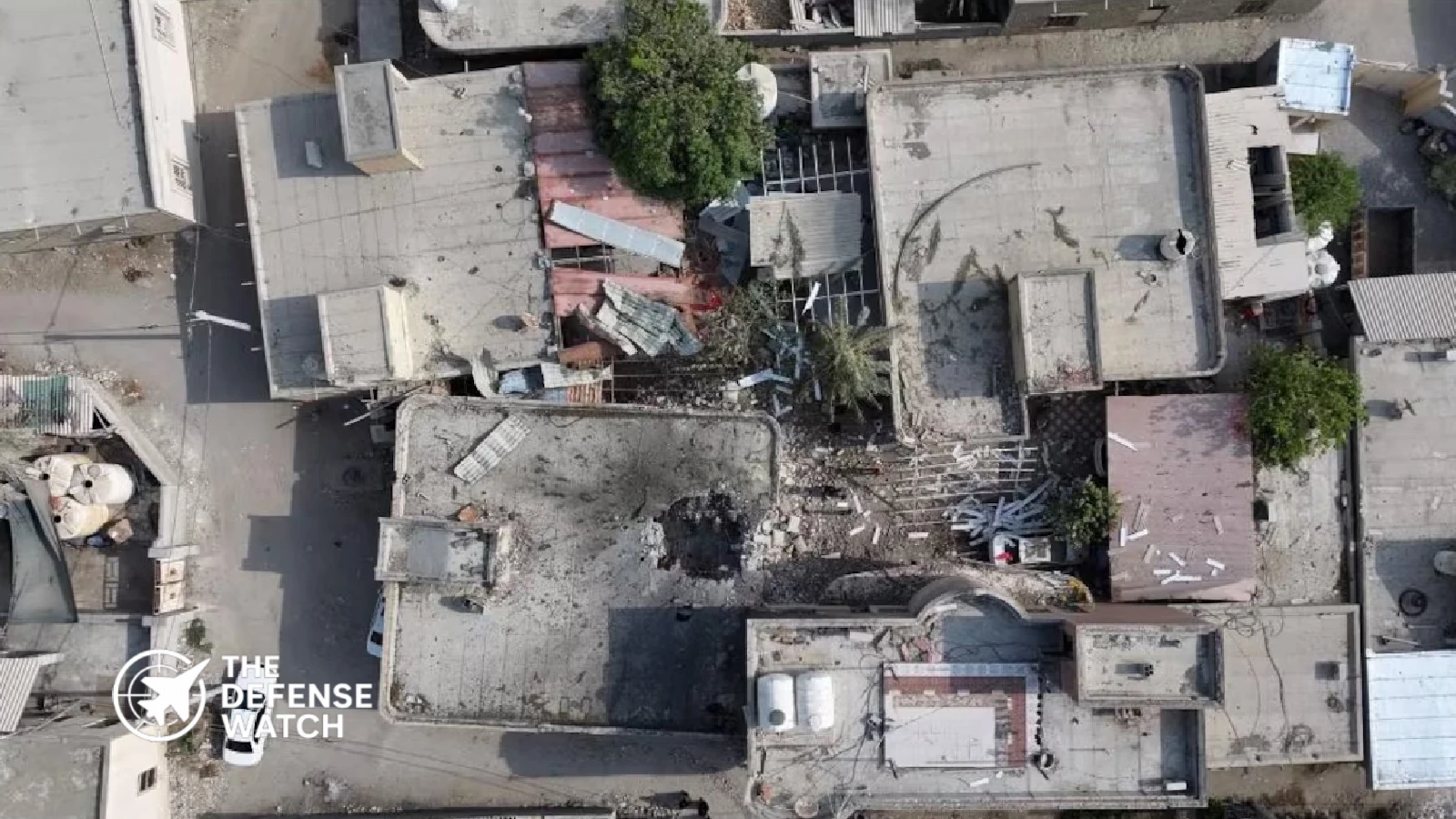
Reuters reported that the explosion struck a residential building where a wedding celebration was taking place. The initial reported toll was four people killed and at least 68 injured. Iranian state television later reported that another woman died from injuries, raising the reported death toll to five.
The United States has not accepted responsibility for the casualties. U.S. officials have said the military is examining what happened, including whether the deaths and injuries were caused by a U.S. strike, an Iranian air-defense event or another scenario.
What The Weapons Analysis Found
Reuters provided photographs and videos of the aftermath to four military weapons experts for assessment. The experts concluded that the physical damage was consistent with a direct munition impact rather than secondary damage caused by a weapon that had struck another target and then ricocheted.
Three of the experts assessed that the weapon was likely American rather than an Iranian air-defense missile. The analysis pointed toward an air-dropped U.S. munition, although Reuters did not establish a definitive weapon identification from the available evidence.
That distinction is important because the location of the wedding was close to a telecommunications tower that U.S. forces had targeted during strikes in the area.
Reuters reported that the tower was approximately 135 meters from the wedding location, based on satellite imagery. U.S. officials told Reuters that American forces had targeted the communications facility in Kuhestak on September 1.
The evidence therefore raises a central question for the U.S. investigation: whether the munition intended for the nearby military-related communications target instead struck the residential building.
U.S. Strikes Targeted IRGC Military Infrastructure
The wider operation was publicly acknowledged by U.S. Central Command.
CENTCOM said on September 1 that U.S. forces completed a wave of strikes against Iranian military targets, including Islamic Revolutionary Guard Corps air-defense sites, radar systems, maritime assets, mine-laying capabilities and communications sites. CENTCOM said the strikes followed Iranian attempts to attack commercial shipping in the Strait of Hormuz and U.S. service members.
The official U.S. account does not specifically identify the Kuhestak wedding incident or acknowledge that an American munition caused the civilian casualties.
That distinction remains important for reporting the incident accurately. The Reuters weapons analysis provides evidence supporting the U.S. munition assessment, but the U.S. government investigation has not publicly reached a final conclusion.
Civilian Casualty Questions
The Iranian wedding strike has become particularly significant because it follows another major civilian casualty incident earlier in the conflict.
On February 28, a strike destroyed the Shajareh Tayyebeh girls school in Minab, southern Iran. Reuters previously reported that U.S. forces were likely responsible based on an initial internal military investigation, while the Pentagon continued a formal investigation. Reuters reported that the strike killed more than 160 people, most of them children.
The two incidents have different circumstances and should not be treated as identical. However, both have raised questions about intelligence, target identification, weapon employment and the ability of U.S. forces to distinguish military objectives from nearby civilian structures.
The latest incident also places renewed attention on the practical limits of precision weapons. Modern guided munitions can substantially improve accuracy, but precision does not eliminate the risk of civilian casualties when military targets are located close to populated areas.
For military planners, the issue extends beyond the accuracy of the weapon itself. Target-quality intelligence, confirmation of the intended aimpoint, assessment of surrounding structures and the timing of the strike can all influence the outcome.
What Remains Unclear
Several important questions remain unanswered.
The first is the exact identity of the munition. Weapons experts assessed the physical evidence as consistent with a U.S. air-dropped weapon, but the publicly available evidence does not establish a definitive model.
The second concerns the intended target. U.S. officials said the telecommunications tower was targeted, but the government has not publicly explained the intelligence supporting the strike or whether the residential building was considered during the targeting process.
The third is whether the wedding site was visible to U.S. intelligence and targeting systems before the strike.
Finally, the investigation must determine whether the incident resulted from a targeting error, a weapon malfunction, an unexpected weapon trajectory or another factor.
Those findings will matter for assessing whether the incident represents an isolated operational failure or points to broader problems in targeting procedures during the Iran campaign.
Why The Incident Matters For U.S. Military Operations
The Iranian wedding strike comes as U.S. forces continue conducting operations against Iranian military infrastructure while attempting to counter threats to American forces and commercial shipping around the Strait of Hormuz.
The strategic environment makes accurate targeting particularly important. Communications facilities, radar systems and air-defense infrastructure can be embedded within or near populated areas, creating difficult operational conditions for strike planners.
Precision-guided weapons are designed to reduce unintended damage, but their effectiveness ultimately depends on accurate intelligence and correct target identification. A weapon can strike its designated aimpoint accurately while still causing civilian harm if the target information is incomplete or if civilians are present in the weapon’s effects area.
This is why the pending U.S. investigation will likely be more important than the initial debate over whether the weapon was American. Establishing responsibility is only the first step. Determining how the target was selected, what information was available and what safeguards were applied will provide a clearer picture of the operational failure, if one is confirmed.
U.S. Accountability Under Scrutiny
Vice President JD Vance said the United States was investigating the incident and emphasized that Washington wanted to establish what happened. U.S. officials have not publicly confirmed that an American munition caused the deaths.
That position contrasts with the findings presented by the Reuters investigation, which relied on independently reviewed imagery and assessments from military weapons specialists.
The Pentagon’s handling of the earlier Minab school investigation adds another layer of scrutiny. Reuters reported that the Pentagon had not publicly released the final findings of that investigation, despite the scale of the casualties.
For the United States, the credibility of its investigation will therefore depend on whether it clearly establishes the weapon involved, the intended target, the intelligence used for the strike and the reasons civilians were present in the affected area.
Until those findings are released, the most defensible conclusion is that independent weapons analysis strongly points toward a direct U.S. munition strike, while formal U.S. responsibility remains unconfirmed.
The Broader Military Lesson
The incident illustrates a central challenge in modern air warfare: precision technology can reduce the probability of unintended casualties, but it cannot compensate for inaccurate or incomplete information about the target environment.
The distinction is particularly important in conflicts where military communications, air-defense and other strategic infrastructure operate close to civilian communities.
For U.S. forces, the outcome of the investigation could influence future targeting procedures, intelligence verification requirements and operational restrictions around populated areas. It could also affect international assessments of how the United States applies precision strike capabilities during the Iran conflict.
For now, the Iranian wedding strike remains an active investigation rather than a formally acknowledged U.S. civilian casualty incident. Reuters’ analysis provides significant evidence about the likely weapon and impact mechanism, but the final determination rests with the U.S. military investigation.
Feature Image Suggestion
Use a professionally licensed Reuters or other authorized news photograph showing the damaged residential building in Kuhestak after the September 1 blast. Avoid graphic imagery of victims. A wide, non-graphic image showing structural damage and the surrounding residential area would provide appropriate context for Google News and Discover.