

Executive Summary:
Pakistan’s Makkah Joint Defence Agreement with Saudi Arabia and Türkiye could develop into a wider economic partnership covering investment, energy, industrial production, technology and defense manufacturing. The agreement itself does not create an automatic economic bloc, however, and Pakistan’s ability to convert strategic ties into sustained investment will depend on macroeconomic stability, regulatory reforms, infrastructure and project execution.
Pakistan’s Makkah Defense Pact Opens A Wider Economic Question
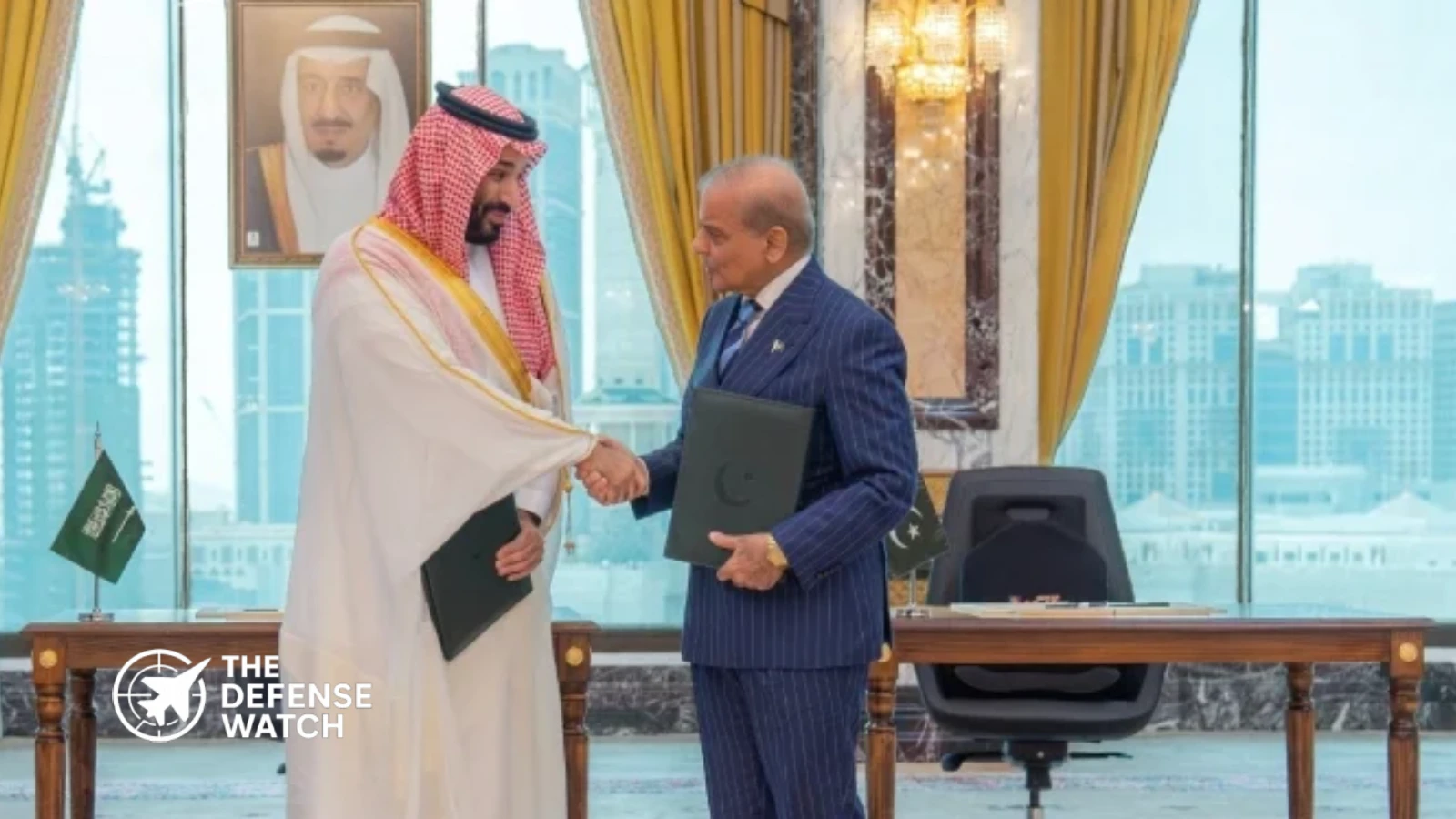
The Pakistan Makkah defense pact signed with Saudi Arabia and Türkiye on August 7 has immediate military and geopolitical implications, but its longer-term importance may extend into investment, energy security and industrial cooperation. Reuters reported that the agreement treats an armed attack against one member as an attack against all, while the three governments have emphasized its defensive character and have not presented it as a replacement for existing alliances.
For Pakistan, the economic dimension is particularly significant because Islamabad continues to balance external financing requirements with efforts to attract foreign capital, strengthen reserves and move from stabilization toward sustainable growth.
The strategic relationship with Saudi Arabia already has an important financial component. In April, Pakistan’s Finance Ministry said Saudi Arabia had committed an additional $3 billion in deposits and agreed to extend an existing $5 billion Saudi deposit for a longer period, providing support for Pakistan’s external financing position.
That existing financial relationship means the Makkah agreement is being signed on top of established economic ties rather than creating them from scratch.
Saudi Capital Could Support Pakistan’s Energy And Infrastructure Priorities
Energy is one of the clearest areas where closer Pakistan-Saudi relations could produce measurable economic effects.
Pakistan has historically relied heavily on imported energy, making global oil prices and foreign exchange availability important variables for its balance of payments. Saudi financing has previously helped Islamabad manage part of that exposure.
The Saudi Fund for Development said in 2025 that its oil derivatives financing for Pakistan had reached approximately $6.7 billion since 2019. The latest agreement at that time provided $1.2 billion for oil derivative imports.
More recently, Pakistani officials have been discussing a potential new Saudi oil financing arrangement reportedly worth $6.7 billion over 15 years, with a proposed five-year grace period and a 1 percent interest rate. The proposal was still under discussion and should not be treated as a finalized financing commitment.
If implemented, such financing could reduce short-term pressure on Pakistan’s foreign exchange position and provide greater predictability for energy imports. It would not, by itself, resolve the structural problems affecting Pakistan’s energy sector, including circular debt, transmission constraints and the financial condition of state-owned utilities.
That distinction is important. External financing can provide liquidity, but lasting energy security requires domestic reforms and investment in generation, transmission, distribution and indigenous energy production.
Investment Is The Bigger Test Of The Makkah Partnership
The central economic question is whether political and security confidence can translate into actual capital deployment.
Pakistan and Saudi Arabia already have an economic cooperation framework covering areas including energy, industry, mining, information technology, tourism, agriculture and food security. Islamabad has also been seeking Saudi participation in major projects and investment opportunities across the economy.
Saudi investment could be particularly important in capital-intensive sectors where Pakistan faces financing constraints.
Potential areas include:
| Sector | Potential Economic Role |
|---|---|
| Energy | Oil, gas, refining, renewable power and electricity infrastructure |
| Mining | Development of mineral resources and processing capacity |
| Logistics | Ports, transport corridors and warehousing |
| Agriculture | Food security, processing and export-oriented production |
| Digital economy | Data infrastructure, IT services and technology |
| Manufacturing | Industrial projects and supply-chain development |
| Tourism | Hospitality, transport and related services |
| Defense industry | Joint production, maintenance and technology cooperation |
The economic logic is straightforward. Saudi Arabia has access to significant investment capital and is pursuing economic diversification under Vision 2030, while Pakistan has a large domestic market, a substantial labor force, natural resources and geographic access to South and Central Asian markets.
The difficult part is turning that complementarity into commercially viable projects.
Türkiye Adds An Industrial And Technology Dimension
Türkiye’s role is different from Saudi Arabia’s.
Ankara has developed a substantial domestic defense industry and industrial base spanning aerospace, naval systems, unmanned aircraft, electronics, armored vehicles and precision weapons. Pakistan and Türkiye already cooperate in areas including naval shipbuilding, aerospace and defense modernization.
The new trilateral framework could therefore provide a platform for combining Saudi financing with Turkish industrial expertise and Pakistani manufacturing capacity.
For the defense sector, that could potentially support joint ventures involving maintenance, components, unmanned systems, naval platforms, electronics and other military technologies.
However, a defense agreement does not automatically create industrial integration. Successful joint production requires export controls, intellectual property arrangements, financing structures, technical standards, supply-chain agreements and long-term procurement commitments.
These mechanisms would have to be negotiated separately.
Pakistan’s Defense Industry Could Gain From Greater Regional Integration
The defense-industrial dimension deserves particular attention because the three countries bring different capabilities to the relationship.
Pakistan has an established defense production sector and experience developing and exporting aircraft, armored vehicles, naval systems and other military equipment. Türkiye has expanded its defense exports and developed advanced domestic platforms and subsystems. Saudi Arabia is seeking to increase domestic defense production as part of its broader economic diversification strategy.
This creates a potential industrial model in which:
- Saudi Arabia provides capital and access to Gulf markets.
- Türkiye contributes engineering, systems integration and industrial technology.
- Pakistan contributes manufacturing capacity, engineering manpower and established defense-production experience.
Such cooperation could be relevant to unmanned systems, naval platforms, ammunition, electronics, maintenance and other areas where regional production capacity is increasingly important.
For the United States and other Western defense suppliers, the development is also worth watching because greater regional defense-industrial cooperation can affect future procurement patterns, technology partnerships and supply-chain relationships.
At the same time, the scale of any future cooperation remains uncertain until specific contracts, production agreements and investment commitments are announced.
Trade Remains A Major Weakness
Security cooperation among Pakistan, Saudi Arabia and Türkiye is considerably deeper than their three-way commercial integration.
Pakistan’s trade relationship with Saudi Arabia remains dominated by energy imports and a relatively narrow range of exports. Pakistan also has significant room to increase commercial trade with Türkiye.
The broader opportunity lies in moving beyond government-to-government agreements toward private-sector investment and supply-chain integration.
Pakistan could potentially expand exports in areas such as:
- Textiles and apparel
- Rice and processed food
- Surgical instruments
- Sports goods
- Leather products
- Pharmaceuticals
- Engineering goods
- Information technology services
Saudi Arabia’s large investment program and Türkiye’s industrial base could also create opportunities for Pakistani suppliers to become part of regional manufacturing and logistics networks.
But this requires more than diplomatic access. Pakistani exporters need competitive energy costs, reliable infrastructure, predictable taxation, efficient customs procedures and stable commercial regulations.
Pakistan’s Macroeconomic Position Remains The Main Constraint
The Makkah agreement comes while Pakistan is still implementing a major economic reform program supported by the International Monetary Fund.
The IMF completed Pakistan’s third review under its Extended Fund Facility and second review under the Resilience and Sustainability Facility in May 2026. The decision unlocked approximately $1.1 billion under the EFF and about $220 million under the RSF, taking combined disbursements under the two arrangements to about $4.8 billion.
The IMF continues to emphasize fiscal discipline, stronger public finances, improved competition, higher productivity, state-owned enterprise reform and energy-sector viability.
Those issues directly affect foreign investment.
A major Saudi or Turkish investor evaluating a multibillion-dollar project will look beyond diplomatic agreements. The investment decision will depend on currency stability, taxation, repatriation rules, energy availability, contract enforcement, infrastructure and the ability of Pakistani institutions to execute projects on schedule.
This is why the Makkah pact should be viewed as an enabling political framework rather than an economic guarantee.
Remittances Already Give Saudi Arabia Strategic Economic Importance
The relationship also extends well beyond government financing and investment.
Saudi Arabia is a major source of remittances for Pakistan. The State Bank of Pakistan reported that Pakistani workers sent home $1.025 billion from Saudi Arabia in May 2026 alone.
Total Pakistani workers’ remittances reached $38.1 billion during July-May of fiscal year 2026, up 9.2 percent from the same period a year earlier. Saudi Arabia was the largest source among the countries listed by the central bank in its May data.
This provides another economic foundation for the strategic relationship.
Labor mobility, skills development and technology transfer could therefore become important components of the broader partnership, particularly as Saudi Arabia continues developing large infrastructure, tourism, technology and industrial projects.
What The Pact Could Mean For U.S. Defense Strategy
From a U.S. defense perspective, the development is significant because it reflects a broader trend toward regional states building additional security relationships outside traditional alliance structures.
The agreement does not eliminate Saudi Arabia’s existing security relationship with Washington, nor does it replace Türkiye’s NATO membership. Reuters reported that the Makkah agreement complements existing arrangements rather than replacing them.
Its importance lies instead in the growing willingness of regional powers to combine their own military capabilities, financing and industrial resources.
For Washington, that could create both opportunities and challenges.
Greater regional defense capacity can reduce pressure on U.S. forces and strengthen the ability of partners to protect critical infrastructure and maritime routes. At the same time, expanding indigenous defense production could gradually reduce dependence on Western suppliers in selected categories.
The eventual impact will depend on whether the agreement remains primarily a political commitment or develops into a structured defense-industrial and operational framework.
Execution Will Determine Whether The Economic Promise Becomes Real
The Makkah pact gives Pakistan an opportunity to connect defense diplomacy with economic policy, but the agreement itself cannot solve Pakistan’s structural economic problems.
The most important indicators to watch over the next 12 to 24 months will be concrete rather than rhetorical:
- Signed investment agreements: Whether announced Saudi and Turkish investment plans become legally binding projects.
- Energy financing: Whether proposed Saudi financing arrangements are finalized and implemented.
- Industrial projects: Whether joint ventures establish actual production facilities inside Pakistan.
- Trade growth: Whether bilateral trade moves beyond existing commodity patterns.
- Defense manufacturing: Whether the three countries establish joint production or technology partnerships.
- Infrastructure execution: Whether major projects move from memorandums to construction and operation.
- Economic reforms: Whether Pakistan improves the regulatory and financial conditions required to retain foreign investment.
The economic potential is substantial, but the distinction between announced investment and realized investment is critical.
Pakistan already has extensive experience with large foreign investment announcements that take years to reach financial close or construction.
The Strategic Opportunity Extends Beyond Defense
The Makkah Joint Defence Agreement creates a new layer in relations among Pakistan, Saudi Arabia and Türkiye, but its economic significance will ultimately depend on what follows the signing ceremony.
Saudi Arabia can provide investment capital and access to Gulf markets. Türkiye brings industrial and technological capabilities, while Pakistan offers manufacturing capacity, a large workforce, strategic geography and access to regional markets.
That combination gives the three countries a potentially complementary economic relationship.
The next stage will require detailed commercial agreements, financing structures, industrial partnerships and regulatory reforms.
For Pakistan, the central challenge is therefore not attracting headlines around the Makkah pact. It is converting strategic trust into factories, energy projects, technology partnerships, exports and long-term private investment.
That is the measure that will determine whether the agreement becomes an important economic milestone or remains primarily a defense and diplomatic arrangement.
