
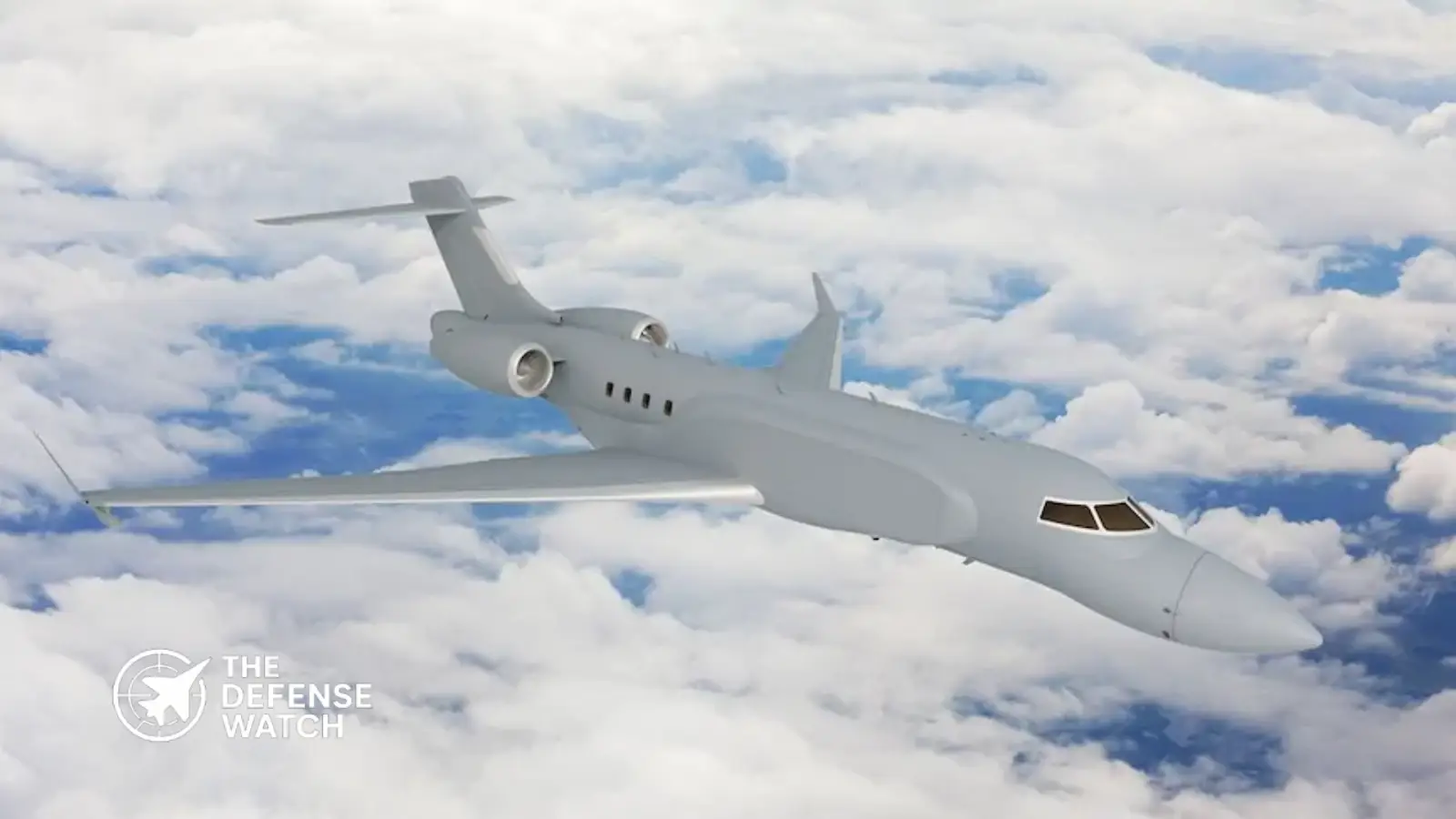
L3Harris AERIS X Positioned For Growing Allied Demand
AERIS X aircraft is being highlighted by L3Harris Technologies as allied governments look for faster and more affordable airborne early warning and control capabilities. The company says nations across Europe, the Indo-Pacific, the Middle East, and the Americas are reassessing aging surveillance fleets while regional air threats continue to expand.
- L3Harris is promoting the AERIS X airborne early warning and control aircraft to allied nations.
- The platform is based on the Bombardier Global 6500 business jet airframe.
- Company says the aircraft offers 360-degree AESA radar coverage and lower lifecycle costs.
- Demand is rising as countries seek protection from drones, cruise missiles, and ballistic threats.
- South Korea previously selected an L3Harris AEW&C solution valued above $2.26 billion.
The aircraft is built on the Bombardier Global 6500 business jet platform and is designed to provide airborne surveillance, battle management, and networked command functions. L3Harris argues that smaller missionized business jets can offer quicker delivery timelines and lower sustainment costs than larger legacy warning aircraft.
Why The Market Is Shifting
Many current airborne warning fleets were developed decades ago. Several operators now face maintenance pressure, limited aircraft availability, and expensive modernization programs. That creates an opening for new entrants like AERIS X aircraft.
The company says recent conflicts have shown the need for persistent detection against drones, low-observable threats, cruise missiles, and ballistic missiles. Those lessons are driving renewed interest in aircraft that can remain on station longer while feeding data to fighters, missile defenses, and command centers.
This reflects a broader defense trend. Instead of waiting years for bespoke programs, many governments are now seeking proven systems already near production.
Claimed Capabilities Of AERIS X
According to L3Harris, the platform includes an Active Electronically Scanned Array radar with full 360-degree coverage and improved resistance to jamming. The company also says the jet can operate at higher altitudes and longer ranges than some competing platforms, improving radar horizon and time on mission.
The aircraft is also marketed as suitable for fifth-generation force integration, including data sharing with stealth fighters and coalition assets. For countries investing heavily in advanced combat aircraft, that interoperability pitch is likely central to future sales efforts.
South Korea Selection Boosts Credibility
One of the strongest indicators of market traction came in 2025 when South Korea selected an L3Harris-led AEW&C solution worth more than $2.26 billion. The program will deliver modified Global 6500 aircraft for the Republic of Korea Air Force.
That win matters because South Korea evaluated multiple competitors while facing a demanding regional threat environment. Export customers often view previous international selections as evidence of maturity and reduced program risk.
Strategic Outlook
The push behind AERIS X aircraft highlights how airborne surveillance is evolving. Instead of relying only on large and expensive AWACS-style fleets, more countries may adopt smaller jets with advanced sensors and lower operating costs.
If L3Harris can convert interest into additional contracts, AERIS X could become a serious competitor in the next generation AEW&C market.
Get real time update about this post category directly on your device, subscribe now.
