.tdw-wrap { font-family: Georgia, ‘Times New Roman’, serif; color: #0f0e0d; line-height: 1.75; font-size: 17px; } .tdw-wrap *, .tdw-wrap *::before, .tdw-wrap *::after { box-sizing: border-box; } .tdw-wrap p { margin-bottom: 1.3rem; } .tdw-wrap a.tdw-link { color: #1a5a9e; text-decoration: none; border-bottom: 1px solid rgba(26,90,158,0.35); } .tdw-wrap a.tdw-link:hover { border-bottom-color: #1a5a9e; }/* INTRO CALLOUT */ .tdw-intro-callout { background: #f5e8e5; border-left: 4px solid #b5280f; padding: 1rem 1.4rem; margin-bottom: 2rem; border-radius: 0 4px 4px 0; font-size: 0.97rem; color: #8c1e0a; line-height: 1.65; }/* AIRCRAFT SNAPSHOT CARDS */ .tdw-aircraft-cards { display: grid; grid-template-columns: 1fr 1fr; gap: 1.2rem; margin: 1.8rem 0; } @media (max-width: 600px) { .tdw-aircraft-cards { grid-template-columns: 1fr; } } .tdw-ac-card { border: 1px solid #d8d0c4; border-radius: 6px; overflow: hidden; } .tdw-ac-header { padding: 0.9rem 1.1rem 0.75rem; color: #fff; } .tdw-ac-header.t50 { background: #0c3060; } .tdw-ac-header.m346 { background: #0f4a2a; } .tdw-ac-name { font-size: 1.2rem; font-weight: 700; display: block; margin-bottom: 3px; } .tdw-ac-sub { font-family: monospace; font-size: 11px; opacity: 0.7; } .tdw-ac-body { background: #fff; padding: 0.85rem 1.1rem; font-size: 0.87rem; color: #4a4540; line-height: 1.6; } .tdw-ac-body strong { color: #0f0e0d; }/* SPECS TABLE */ .tdw-specs-wrap { overflow-x: auto; margin: 1.5rem 0 2rem; border: 1px solid #d8d0c4; border-radius: 6px; } table.tdw-specs { width: 100%; border-collapse: collapse; font-size: 0.86rem; min-width: 560px; } table.tdw-specs thead tr { background: #111c30; color: #fff; } table.tdw-specs thead th { padding: 0.7rem 0.9rem; text-align: left; font-family: monospace; font-weight: 500; font-size: 11px; letter-spacing: 0.06em; } table.tdw-specs thead th.t50h { color: #7fc7ff; } table.tdw-specs thead th.m346h { color: #7fe8a8; } table.tdw-specs tbody tr:nth-child(even) { background: #f2ede4; } table.tdw-specs tbody tr:nth-child(odd) { background: #fff; } table.tdw-specs tbody td { padding: 0.6rem 0.9rem; border-bottom: 1px solid #d8d0c4; vertical-align: top; color: #0f0e0d; } table.tdw-specs tbody td:first-child { font-family: monospace; font-size: 11px; color: #7a7268; white-space: nowrap; } table.tdw-specs tbody td.tdw-win { font-weight: 600; } .tdw-badge { font-family: monospace; font-size: 9px; font-weight: 600; background: #c8921a; color: #fff; padding: 1px 6px; border-radius: 2px; margin-left: 5px; vertical-align: middle; letter-spacing: 0.04em; }/* SECTION DIVIDER */ .tdw-rule { border: none; border-top: 1px solid #d8d0c4; margin: 2.25rem 0; }/* COMPARE BARS */ .tdw-bars { margin: 1.5rem 0; } .tdw-bar-row { margin-bottom: 1rem; } .tdw-bar-label { font-family: monospace; font-size: 11.5px; color: #4a4540; margin-bottom: 4px; display: flex; justify-content: space-between; } .tdw-bar-track { background: #f2ede4; border: 1px solid #d8d0c4; border-radius: 3px; height: 10px; overflow: hidden; display: flex; } .tdw-bar-t50 { height: 10px; background: #1a5a9e; } .tdw-bar-m346 { height: 10px; background: #0f4a2a; margin-left: 2px; } .tdw-bar-legend { display: flex; gap: 1.5rem; margin-top: 0.9rem; font-family: monospace; font-size: 11px; color: #4a4540; } .tdw-dot { display: inline-block; width: 10px; height: 10px; border-radius: 2px; margin-right: 5px; vertical-align: middle; }/* PULL QUOTE */ .tdw-pull-quote { border-left: 4px solid #c8921a; padding: 0.8rem 1.4rem; margin: 2rem 0; background: #fdf4e3; border-radius: 0 4px 4px 0; font-size: 1.02rem; font-style: italic; color: #4a4540; line-height: 1.65; } .tdw-pull-quote cite { display: block; font-family: monospace; font-size: 11px; font-style: normal; color: #7a7268; margin-top: 0.5rem; }/* VERDICT GRID */ .tdw-verdict-grid { display: grid; grid-template-columns: 1fr 1fr; gap: 1.2rem; margin: 1.5rem 0; } @media (max-width: 600px) { .tdw-verdict-grid { grid-template-columns: 1fr; } } .tdw-verdict-card { border: 1px solid #d8d0c4; border-radius: 6px; padding: 1.1rem; background: #fff; } .tdw-verdict-card h4 { font-family: monospace; font-size: 11px; font-weight: 600; letter-spacing: 0.1em; text-transform: uppercase; margin-bottom: 0.75rem; margin-top: 0; } .tdw-verdict-card.t50 h4 { color: #1a5a9e; } .tdw-verdict-card.m346 h4 { color: #0f4a2a; } .tdw-verdict-card ul { list-style: none; padding: 0; margin: 0; display: flex; flex-direction: column; gap: 5px; } .tdw-verdict-card ul li { font-size: 0.86rem; color: #4a4540; padding-left: 1.1rem; position: relative; line-height: 1.5; } .tdw-verdict-card ul li.pro::before { content: ‘+’; position: absolute; left: 0; font-weight: 700; font-size: 0.9rem; } .tdw-verdict-card.t50 ul li.pro::before { color: #1a5a9e; } .tdw-verdict-card.m346 ul li.pro::before { color: #0f4a2a; } .tdw-verdict-card ul li.con::before { content: ‘−’; position: absolute; left: 0; font-weight: 700; font-size: 0.9rem; color: #b5280f; }/* CONCLUSION BANNERS */ .tdw-conclusion { background: #111c30; color: #fff; padding: 1.5rem 1.75rem; border-radius: 6px; margin: 1.5rem 0; display: grid; grid-template-columns: auto 1fr; gap: 1.2rem; align-items: center; } .tdw-conclusion-icon { font-size: 2.2rem; line-height: 1; } .tdw-conclusion-text h3 { color: #ffd87a; font-size: 1.1rem; font-weight: 700; margin: 0 0 0.4rem; } .tdw-conclusion-text p { font-size: 0.91rem; color: rgba(255,255,255,0.75); line-height: 1.6; margin: 0; }/* IMAGE NOTE */ .tdw-image-note { background: #f2ede4; border: 1px dashed #b8ae9e; border-radius: 4px; padding: 0.9rem 1.1rem; margin: 1.5rem 0; font-family: monospace; font-size: 11.5px; color: #7a7268; line-height: 1.6; } .tdw-image-note strong { color: #4a4540; }/* FAQ */ .tdw-faq { margin: 2rem 0 2.5rem; border: 1px solid #d8d0c4; border-radius: 6px; overflow: hidden; } .tdw-faq-header { background: #111c30; color: #fff; padding: 0.85rem 1.3rem; font-family: monospace; font-size: 11.5px; font-weight: 600; letter-spacing: 0.1em; text-transform: uppercase; } .tdw-faq-item { border-bottom: 1px solid #d8d0c4; padding: 1.1rem 1.3rem; background: #fff; } .tdw-faq-item:last-child { border-bottom: none; } .tdw-faq-q { font-weight: 700; font-size: 0.97rem; color: #111c30; margin-bottom: 0.5rem; } .tdw-faq-a { font-size: 0.87rem; color: #4a4540; line-height: 1.65; }/* SOURCES */ .tdw-sources { font-family: monospace; font-size: 11.5px; color: #7a7268; line-height: 1.9; margin-top: 0.5rem; } .tdw-sources strong { color: #4a4540; }/* SEO KEYWORD BOX */ .tdw-seo-box { background: #e4eef8; border: 1px solid #b8d4ee; border-left: 4px solid #1a5a9e; border-radius: 4px; padding: 0.9rem 1.1rem; margin: 1.5rem 0; font-family: monospace; font-size: 11.5px; color: #0c3060; } .tdw-seo-box .tdw-seo-title { font-weight: 600; font-size: 10.5px; letter-spacing: 0.1em; text-transform: uppercase; margin-bottom: 0.5rem; color: #1a5a9e; } .tdw-kws { display: flex; flex-wrap: wrap; gap: 6px; margin-top: 0.6rem; } .tdw-kw { background: #1a5a9e; color: #fff; padding: 2px 9px; border-radius: 2px; font-size: 10.5px; }
- Specifications: KAI T-50 vs M-346 Side-by-Side
- Design & Technology: Two Philosophies, One Goal
- Firepower & Performance: T-50 vs M-346 in the Combat Role
- Operational Range & Mobility
- Combat Effectiveness & Training Doctrine
- The T-50: Supersonic Fidelity for F-16 and F-35 Pipelines
- The M-346: NATO Standard, Embedded Simulation
- Cost & Export Value: Who Is Winning the Market?
- Analysis: Strengths, Weaknesses, and the U.S. Perspective
- Conclusion: KAI T-50 vs M-346 — Who Wins?
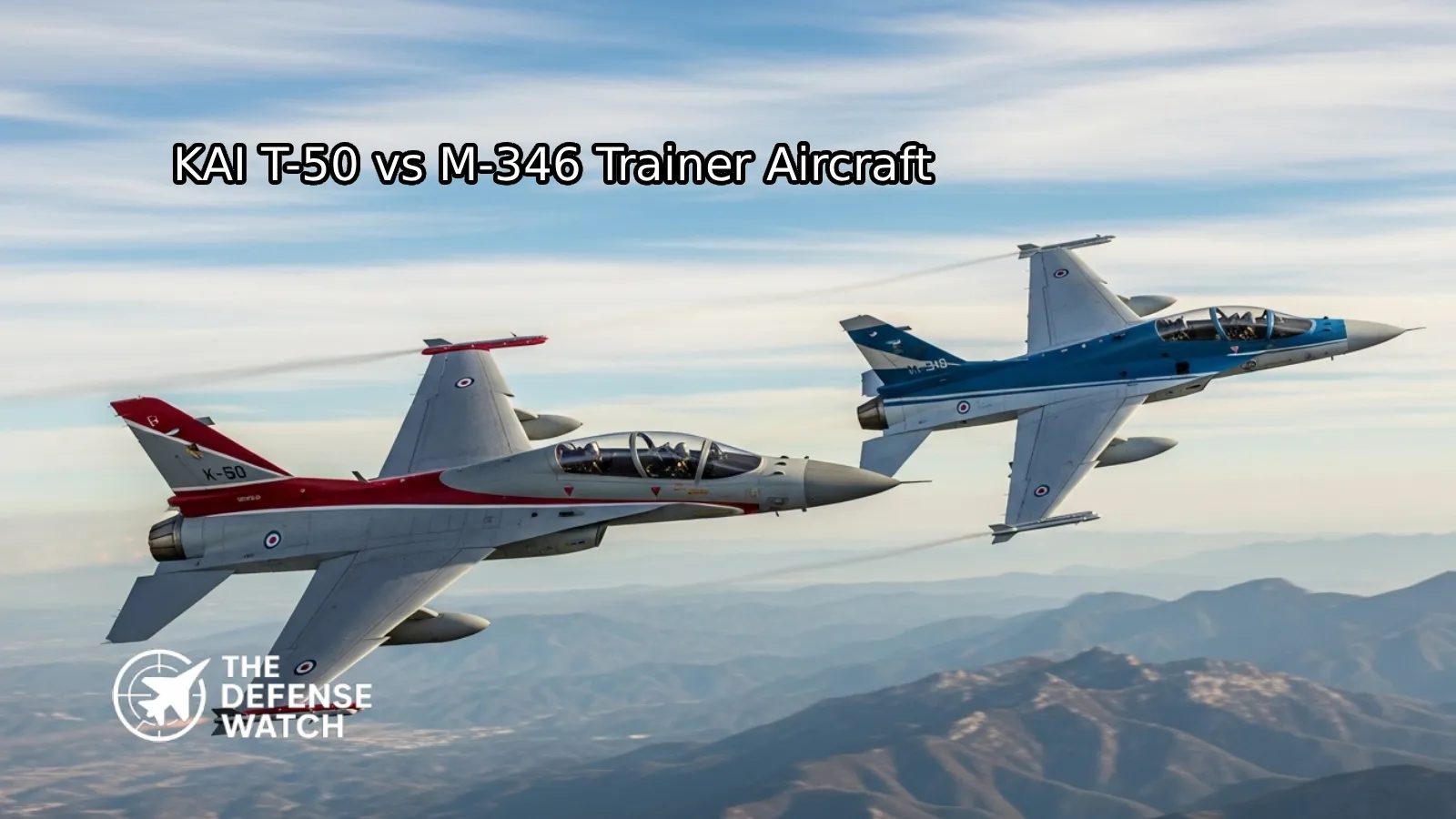
The KAI T-50 vs M-346 comparison is more than a technical curiosity. Both aircraft emerged in the same era, share a supersonic or transonic design philosophy, and target the same shrinking market: air forces that need a modern lead-in fighter trainer (LIFT) capable of preparing pilots for F-16s, F-35s, Typhoons, and Rafales. Yet they represent fundamentally different industrial lineages, doctrine philosophies, and geopolitical alignments — and those differences have real-world consequences for how allied nations train, fight, and partner with the United States.
The T-50 is a joint American-Korean product. It carries Lockheed Martin DNA, uses a General Electric engine, and is deeply integrated into the U.S. arms export ecosystem. The M-346, by contrast, emerged from a dissolved joint venture with Russia’s Yakovlev bureau, was reborn as a fully Western platform under Italian leadership, and is now part of the Leonardo defense group’s portfolio. It serves NATO members including Italy, Poland, and Greece, as well as U.S. allies Israel and Singapore.
Both jets compete globally. Both have won major contracts. And both have lost to each other. Let’s break down exactly what separates them — and which one has the edge.
First flight: August 2002
Service entry: 2005 (ROKAF)
Engine: 1× GE F404-GE-102 turbofan (w/ afterburner)
Operators: South Korea, Indonesia, Iraq, Thailand, Philippines, Poland
First flight: July 2004
Service entry: 2011 (Italian Air Force)
Engine: 2× Honeywell F124-GA-200 turbofan (no afterburner)
Operators: Italy, Israel, Singapore, Poland, Greece, Qatar, Turkmenistan
Specifications: KAI T-50 vs M-346 Side-by-Side
Raw numbers are never the whole story, but they establish a baseline. Here is how the two aircraft compare on the specifications that matter most to air force planners and defense analysts.
| Specification | KAI T-50 Golden Eagle | Leonardo M-346 Master |
|---|---|---|
| Manufacturer | KAI / Lockheed Martin (South Korea / USA) | Leonardo S.p.A. (Italy) |
| Engines | 1× GE F404-GE-102 (17,700 lbf w/ AB)SUPERSONIC | 2× Honeywell F124-GA-200 (6,250 lbf each, no AB) |
| Max Speed | Mach 1.5 (supersonic)EDGE | Mach 1.15–1.2 (transonic) |
| Service Ceiling | 48,000 ft (14,630 m) | 45,000 ft (13,700 m) |
| Max Takeoff Weight | 26,455 lb (12,000 kg) | 21,605 lb (9,800 kg) |
| Combat Radius | ~239 nmi / 443 km (FA-50) | ~370 nmi / 690 km (FA variant)EDGE |
| Hardpoints | 7 (armed variants) | 7 (+ wingtips) |
| Internal Gun | 20mm M197 gatling (3-barrel) | Gun pod option only (23mm or 30mm) |
| g-Limit | +8g / −3g | +8g / −3g (identical) |
| High-AoA Capability | Good | Excellent (delta wing vortex lift)EDGE |
| Fly-by-Wire | Triple-redundant digital FBW | Full-authority digital FBW |
| Radar (armed variant) | APG-67 (TA/FA-50) | Leonardo Grifo-M346 multimodeEDGE |
| Unit Cost (approx.) | ~$25–$30M (trainer), ~$35M+ (FA-50) | ~$25–$30M (trainer), higher for FA variant |
| Total Built (approx.) | 170+ (all variants)EDGE | ~80+ |
| U.S. Export Support | Yes — Lockheed Martin partnership | Partial (Boeing MOU; NATO-compatible) |
Design & Technology: Two Philosophies, One Goal
The T-50: An F-16 in Training Clothes
The KAI T-50 Golden Eagle was explicitly designed as an F-16 derivative. It resembles the F-16 Fighting Falcon at roughly 80 percent of the size, sharing similar wing geometry, a single-engine layout, and a Lockheed Martin-developed avionics and flight control system. The cockpit features two Honeywell MFDs, HOTAS controls, and a BAE Systems HUD — all designed to minimize transition time to fourth- and fifth-generation fighters. Critically, the T-50 uses a single afterburning GE F404 engine, giving it genuine supersonic capability up to Mach 1.5. This matters enormously for training realism: pilots learn supersonic handling, afterburner management, and transonic aerodynamics in a dedicated trainer rather than expensively burning hours in an F-16 or F/A-18.
The fly-by-wire system uses triple-redundant digital flight control — a standard inherited directly from Lockheed Martin’s fighter programs. The T-50 was the first trainer to employ electronic fly-by-wire and digital flight control for precision maneuvering, and its actuator system includes a direct-drive design with a reconfiguration mode for added redundancy.
The M-346: European Doctrine, Italian Craftsmanship
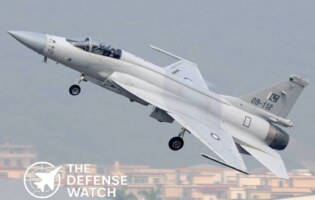
The M-346 Master took a different path. Originally co-developed with Russia’s Yakovlev bureau as the Yak/AEM-130, the partnership dissolved in 2000 and Alenia Aermacchi rebuilt the aircraft along Western lines. The result was a distinctive twin-engine, delta-wing design optimized for high angle-of-attack (AoA) flight — a training regime that better mimics the handling of Typhoons, Rafales, and even the F-35 at the edges of the flight envelope. The aerodynamic design uses vortex lift to provide manoeuvrability and controllability at very high angles of attack, giving it flight characteristics genuinely similar to modern delta-wing fighters.
Powered by two Honeywell F124 turbofan engines — notably without afterburners — the M-346 achieves transonic performance that its manufacturer describes as “second only to afterburner-equipped aircraft.” The twin-engine configuration also provides redundancy that single-engine platforms like the T-50 cannot match, a factor that weighs heavily in procurement decisions for nations operating over water or remote terrain.
Firepower & Performance: T-50 vs M-346 in the Combat Role
Both aircraft were designed primarily as trainers, but both have evolved into credible light combat platforms — an important factor in export sales to nations that want a single airframe to serve double duty.
The T-50 family’s armed variants — the TA-50 and FA-50 — carry a built-in 20mm M197 three-barrel gatling cannon, AIM-9 Sidewinder launch rails on the wingtips, and a suite of underwing ordnance that includes AGM-65 Maverick missiles, JDAM precision-guided bombs, Mk 82/83/84 general-purpose bombs, and sensor-fused weapons. The FA-50 adds an all-weather, day-night multimode APG-67 fire control radar. Poland’s FA-50PL variant, intended for a frontline role, is receiving a more capable radar system. In December 2025, Thailand’s Royal Thai Air Force deployed its T-50TH in live combat for the first time, conducting a deep-strike mission alongside F-16s and Gripens — a landmark validation of the platform’s real-world combat utility.
The M-346 FA (Fighter Attack) variant integrates a Leonardo Grifo-M346 multimode radar, seven hardpoints, AIM-9L air-to-air missiles (tested in 2017), air-to-ground precision munitions, and options for 23mm or 30mm gun pods. While it lacks an internal cannon — a legitimate drawback — its radar system is widely regarded as more capable than the APG-67 carried by baseline FA-50s, and its embedded simulation suite allows pilots to train against realistic threat environments without expending live munitions. The M-346’s per-flying-hour costs are reportedly one-tenth of those of the Eurofighter Typhoon, making it an economically attractive trainer for NATO air forces flying Typhoons.
Operational Range & Mobility
This is one area where the M-346 holds a clear tactical edge. With a combat radius approaching 690 km in its fighter-attack configuration — compared to roughly 443 km for the FA-50 — the Italian jet can range farther from base, persist longer on station, and better simulate the deep-strike profiles that modern pilots will execute in frontline fighters. The twin-engine configuration also reduces return-to-base anxiety over open water, a significant factor for island-nation operators like Singapore.
The T-50, however, benefits from shorter runway requirements and a lighter footprint that suits expeditionary or austere operating environments. Its single-engine simplicity reduces maintenance complexity and total life-cycle cost. For air forces operating from inland bases with robust logistics, the T-50’s range limitations are less operationally relevant.
Combat Effectiveness & Training Doctrine
The T-50: Supersonic Fidelity for F-16 and F-35 Pipelines
The T-50’s greatest training asset is its genuine supersonic capability. Pilots preparing for the F-16, F/A-18, or F-35 need exposure to afterburner management, supersonic aerodynamics, and the physical demands of high-speed flight. The T-50 provides that in a dedicated trainer, rather than burning expensive hours in a frontline aircraft. KAI and Lockheed Martin position the T-50 as the only high-performance supersonic trainer in production capable of allowing new fighter pilots to smoothly transition into advanced aircraft such as the F-16 and 5th Generation F-35.
Iraq, Indonesia, the Philippines, and Poland have all acquired T-50 family aircraft and embedded them into structured advanced training pipelines. Poland’s emergency procurement of 48 FA-50GF aircraft following Russia’s 2022 invasion of Ukraine also demonstrated the platform’s rapid-acquisition credibility — KAI delivered early batches within months of contract signing.
The M-346: NATO Standard, Embedded Simulation
The M-346’s defining operational advantage is its embedded simulation architecture. The aircraft’s avionics can replicate threat environments, inject simulated contacts, and record sortie data for debrief — effectively functioning as both a live aircraft and a part-task trainer simultaneously. By mid-2024, M-346 operators globally had surpassed 120,000 flight hours, demonstrating the platform’s sustained operational tempo across multiple demanding programs.
Israel’s use of the M-346 — designated the “Lavi” by the Israeli Air Force — as its primary advanced trainer is particularly telling. The IAF operates one of the world’s most combat-experienced pilot training pipelines, and its choice of the M-346 over competing platforms reflects the aircraft’s high-fidelity simulation and NATO-compatible data links. The U.S. Air Force has also certified the Polish Air Force’s M-346 training system, a significant endorsement of its interoperability with American standards.
Cost & Export Value: Who Is Winning the Market?
On raw export numbers, the T-50 is ahead. With over 170 aircraft delivered across six nations, the Golden Eagle has broader market penetration. Its U.S. co-development heritage makes it politically easier for American allies to acquire through Foreign Military Sales (FMS) channels, and its F-16 DNA provides natural appeal to air forces already flying Lockheed products.
The M-346 wins on unit sophistication and NATO integration. Its approximately 80 aircraft serve in operationally demanding environments — Israel, Singapore, Poland — where training quality outweighs unit economics. In Poland, the M-346 and FA-50 now coexist: Warsaw chose the M-346 in 2014 for its primary advanced trainer requirement, then bought FA-50s in 2022 for emergency light combat capacity. That dual-track procurement reflects each aircraft’s distinct strengths rather than one platform displacing the other.
Unit costs for both aircraft are broadly comparable in the trainer configuration — roughly $25–$30 million. Armed variants command a premium, with the FA-50 exceeding $35 million depending on radar and weapons packages. The M-346 FA similarly commands a higher price for its enhanced combat configuration. Life-cycle costs favor the T-50 due to simpler single-engine maintenance, though the M-346’s twin-engine safety margin is valued in certain operational contexts.
Analysis: Strengths, Weaknesses, and the U.S. Perspective
KAI T-50 Golden Eagle
- Genuine supersonic performance (Mach 1.5)
- F-16/F-35 transition fidelity built-in
- Lockheed Martin partnership eases U.S. FMS sales
- Internal cannon in armed variants
- Proven combat debut (Thailand, 2025)
- Lower lifecycle cost (single engine)
- Shorter combat radius (~443 km FA-50)
- Less advanced radar vs M-346 FA
- Less NATO interoperability depth
Leonardo M-346 Master
- Superior high-AoA training realism (delta wing)
- Twin-engine safety and reliability
- Embedded simulation — simulate threats in-flight
- Greater combat radius (~690 km)
- Deep NATO integration (data links, sensors)
- Chosen by IAF — world-class endorsement
- No afterburner — transonic, not supersonic
- No internal gun (gun pod only)
- Lower total production — fewer operators
From a U.S. defense perspective, both platforms serve American strategic interests. The T-50 is effectively an American-Korean co-product and strengthens the U.S.-South Korea alliance. Its FMS-compatible status means American funding mechanisms can facilitate its sale to partners. The M-346’s adoption by NATO nations — particularly Poland and Italy — supports alliance interoperability and reduces the burden on the U.S. to supply trainer aircraft to allies building up their air forces in response to Russian aggression.
Conclusion: KAI T-50 vs M-346 — Who Wins?
The honest answer is that neither aircraft is the universal winner. They solve the advanced trainer challenge from different directions, and the “better” jet depends entirely on what an air force needs most.
Choose the T-50 if…
Your air force operates F-16s or F-35s, values supersonic training realism, needs an internal gun in the light-attack role, wants U.S. FMS support, or requires a platform with a larger global spare-parts network. The T-50’s combat debut in 2025 also removes any lingering doubt about its operational credibility.
Choose the M-346 if…
Your air force operates Typhoons, Rafales, or other delta-wing fighters, prioritizes high-AoA training fidelity, needs twin-engine safety over water, values embedded simulation depth, or requires deep NATO sensor and data-link integration. For nations in Europe under the shadow of Russian airpower, the M-346’s interoperability credentials are decisive.
Both aircraft will remain relevant well into the 2030s. The global trainer market is not a zero-sum game, and the fact that Poland operates both jets simultaneously is perhaps the most eloquent statement on their complementary value. For U.S. defense planners, both platforms represent allied industrial capacity worth supporting — and both will produce the next generation of fighter pilots who will fly alongside American aviators in the world’s most contested skies.
Sources & Further Reading:
KAI T-50 Golden Eagle — Wikipedia ·
Alenia Aermacchi M-346 Master — Wikipedia ·
T-50 Golden Eagle — Airforce Technology ·
M-346 Master — Airforce Technology ·
Lockheed Martin T-50 Press Release ·
Singapore MoD M-346 Fact Sheet