Iran War Lays Bare Britain’s Military Capability Crisis
The 2026 Iran war has delivered the starkest demonstration yet of Britain’s military decline, exposing capability gaps that defence analysts and military chiefs have warned about for years. When the conflict erupted on February 28 following joint U.S.-Israeli strikes on Iranian nuclear and military infrastructure, the United Kingdom found itself without a single major warship in the entire Middle East — a region where the Royal Navy had maintained a continuous presence for decades.
- Iran War Lays Bare Britain’s Military Capability Crisis
- A Three-Week Response Time — And a Navy Half Its Former Size
- Air Defense Gaps Exposed at Cyprus
- A Defensive Role — And a Strained One at That
- Decades of Cuts — And a Reckoning Now Arriving
- Starmer Under Pressure to Accelerate Spending
- What Comes Next: Fleet Renewal and Long-Term Risk
- Britain’s army stands at 74,000 full-time personnel in 2026 — down from 148,000 in 1991, its smallest size since the early 19th century.
- The Royal Navy currently operates 38,000 personnel and a combined fleet of 13 destroyers and frigates, compared to roughly 62,000 personnel and about 50 destroyers and frigates in 1991.
- HMS Lancaster, Britain’s last permanently stationed Middle East warship, was decommissioned in Bahrain in December 2025 — weeks before the Iran conflict began.
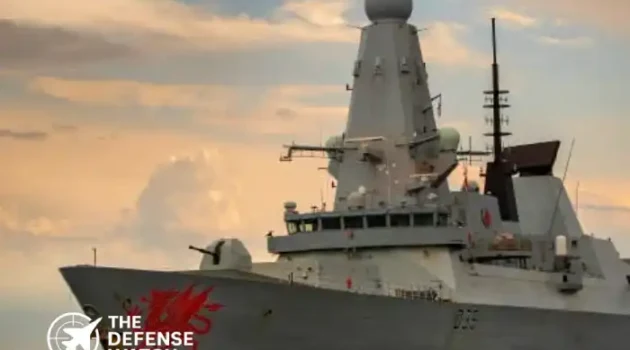
- When a British military base in Cyprus was struck by a drone in early March 2026, London took three weeks to deploy HMS Dragon, a single destroyer, to the eastern Mediterranean.
- Prime Minister Starmer is now under mounting pressure to accelerate defence spending beyond the current commitment of 2.6% of GDP by 2027, toward a possible 3.5% NATO target.
HMS Lancaster, the last British warship stationed in the region, had been decommissioned in Bahrain just weeks before the Iran war began in late December 2025. The timing was not incidental — it was symptomatic of a force structure stretched beyond its operational limits.
A Three-Week Response Time — And a Navy Half Its Former Size
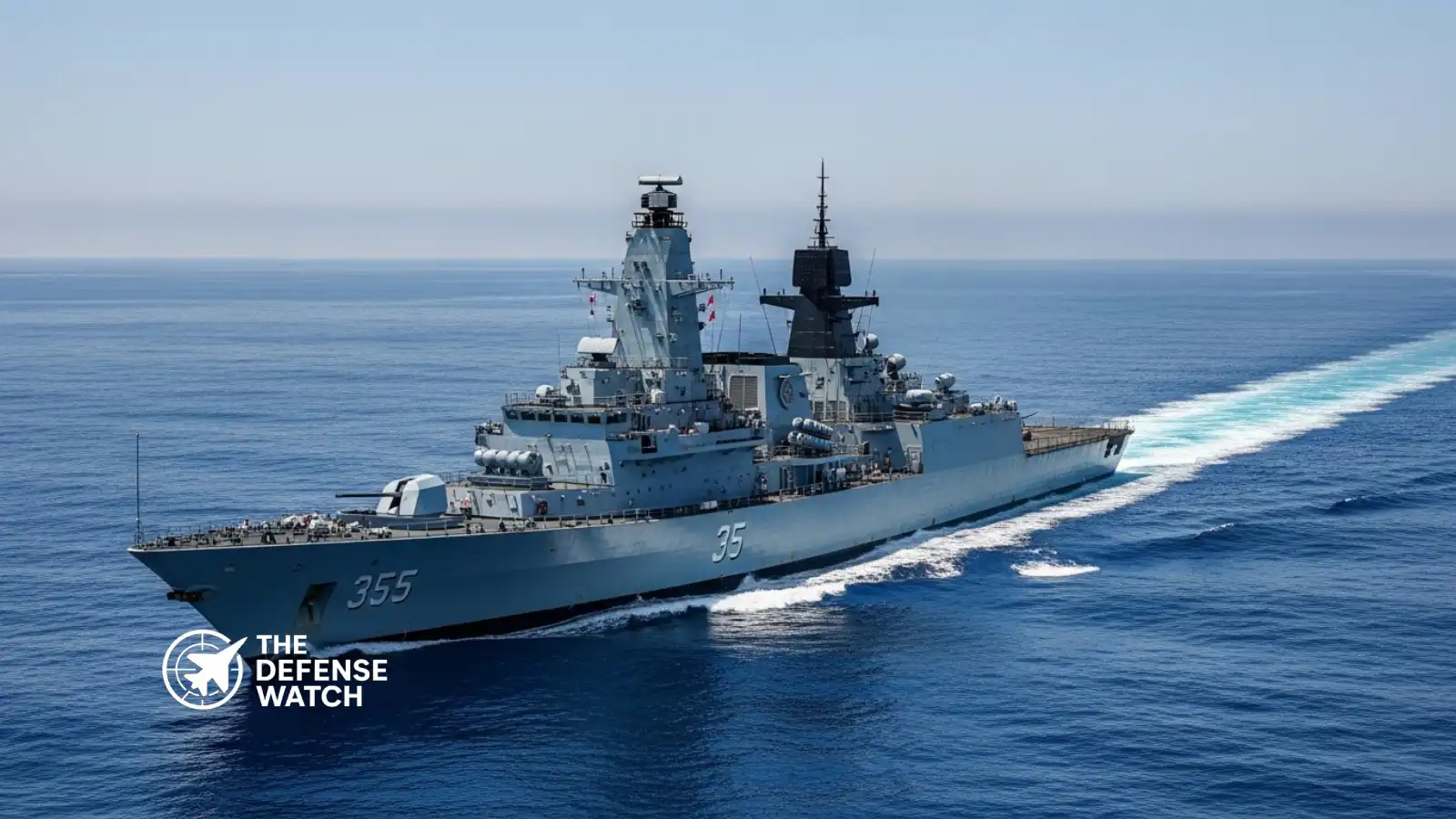
The inadequacy of Britain’s current force posture was thrown into sharp relief almost immediately. When a British military base in Cyprus was struck by a drone early in the Iran conflict in March, London took three weeks to deploy a single warship to the eastern Mediterranean. That warship was HMS Dragon, a Type 45 air defence destroyer — the only available surface combatant that could be pulled from maintenance, fitted with the correct weapons systems, and redeployed.
Because Dragon needed to be brought out of maintenance and fitted with the correct weaponry, it was not scheduled to begin traveling until the week after Starmer’s announcement. Cypriot officials did not hold back their frustration.
The contrast with Britain’s historical power projection is sobering. During the Gulf War in 1990–91, the Royal Navy sent 21 surface ships, two submarines, and 11 Royal Fleet Auxiliary vessels to the region. In 2026, that same navy could muster one destroyer — and only after a significant delay.
The Royal Navy today operates 38,000 personnel and a combined fleet of 13 destroyers and frigates, down from approximately 62,000 personnel and about 50 destroyers and frigates in 1991. The RAF has shrunk by more than 40 percent over a similar period, according to analysis from Foreign Policy. The British Army, at 74,000 full-time personnel, is at its smallest since the early 19th century.
Air Defense Gaps Exposed at Cyprus
The Cyprus drone strike exposed a second critical vulnerability: insufficient ground-based air defense coverage at British sovereign bases overseas. Iran’s missile and drone strikes highlighted Britain’s limited capacity to protect its own citizens and interests, including at its sovereign military bases on Cyprus. Only after a drone struck the base did London rush air defense assets to the region, prompting pointed questions about why those weapons were not already in place.
Although the British Army’s Sky Sabre air defense systems are capable of intercepting drones, they are only available in limited numbers and were reportedly not allocated to defend British bases on Cyprus prior to the attack.
Britain does operate at RAF Akrotiri, one of two sovereign base areas on Cyprus, which serves as a forward base for Middle East operations. During January 2026, the UK had moved additional resources to its Cyprus bases, including radar, air defence systems, and F-35 fighter jets. But the drone strike demonstrated that those preparations were insufficient.
A Defensive Role — And a Strained One at That
Britain has not participated offensively in the U.S.-Israeli campaign against Iran. Prime Minister Keir Starmer drew an explicit line, stating the UK would not join offensive action but would conduct “defensive missions” to protect British citizens and allied forces in the region.
UK aircraft have been deployed in a defensive role to intercept missiles and projectiles in Qatar, Jordan, Iraq, and Cyprus. Measures taken include deploying HMS Dragon to Cyprus, four additional jets to Qatar, and air defense systems to Bahrain, Kuwait, and Saudi Arabia.
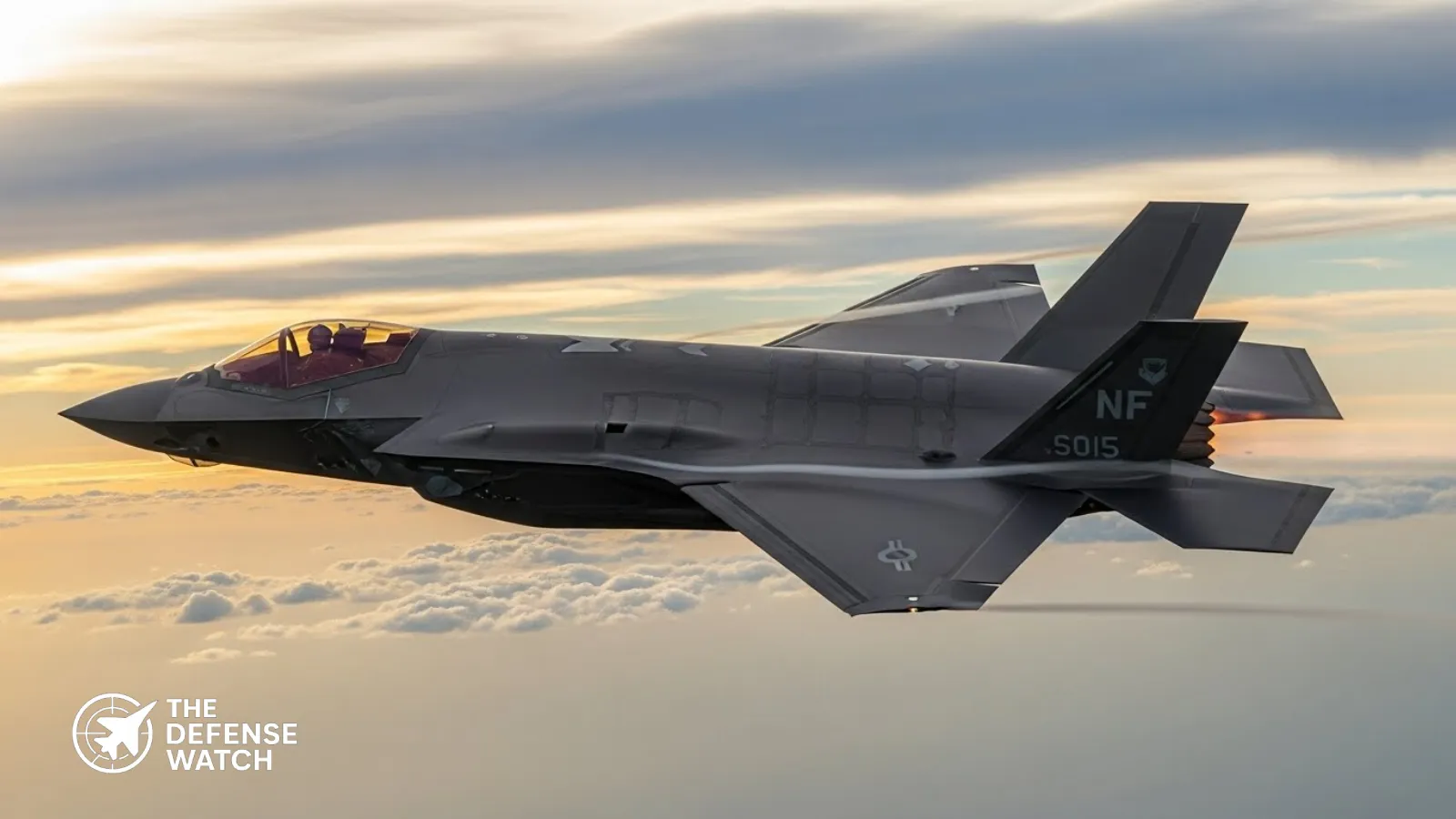
On March 2, RAF F-35s shot down Iranian Shahed drones over Jordan using ASRAAM missiles, while a British Typhoon intercepted a drone directed at Qatar. These engagements demonstrated that British forces retain tactical competence. The question is whether that competence can be sustained across a sustained and expanding operational theater — with the equipment and numbers currently available.
The Royal Navy is also being stretched by Russian threats closer to home, with British warships recently spending a month in the North Atlantic tracking Russian submarines. Simultaneously maintaining deterrence in the North Atlantic, sustaining the Trident nuclear patrol commitment, and projecting force into the Middle East is an increasingly difficult balancing act for a navy this size.
Decades of Cuts — And a Reckoning Now Arriving
The roots of Britain’s current predicament run deep. Between 2000 and 2024, British Army personnel numbers shrank significantly. The Royal Navy and Royal Marines together shrank by almost 25 percent, and the Royal Air Force by more than 40 percent.
Procurement failures compounded the personnel declines. The majority of armored vehicles, including tanks, were built between 30 and 60 years ago. The Army’s main battle tank has not received a significant upgrade since the last century. When the long-delayed Challenger 3 upgrade finally proceeds, only 148 tanks will be upgraded to the latest specifications.
Armed Forces Minister Al Carns has acknowledged the severity of the problem, expressing alarm that much of the British military has not fundamentally changed from the 1980s and 1990s.
The structural assumption underpinning British defence planning for decades — that the UK would have warning time, would fight as part of a U.S.-led coalition, and would not face threats directly to its own territory or bases — has been systematically invalidated. Russia has been practicing hard at delivering attacks at ranges far beyond what most of the British public imagines. And as the Cyprus drone strike demonstrated, British sovereign territory is no longer a sanctuary.
Starmer Under Pressure to Accelerate Spending
The political pressure on Prime Minister Starmer to act has intensified sharply since the conflict began. Starmer has resolved to hike Britain’s defence spending faster than current plans propose, hoping that a focus on security at a time of escalating conflict can help his political position amid internal party pressure.
Starmer is pushing the Treasury to accelerate plans to increase UK defence spending, after being persuaded by military chiefs that swifter action is needed to restore the country’s hollowed-out forces. The premier’s office and Ministry of Defence believe expenditure beyond the current commitment of 2.6% of GDP by 2027 is needed to fill the defence budget hole.
Former NATO Secretary General George Robertson has accused the government of “corrosive complacency” about the state of Britain’s armed forces — a charge Starmer publicly rejected while promising to publish the long-overdue Defence Investment Plan “as soon as possible.
At the NATO summit in The Hague, Starmer committed the UK to NATO’s new target of defence spending at 3.5% of GDP, plus an additional 1.5% spent on wider defence. Whether that commitment translates into the sustained, multi-year procurement programs the armed forces require — rather than headline pledges without delivery mechanisms — remains the central question facing British defence policy.
What Comes Next: Fleet Renewal and Long-Term Risk
On paper, Britain’s military modernization pipeline is substantive. A fleet of 13 new Type 26 and Type 31 frigates is due to enter service in the coming years. The F-35B program is delivering a credible fifth-generation strike capability for the Royal Navy’s two aircraft carriers. The nuclear deterrent, comprising four Vanguard-class submarines under the Continuous At-Sea Deterrence policy, remains intact.
But the transition period — during which ageing frigates retire before their replacements enter service — leaves a critical gap in surface fleet availability that the Iran conflict has made impossible to ignore. The Royal Navy’s ageing frigates need to be retired before replacements become available, and its destroyers are undergoing maintenance work.
For a nation that once commanded the world’s most powerful navy, the current state of Britain’s armed forces represents more than a capability problem — it is a strategic identity crisis. The Iran war has not created these vulnerabilities. It has simply made them visible.