Operation Midnight Hammer to Operation Epic Fury
The Trump vs. Iran conflict did not ignite overnight. It was built layer by layer — through maximum pressure sanctions that strangled the Iranian economy, a 60-day diplomatic ultimatum that Tehran ultimately rejected, B-2 stealth bombers that flew 18 hours across the Atlantic to drop 30,000-pound bunker-busters on underground nuclear vaults, and finally, a full-scale joint U.S.-Israeli military campaign that killed Iran’s supreme leader and plunged the global energy market into crisis. The story of how the world arrived at this point — and where it stands today — is one of the most consequential chapters in post-Cold War American defense and foreign policy. This is the complete timeline of the Trump vs. Iran confrontation: what happened, why it happened, and what remains dangerously unresolved.
- ► Trump reimposed “maximum pressure” sanctions on Iran on February 4, 2025, pledging to reduce Iranian oil exports to zero and demanding a new nuclear agreement within 60 days.
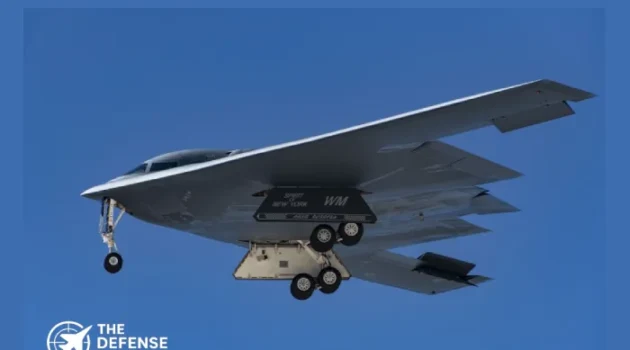
- ► Operation Midnight Hammer — June 21–22, 2025 — saw seven B-2 Spirit stealth bombers and a submarine strike Iran’s Fordow, Natanz, and Isfahan nuclear facilities using 14 GBU-57 bunker-busting bombs in combat for the first time.
- ► Operation Epic Fury launched February 28, 2026 — a joint U.S.-Israeli campaign striking at least nine Iranian cities, killing Supreme Leader Ayatollah Ali Khamenei, and destroying over 5,000 targets including missile sites, naval assets, and regime leadership compounds.
- ► Iran retaliated by striking U.S. military facilities in Qatar, Kuwait, Bahrain, and the UAE and moved to blockade the Strait of Hormuz — triggering the largest oil supply disruption in recorded history, with prices surging past $114 per barrel.
- ► As of April 2, 2026 — over four weeks into active warfare — the U.S. is simultaneously conducting airstrikes, holding back-channel talks with Tehran, and threatening further escalation, with no ceasefire or formal deal in place.
Phase One — Maximum Pressure Returns: January–March 2025
The Trump administration wasted no time signaling its Iran posture after returning to power in January 2025. On February 4, 2025, Trump formally reimposed his “maximum pressure” policy on Iran. Within weeks, the administration announced new sanctions targeting an international network accused of selling millions of barrels of Iranian crude to China, with proceeds alleged to fund Iran’s military and proxy activities. The measures designated Sepehr Energy — described as a front company for Iran’s Armed Forces General Staff — alongside associated oil tankers and individuals.
The financial pressure was already visible before Trump’s second term formally began. As early as October 2024, Iranian oil exports to China were declining, driven by anticipation of new U.S. sanctions. By early 2025, a major Chinese government-owned port announced it would cease accepting goods from OFAC-blacklisted entities, including Iran.
These sanctions were never purely punitive instruments — they were designed as leverage in the nuclear showdown Trump knew was coming.
Phase Two — The Letter and the 60-Day Clock: March–May 2025
On March 7, 2025, Trump announced he had written a personal letter to Supreme Leader Ali Khamenei, expressing his desire to initiate new nuclear negotiations while warning that failure to accept the proposal could expose Iran to serious military consequences. Trump simultaneously pledged to reduce Iranian oil exports to zero.
The letter’s demands were sweeping: Iran was required to fully dismantle its nuclear program, halt all uranium enrichment, and sever financial and material support for regional proxy forces — all within two months. In exchange, Washington offered sanctions relief and the normalization of relations. Khamenei initially declined even to acknowledge the communication, and Iranian officials signaled the conditions were unacceptable.
Indirect negotiations nonetheless began in April 2025, with Oman serving as a back-channel venue. Multiple rounds followed — in Rome, Istanbul, and elsewhere — but each ended without a substantive breakthrough. The central impasse was immovable: Washington demanded zero enrichment; Tehran insisted enrichment was a sovereign and non-negotiable right.
Meanwhile, Iran’s nuclear program was advancing rather than slowing. By May 31, 2025, the IAEA reported that Iran had sharply increased its stockpile of uranium enriched to 60 percent purity — just below weapons-grade — reaching over 408 kilograms, a nearly 50 percent rise since February. The agency warned that this quantity was sufficient for multiple nuclear weapons if further enriched. On June 12, the IAEA voted to formally censure Iran. Tehran responded by declaring it would construct an entirely new enrichment facility at an undisclosed location.
The 60-day window had closed. Israel moved first.
Phase Three — The Twelve-Day War: Israel’s Operation Rising Lion, June 13–24, 2025
On June 13, 2025, Israel launched Operation Rising Lion — a surprise offensive targeting Iranian military sites, nuclear facilities, and regime infrastructure. The campaign’s opening strikes degraded Iran’s air defense network, struck missile launch sites across the country, and killed several senior Iranian military leaders and nuclear scientists.
The 12-day Israel-Iran conflict killed top Iranian military leaders and caused significant damage to Iran’s military and nuclear infrastructure. Iran retaliated with waves of ballistic missiles and drones toward Israeli territory, though the scale of successful intercepts by Israeli and American air defense systems significantly limited the damage. Following the Israeli attack, the sixth round of U.S.-Iran nuclear talks, scheduled for June 15 in Oman, was indefinitely suspended.
The diplomatic off-ramp had been closed. Washington now faced a binary choice: stand aside or act.
Phase Four — Operation Midnight Hammer: The First U.S. Strike on Iran’s Nuclear Core, June 21–22, 2025
On the evening of June 21, 2025, the United States launched the most technically complex American military operation in decades. Gen. Dan Caine, Chairman of the Joint Chiefs of Staff, described it as “the largest B-2 operational strike in U.S. history,” inflicting “extremely severe damage and destruction” on its three targets.
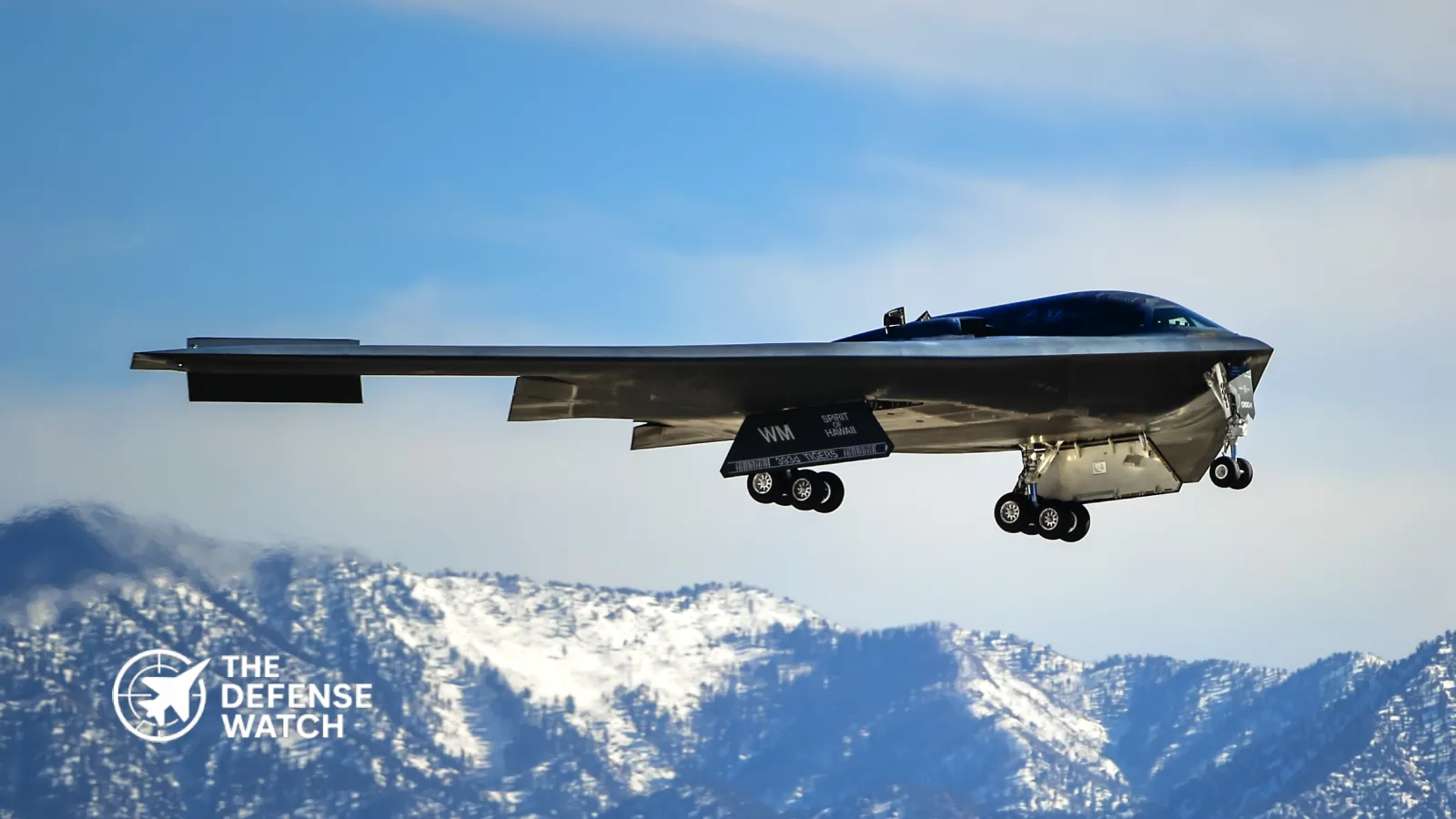
Seven B-2 Spirit bombers of the 509th Bomb Wing departed Whiteman Air Force Base in Missouri and flew eastward for 18 continuous hours toward Iranian airspace, refueling mid-air three times. The mission carried extraordinary operational secrecy. It was described as “a highly classified mission with very few people in Washington knowing the timing or nature of the plan.”
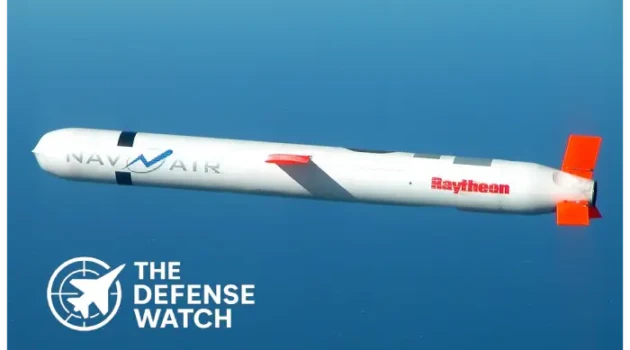
The mechanics unfolded with precision across three targets simultaneously. At approximately 5 p.m. ET — just before the B-2s entered Iranian airspace — a U.S. submarine launched more than two dozen Tomahawk cruise missiles against surface infrastructure at Isfahan. Six B-2s attacked Fordow first, dropping six bombs each on the two main ventilation shafts: the initial bombs blew off concrete covers to expose the shafts, while subsequent penetrators drove deep into the facility. A seventh B-2 dropped two MOPs on Natanz.
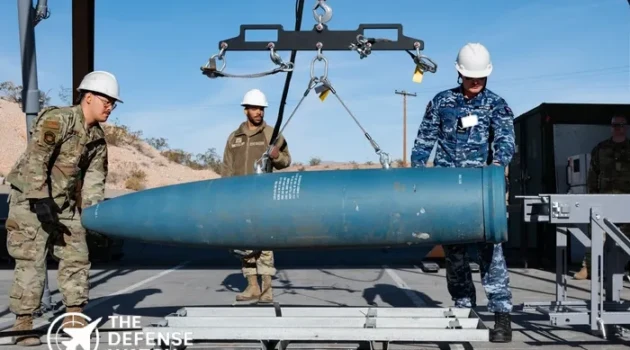
In total, U.S. forces employed approximately 75 precision-guided weapons during the operation, including 14 GBU-57 Massive Ordnance Penetrators — the weapon’s first-ever operational use in combat. Each MOP weighs 30,000 pounds and carries 11 tons of TNT-equivalent explosive power, designed specifically to defeat hardened, deeply buried facilities. Before Midnight Hammer, the weapon had never been dropped in a live conflict.
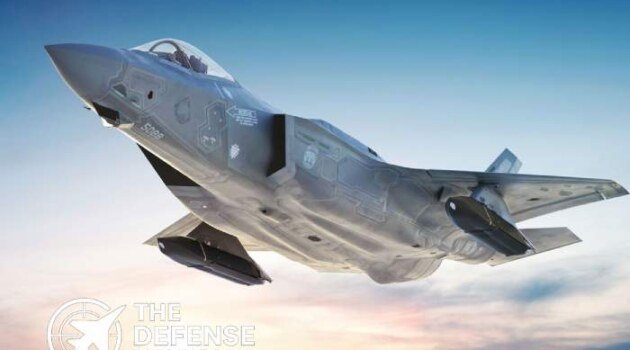
As the strike package entered Iranian airspace, the U.S. employed several deception tactics, including decoys, while fourth- and fifth-generation aircraft swept ahead of the bombers at high altitude, clearing for enemy fighters and surface-to-air missile threats. “We are currently unaware of any shots fired at the U.S. strike package on the way in,” Caine confirmed at a Pentagon briefing.
Trump declared that evening that “Iran’s key nuclear enrichment facilities have been completely and totally obliterated.” But the reality was more nuanced. A leaked Defense Intelligence Agency assessment suggested the strikes may have fallen short of their stated objective — with core components of Iran’s program, including centrifuges and enriched uranium stockpiles, possibly not destroyed or having been relocated before the attack. Pentagon spokesman Sean Parnell acknowledged the U.S. believed the strikes “degraded their program by one to two years.”
The hunt for Iran’s four hundred kilograms of enriched uranium continued in the weeks following the strikes, with U.S. and international officials uncertain about the fate of the material.
Phase Five — Ceasefire, Collapse, and the Road to War: July 2025 – February 2026
A ceasefire ended the Twelve-Day War on June 24, 2025 — but it resolved nothing fundamental. Iran’s parliament voted to suspend cooperation with the IAEA, prompting the United Kingdom, France, and Germany to trigger the JCPOA’s snapback mechanism in August. The UN Security Council failed to pass a resolution to stop those snapback sanctions, supported by only 4 of its 15 members, meaning UN sanctions were set to resume at the end of September 2025.
The economic pressure proved destabilizing. The reimposition of international and U.S. sanctions sent the Iranian rial into freefall, triggering a nationwide outbreak of protests beginning December 28, 2025. After the protests were brutally repressed — with people killed by gunfire on an unprecedented scale — the United States moved naval and air force assets into the region.
In January 2026, Trump issued a blunt social media warning that a “massive Armada” was heading to Iran, led by the aircraft carrier Abraham Lincoln, and urged Tehran to “come to the table” or face military consequences. The administration simultaneously escalated OFAC sanctions against additional Iranian officials.
Diplomatic signals were, nonetheless, still flickering. As late as February 27, 2026 — the day before the strikes — Oman’s Foreign Minister Badr Al-Busaidi reported that a breakthrough had been reached: Iran had agreed to never stockpile enriched uranium and to accept full IAEA verification, and had agreed to irreversibly downgrade its existing enriched uranium to the lowest possible level. Al-Busaidi declared that peace was “within reach” and that talks were expected to resume March 2.
They never did.
Phase Six — Operation Epic Fury: The Full-Scale War Begins, February 28, 2026
At approximately 7:00 a.m. local Iranian time on February 28, 2026, the United States and Israel commenced coordinated, large-scale strikes against a wide range of targets across Iran. The U.S. operation was codenamed Operation Epic Fury; Israel’s parallel campaign was named Operation Roaring Lion.
Trump announced the attacks in a TruthSocial post at 2:00 a.m. EST — there was no public address, and no Congressional briefing beyond a notification to the Gang of Eight shortly before strikes commenced. The eight-minute video message to the Iranian people concluded with Trump declaring: “the hour of your freedom is at hand.”
The stated objectives of Operation Epic Fury were fourfold: obliterate Iran’s ballistic missile arsenal and production capacity, annihilate the Iranian navy, sever its support for terrorist proxy networks, and ensure Iran could never acquire a nuclear weapon.
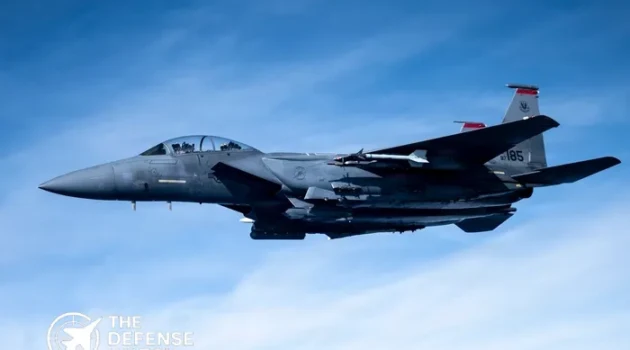
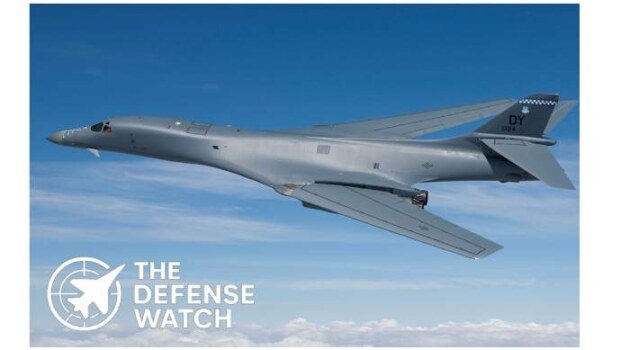
The scale dwarfed Midnight Hammer. In its first ten days, Operation Epic Fury struck over 5,000 targets and damaged or destroyed 50 Iranian naval vessels, employing B-1, B-2, and B-52 bombers alongside LUCAS drones and both Patriot and THAAD missile defense systems.
The opening phase focused on decapitating senior Iranian leadership while degrading missile infrastructure, launch systems, and air defenses. In the hours that followed, Iran initiated large-scale retaliation — expanding the conflict beyond Iranian territory into a region-wide exchange touching multiple Gulf states and allied military assets.
Among the first day’s most consequential outcomes: a strike on Supreme Leader Ali Khamenei’s compound in Tehran was confirmed, with subsequent updates confirming his death. Intelligence for the strike had been gathered through an unconventional means. The Financial Times separately reported that compromised traffic cameras and mobile phone networks provided intelligence about Khamenei’s meeting with senior officials, which determined the timing of the strike.
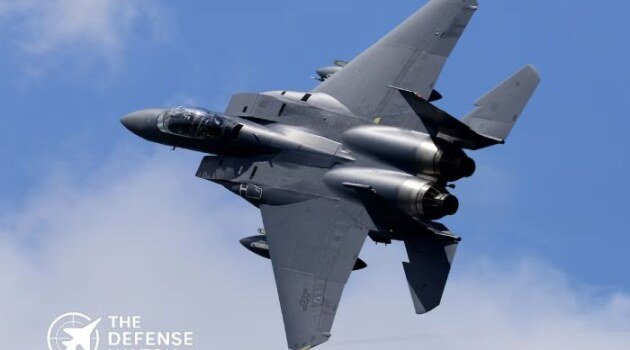
Iran’s retaliation was immediate and regional. Iran launched missile attacks against U.S. military facilities in Qatar, Kuwait, the United Arab Emirates, and Bahrain, as well as strikes on Israel, Jordan, and Saudi Arabia. The U.S. Embassy in Kuwait was struck and closed indefinitely. A Kuwaiti F/A-18 shot down three American F-15Es in a friendly-fire incident; all six crew members survived.
Iran moved to blockade the Strait of Hormuz. Tehran threatened to “completely” close the waterway and strike energy and desalination facilities critical for drinking water across the region. Oil prices surged past $114 per barrel — the highest since the COVID-19 pandemic — as traffic through the Strait collapsed and Iranian strikes hit oil facilities in Saudi Arabia and the UAE.
The IEA described the disruption as “the largest supply disruption in the history of the global oil market.”
Iran’s New Leadership and a Regime That Endured
The death of Ayatollah Ali Khamenei — who had served as supreme leader since 1989 — created an immediate succession crisis. On March 3, Israel bombed Iran’s 84-member Assembly of Experts as they gathered for a preliminary meeting to elect the next supreme leader. Despite the strike, Mojtaba Khamenei — the late supreme leader’s son — was elected on March 8, 2026, and Iran’s top leaders, including parliament speaker Mohammad Bagher Ghalibaf, Ali Larijani, and President Masoud Pezeshkian, pledged their allegiance to him.
The regime had survived decapitation. Despite Trump’s claim that the United States had won the war, the regime remained intact, with Khamenei’s son as the new supreme leader — and Iran’s negotiating positions appeared to have hardened rather than softened.
The Energy Crisis Goes Global
The Strait of Hormuz blockade rapidly escalated from a regional military matter to a global economic emergency. Qatar’s energy minister Saad al-Kaabi warned on March 6 that if the war continued, other Gulf energy producers might be forced to halt exports entirely and declare force majeure. The International Monetary Fund warned that every ten percent increase in energy prices over the course of 2026 is expected to raise global inflation by nearly half a percent. Bangladesh closed universities early for the summer; Pakistan and the Philippines declared four-day work weeks. The IEA urged households across the world to reduce highway speeds, take public transportation, and work from home to mitigate the fuel crisis.
In a significant reversal of its own sanctions policy, the Trump administration temporarily lifted restrictions on Iranian oil stranded on ships at sea. U.S. Treasury Secretary Scott Bessent said the move was expected to quickly add approximately 140 million barrels to the global market. The relief was set to last until April 19, 2026.
Where Things Stand: April 2, 2026
The conflict has now entered its fifth week since the February 28 strikes, with no formal ceasefire, no peace framework, and both military operations and diplomatic signaling continuing simultaneously.
Trump told reporters at a Cabinet meeting that the United States is engaged in “very substantial talks with the right people” in Tehran, pointing to Iran’s willingness to allow eight oil tankers through the Strait of Hormuz as evidence that the interlocutors hold genuine influence within the new leadership.
Iran’s own demands, however, have hardened dramatically. Tehran’s stated negotiating positions now include collecting fees from ships transiting the Strait of Hormuz, guarantees that all strikes will stop, the lifting of all U.S. and international sanctions, the right to retain its missile program, reparations from the United States, and the closure of American military bases in the Persian Gulf. These conditions far exceed what Iran had asked before the war began.
Speaker of the Iranian parliament Mohammad Bagher Qalibaf stated on March 23 that “no negotiations have been held” with the United States — directly contradicting Trump’s claims of progress.
Trump, for his part, has insisted the conflict is nearly over. He has publicly said the war could end “soon” and that the United States has already achieved many of its military objectives in Iran. Yet he has simultaneously threatened new escalation, setting a deadline for Iran to reopen the Strait of Hormuz or face airstrikes on Iranian power plants — while declining to clarify whether that deadline remains in effect when pressed by reporters.
Analysis: A Campaign That Achieved Its Tactical Goals — But Not Its Strategic Ones
Operation Midnight Hammer was, on its own narrow technical terms, an extraordinary demonstration of American airpower. Flying more than a third of the entire B-2 fleet 18-plus hours round-trip, employing the GBU-57 MOP in combat for the first time, striking three hardened underground facilities in 25 minutes without losing a single aircraft or crew member — this represented the culmination of decades of investment in stealth technology, precision munitions, and joint operational planning. Operation Epic Fury then demonstrated an even broader capability: the systematic targeting of a nation-state’s leadership, military infrastructure, naval forces, and communications simultaneously, using cyber operations and intelligence from compromised networks to eliminate a sitting head of government in real time.
But tactical dominance has not translated into strategic resolution. Nine months after Midnight Hammer was launched on the premise that Iran’s nuclear program had been “obliterated,” a senior Trump aide was telling reporters that Iran was one week from nuclear bomb-making material. The regime survived Epic Fury’s opening strikes and reconstituted a new supreme leader within eight days. Iran’s retaliatory strikes against U.S. partners across the Gulf — combined with the Strait of Hormuz blockade — imposed costs on the global economy that Washington was ultimately forced to partially absorb by lifting its own oil sanctions.
Perhaps the most revealing detail in the entire chronology is the February 27, 2026 moment: on the day before the largest American military operation in a generation, Oman’s foreign minister was announcing that a genuine diplomatic breakthrough had been reached and that peace was within reach. Whether those negotiations were genuine, misrepresented, or deliberately derailed remains one of the critical unresolved questions of the conflict — and one that will shape how this war is judged for years to come.
The United States has demonstrated it can hit any target in Iran. What remains unproven is whether it can convert that firepower into a durable settlement that prevents Iranian nuclear ambitions while stabilizing the region and the global energy market that both American consumers and global partners depend on.
FAQs
What is Operation Epic Fury?Operation Epic Fury is the U.S. military’s code name for the large-scale joint U.S.-Israeli military campaign that began on February 28, 2026. It targeted Iranian leadership, ballistic missile infrastructure, naval assets, proxy networks, and the remnants of Iran’s nuclear program. In its first ten days alone, over 5,000 targets were struck and 50 Iranian naval vessels were damaged or destroyed.
What is Operation Midnight Hammer?Operation Midnight Hammer was the June 21–22, 2025 U.S. air and naval strike on three Iranian nuclear facilities — Fordow, Natanz, and Isfahan — using seven B-2 Spirit stealth bombers and submarine-launched Tomahawk cruise missiles. It was the first combat use of the GBU-57 Massive Ordnance Penetrator bunker-busting bomb and the largest B-2 operational strike in U.S. history.
Did Trump bomb Iran?Yes, twice. The first time was during Operation Midnight Hammer on June 21–22, 2025, targeting nuclear facilities. The second and far larger campaign — Operation Epic Fury — began February 28, 2026, targeting Iranian military infrastructure, naval assets, and leadership, including Supreme Leader Ayatollah Ali Khamenei, who was killed in the strikes.
Why did Trump bomb Iran?The Trump administration cited Iran’s refusal to accept a nuclear deal within a 60-day diplomatic window, its rapidly expanding uranium enrichment stockpile, and the IAEA’s formal censure of Iran’s nuclear non-compliance. Operation Epic Fury was additionally framed as targeting Iran’s missile forces, navy, and proxy networks.
Has the U.S. declared war on Iran?No. Despite President Trump characterizing operations as “major combat operations,” the United States has not formally declared war on Iran. Under Article I, Section 8 of the U.S. Constitution, only Congress holds the authority to declare war.
What happened to Iran’s Supreme Leader after the strikes?Supreme Leader Ayatollah Ali Khamenei was killed during the opening hours of Operation Epic Fury on February 28, 2026. His son, Mojtaba Khamenei, was elected as the new Supreme Leader on March 8, 2026.
Is the Strait of Hormuz still closed?As of early April 2026, Iran has moved to blockade the Strait of Hormuz, severely restricting tanker traffic. The Trump administration has temporarily lifted sanctions on Iranian oil stranded at sea and has threatened additional airstrikes on Iranian power plants if the waterway is not reopened.
Get real time update about this post category directly on your device, subscribe now.

Privacy & Cookies PolicyThis website uses cookies to improve your experience. We'll assume you're ok with this, but you can opt-out if you wish. Accept Read More