
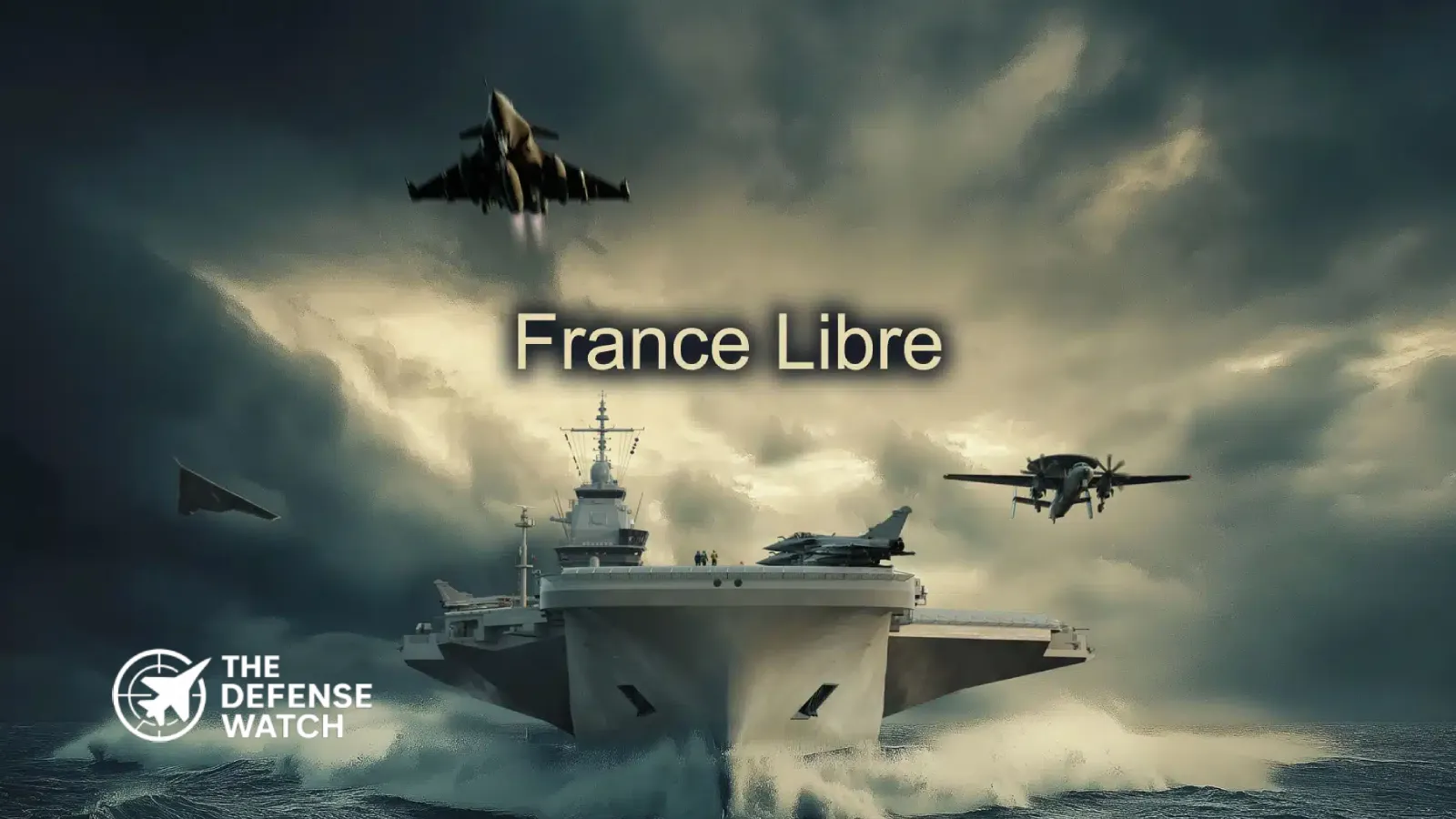
- France unveiled the 78,000-ton nuclear aircraft carrier France Libre as part of its next-generation naval program.
- The carrier is designed to operate around 40 aircraft, including next-generation fighter jets.
- The platform strengthens France’s global power projection and NATO maritime capabilities.
- The program is expected to replace the Charles de Gaulle carrier in the 2030s.
- The ship reflects Europe’s push toward strategic autonomy in high-end naval warfare.
France Libre Nuclear Aircraft Carrier Advances French Naval Power
France Libre nuclear aircraft carrier marks a major step in France’s naval modernization, introducing a 78,000-ton platform designed to carry around 40 aircraft and replace the aging Charles de Gaulle in the next decade.
The Big Picture
France is moving to sustain its status as Europe’s only nation operating a nuclear-powered aircraft carrier. The France Libre program reflects broader trends in NATO maritime strategy, where high-end naval assets are increasingly central to deterrence and expeditionary operations.
The United States continues to dominate carrier aviation with its Nimitz and Ford-class fleets, while China is expanding its own carrier force. France’s decision to invest in a next-generation nuclear carrier ensures it remains a credible blue-water navy capable of independent operations.
European defense policy has also shifted toward strategic autonomy. France Libre aligns with that objective by maintaining sovereign carrier strike capabilities without reliance on allied platforms.
What’s Happening
France has revealed details of the France Libre nuclear aircraft carrier, a next-generation platform expected to enter service in the 2030s.
The ship will displace approximately 78,000 tons, making it significantly larger than the current Charles de Gaulle, which displaces about 42,000 tons. The new carrier will feature nuclear propulsion, enabling extended deployments without the need for frequent refueling.
The air wing is expected to include around 40 aircraft, likely incorporating next-generation fighters developed under the Future Combat Air System program, alongside airborne early warning and support aircraft.
French defense authorities intend for the platform to serve as the backbone of the country’s naval aviation capability for decades.
Why It Matters
France Libre addresses several operational limitations of the current French carrier fleet.
Charles de Gaulle has provided France with a unique European capability, but its size limits sortie generation and aircraft capacity. The new carrier’s larger displacement allows for increased operational tempo, improved deck operations, and enhanced survivability.
The integration of next-generation aircraft and advanced launch systems will also improve interoperability with allied forces, particularly the United States Navy.
Nuclear propulsion remains a critical advantage. It allows sustained high-speed operations and reduces logistical constraints, enabling France to deploy globally without dependence on forward basing.
Strategic Implications
France Libre strengthens NATO’s maritime posture by adding a modern, high-end carrier to the alliance’s collective capabilities.
Carrier strike groups remain essential for power projection, sea control, and crisis response. France’s ability to deploy such a platform independently provides NATO with greater flexibility, particularly in contested regions such as the Mediterranean, Indo-Pacific, and North Atlantic.
The platform also enhances deterrence. A nuclear-powered carrier with advanced air assets signals sustained combat capability and operational reach.
France’s investment may also influence other European nations to expand their naval ambitions, particularly in carrier aviation and expeditionary warfare.
What To Watch Next
Program development milestones will shape the trajectory of France Libre over the next decade.
Observers should track design finalization, shipyard construction timelines, and integration of next-generation aircraft systems. The development of electromagnetic or advanced catapult systems will be particularly important for operational effectiveness.
Initial sea trials and air wing integration in the early 2030s will determine the carrier’s readiness for full operational deployment.
Budgetary stability and industrial capacity will also remain key factors influencing delivery timelines.
Capability Gap
France Libre directly addresses the limitations of operating a single, smaller carrier.
The current fleet structure creates gaps in availability during maintenance cycles. A larger and more capable platform improves sortie generation but does not fully eliminate the structural limitation of having only one carrier.
The ship’s scale and complexity also introduce risks, including cost overruns and technical challenges associated with nuclear propulsion and advanced launch systems.
Despite these challenges, the platform significantly enhances France’s ability to sustain high-intensity naval aviation operations.
The Bottom Line
France Libre nuclear aircraft carrier positions France to maintain credible, independent carrier strike capability in an increasingly competitive maritime environment.
Get real time update about this post category directly on your device, subscribe now.


