
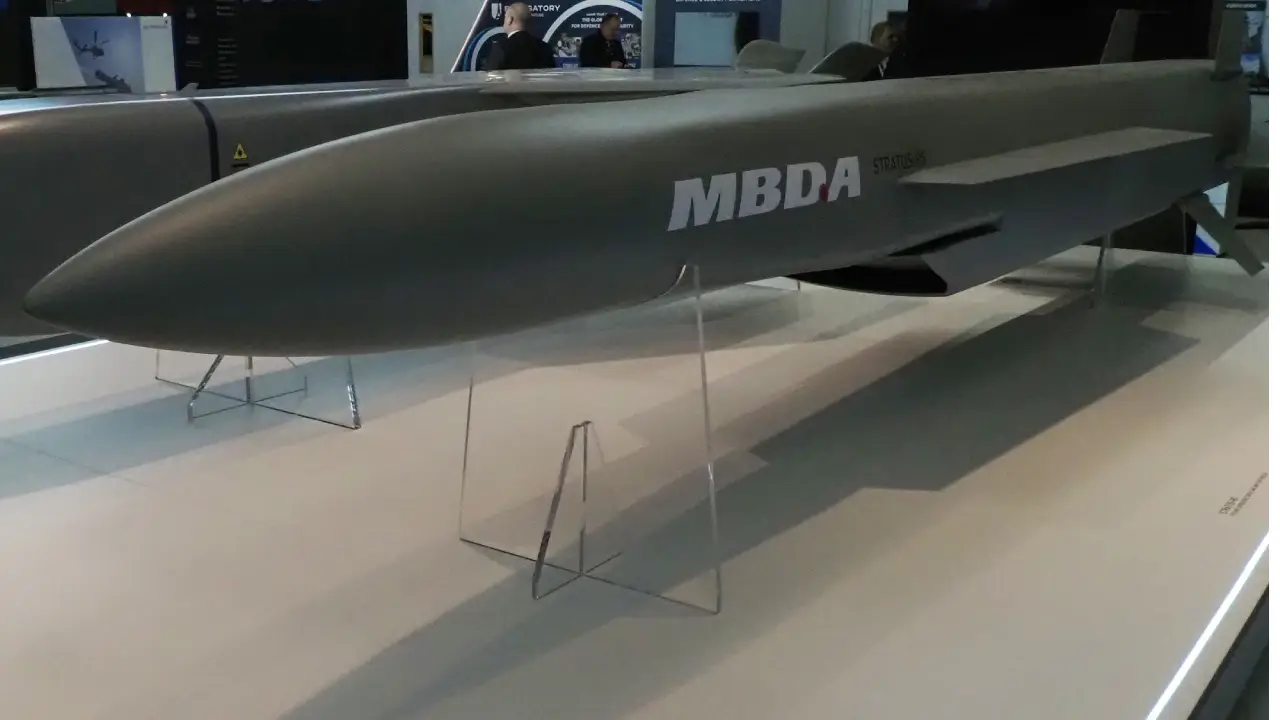
The STRATUS cruise missile has been officially confirmed for deployment aboard the Type 26 City-class frigates of the Royal Navy. The announcement came via a written answer given on 1 December 2025 by Luke Pollard, Minister of State for Defense Procurement, in response to a parliamentary question. The missile selected is the subsonic, low-observable variant, known as STRATUS LO — marking a milestone for the United Kingdom’s future surface-strike capabilities.
Background: The STRATUS Programme and Type 26
The STRATUS project (formerly known as the Future Cruise/Anti‑Ship Weapon — FC/ASW) is a trilateral development effort between the UK, France and Italy, managed by the European missile manufacturer MBDA. The aim: to field a next-generation family of deep-strike and anti-ship missiles capable of replacing legacy systems such as Harpoon, Exocet, and air-launched strike weapons like Storm Shadow / SCALP.
The Type 26 frigate is the Royal Navy’s next-generation general purpose and anti-submarine warfare surface combatant. Each ship is outfitted with 24 cells of Mk 41 vertical launch system (VLS), in addition to air-defence silos, sensors and a mission bay — designed for a flexible mix of weapons, sensors, and mission profiles.
With STRATUS LO confirmed for the Type 26, the Royal Navy establishes its primary surface-platform for long-range strike and maritime strike missions.STRATUS LO: Details of the Weapon
Stealth design & long-range strike
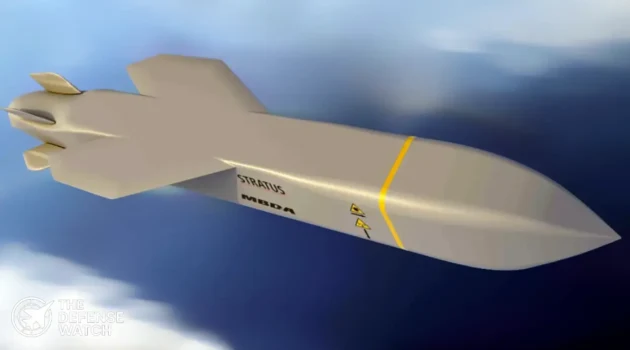
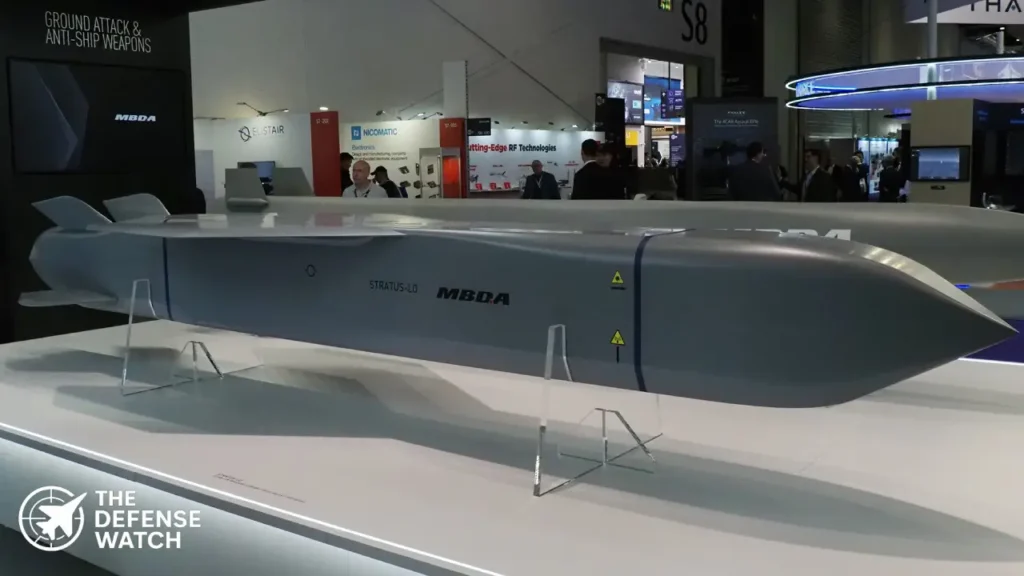
- STRATUS LO is a subsonic cruise missile powered by a turbojet engine, optimized for low observability. Its airframe features blended shaping, compact lifting surfaces, and materials designed to minimize radar signature.
- According to MBDA and recent public disclosures, the ship-launched STRATUS LO is expected to have a range of approximately 1,000 kilometers (about 621 miles) when launched from a platform like Type 26.
- The missile is designed for both land-attack and anti-ship roles, giving the Royal Navy the ability to engage high-value targets at stand-off distances from both coastal and maritime launch points.

Program history & development status
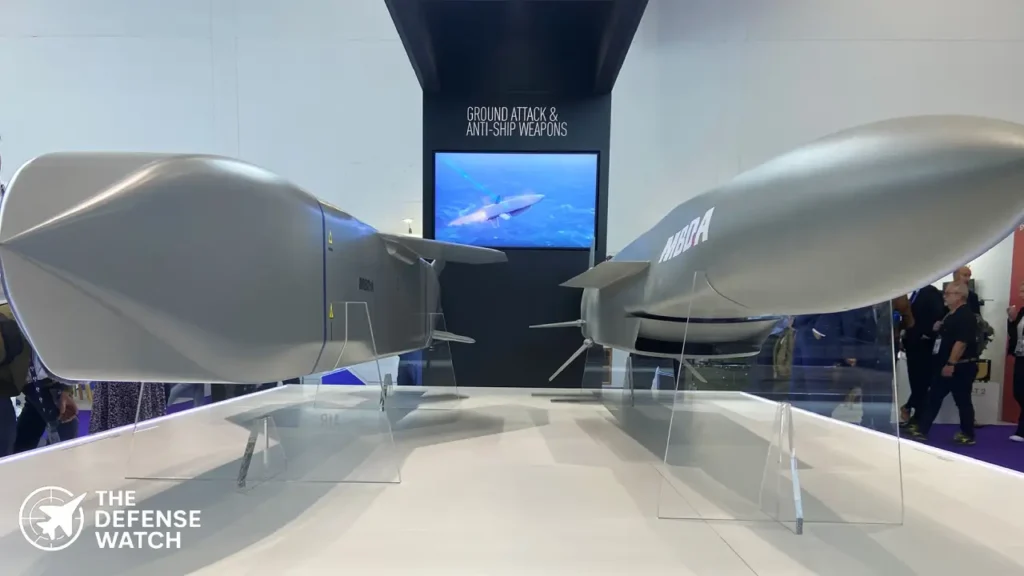
- The STRATUS missile family was publicly unveiled at the 2025 DSEI exhibition in London. At that event, MBDA presented for the first time the finalized design for STRATUS LO (formerly known as TP15) along with the anticipated supersonic variant, STRATUS RS (formerly RJ10).
- According to disclosures, the program has moved from concept into the development phase. Over the past years, MBDA has carried out design refinement, wind-tunnel testing, seeker and warhead ground tests, and signature evaluation to ensure the missile meets low-observable criteria.
Strategic fit: Type 26 and Mk 41 VLS integration
- The Royal Navy’s decision to acquire STRATUS LO units for Type 26 directly addresses its “Future Offensive Surface Weapon” (FoSUW) requirement — a long-range anti-ship and land-attack capability compatible with the Mk 41 launcher.
- This integration avoids costly bespoke launchers: Mk 41 is a widely used system across NATO navies, allowing interoperability and flexibility for future deployments.
What About STRATUS RS?
The STRATUS family includes a second variant: STRATUS RS (Rapid Strike). Unlike its stealth-optimized sibling, STRATUS RS is a ramjet-powered supersonic missile, offering high speed and maneuverability. Its design is more oriented toward suppression or destruction of enemy air defenses (SEAD/DEAD), anti-ship, and even anti-AWACS missions.
However, the UK’s written answer to Parliament only mentions STRATUS LO. As a result, at least for now, Type 26 frigates are planned to carry only the subsonic stealth variant. It remains unclear if or when STRATUS RS will be adopted by the Royal Navy, or on which platforms.
Strategic and Operational Implications
Equipping Type 26 frigates with STRATUS LO considerably upgrades the Royal Navy’s maritime strike and power-projection capabilities. A single Type 26 could threaten enemy naval formations or high-value land targets from outside the engagement envelope of many existing anti-ship or coastal defenses.
This capability enhances the deterrence posture of the Royal Navy — whether operating independently or as part of carrier strike groups or task forces. The compatibility with Mk 41 VLS ensures the missile can be loaded alongside other weapons — including surface-to-air missiles or anti-submarine weapons — giving commanders flexibility to tailor loadouts per mission.
Moreover, the adoption of STRATUS LO signals a broader shift within European defense cooperation: through the shared missile family, the UK, France, and Italy can coordinate procurement, share logistics and maintenance burdens, and potentially maintain interoperability in combined or coalition operations.
What’s Next
Finally, the broader implications for European naval architecture: If STRATUS becomes common across UK, French, and Italian fleets, it could lead to coordinated deployments, shared logistics, and enhanced interoperability in future multinational maritime operations.
The immediate next steps will involve final qualification and integration of STRATUS LO onto Type 26 hulls — likely in the late 2020s or early 2030s, aligning with the in-service timeline for the new frigates.
Monitoring will continue to see whether the Royal Navy elects to adopt STRATUS RS in the future — either for surface ships, air platforms, or as part of a layered strike doctrine combining stealth, speed, and complexity.
Get real time update about this post category directly on your device, subscribe now.

15 comments
[…] leaders also noted that Royal Navy bases at Clyde, Devonport and Portsmouth will rely on the new vessels, yet UK yards capable of […]
[…] the Defence Maritime Services Next Generation programme, Serco is replacing a wide range of Royal Navy harbour and support craft at major UK naval bases including Faslane, Devonport and Portsmouth. The […]
[…] Royal Navy said Proteus can draw data from allied platforms and networked sensors to conduct missions more […]
[…] program and long-term sustainment of existing fleets. Leonardo Yeovil currently supports the Royal Navy and Army through assembly, integration, and support work, but Unite argues that role is being […]
[…] Royal Navy’s wider shipbuilding pipeline. Recent press releases highlight ongoing work on Type 26 and Type 31 frigates in Glasgow and Rosyth, supporting thousands of jobs and wider supplier […]
[…] 1,000 vessels and naval systems integration for allied surface combatant programmes such as the Type 26 frigates under construction for the UK, Canada, Australia, and […]
[…] missions typically involved NATO fighters identifying approaching aircraft, visually confirming type and markings, and escorting them while they remained near alliance […]
[…] Royal Navy has already selected the Mk 41 for several programs. Type 26 frigates will feature Mk 41 cells forward of the bridge, while the Type 31 design also includes space and […]
[…] Norway’s Long-Term Plan on Defence, adopted in 2024, the Royal Norwegian Navy was set to receive five new British-built Type 26 anti-submarine warfare frigates to replace its older Fridtjof Nansen-class ships. The Type 26 […]
[…] take “in-build” Royal Navy hulls. The programme remains on schedule to deliver the planned Royal Navy fleet, the ministry […]
[…] amphibious support vessels and other auxiliaries but are civilian employees rather than uniformed Royal Navy […]
[…] Royal Navy’s Strike Net data linksThese feed into the overall web concept, with underpinning work on data standards and secure networks to allow information to flow quickly and securely at machine speed. […]
[…] to the Royal Navy, Tidespring’s extended mission demonstrated the essential role of naval logistics in sustaining […]
[…] have similarly argued that iterative prototyping and operational testing could strengthen the Royal Navy’s ability to adapt to complex threats, recommending more integrated prototyping with industry […]
[…] entered service with the Royal Navy in 2002 and was retired from active British service in 2023 before the […]