
Table of Contents
China Aircraft Carrier vs US Carrier
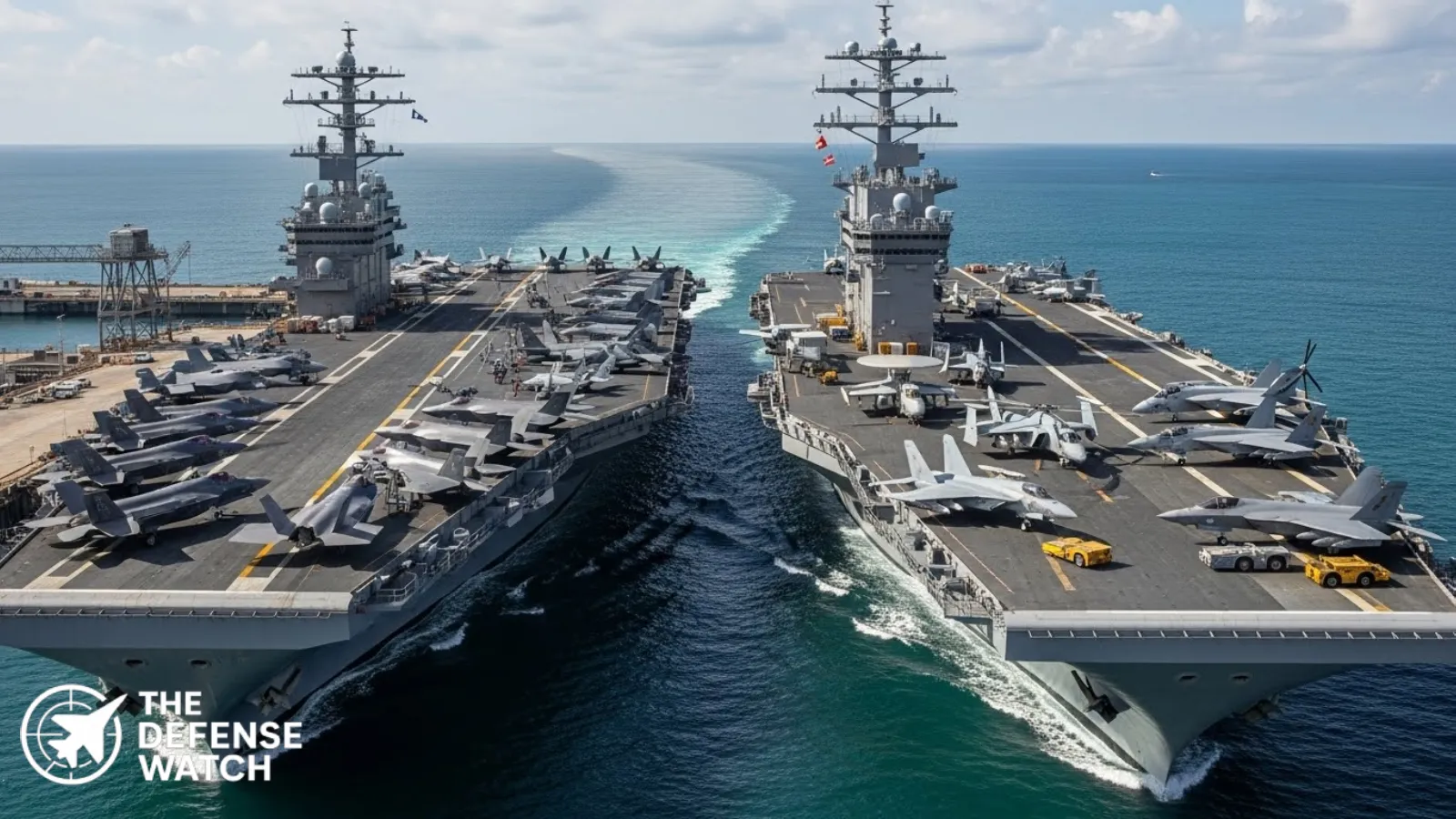
For decades the United States Navy’s aircraft carriers have been the backbone of American military power at sea, acting as floating air bases wherever Washington wants global influence. Now China’s rapid push into carrier development has shifted this balance in the Indo‑Pacific. With China operating multiple carriers and building even more advanced ones, the question is no longer theoretical: in a China aircraft carrier vs US contest, who leads in strength, capability, and strategic impact today and in the near future? This comparison matters not just for Taiwan or the South China Sea, but for NATO partners in Asia, U.S. deterrence posture, and global trade security across vital sea lanes.
China Aircraft Carrier vs US Carrier Specifications Table
| Feature | China’s Carriers (Fujian Class) | U.S. Navy Carriers (Ford/Nimitz Class) |
|---|---|---|
| Number in Service | 3 (Liaoning, Shandong, Fujian) | 11 supercarriers overall |
| Displacement | ~80,000 tons (Fujian) | ~100,000+ tons |
| Propulsion | Conventional (fuel) | Nuclear |
| Aircraft Launch | Electromagnetic (Fujian), ski jump (older) | Catapult (steam/EMALS) |
| Typical Air Wing | ~50–60 aircraft | ~70–90 aircraft |
| Endurance at Sea | Limited (fuel dependent) | Very high (nuclear) |
| First Service Entry | 2012 (Liaoning) to 2025 (Fujian) | 1975 (Nimitz) to 2017 (Ford) |
| Estimated Cost | ~5 to 6 billion USD each | ~13+ billion USD each |
Design & Technology
China’s Carriers
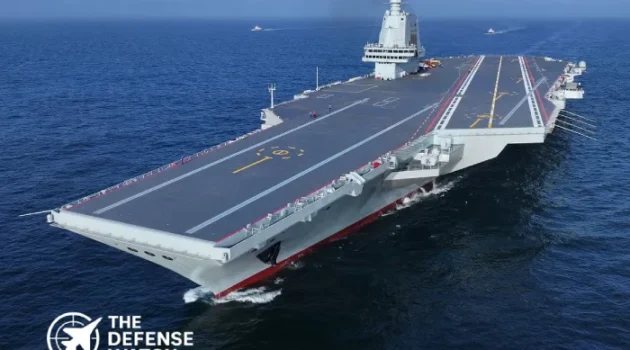
China’s first carriers were built from Soviet designs and launched aircraft off a ski ramp. The newest, the Fujian, shifts to electromagnetic launchers like those on U.S. carriers. That lets China operate heavier aircraft and yields greater payload capacity. But China’s carriers use conventional engines, which means they need regular refueling and lack the almost unlimited reach that nuclear power provides. China is also building a future carrier design (Type 004) that may be nuclear and larger than the U.S. Ford class.
U.S. Carriers
Firepower & Performance
China’s Carrier Air Wing
China’s air wings include J‑15 fighters, new J‑35 stealth jets, airborne early warning aircraft (KJ‑600), and drones. This mix gives China a broader range of mission profiles than earlier carriers could manage, but they still trail the U.S. in mature combat systems and number of fighter sorties per day.
U.S. Carrier Air Wing
U.S. carrier air wings include F‑35C stealth fighters, F/A‑18 Super Hornets, E‑2D Hawkeyes for airborne radar, and EA‑18G Growlers for electronic warfare. The U.S. can support large air wings and sustain high sortie rates thanks to advanced deck tech and long experience.

Operational Range & Mobility
With nuclear propulsion, U.S. carriers can stay at sea for months without refueling, and move quickly across oceans. China’s current carriers must refuel more often and rely on supply ships, which adds complexity to long‑range operations. Future Chinese carriers with nuclear plants could narrow this gap.
Combat Effectiveness
China’s Experience
China’s carrier operations are relatively new. The PLAN has conducted exercises and integrated carriers into fleet drills, but it lacks real combat experience. Training, logistics, and joint‑force command will take years to mature.
U.S. Operational Record
Cost & Export Value
U.S. carriers are among the most expensive warships ever built, but they also support vast industrial bases and export naval aviation tech to allies. China’s carriers cost less but their export value is limited since no other navy yet operates similar ships at scale.
Analysis
In a straight China aircraft carrier vs US comparison today, the United States maintains the lead in overall capability. U.S. carriers are larger, nuclear powered, and carry more aircraft, supported by decades of operational experience and a global network of bases. China is closing the technology gap with electromagnetic launch systems, domestic aircraft development, and plans for future nuclear carriers. But China’s fleet is smaller, less tested, and more regionally focused around the First Island Chain. U.S. doctrine still emphasizes integrated air, sea, and joint operations with allies, while China continues to build institutional expertise.
China’s carrier program is rapidly evolving. Newer designs like the projected Type 004 could rival or even surpass U.S. carriers in size and aircraft capacity. Still, numbers and technology do not automatically translate to combat effectiveness without experience and logistics support.
Conclusion
In a direct China aircraft carrier vs US comparison today, the United States clearly leads in capability, reach, and operational experience. China’s carriers are credible and improving quickly, but they remain second with limited endurance and less battle‑tested systems. Under specific conditions close to China’s coast and within integrated PLAN operations, Chinese carriers could be effective. On a global scale, U.S. carriers retain the edge in power projection and sustained operations.
FAQs
In a China aircraft carrier vs US clash who has more carriers?The U.S. Navy operates more carriers (11) compared with China’s three.
How do China’s carriers differ in launch technology?China’s newest carrier uses electromagnetic launch systems like U.S. Ford class, while earlier Chinese carriers used ski‑jump ramps.
Why does propulsion matter in carrier ops?Nuclear propulsion lets U.S. carriers stay at sea longer without refueling, giving them greater range and endurance. Chinese carriers now are conventionally powered.
Can China’s carriers carry stealth aircraft?China is developing carrier‑based stealth jets like the J‑35, expanding their mission sets.
Does the U.S. still lead in carrier combat experience?Yes. The U.S. has longer and more varied operational experience with carriers, especially in real combat scenarios.
Get real time update about this post category directly on your device, subscribe now.


3 comments
[…] strike farther and faster than guns. At Pearl Harbor, planes crippled the battle line. At Midway, carrier air power decided the battle before ships ever saw each […]
[…] auxiliary vessels and from forward locations such as Prestwick in Scotland. Units like 814 Naval Air Squadron and 824 Naval Air Squadron play a central role in the UK’s ASW […]
[…] with Martlet missiles. The Puma drone has been in service for more than six years with 700X Naval Air Squadron based at RNAS Culdrose, providing the trials with a proven platform for integration […]